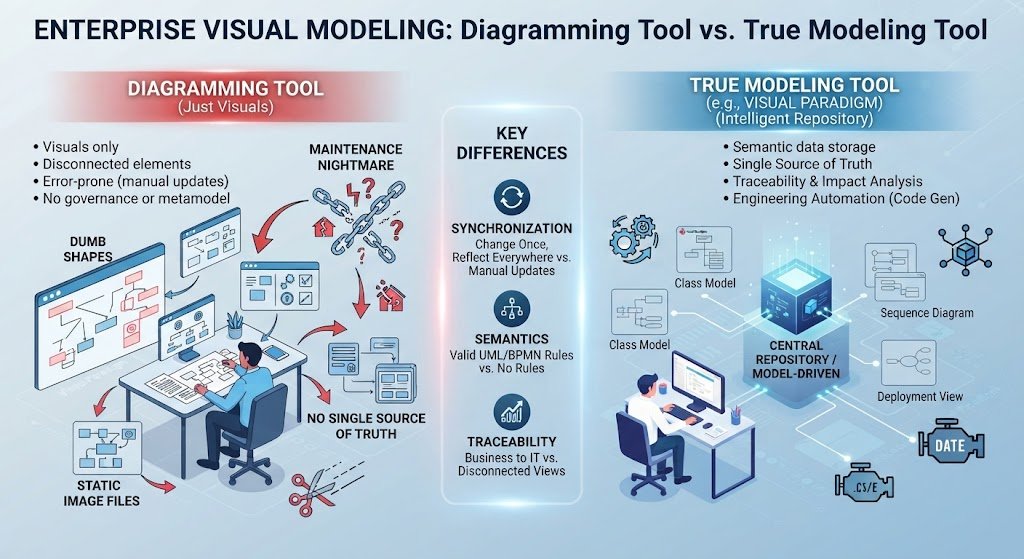
In the world of software engineering and enterprise architecture, there is a profound difference between creating a visual representation of a system and actually modeling the system itself. Many organizations fall into the trap of using standard diagramming tools (like Visio, Lucidchart, or Draw.io) for complex architectural tasks. While these tools are excellent for creating static visuals, they lack the underlying intelligence required for true software engineering.
This tutorial explores the fundamental architectural differences between a “Diagramming Tool” and a “True Modeling Tool” (such as Visual Paradigm). We will walk through why the latter is essential for enterprise scalability, how it enforces semantic rules, and how it transforms static images into a living, single source of truth.
The Core Distinction: Canvas vs. Repository
To understand the value of true modeling, we must first look at the underlying architecture of the software tools themselves. The difference is not merely cosmetic; it is structural.
1. The “Dumb Shapes” Approach (Diagramming Tools)
When you use a standard diagramming tool, you are essentially working with a digital canvas. The tool provides you with “dumb” shapes—lines, squares, and text boxes. These shapes have no inherent knowledge of what they represent.
- No Underlying Data: When you draw a box labeled “Customer,” the tool does not know it is a class, a database table, or a business entity. It is simply a shape with a text label.
- Disconnected Elements: Copy-pasting a shape creates an entirely separate object. There is no link between the original and the copy.
- Static Output: The result is often just an image or a static file that cannot be parsed by other software.
2. The “Intelligent Repository” Approach (True Modeling Tools)
In contrast, a true modeling platform operates on a Centralized Model Repository. The diagrams you see are merely “views” of the data stored inside the repository.
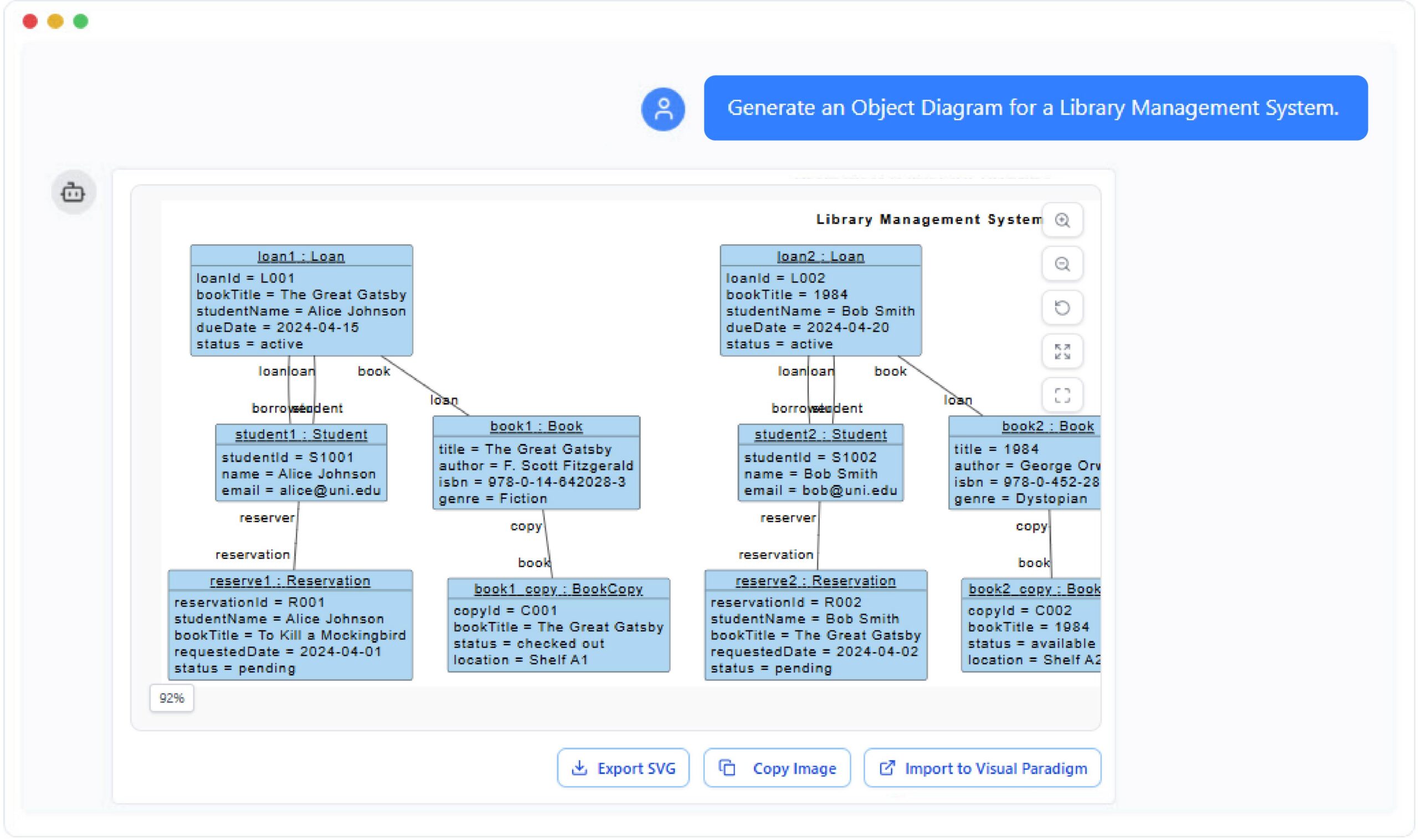
- Semantic Data Storage: When you create a “Customer” class in the repository, it is a real software object with attributes and relationships.
- Single Source of Truth: That “Customer” object exists only once in the database. It can be visualized in a Class Diagram, a Sequence Diagram, and a Deployment View simultaneously.
- Model-Driven: The tool understands the relationships between objects, allowing for complex logic and automation.
Why “Single Source of Truth” Matters: The Maintenance Nightmare
The most immediate impact of moving from diagramming to modeling is the elimination of the “Maintenance Nightmare” at scale. In an enterprise environment, a single core entity (like a Payment Gateway) might be referenced across dozens of diagrams, from requirements analysis to deployment models.
The Scenario: Renaming a Concept
Imagine your team decides to rename the “Customer” class to “Client” due to a change in business requirements.
- In a Diagramming Tool: You must manually hunt down every single diagram where “Customer” appears. You might miss a diagram stored on a wiki or a hard drive. You are left with “organized chaos” and inconsistent documentation.
- In a Modeling Tool: You rename the element once in the central repository. The change instantly reflects across all 50 associated diagrams. The system remains synchronized automatically.
Enforcing Semantics and Rules
One of the most dangerous aspects of casual diagramming is the lack of validation. Without a metamodel to enforce rules, users can draw anything, leading to ambiguous or logically impossible diagrams.
Visualizing Logic Errors
If you are using a standard drawing tool, you can draw an inheritance arrow from a database to an actor. The tool won’t care. It will let you draw it because it only sees lines and shapes.
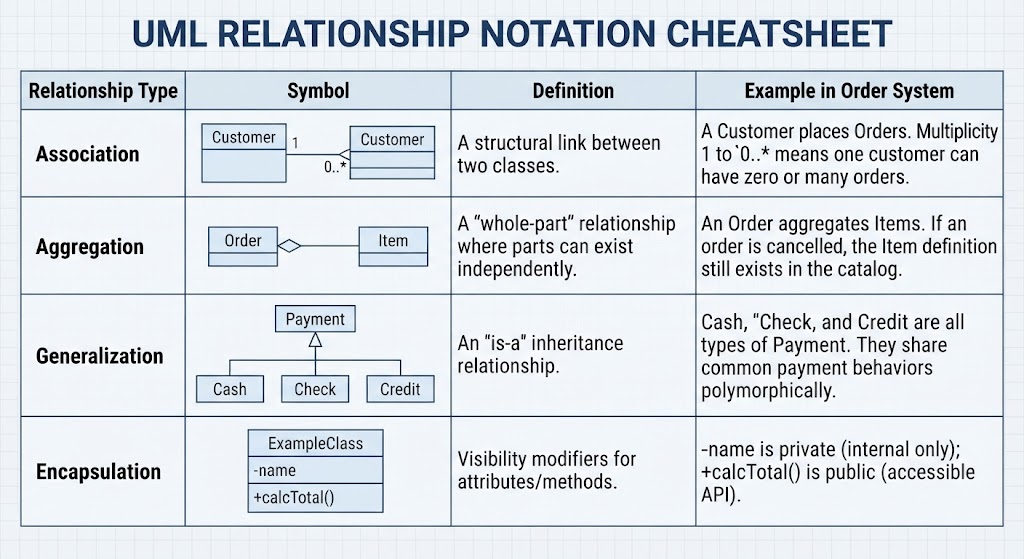
However, a true modeling tool (like Visual Paradigm) enforces strict UML, BPMN, or ArchiMate syntax. It validates relationships to prevent logical errors. It knows that a database cannot inherit from an actor. This governance ensures that the diagrams you create are technically accurate blueprints, not just artistic sketches.
Engineering Automation: From Model to Code
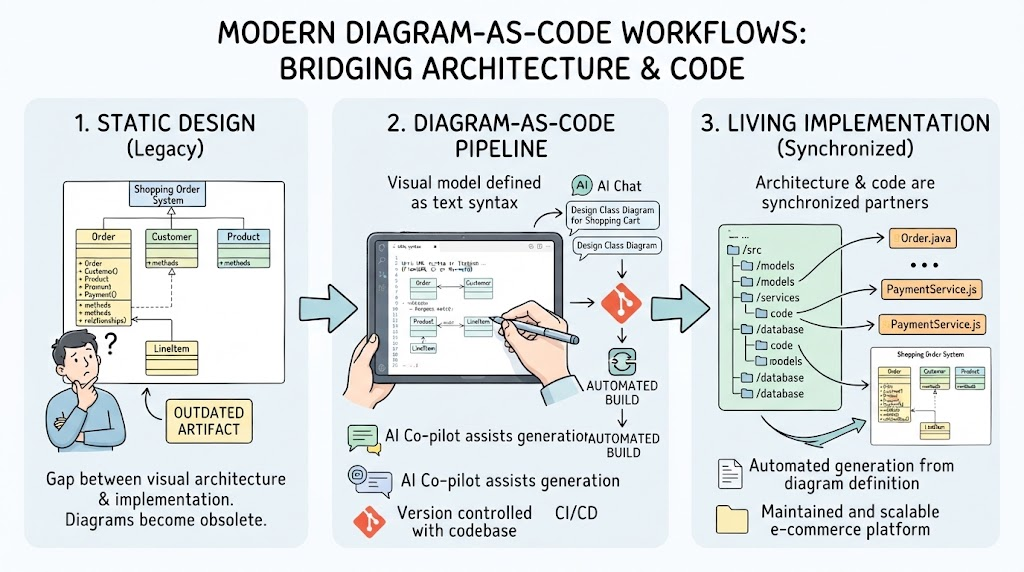
The ultimate goal of enterprise modeling is to bridge the gap between high-level architecture and implementation. Diagramming tools cannot do this; they are dead ends.
Traceability and Impact Analysis
True modeling allows for end-to-end traceability. An architect can trace a strategic business goal (e.g., TOGAF Phase A) down to a specific BPMN process, and further down to a specific UML Class or database table. If a change is made at the business level, the tool can perform impact analysis to show exactly which code modules will be affected.
Model-to-Code Generation
Enterprises need to move fast. A modeling platform treats the model as the blueprint. This enables:
- Automated Code Generation: Generate Java, C#, or Python code skeletons directly from the Class Diagram.
- Database Schema Generation: Create DDL scripts (CREATE TABLE statements) from the data model.
- Structured Documentation: Automatically generate API documentation based on the service definitions.
Conclusion: Avoiding Technical Debt
Adopting a true modeling platform is an investment in preventing “diagramming technical debt.” By using a tool like the Visual Paradigm Free Edition, teams can establish a robust, model-driven architecture from day one. Instead of accumulating a library of disconnected, error-prone pictures, you build a centralized, intelligent repository that serves as the backbone of your enterprise’s software engineering lifecycle.
The shift is not just about changing software; it is about shifting the mindset from “drawing pictures” to “building systems.”