The landscape of software architecture documentation has undergone a significant transformation. For years, diagrams were often static images created in isolation, difficult to maintain and prone to becoming outdated the moment requirements changed. Today, the industry has shifted decisively toward Diagram-as-Code (DaC). This paradigm treats diagrams as source code, allowing architects to define system structures using text-based scripts that are version-controlled, automated, and highly precise.
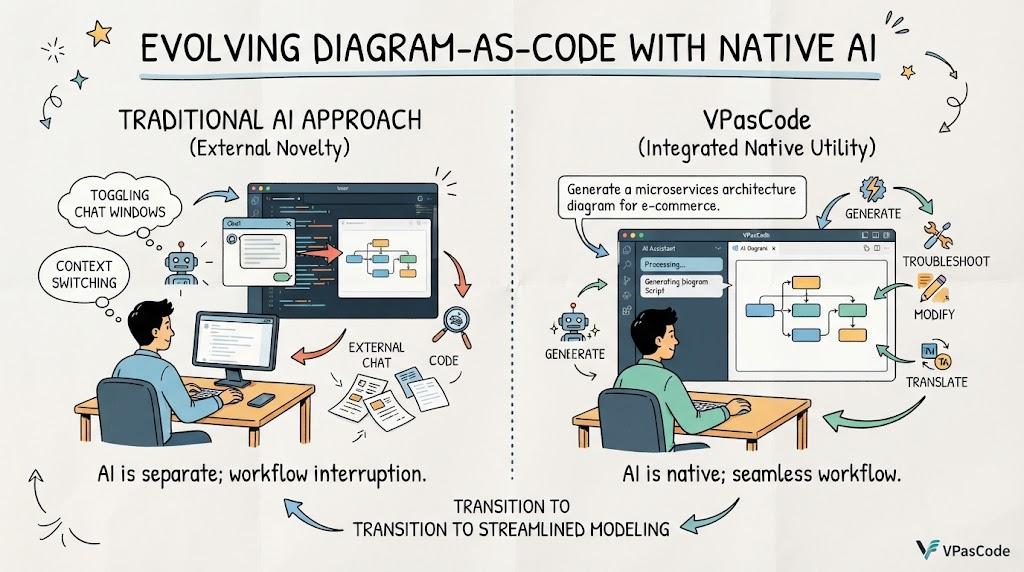
However, as we embrace this code-centric approach, a new challenge has emerged regarding how we interact with Artificial Intelligence. Many tools currently treat AI as an external novelty—a separate chat window that sits beside the editor. This disconnect often leads to a fragmented workflow. In contrast, Visual Paradigm’s VPasCode represents a true paradigm shift by embedding native AI-powered utilities directly into the workspace interface.
The Problem: Context Switching and Workflow Interruption
In traditional setups using external AI tools, the modeling process is frequently interrupted. An architect might find themselves toggling between a chat window to generate an idea and a code editor to implement it. This constant context switching breaks the flow of thought and slows down the design process. The AI is treated as a separate entity, requiring the user to manually copy, paste, and troubleshoot results outside of the visual modeling environment.
This separation creates a barrier between natural language intent and the technical implementation. You might ask an external bot, “Create a microservices architecture for an e-commerce site,” but then you are left to manually translate that response into the specific syntax required by your diagramming tool. This is inefficient and prone to error.
The Solution: VPasCode and Native AI Integration
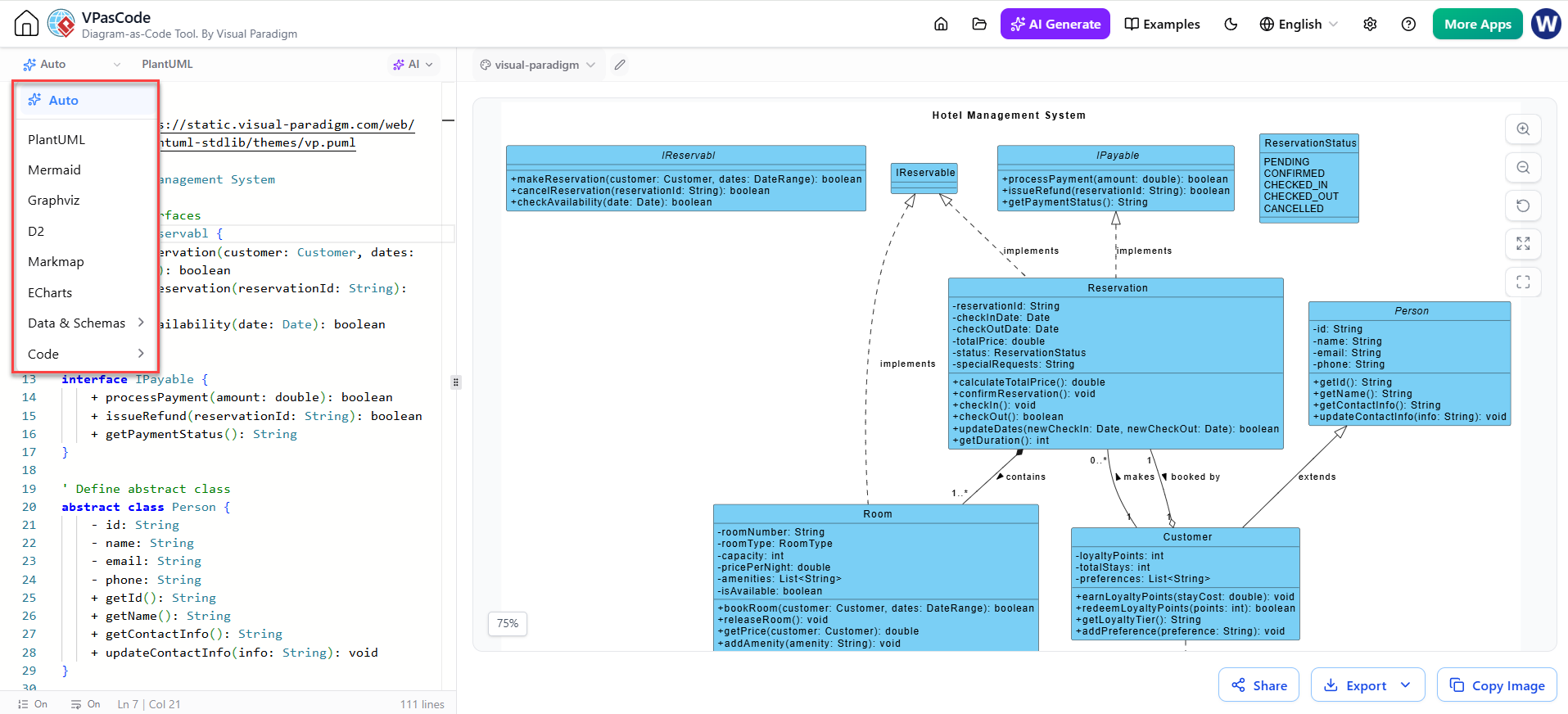
Visual Paradigm addresses these friction points by treating AI as an integrated native utility. VPasCode allows users to generate, troubleshoot, modify, and translate diagram scripts directly on the canvas. This integration ensures that the AI is not just a sidekick, but a core component of the modeling workflow.
By keeping the AI assistant within the same viewport as the diagram, Visual Paradigm facilitates a seamless loop of creation and refinement. Here is how these integrated features streamline the modeling process:
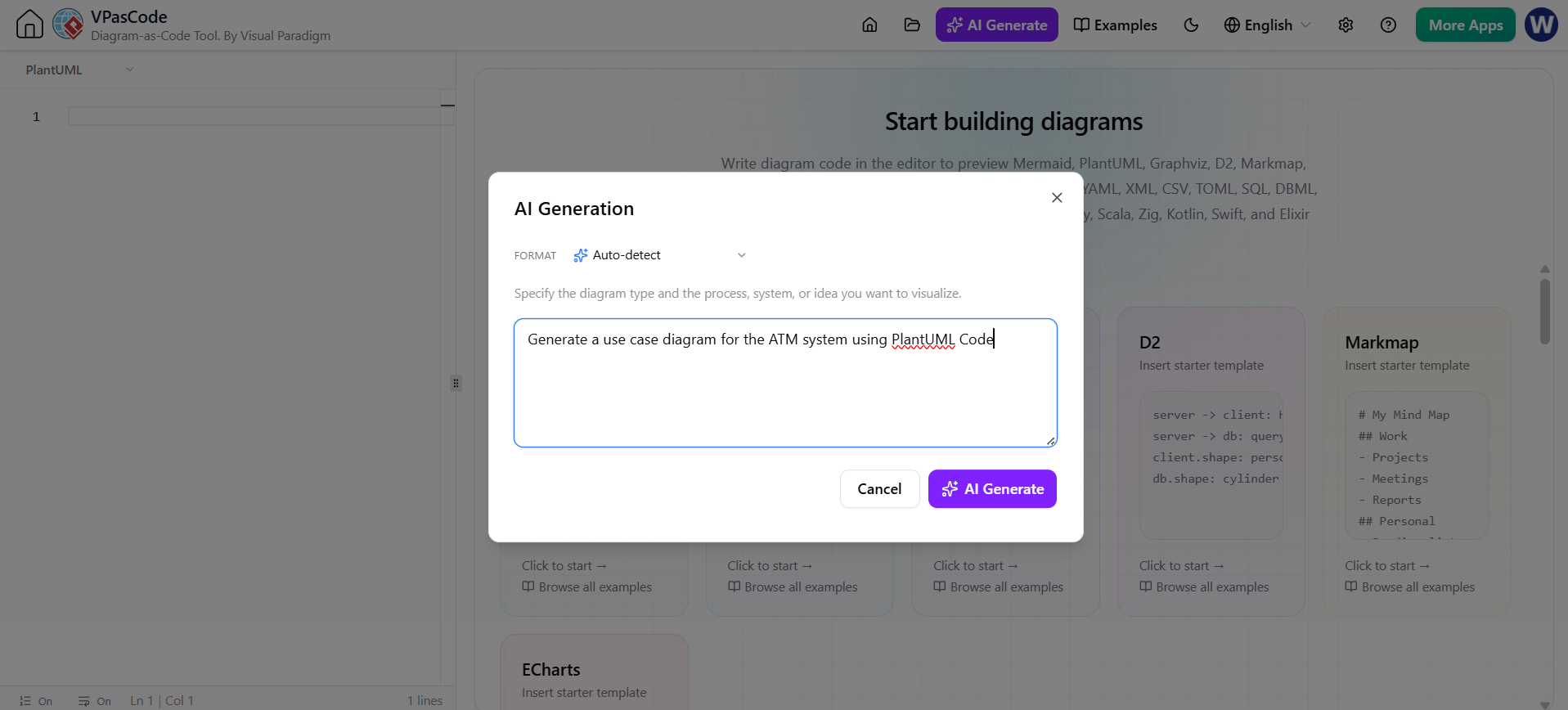
- Natural Language Generation: Instead of writing complex syntax from scratch, you can simply type natural language prompts directly into the workspace. For example, you can instruct the system to “Generate a microservices architecture diagram for e-commerce,” and VPasCode will render the precise technical diagram on the canvas instantly.
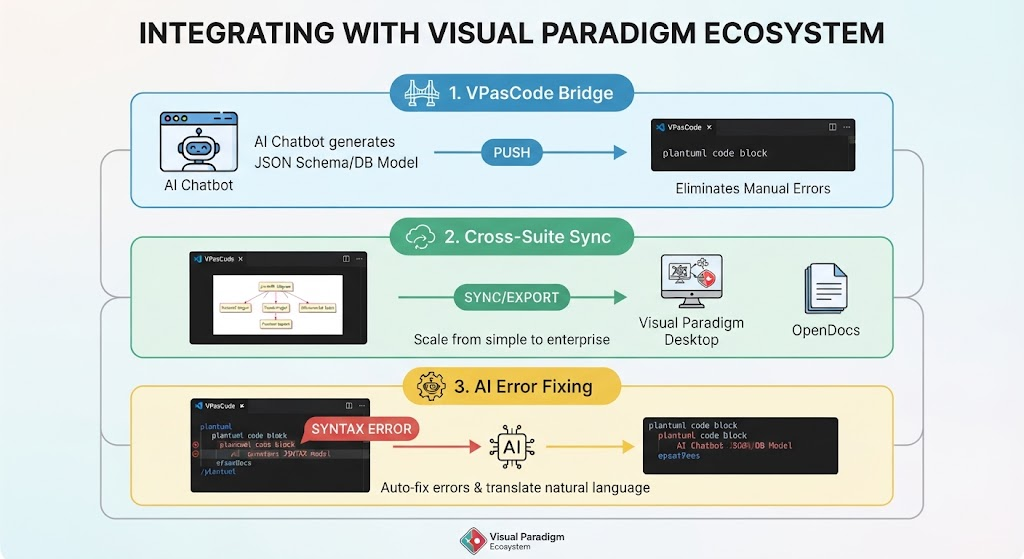
- Seamless Troubleshooting: When a diagram script contains errors or fails to render correctly, you don’t need to leave the environment. The native AI can analyze the script, identify the syntax errors, and suggest fixes immediately.
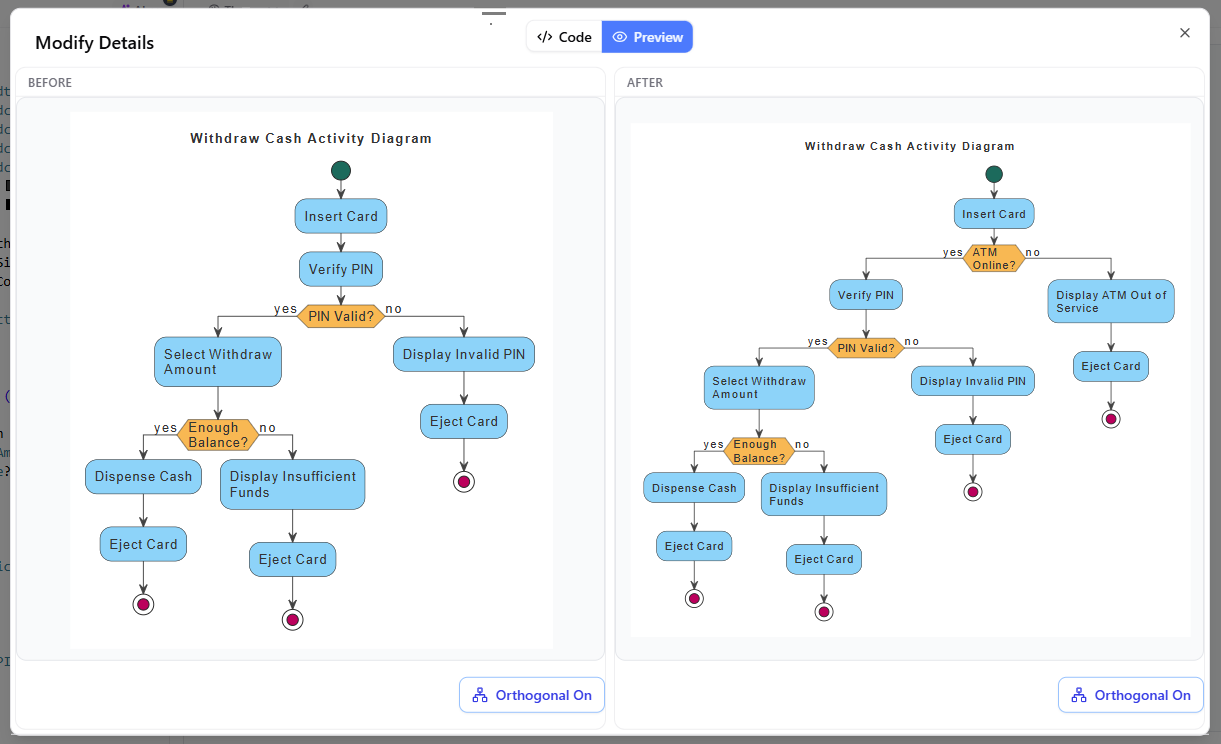
- Iterative Modification: As requirements evolve, you can ask the AI to modify specific parts of the diagram. Whether it’s adding a new component or restructuring a relationship, the changes are applied directly to the model without the need for manual code refactoring.
- Script Translation: One of the most powerful features of DaC is the ability to convert between different diagramming languages. VPasCode can translate a script from one format to another, allowing you to maintain a single source of truth while adapting to different tooling needs.
Transforming the Modeling Experience
The transition from “External Novelty” to “Integrated Native Utility” is crucial for modern software architects. Visual Paradigm facilitates this by ensuring that the AI is always at hand, ready to assist with the heavy lifting of syntax and structure. This approach turns natural language intent into precise, renderable technical diagrams without breaking workflow momentum.
Ultimately, VPasCode demonstrates that the future of software architecture is not just about writing code to draw diagrams, but about leveraging intelligent tools to make the entire modeling process faster, more accurate, and more intuitive. By embedding these capabilities directly into the interface, Visual Paradigm empowers teams to focus on high-level design decisions rather than getting bogged down in the mechanics of documentation.