


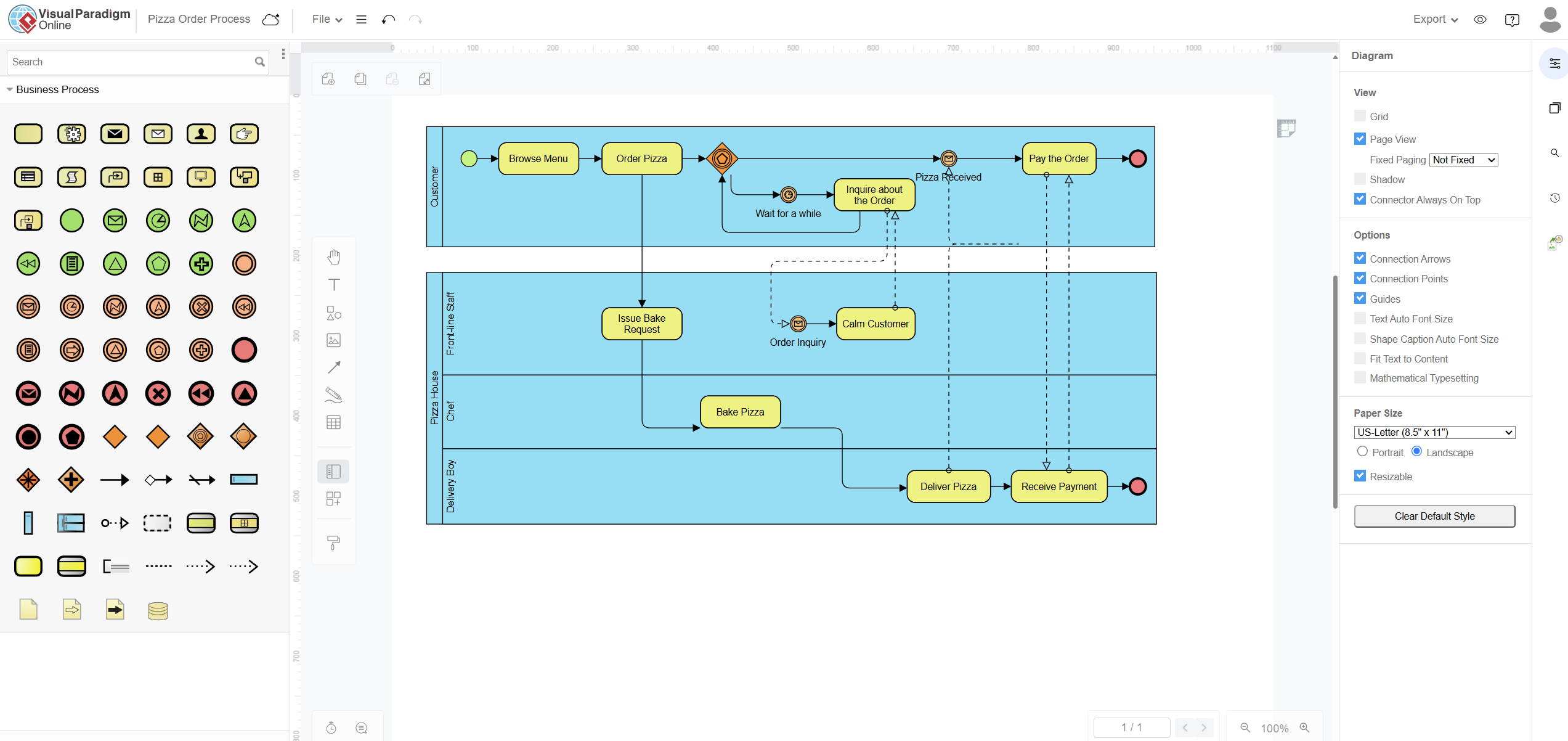
In the world of Business Process Management (BPM), clarity is the most valuable asset. To achieve this, professionals rely on Business Process Model and Notation (BPMN), a standard for modeling business processes in a graphical notation. In this tutorial, we will deconstruct a real-world example: the Pizza Order Process modeled in Visual Paradigm Online.
By analyzing this diagram, you will learn how to organize complex workflows using swimlanes, manage parallel tasks with gateways, and visualize communication between different roles using message flows.
1. Understanding the Structure: Swimlanes and Participants
The most fundamental concept in this diagram is the Swimlane (or Pool). Swimlanes divide the process diagram horizontally to show which role or department is responsible for each activity. This prevents ambiguity regarding “who does what.”
- Customer Lane (Top): Represents the external actor initiating the request. All actions here are driven by the customer’s intent.
- Front-in’s Staff Lane (Middle): Represents the administrative team handling orders and customer service.
- Operations Lane (Bottom): This combined lane handles the physical fulfillment, split between the Pizza Oven Chef (production) and the Delivery Boy (logistics).
2. The Sequence Flow: Tracing the Customer Journey
The solid lines connecting the shapes represent the Sequence Flow. This dictates the order of activities within a specific lane. Let’s trace the start of the process:
- Start Event: The process begins with a green circle. This indicates the trigger for the entire workflow.
- Task: Browse Menu: The customer interacts with the menu (likely a digital interface).
- Task: Order Pizza: The customer finalizes their selection.
3. Managing Complexity: The Parallel Gateway
Once the order is placed, the diagram encounters a diamond shape. This is a Gateway, a decision point or a splitting point in the logic. In this specific diagram, it appears to be a Parallel Gateway (AND Gateway).
Why parallel? Because the process splits into two simultaneous paths that must happen at the same time:
- Path A (The Wait): The customer enters a “Wait for a while” loop. They are stuck in a state of waiting for the pizza to be ready.
- Path B (The Production): The Staff lane immediately receives the signal to “Issue Bake Request.”
This logic ensures that while the kitchen is busy baking, the customer is simultaneously moving toward the payment phase. The process does not wait for one to finish before starting the other; they run in parallel.
4. Communication: Message Flows vs. Sequence Flows
This is the most critical technical distinction in BPMN. Sequence flows (solid arrows) happen inside a lane. Message Flows (dashed lines with an envelope icon) happen between lanes.
Let’s look at the “Order Inquiry” scenario:
- External Communication: Notice the dashed line connecting Inquire about the Order (Customer Lane) and Calm Customer (Staff Lane). This is a Message Flow. It signifies that the customer sends a message (a query) to the staff.
- Feedback Loop: The staff responds with Order Inquiry (which seems to be a typo in the model, likely meaning “Response to Inquiry”), sending a message back to the customer. This creates a dialogue loop that is external to the main production process.
5. The Backend: Production and Fulfillment
While the customer waits, the backend workflow executes efficiently:
- Issue Bake Request: The staff formally notifies the kitchen.
- Bake Pizza: The Chef performs the core value-adding activity.
- Deliver Pizza: The Delivery Boy takes over, bridging the gap between the kitchen and the customer.
6. The Conclusion: Payment and Termination
The process converges at the end. The customer performs Pay the Order (a task in their lane), which triggers a message flow to the Delivery Boy’s lane to Receive Payment. Finally, the red circle with the thick border indicates the End Event, signifying that the transaction is complete and the process has terminated.
By breaking down this diagram, we see how Visual Paradigm Online allows us to model not just the work, but the interactions and concurrency inherent in real-world business operations.
Related posts:
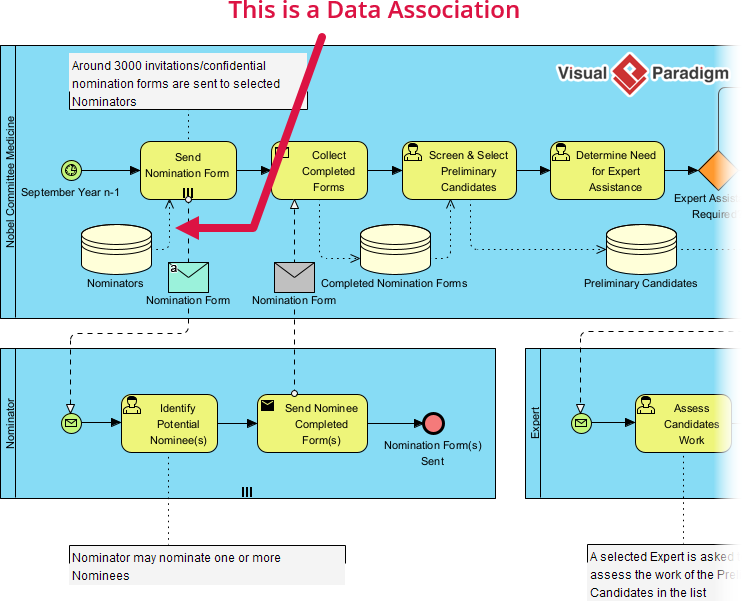 Mastering Data Association in BPMN Diagrams: A Visual Guide
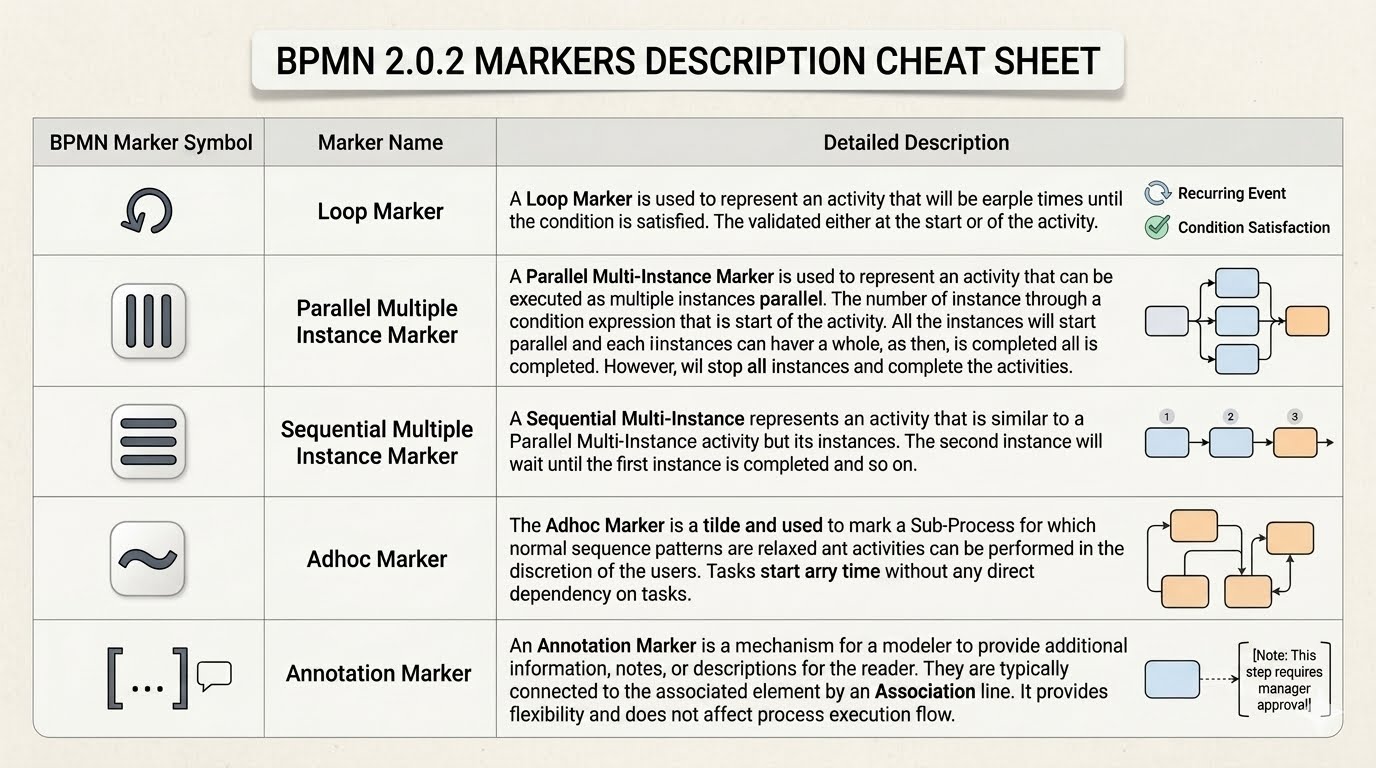 Mastering BPMN 2.0 Markers: The Hidden Modifiers That Control Process Execution
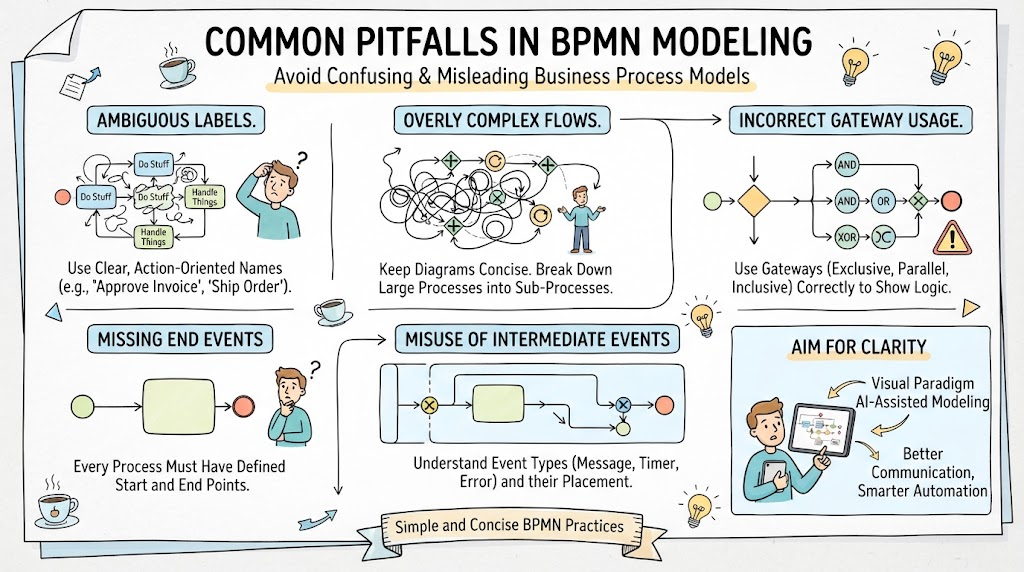 Mastering BPMN: A Guide to Avoiding Common Modeling Pitfalls
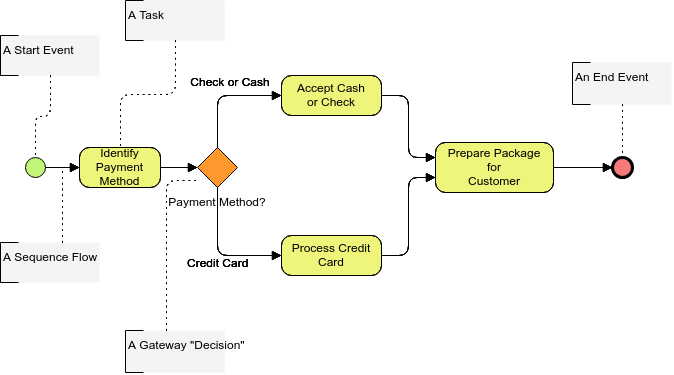 Mastering BPMN Basics: A Step-by-Step Guide to Process Modeling with Start Events, Gateways, and Tasks