C4

The Evolution of C4 Modeling: A Synergistic Approach

The Evolution of C4 Modeling: A Synergistic Approach

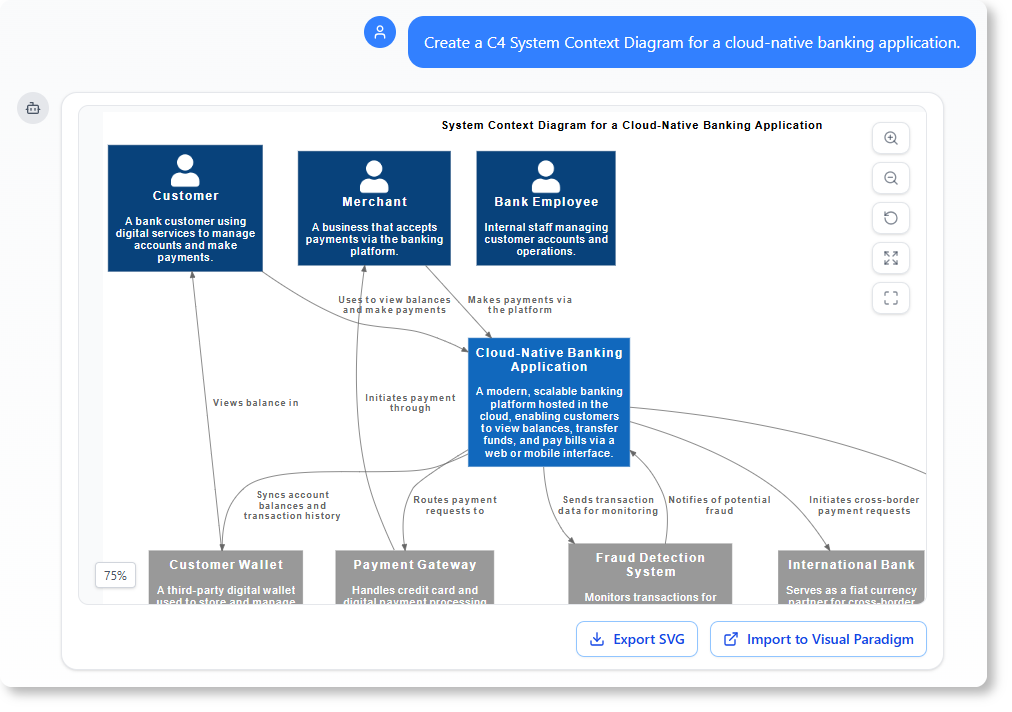
Tooling Synergy: Visual Paradigm + AI Chatbot + VPasCode Creating and maintaining C4 diagrams manually is error-prone. The combination of Visual Paradigm (VP), AI Chatbot, and VPasCode creates a powerful workflow. Why Use This Stack? Tool Role Benefit in C4 Modeling Visual Paradigm Modeling Platform Native C4 support, enterprise repository, multi-format export, and traceability to requirements. AI Chatbot Intelligent Assistant Generates VPasCode from natural language, validates C4 syntax, suggests missing relationships, and explains architectural decisions. VPasCode Scripting Language Text-based diagram definition (similar to PlantUML), version-controllable, enables CI/CD integration, and bulk editing.

Bridging the Gap with the C4 Model: A Deep Dive into Container Diagrams

Bridging the Gap with the C4 Model: A Deep Dive into Container Diagrams

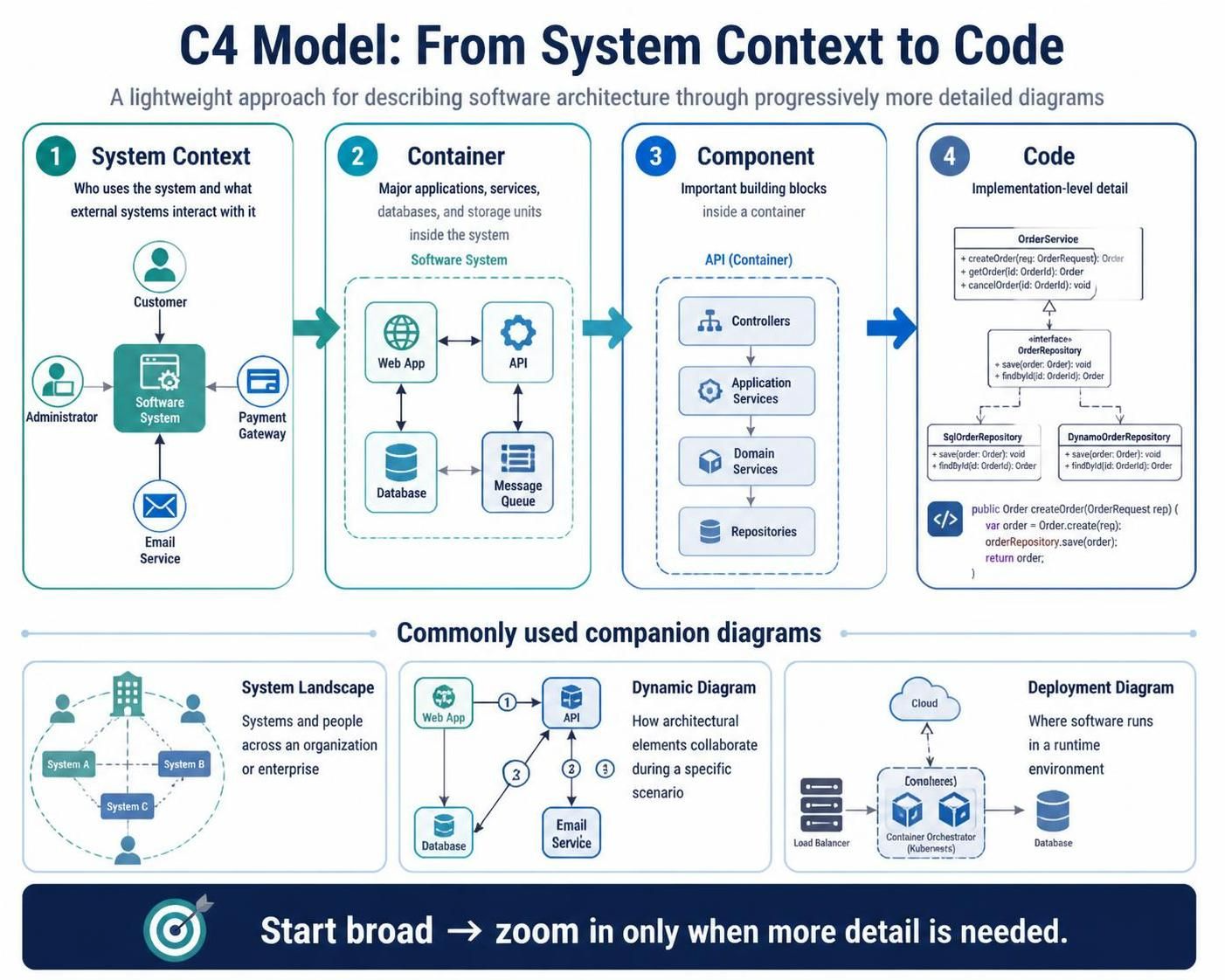
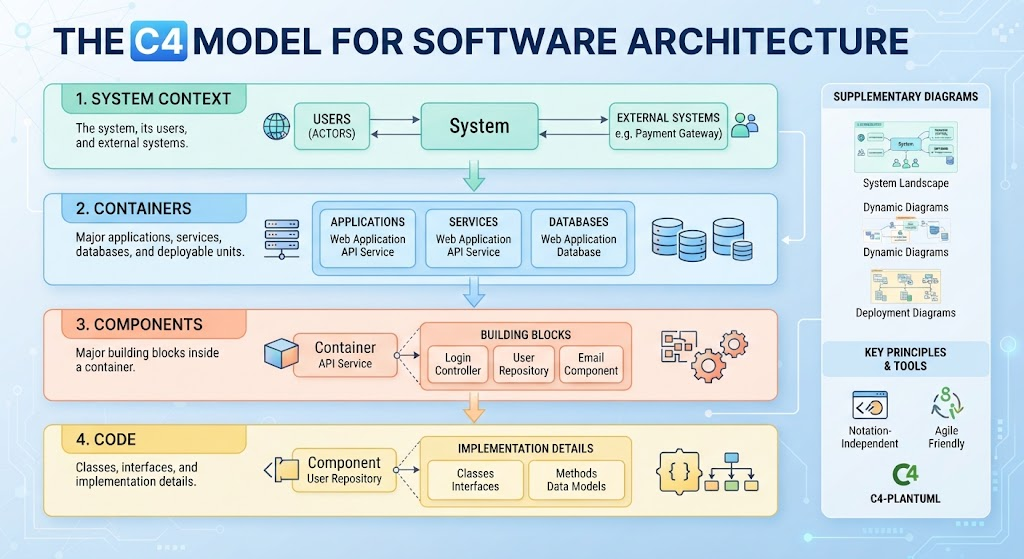
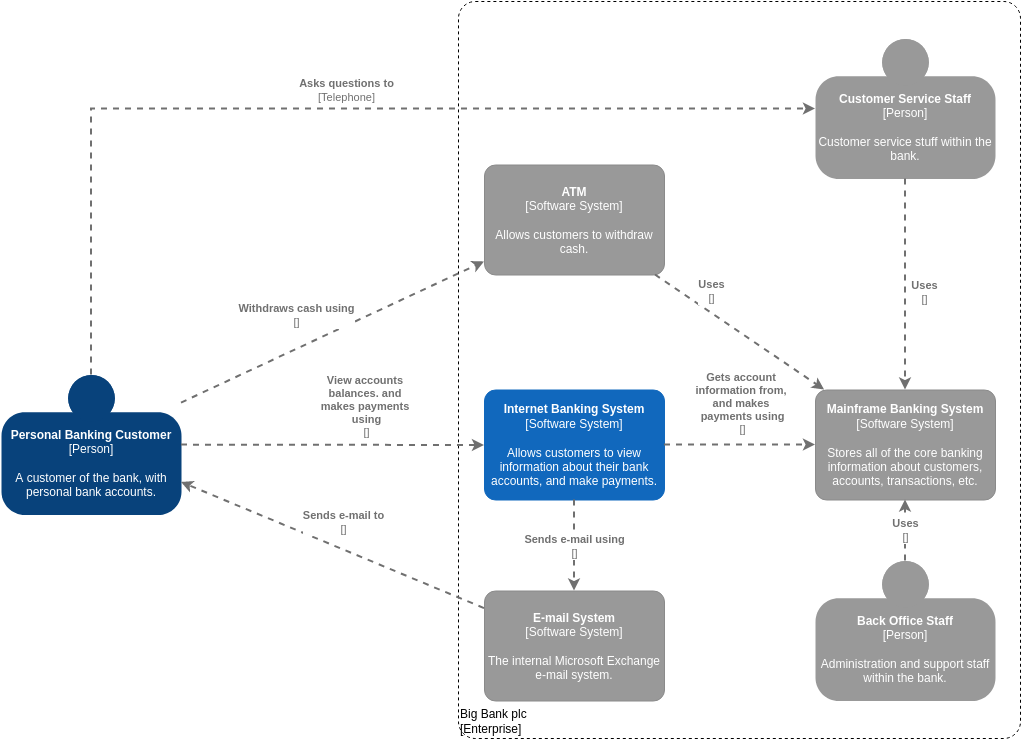
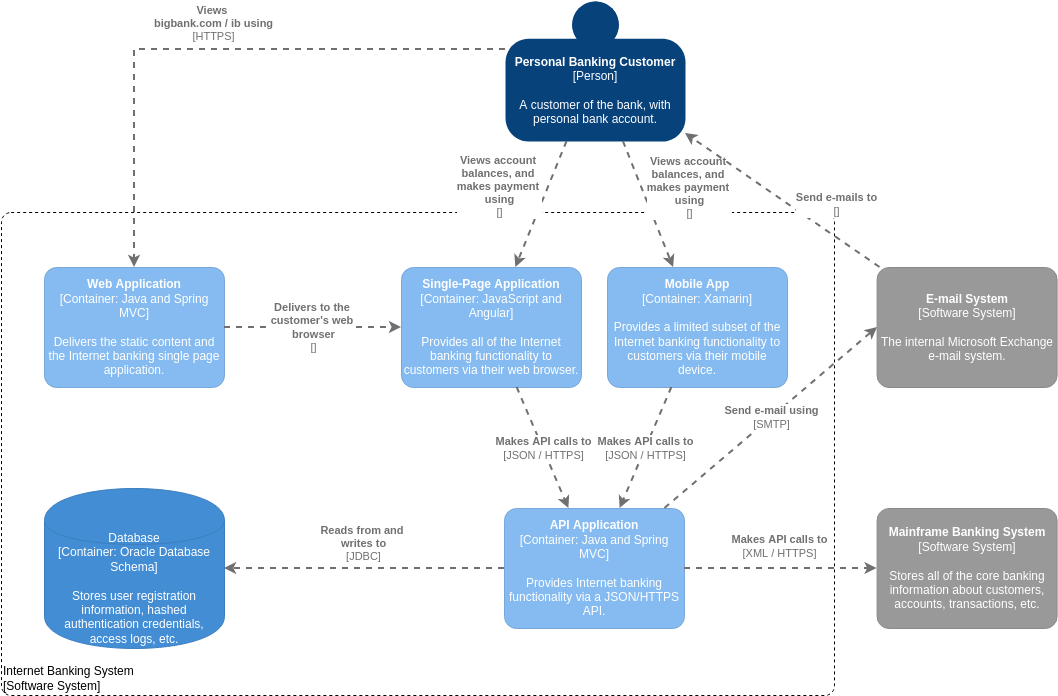
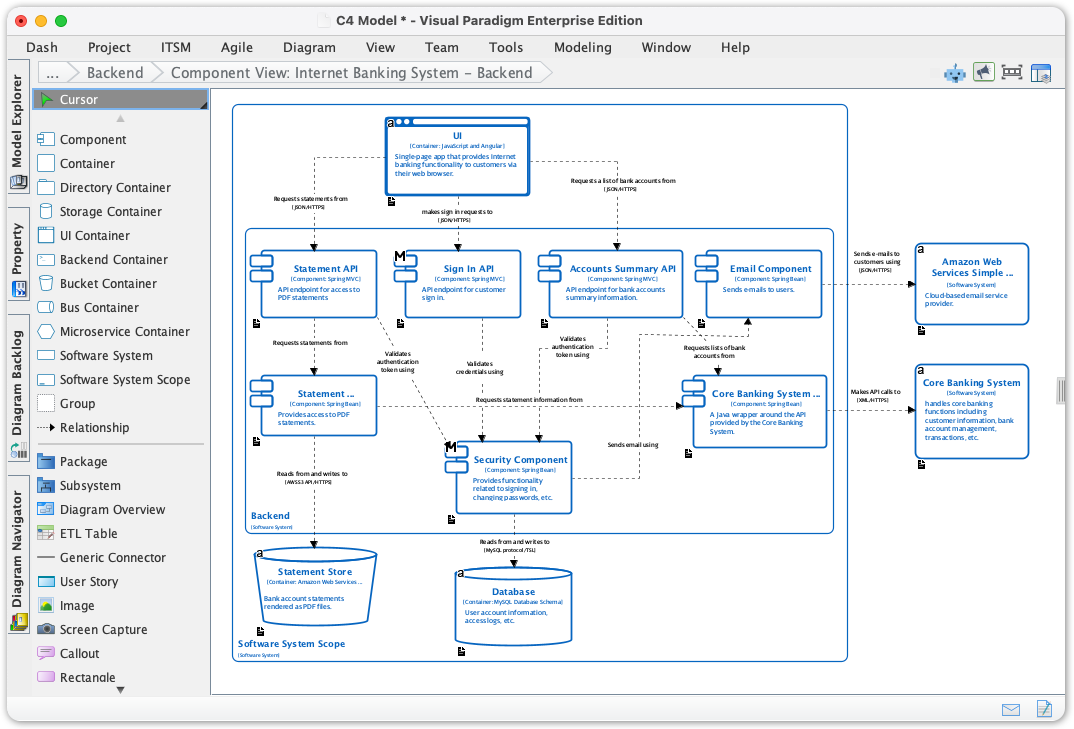
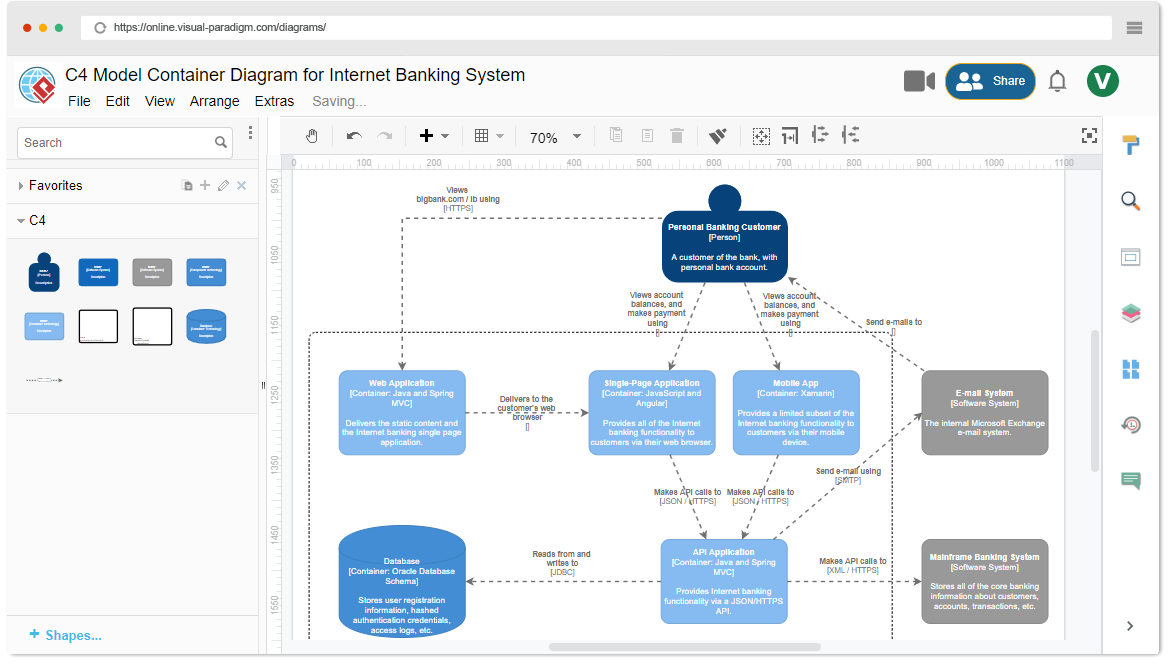
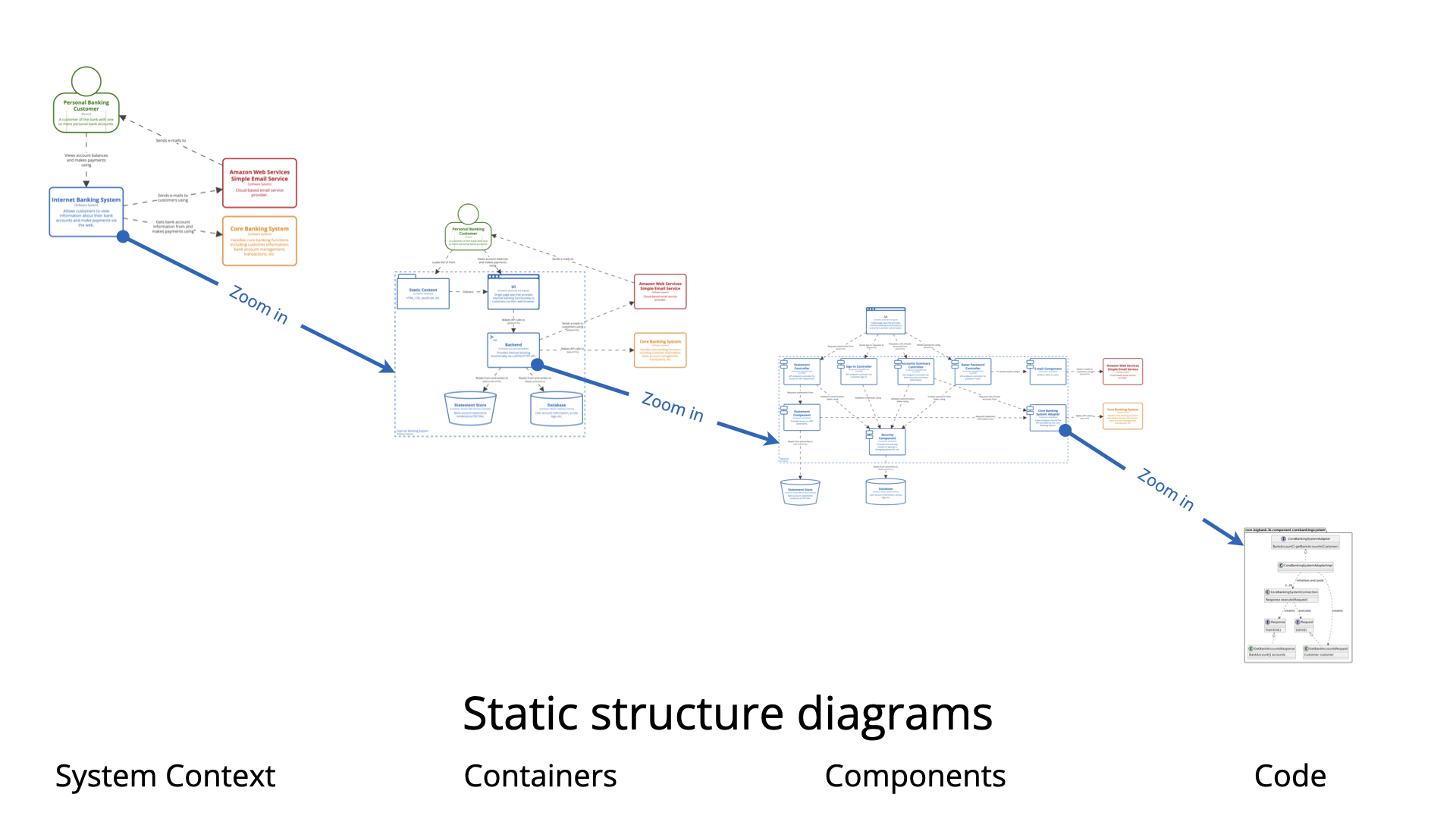
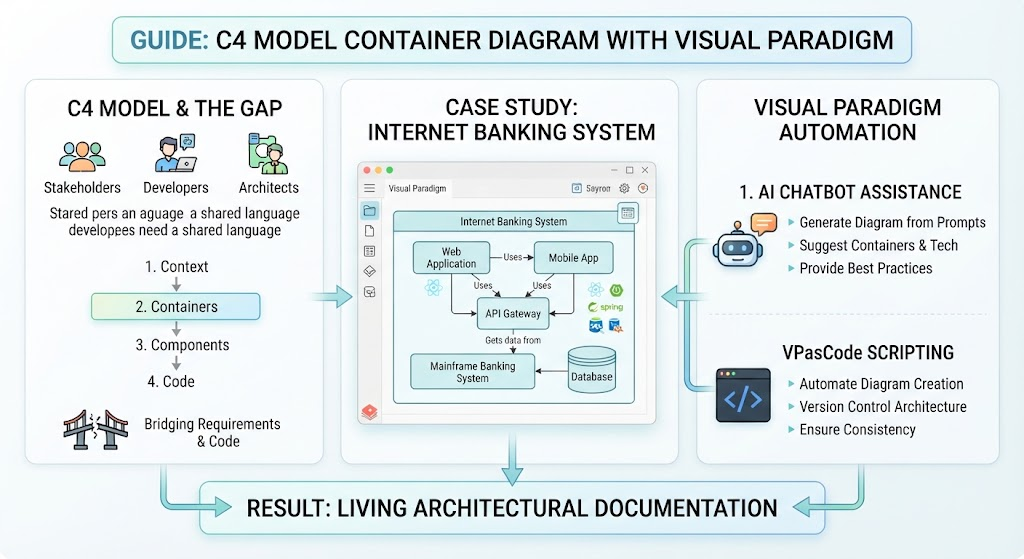
In modern software architecture, the gap between high-level business requirements and low-level code implementation is often where projects fail. Stakeholders need context, developers need structure, and architects need a shared language. The C4 model (Context, Containers, Components, and Code) has emerged as the industry standard for visualizing software architecture at varying levels of abstraction. This guide focuses specifically on the Container Diagram, the second level of the C4 model, using the “Internet Banking System” as a practical case study. We will explore how to leverage Visual Paradigm, its AI Chatbot, and the VPasCode scripting language to create, maintain, and evolve these diagrams efficiently. By integrating AI-driven assistance with Infrastructure-as-Code principles, teams can transform static diagrams into living architectural documentation.

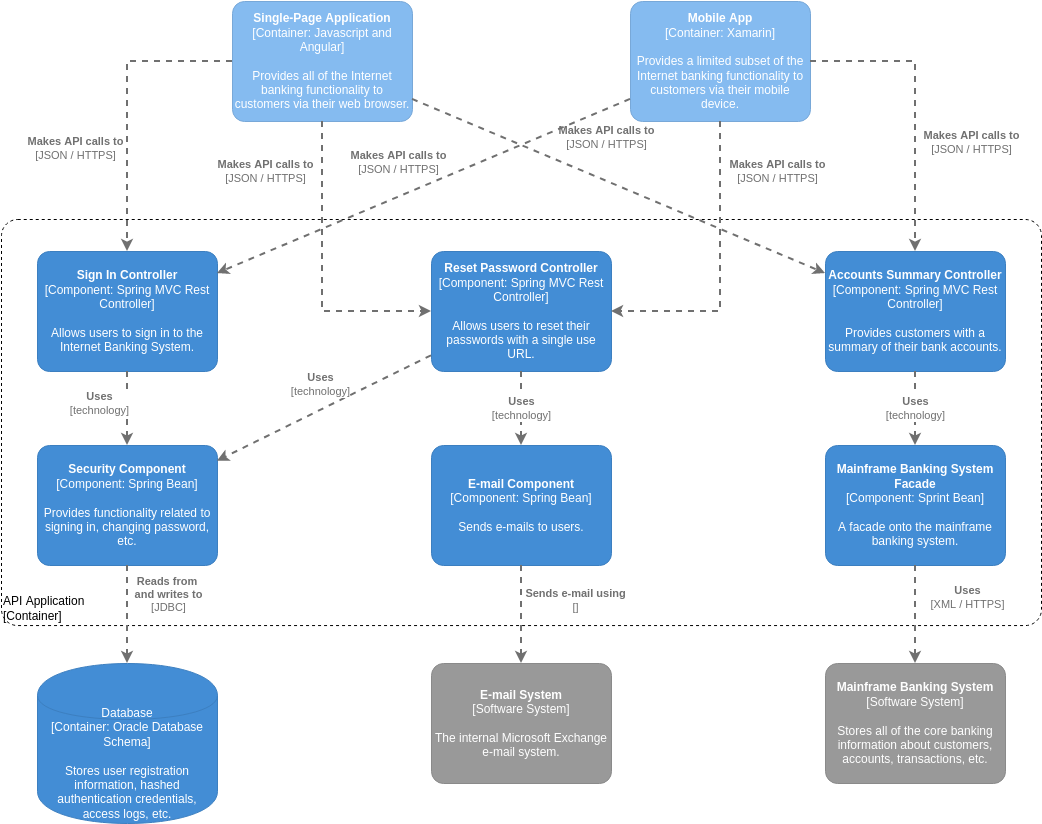
C4: PlantUML Component Diagram Account Service ASP.NET

C4: PlantUML Component Diagram Account Service ASP.NET

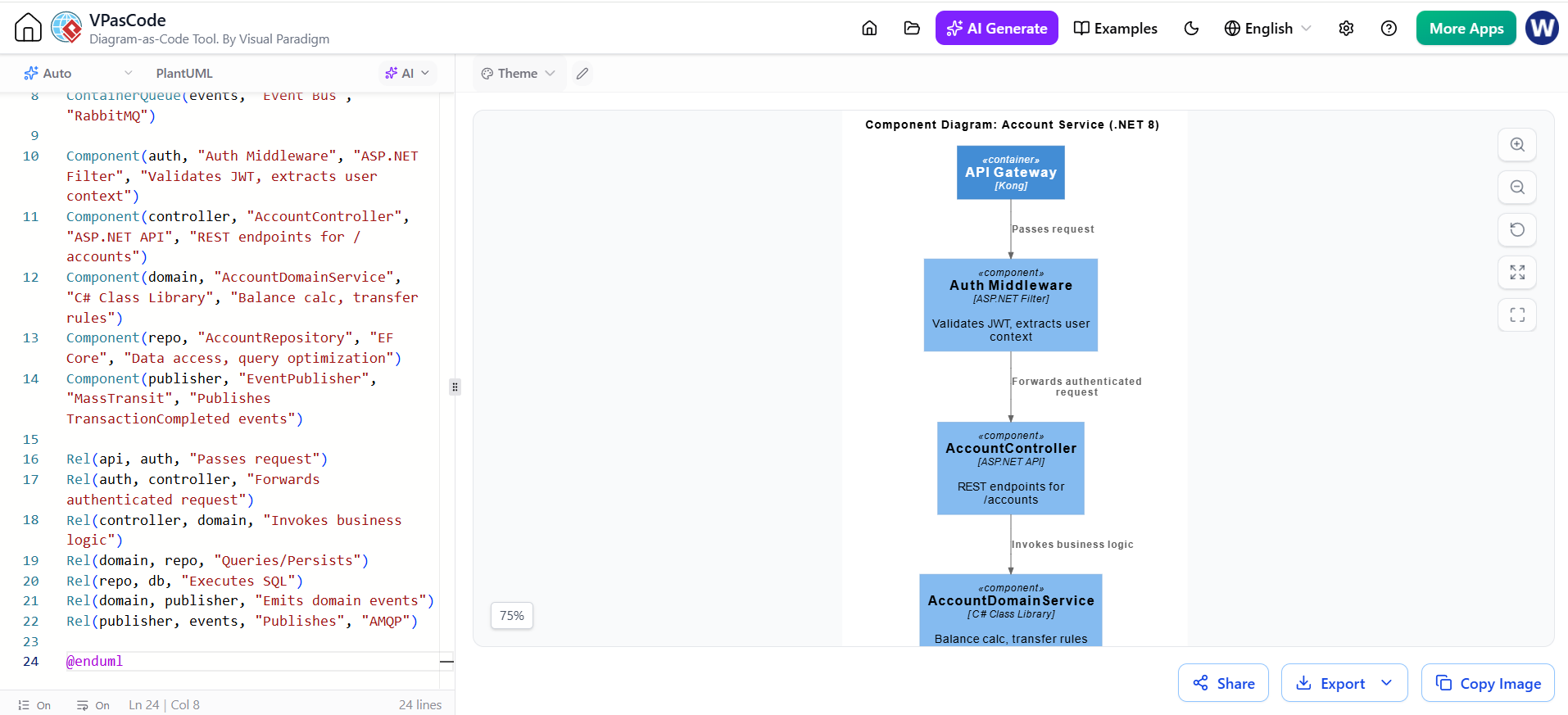
C4: The screenshot displays a PlantUML component diagram titled “Account Service (.NET 8)” within a VPasCode editor, illustrating a request flow from an API Gateway through an Auth Middleware and AccountController down to the AccountDomainService. The left panel shows the underlying code generating this architecture, while the right panel renders the corresponding graphical representation with components connected by directional arrows indicating data passage and logic invocation.

Scroll to Top