


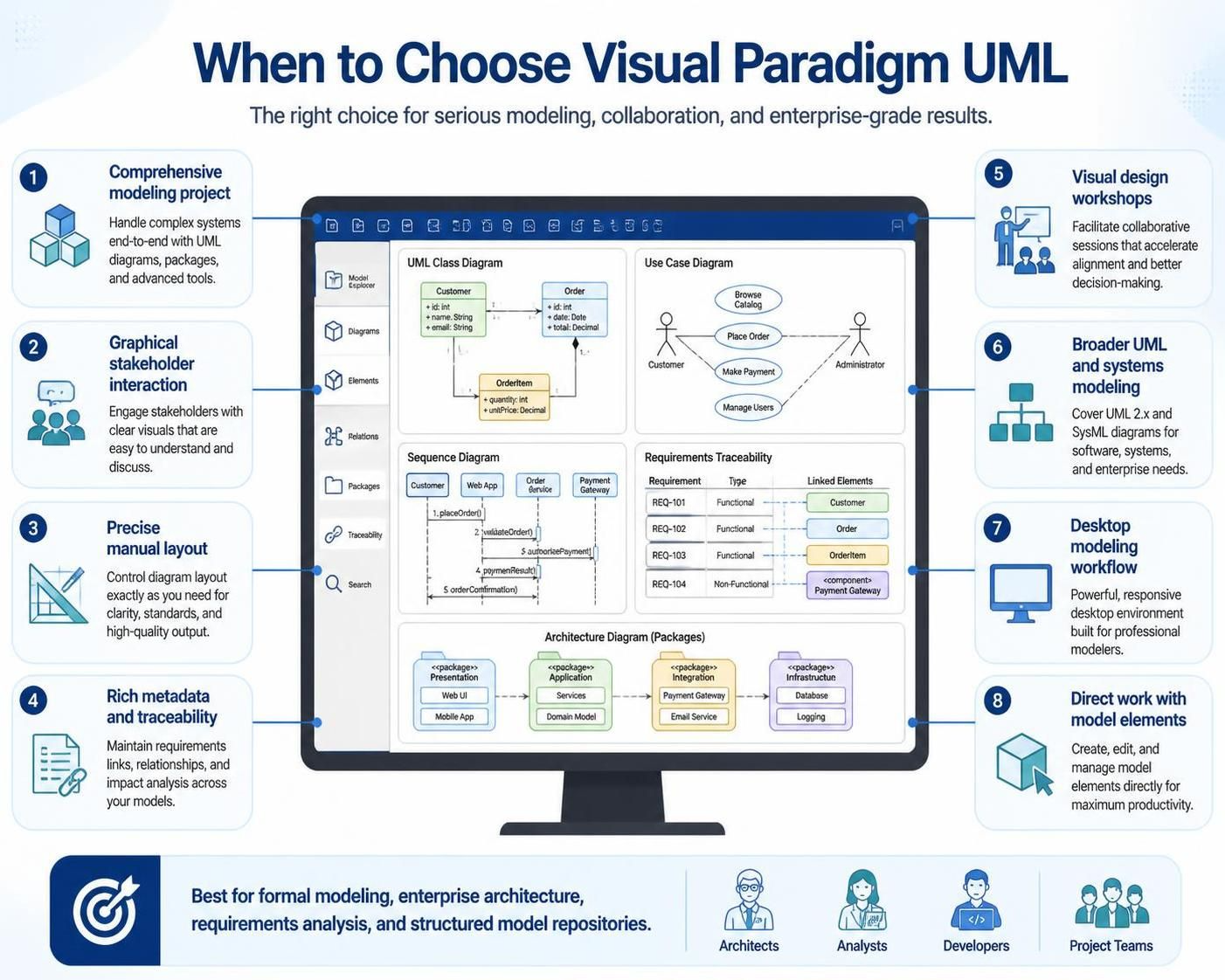
In the complex landscape of software engineering and enterprise architecture, selecting the right modeling tool is often as critical as the architecture itself. While many tools offer rapid prototyping or simple diagramming, serious architectural work requires a robust environment capable of handling complexity, metadata, and structured workflows. This tutorial explores the strategic advantages of choosing Visual Paradigm UML for comprehensive modeling projects, specifically examining its synergy with VPasCode for modern development needs.
The Power of a Comprehensive Modeling Project
When initiating a project that spans from high-level requirements to detailed code generation, the distinction between a simple drawing tool and a true modeling platform becomes apparent. Visual Paradigm UML is designed for comprehensive modeling projects where the diagram is not an isolated artifact but a living part of a structured model repository.
This approach is essential for:
- Enterprise Architecture: Managing systems of systems where interdependencies are complex.
- Requirements Analysis: Linking business needs directly to technical specifications.
- Formal Modeling: Ensuring strict adherence to UML 2.x and SysML standards.
Stakeholder Interaction and Visual Workshops
One of the most significant friction points in software development is the communication gap between technical teams and business stakeholders. Visual Paradigm UML addresses this by prioritizing graphical stakeholder interaction.
The tool facilitates visual design workshops where complex logic can be mapped out in real-time. By utilizing clear visuals—such as the Use Case diagrams and Class diagrams shown in the interface—the tool allows non-technical stakeholders to:
- Understand system flows without reading technical documentation.
- Provide immediate feedback on alignment and logic.
- Accelerate decision-making through collaborative sessions.
Manual Layout Control and Precision
While automated layout engines are convenient, they often struggle with specific presentation requirements. In professional documentation, precise manual layout control is a necessity. Visual Paradigm UML empowers analysts and architects to:
- Control diagram layout exactly as needed for clarity.
- Ensure standards compliance in the final output.
- Produce high-quality, print-ready diagrams.
VPasCode Integration: The Bridge to Code
A key feature of the modern Visual Paradigm ecosystem is the integration with VPasCode. This tooling bridges the gap between abstract modeling and concrete implementation. Unlike simple reverse engineering tools, VPasCode allows for a more dynamic workflow where:
- Code is treated as a first-class citizen within the model.
- Model elements can be created and managed directly for maximum productivity.
- Developers can work directly with model elements to ensure the code reflects the design.
Rich Metadata and Traceability
The true strength of a desktop modeling workflow lies in its ability to handle rich metadata and traceability relationships. In the context of enterprise architecture, a diagram is only as good as the data it connects.
Visual Paradigm UML excels in this area by maintaining:
- Requirements Links: Ensuring every feature traces back to a business need.
- Relationships: Mapping dependencies between components, packages, and services.
- Impact Analysis: Allowing architects to see how a change in one part of the model affects the rest of the system.
Target Audience: Architects and Analysts
This tool is a strong choice for formal modeling, enterprise architecture, and projects where diagrams are managed as part of a larger structured model. It is specifically tailored for:
- Architects: Who need to visualize system structure and infrastructure.
- Analysts: Who focus on requirements and business processes.
- Developers: Who utilize VPasCode to generate or reverse-engineer code.
- Project Teams: Who require a single source of truth for the entire project lifecycle.
Conclusion
Choosing the right modeling tool is a strategic decision. When you need broader UML and systems modeling capabilities, require precise control over your visual output, and need to facilitate collaboration across technical and non-technical teams, Visual Paradigm UML stands out as the industry standard for enterprise-grade results.