


Mastering UML Class Diagrams: From Construction Plans to Object Instances
Master UML Class Diagrams to distinguish between class blueprints and object instances, while learning to control data access using visibility markers.
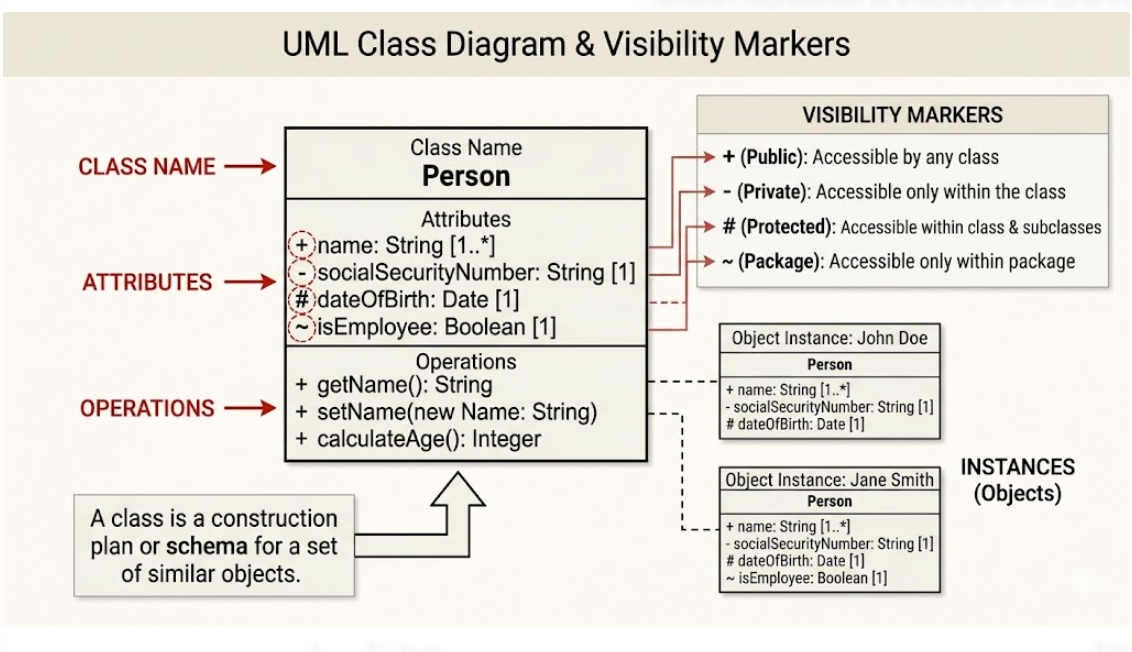
Master UML Class Diagrams to distinguish between class blueprints and object instances, while learning to control data access using visibility markers.
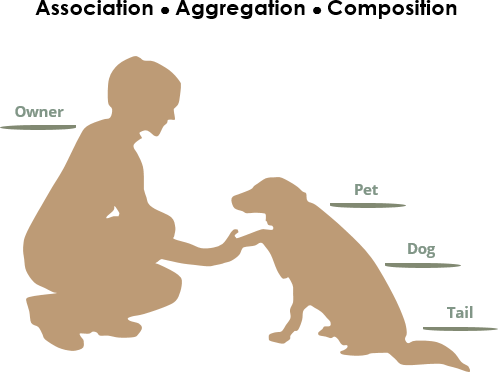
Learn to distinguish UML Association, Aggregation, and Composition using real-world Owner, Pet, Dog, and Tail examples to master system lifecycle modeling.
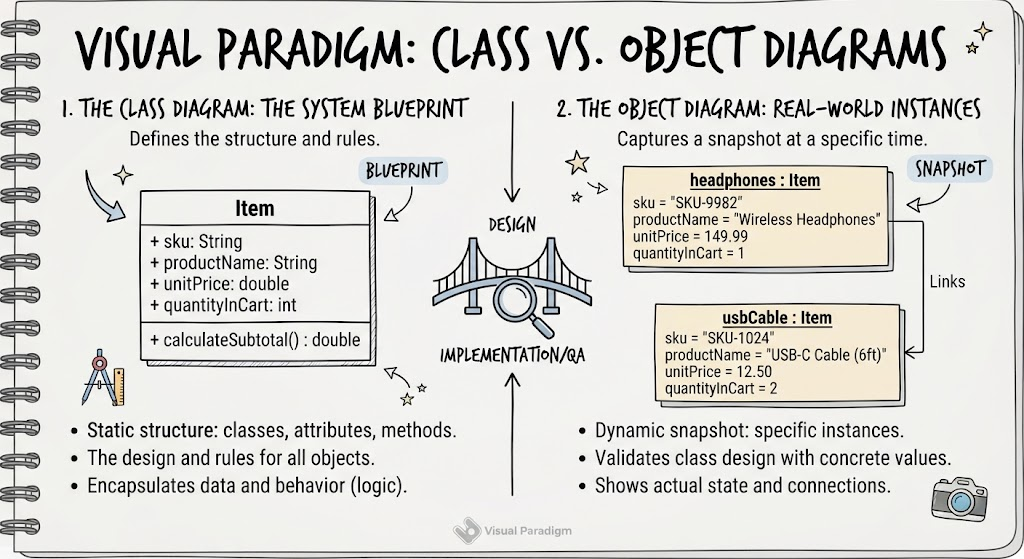
Master Visual Paradigm to distinguish Class vs. Object Diagrams in UML. Learn to model e-commerce systems effectively using VPa Code for seamless design-to-implementation.
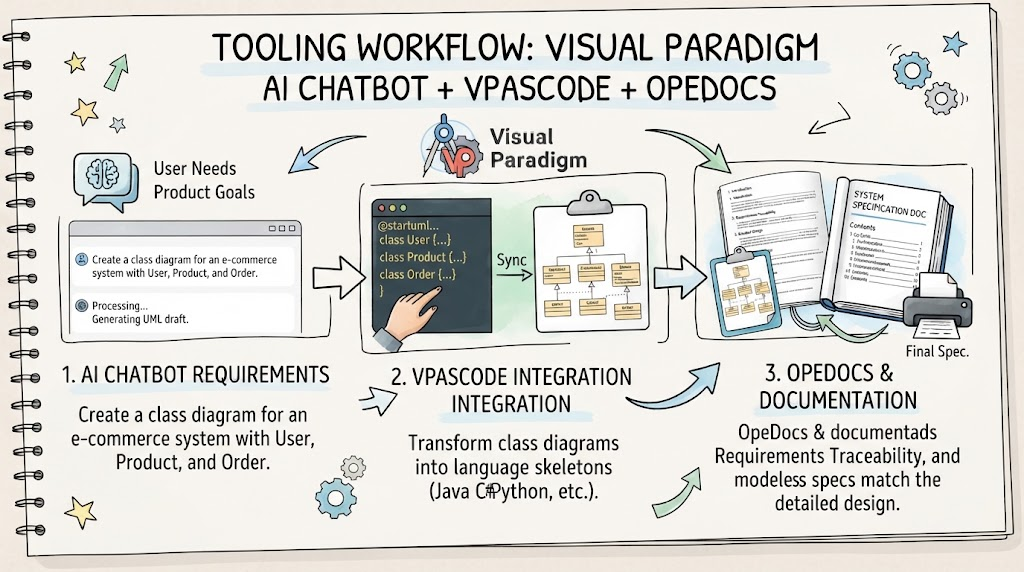
Discover how AI-driven workflows in Visual Paradigm transform abstract ideas into UML blueprints using chatbots, VP4Code, and OpenDoc for automated documentation.
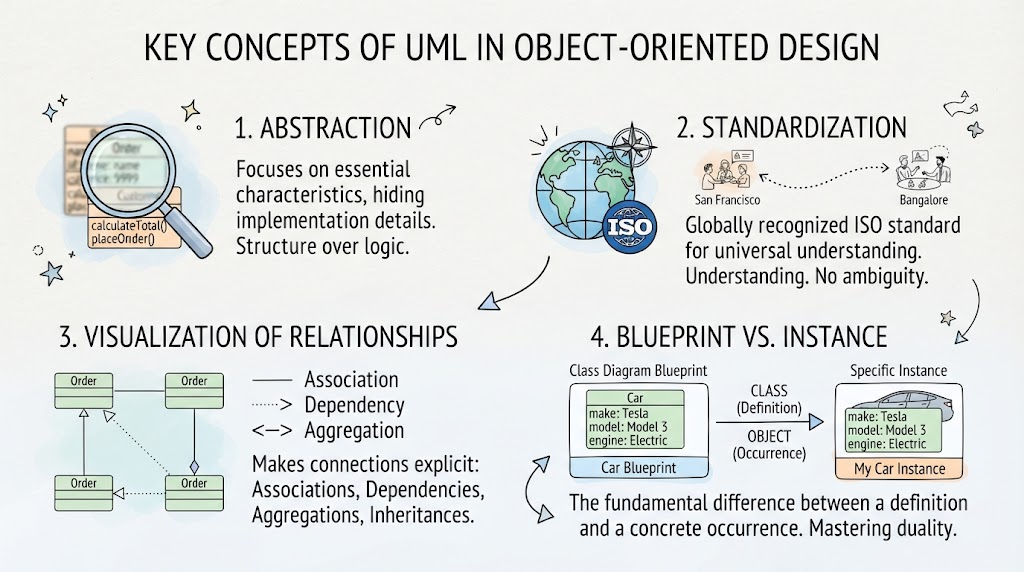
Master UML’s four fundamental pillars: abstraction, standardization, relationship visualization, and the blueprint-instance distinction for effective object-oriented design.
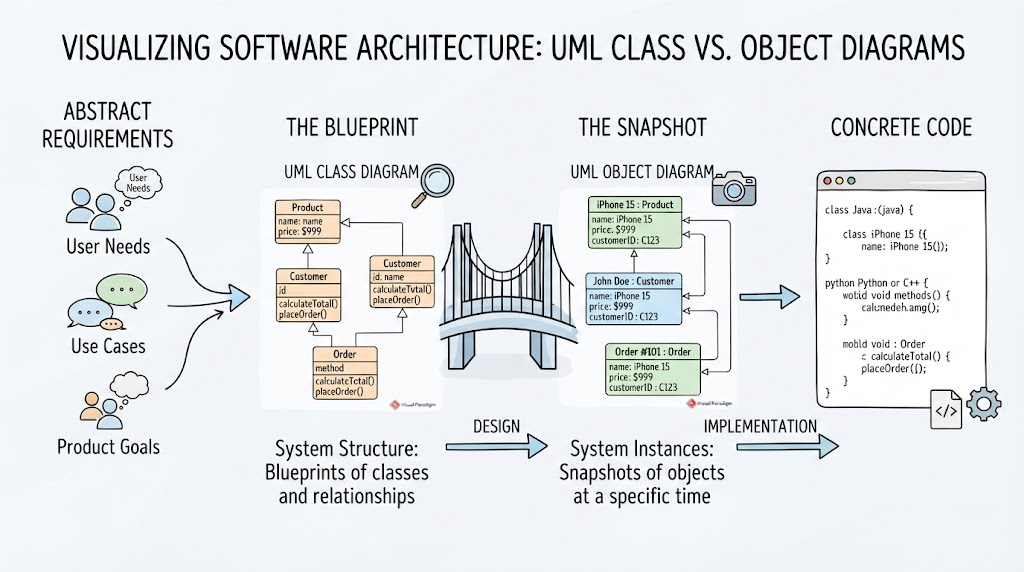
Master the UML Class and Object Diagrams to transform abstract requirements into concrete code. Learn how these essential OOD blueprints and snapshots drive effective software architecture.
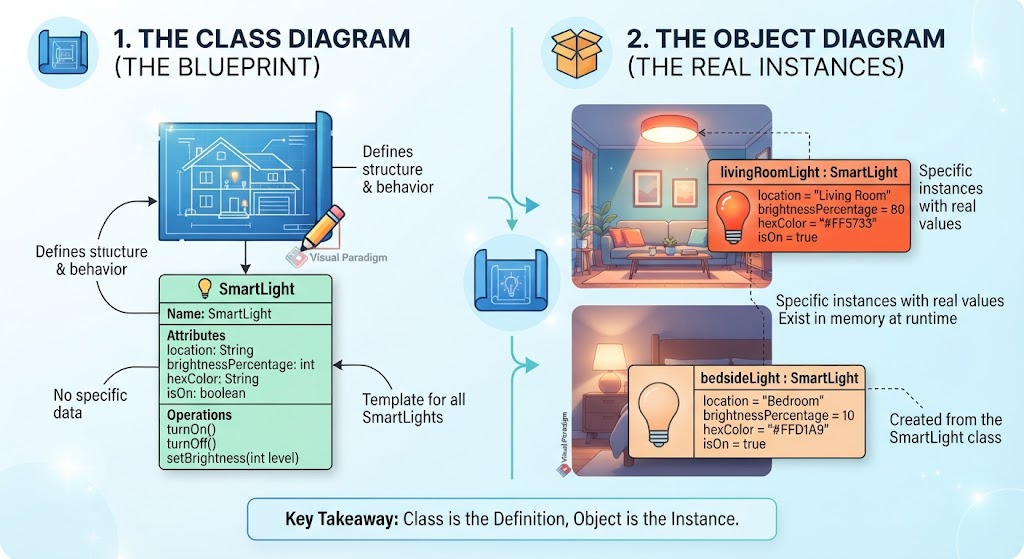
Learn to distinguish UML Class and Object Diagrams using a Smart Home scenario to master system structure versus runtime state.
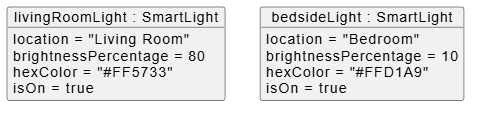
Learn to distinguish class blueprints from concrete object instances using Visual Paradigm. Master Object Diagrams to visualize real-time Smart Lighting system states and attribute values.
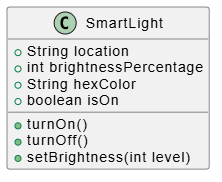
Master Object-Oriented Design by learning how the SmartLight class blueprint drives scalable smart home systems and distinguishes classes from instances.
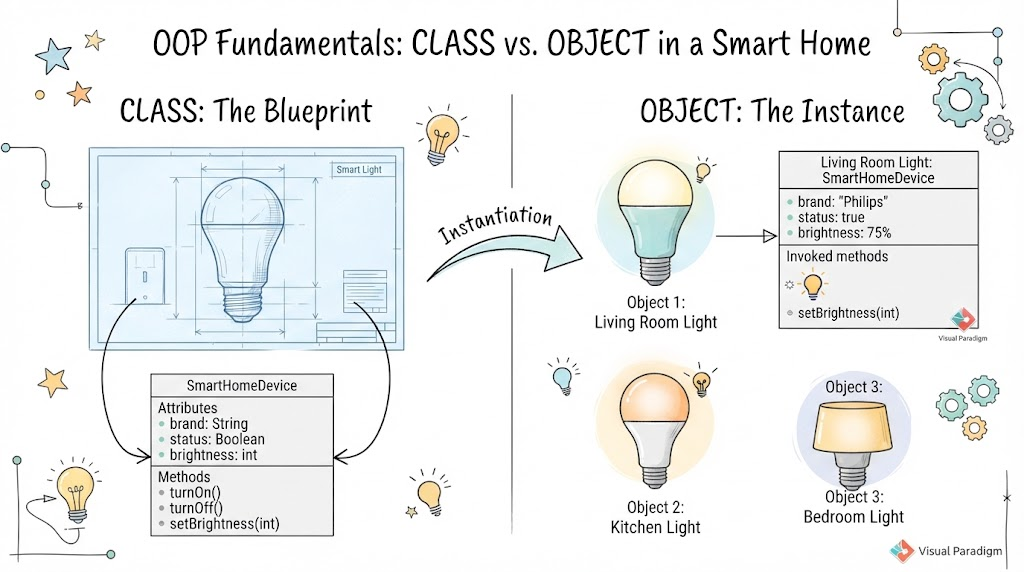
Master OOP fundamentals by visualizing Smart Home systems through UML Class and Object diagrams to distinguish between blueprints and instances.
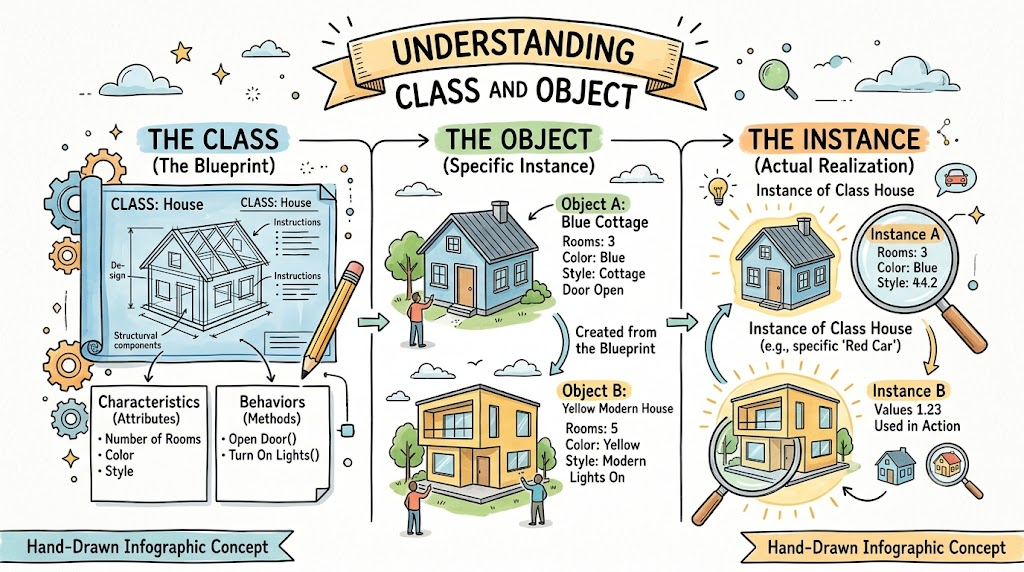
Master classes, objects, and instances to build robust systems. Learn their distinct roles in OOP and UML modeling for scalable software architecture.
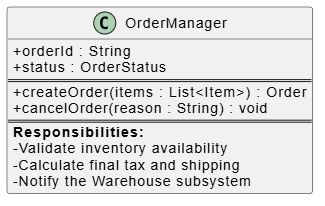
Learn to extend UML class diagrams in Visual Paradigm by implementing custom “Responsibilities” compartments to clarify design contracts and enhance code reviews.