


Welcome to the World of BPMN
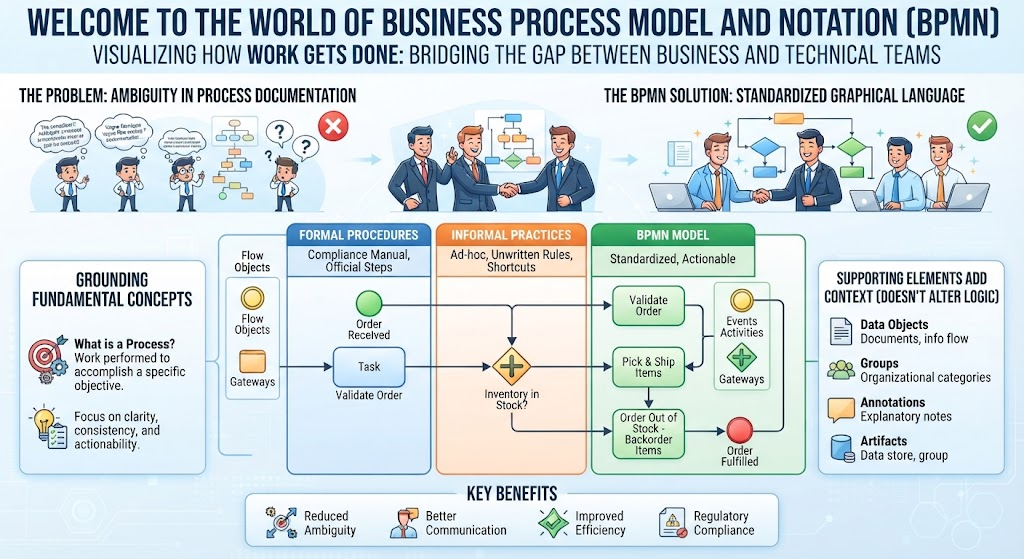
Hello and welcome to today’s tutorial session. We are about to dive deep into a powerful framework known as Business Process Model and Notation, or simply BPMN. Think of this as the universal language for business processes. Our goal today is to understand how we can visualize exactly how work gets done, effectively bridging the often-damaging gap between business stakeholders and technical teams.
The Problem: Ambiguity in Process Documentation
Let’s start by identifying the challenge we are trying to solve. In many organizations, we face a significant problem known as ambiguity. Imagine a scenario where business users rely on complex compliance manuals and official steps, while the actual work gets done through ad-hoc, unwritten rules and shortcuts. When you try to document this, you often end up with a confusing mix of formal procedures and informal practices that don’t align. This disconnect leads to errors, frustration, and a lack of clarity.
The Solution: A Standardized Graphical Language
The remedy for this confusion is the adoption of a standardized graphical language: the BPMN model. Instead of relying on text-heavy manuals or vague mental models, BPMN allows us to create a visual map of the workflow. This model acts as a bridge. It takes the rigidity of formal compliance manuals and the reality of informal practices and synthesizes them into a single, standardized, and actionable diagram.
Grounding Fundamental Concepts
Before we draw our first diagram, we must ground ourselves in the fundamental concept of a process. Simply put, a process is any work performed to accomplish a specific objective. The focus of BPMN is on clarity, consistency, and actionability. By using this standard, we ensure that everyone—from the executive to the developer—is looking at the same map.
Mapping the Workflow
Let’s look at how the mapping works in practice. Imagine an order fulfillment scenario. On the left, you have the Formal Procedures, such as a compliance manual stating that an “Order Received” triggers a “Task” to “Validate Order.” In the middle, you have the Informal Practices, which might include unwritten rules or shortcuts, such as a quick check for “Inventory in Stock.”
The BPMN model brings these together. It visualizes the flow: you receive an order, you validate it, and then you move to the next step. If there is inventory, you proceed to “Pick & Ship Items.” If there is not, you might trigger a “Backorder.” This visual representation turns a complex set of rules into a logical flow.
Understanding the Building Blocks
BPMN uses specific shapes and symbols to represent different types of activities. You will often see Flow Objects like tasks (rectangles) and gateways (diamonds) which represent decisions. You will also see Data Objects (documents) and Artifacts (groups or notes).
It is important to understand that supporting elements add context but do not alter the core logic of the process. For example, you might have a “Data Object” representing a customer invoice or a “Group” representing a specific organizational team. These elements help explain the “who” and “what” without changing the “how” of the process flow.
Key Benefits of Standardization
Why go through the effort of learning and implementing BPMN? The benefits are substantial. By standardizing your process documentation, you achieve:
- Reduced Ambiguity: Everyone knows exactly what the steps are.
- Better Communication: Business and IT teams can finally speak the same language.
- Improved Efficiency: Bottlenecks become visible and can be addressed.
- Regulatory Compliance: It is easier to prove that your processes meet legal and internal standards.
By the end of this session, you should see BPMN not just as a set of drawing rules, but as a vital tool for organizational clarity and success.
Related posts:
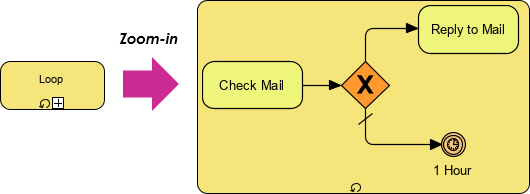 Mastering BPMN Loop Markers: A Practical Guide to Email Management
 Mastering BPMN Cross-Functional Flows: A Nobel Prize Process Analysis
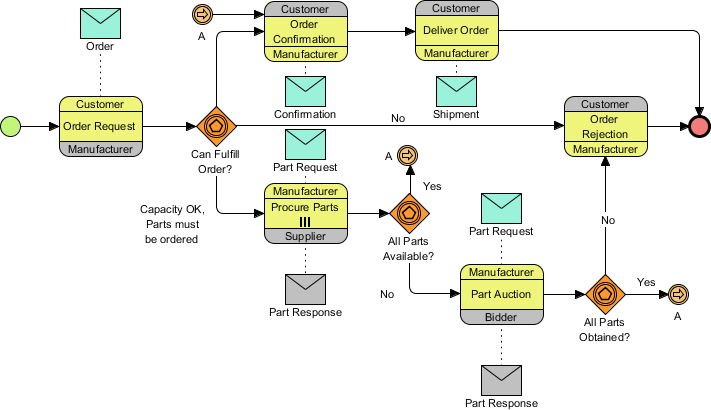 Mastering BPMN 2.0: Orchestrating Multi-Party Order Fulfillment with Choreography Diagrams
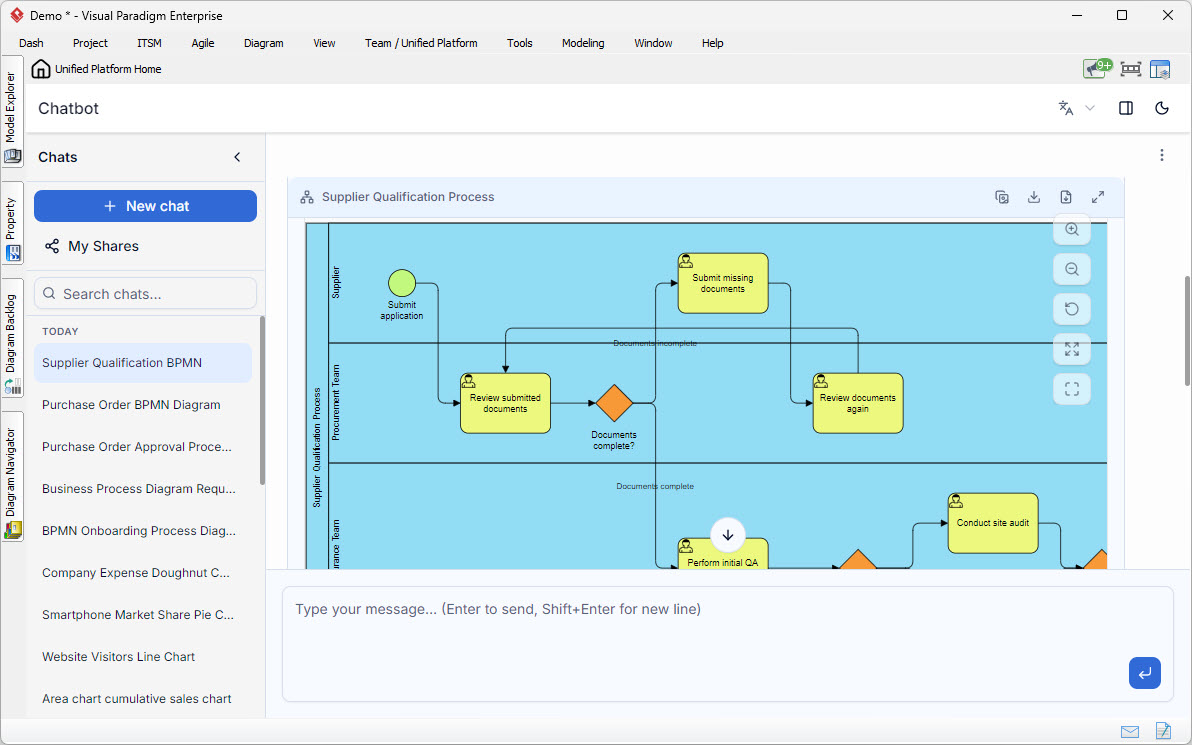 Mastering BPMN Swimlanes: A Deep Dive into the Supplier Qualification Process