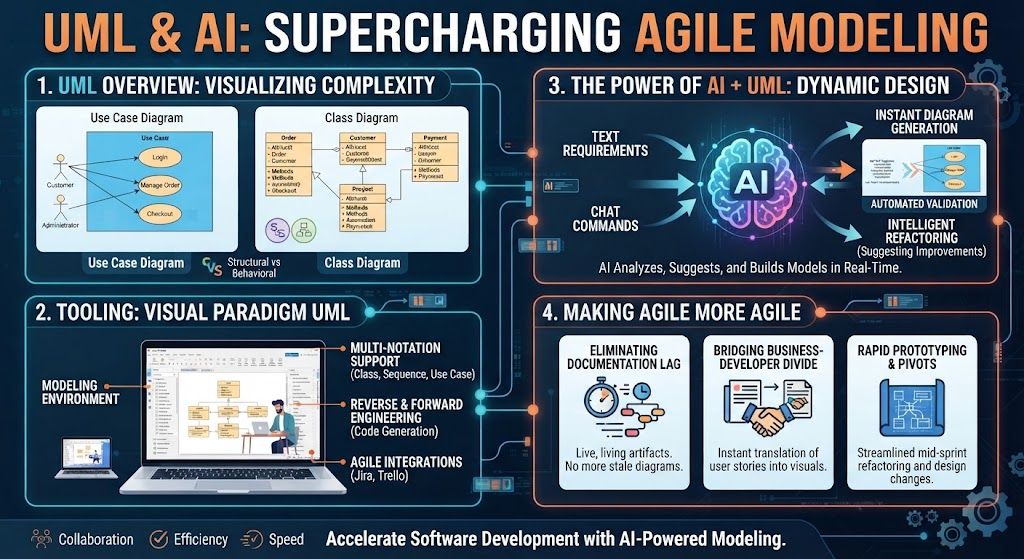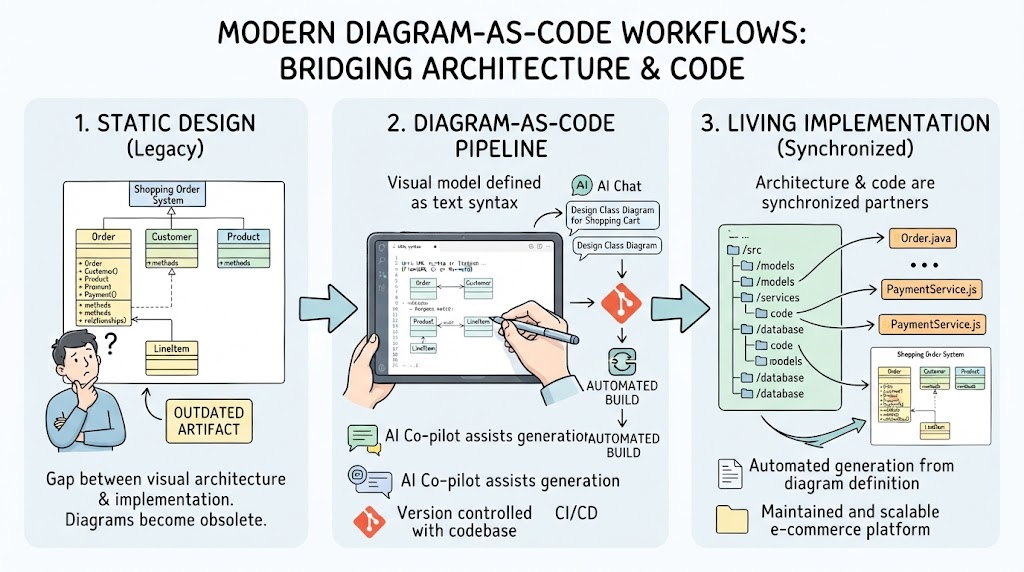
In the realm of modern software engineering, one of the most persistent challenges has been the friction between high-level architectural design and the messy reality of implementation. Historically, we have relied on UML diagrams to visualize complex systems like a Shopping Order System. However, these diagrams often suffered from a fatal flaw: they became “outdated artifacts.” As developers wrote code, the diagrams remained static, creating a dangerous disconnect where the visual representation no longer matched the living codebase.
Fortunately, the evolution of modeling tools has ushered in a new era. We are moving away from static drawings toward “Diagram-as-Code” workflows. This approach transforms diagrams from passive documentation into dynamic, maintainable software assets. Let us explore this evolution by analyzing the anatomy of a classic e-commerce system.
The Legacy Challenge: Static Design
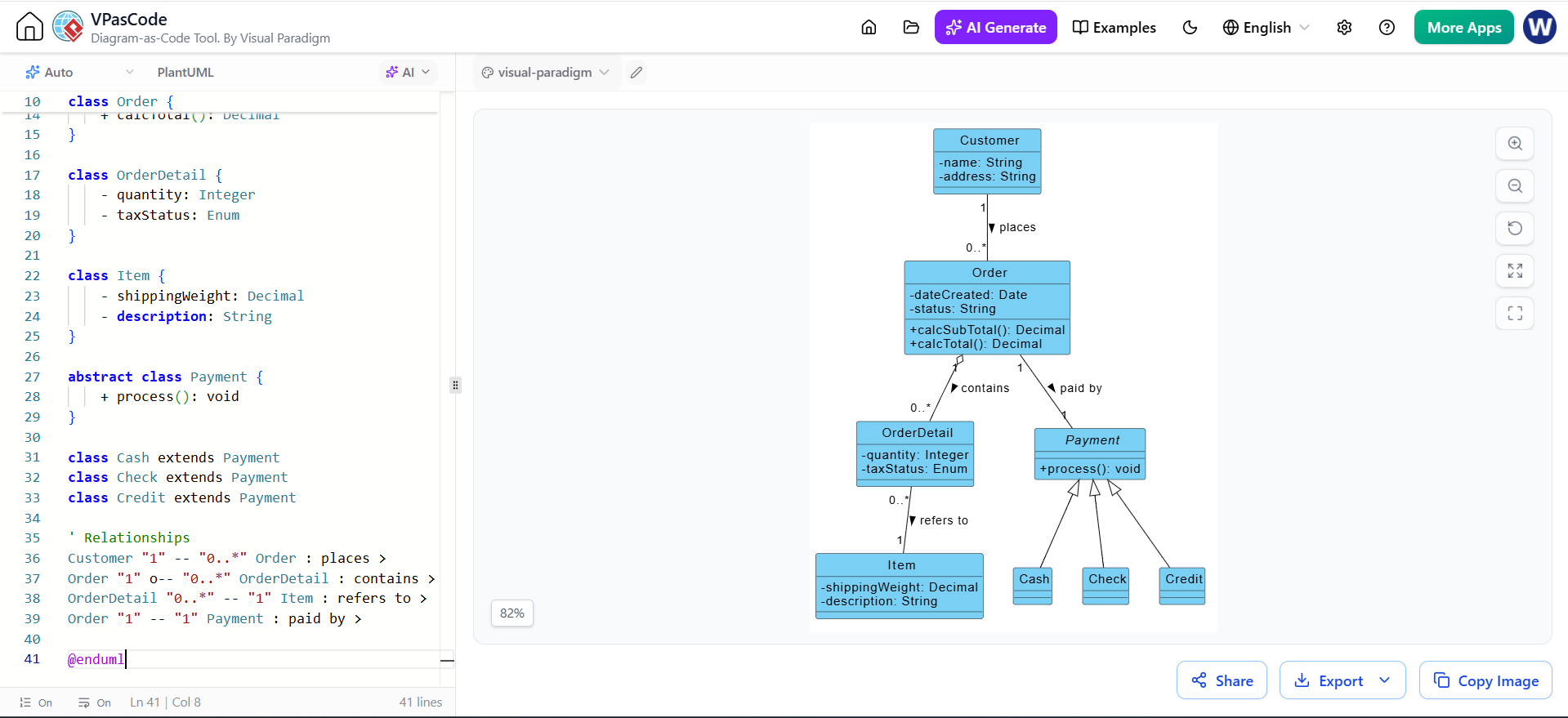
To understand the value of modern workflows, we must first recognize the pitfalls of the past. In the traditional “Static Design” phase, architects would define the system’s structure using classes such as Order, Customer, Product, and LineItem. Relationships like composition and association were drawn on a whiteboard or in proprietary tools.
The problem arose immediately after. Once the code was written—say, a Java class for Order.java—the diagram was often ignored. Over time, as features were added or refactored, the diagram became obsolete. It ceased to be a helpful map and became a confusing relic. This “gap between visual architecture and implementation” meant that new developers had to reverse-engineer the system from code alone, defeating the purpose of having an architecture in the first place.
The Modern Solution: The Diagram-as-Code Pipeline
The middle stage of our evolution represents a paradigm shift: the Diagram-as-Code Pipeline. In this workflow, the visual model is no longer a separate drawing; it is defined as text syntax. This simple change unlocks a powerful suite of engineering capabilities.
1. Visual Models as Text
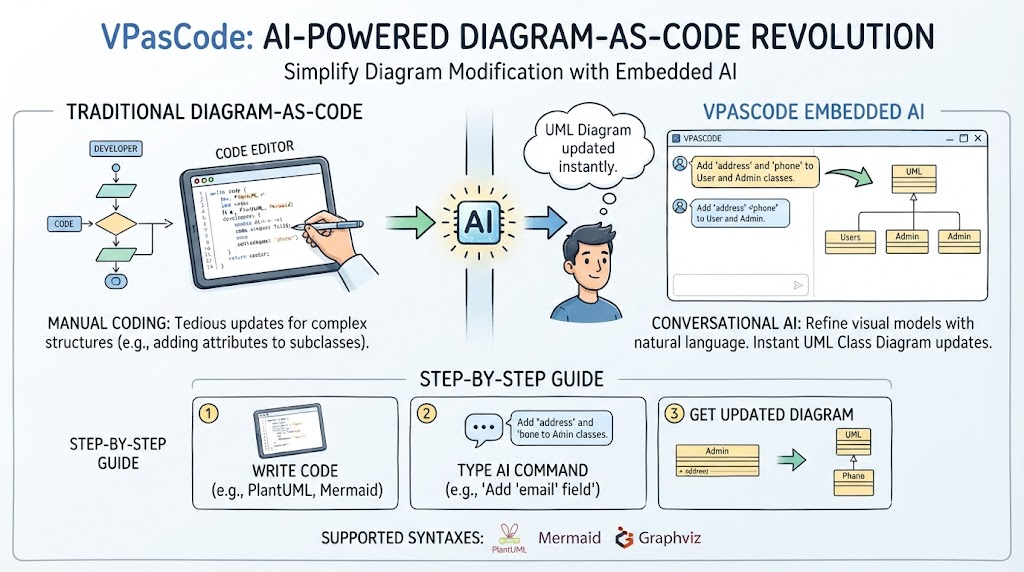
Instead of clicking and dragging shapes, engineers define the architecture using a declarative text syntax. This might look like a simplified definition of your Shopping Cart or Order system. Because the diagram is now text, it inherits all the benefits of source code.
2. AI-Assisted Generation
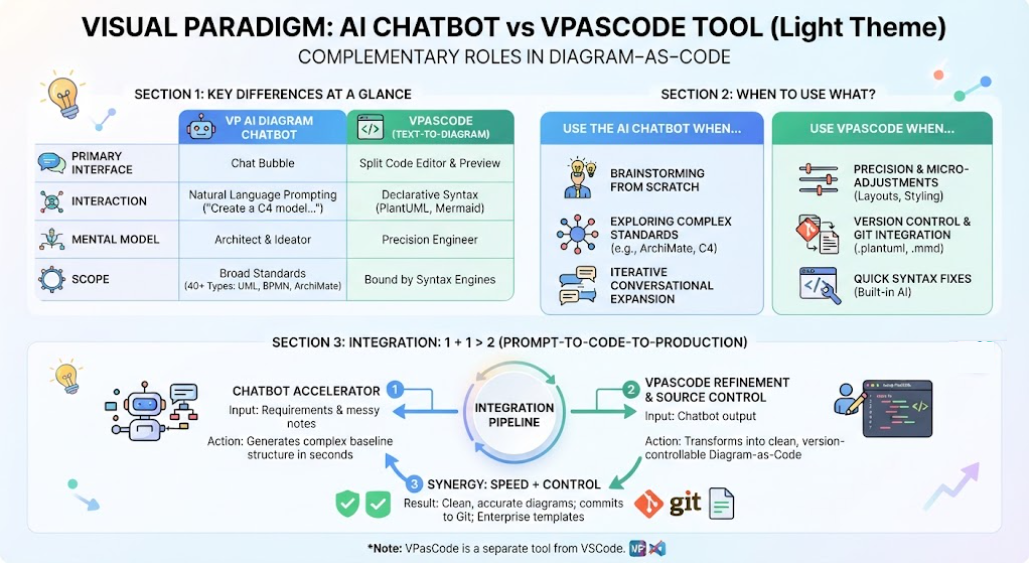
This is where modern intelligence comes into play. The workflow leverages AI Chatbots and AI Co-pilots to assist in generation. You can prompt an AI to “Design a Class Diagram for a Shopping Cart,” and it can generate the initial text syntax. Conversely, the AI can analyze your existing code and suggest updates to the diagram. This bidirectional flow ensures that the design is never disconnected from the logic.
3. Automated Builds and Version Control
Just like your application code, your diagrams are now version-controlled. When you commit a change to the diagram syntax, a CI/CD pipeline triggers an Automated Build. This process renders the visual representation instantly. There is no manual “export to PDF” step. The diagram is a living part of the repository, tracked alongside your Java or JavaScript files.
The Result: Living Implementation
The final stage is the Living Implementation, where architecture and code become synchronized partners. In a robust e-commerce platform, this means that the diagram is not just a reference; it is the source of truth.
- Synchronization: If you modify the
PaymentService.jsin your codebase, the diagram automatically updates to reflect the new method signatures or dependencies. - Automated Generation: Boilerplate code can be generated directly from the diagram definition, ensuring that the implementation strictly adheres to the architectural intent.
- Maintainability: The system remains scalable. Because the documentation is always up-to-date, onboarding new team members becomes significantly faster, and architectural debt is easier to spot and address.
By adopting this pipeline, you transform your software development lifecycle. You move from maintaining obsolete drawings to managing a synchronized, intelligent ecosystem where your architecture truly guides your implementation.