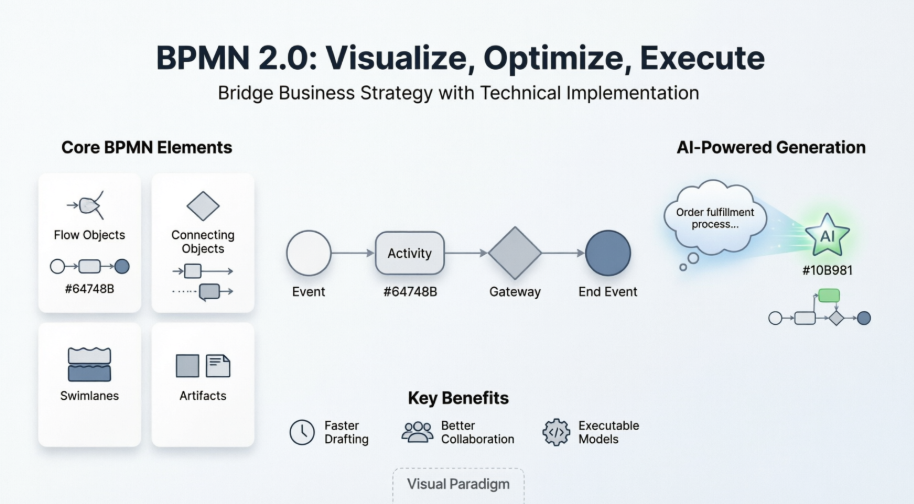
In today’s fast-paced business environment, clarity in process design isn’t just helpful—it’s essential. Organizations that can clearly map, analyze, and optimize their workflows gain a significant competitive edge. This tutorial serves as a comprehensive guide to understanding the Business Process Model and Notation (BPMN) standard, exploring how it bridges the gap between business strategy and technical implementation, and how modern AI-powered tools are revolutionizing the modeling landscape.
Understanding the BPMN Foundation
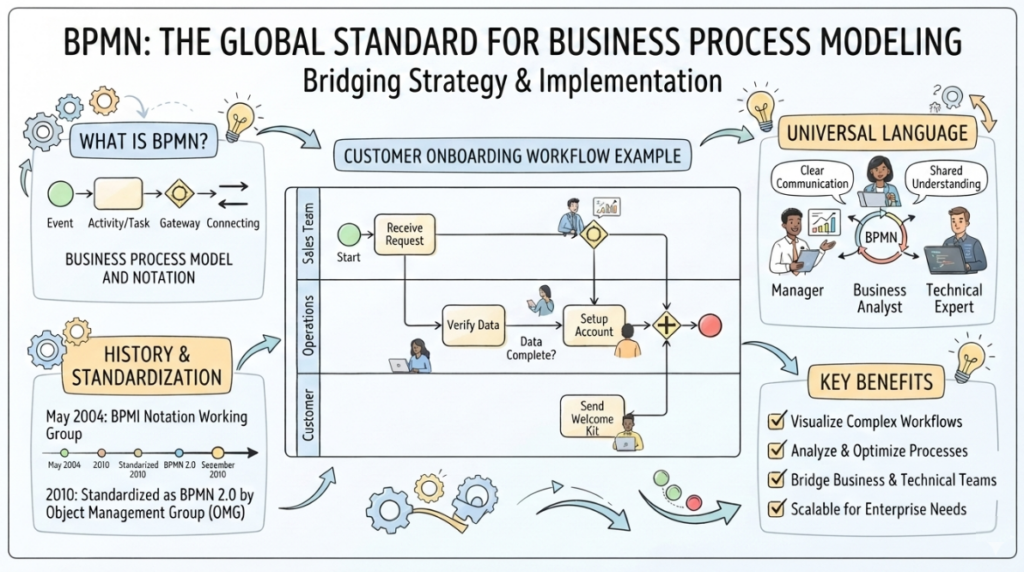
A business goal is a target that an organization aims to achieve by performing correctly the related business process. A business process consists of a set of activities performed in coordination within an organizational and technical environment. The primary goal of BPMN is to provide a notation that is readily understandable by all business users—from the business analysts creating initial drafts, to the technical developers implementing the technology, and finally, to the business people managing and monitoring the processes.
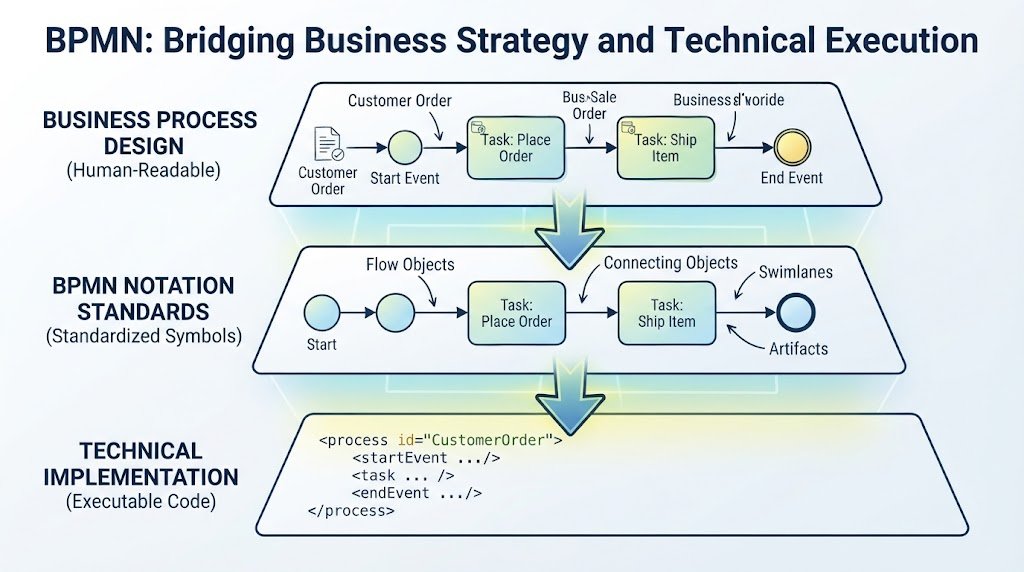
A Business Process Diagram (BPD) is made up of a set of graphical elements. BPMN is based on a flowcharting technique tailored for creating graphical models of business process operations. It creates a standardized bridge for the gap between the business process design and process implementation.
Core BPMN Elements: The Building Blocks
Just as a programmer needs to understand variables and functions, a process modeler must master the core graphical elements of BPMN. Based on standard notation, here are the fundamental components you will encounter:
1. Flow Objects
These are the central objects in a BPMN diagram and represent the behavior of the process. They are distinguished by their shapes:
- Events: Represented by circles. These are things that happen during the course of a process (e.g., a start event or an end event). They have no width and do not represent work.
- Activities: Represented by rounded rectangles. These are the actual tasks or work performed within the process (e.g., “Approve Loan” or “Ship Order”).
- Gateways: Represented by diamonds. These control the divergence and convergence of sequence flows. They determine the logic of the process (e.g., a decision point where the path splits based on a condition).
2. Connecting Objects
These elements link the flow objects together to define the order of performance. The most common is the Sequence Flow (a solid arrow), which shows the order in which activities are performed.
3. Swimlanes (Pools and Lanes)
Swimlanes are visual containers that partition the elements of a process diagram. They are used to organize and categorize activities by a specific role, resource, or system. This helps clarify “who” or “what” is responsible for each activity.
4. Artifacts
Artifacts are graphical elements used to add extra information to a diagram. They include documents, groups, and annotations that help clarify the model without affecting the flow logic.
The Three Levels of BPMN Modeling
BPMN is versatile and can be applied at different levels of abstraction depending on the goal of the model:
- Descriptive Process Models: Suitable for high-level modeling. These should be comfortable for analysts that have used standard flowcharts. They focus on clarity and communication rather than technical precision.
- Analytic Process Models: Contains the concepts most commonly used and covered in BPMN training. These models are detailed enough to allow for simulation and analysis of bottlenecks or performance issues.
- Common Executable Process Models: Focuses on the elements required for executable process models. These models contain the specific data and logic required to be directly translated into code (such as BPEL4WS) and deployed.
AI-Powered Generation: The Future of Modeling
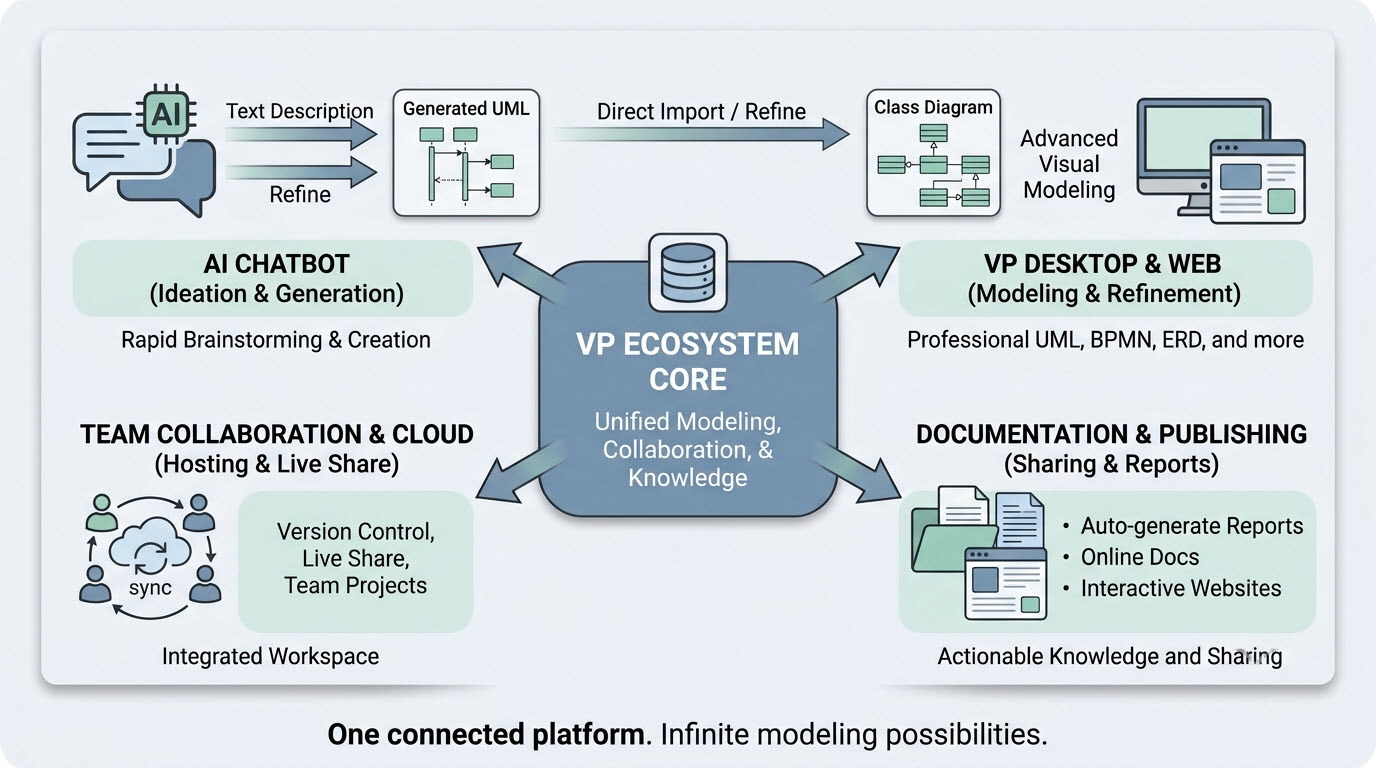
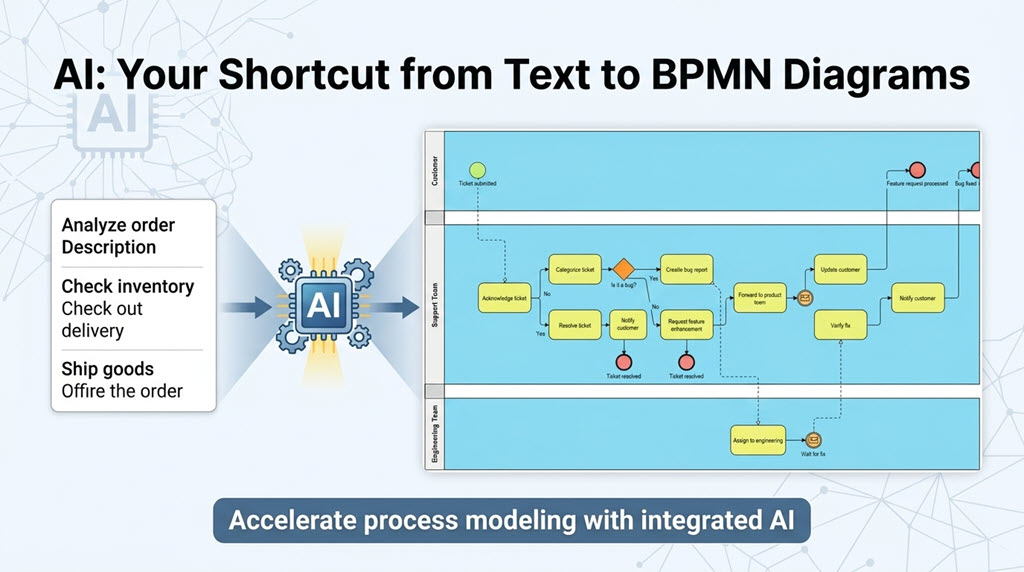
Traditionally, drawing these diagrams required manual drag-and-drop. However, modern environments like Visual Paradigm are integrating AI to streamline this workflow. This “AI-Powered Generation” allows users to input a text description of a process—such as an “Order fulfillment process”—and automatically generate a structured BPMN diagram.
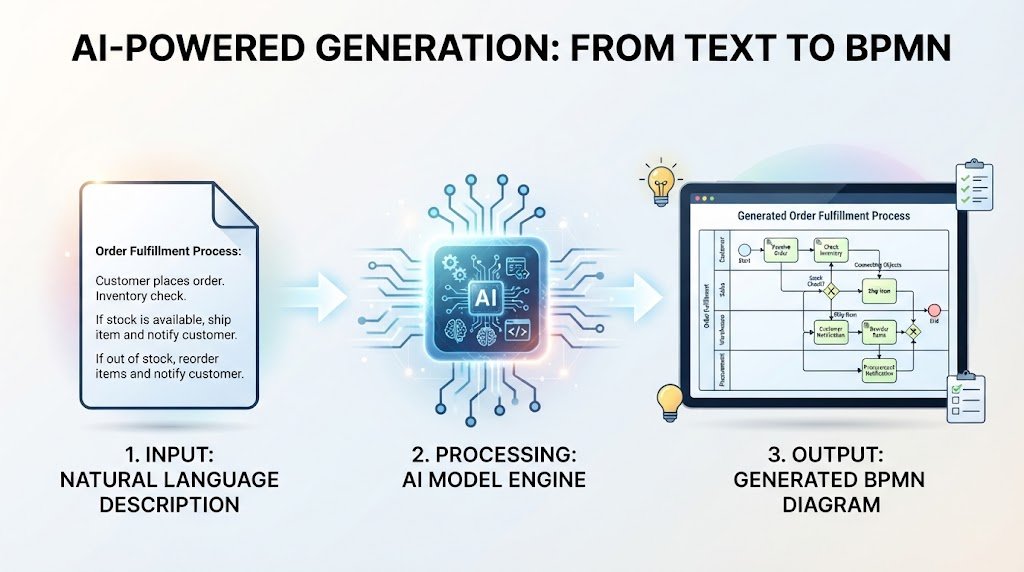
This capability significantly reduces the time spent on drafting and allows business stakeholders to validate logic immediately, ensuring the model aligns with reality before technical implementation begins.
Choosing the Right Tooling
Whether you are drafting your first flowchart or refining executable process models for deployment, the tool you choose matters. While enterprise-grade solutions like Visual Paradigm offer robust features including AI integration, it is important to explore options that fit your budget and skill level.
For those looking to start immediately without financial barriers, utilizing a free BPMN tool is an excellent way to learn the notation. Many open-source or freemium platforms allow you to practice creating flow objects, connecting objects, and swimlanes without the overhead of a full enterprise license.
Key Benefits of BPMN Adoption
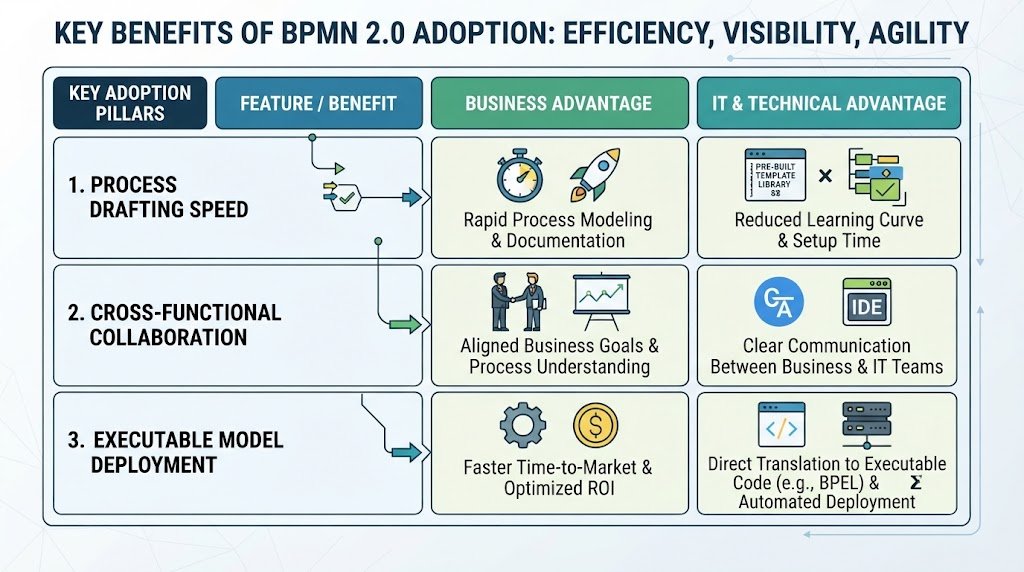
By adopting BPMN 2.0 and utilizing modern modeling environments, organizations achieve three critical benefits:
- Faster Drafting: Standardized symbols reduce the learning curve and speed up diagram creation.
- Better Collaboration: The universal nature of BPMN ensures that business and IT speak the same language.
- Executable Models: The ability to move from a diagram directly to code accelerates deployment and reduces implementation errors.