


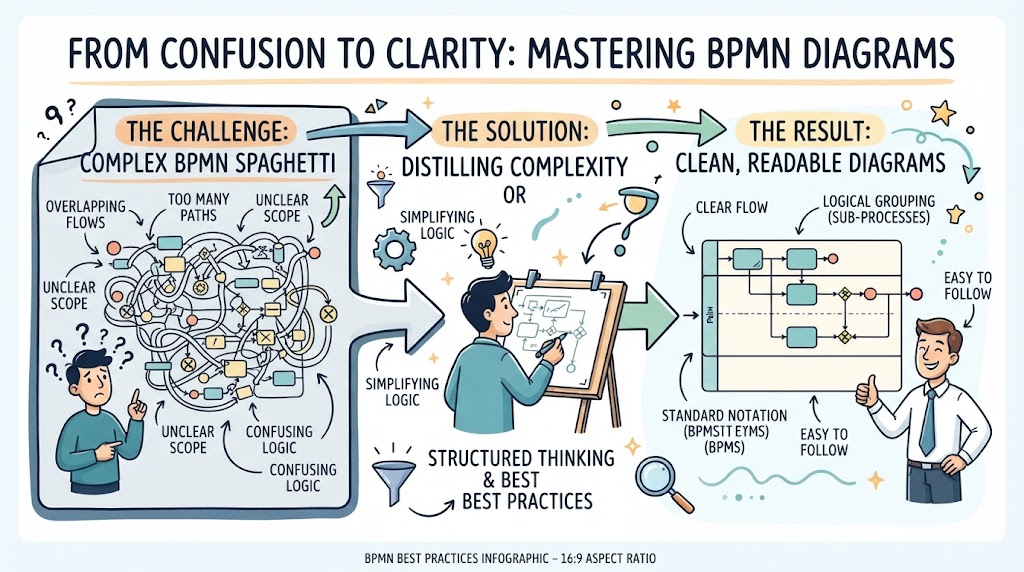
Business Process Model and Notation (BPMN) is widely recognized as the gold standard for visualizing business processes. It provides a universal language for mapping out operations, ensuring that everyone from developers to executives understands the workflow. However, as workflows grow in complexity, diagrams can quickly transform from clear maps of operation into tangled webs of confusion—often referred to in the industry as “BPMN Spaghetti.”
For Product Managers, Business Analysts, and Enterprise Architects, the ability to distill complex logic into clean, readable diagrams is a critical skill. This tutorial explores how to navigate that transition, moving from confusing, overlapping flows to pristine, actionable diagrams using structured thinking and modern tools like Visual Paradigm.
1. Diagnosing the Challenge: The “Spaghetti” Syndrome
The journey to clarity begins by identifying the common pitfalls that plague complex process models. When a diagram becomes unreadable, it is usually due to a few structural failures. By recognizing these symptoms early, you can prevent your model from becoming an unmanageable artifact.
Key Symptoms of a Complex BPMN Model:
- Overlapping Flows: When sequence flows cross each other excessively, it becomes difficult to trace the path of a single transaction from start to finish.
- Unclear Scope: If the boundaries of the process are ambiguous, stakeholders cannot easily determine where one process ends and another begins.
- Too Many Paths: Without proper abstraction, a single diagram may attempt to handle every minor exception, leading to an overwhelming number of parallel lines.
- Confusing Logic: Complex decision points (gateways) that are not logically grouped can make the flow feel arbitrary and hard to follow.
2. The Solution: Structured Thinking & Simplification
To solve the problem of complexity, you must apply Structured Thinking. This involves breaking down a monolithic process into manageable chunks. The goal is to simplify logic rather than just drawing lines.
Techniques for Simplifying Logic:
- Logical Grouping (Sub-Processes): Instead of listing every single step in a long approval chain, encapsulate that logic into a collapsed sub-process. This keeps the high-level diagram clean while retaining the detail for those who need it.
- Standard Notation: Adhering strictly to BPMN standards ensures that symbols (like gateways and events) have a consistent meaning. This reduces cognitive load for the reader.
- Gateways and Decision Points: Use Exclusive Gateways (XOR) and Inclusive Gateways (OR) effectively to represent decision-making logic without cluttering the diagram with conditional text on every line.
3. Leveraging Technology: Visual Paradigm + AI Features
While human logic is the foundation of good modeling, technology can accelerate the process and ensure accuracy. Visual Paradigm stands out as a powerful all-in-one modeling tool that supports the entire process lifecycle, from initial design to deployment.
Why Visual Paradigm is Essential for Complex Workflows:
- AI-Assisted Modeling: Visual Paradigm leverages AI features to help streamline creation. You can describe a process in text, and the AI can assist in generating the initial diagram structure, ensuring you start with a solid foundation.
- UML and BPMN Integration: Since business processes often interact with software systems, having a tool that supports both BPMN and UML is crucial for mapping the “Entire Process” from business requirements to technical implementation.
- BPMS Readiness: A clean diagram isn’t just for documentation; it’s for execution. By following best practices, your diagrams become compatible with Business Process Management Systems (BPMS), allowing for automated deployment.
4. The Result: Clean, Readable, and Actionable Diagrams
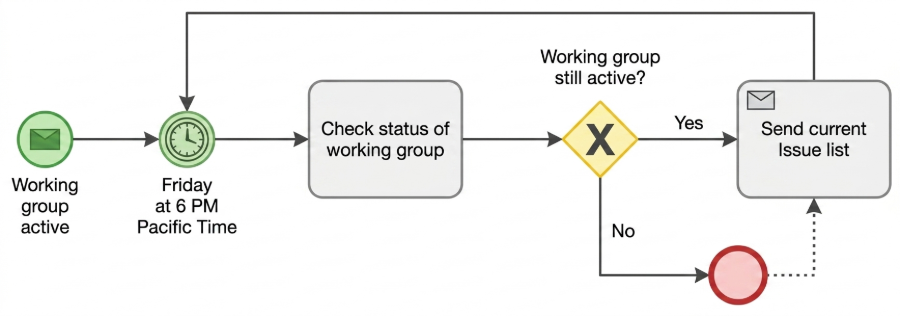
By combining structured thinking with tools like Visual Paradigm, the result is a diagram that is “Easy to Follow.” The visual complexity is reduced, and the logical flow is highlighted.
Characteristics of a Successful BPMN Diagram:
- Clear Flow: The eye can naturally follow the path from the Start Event to the End Event without getting lost in a sea of lines.
- Intuitive Structure: The hierarchy is obvious, with high-level processes visible at the top and detailed sub-processes available on demand.
- Actionable Insights: Stakeholders can look at the diagram and immediately understand where bottlenecks might occur or how exceptions are handled.
In conclusion, mastering BPMN is not just about learning symbols; it is about mastering the art of simplification. Whether you are mapping a simple approval flow or a multi-layered enterprise service, these principles will ensure your diagrams remain intuitive and actionable.
Related posts:
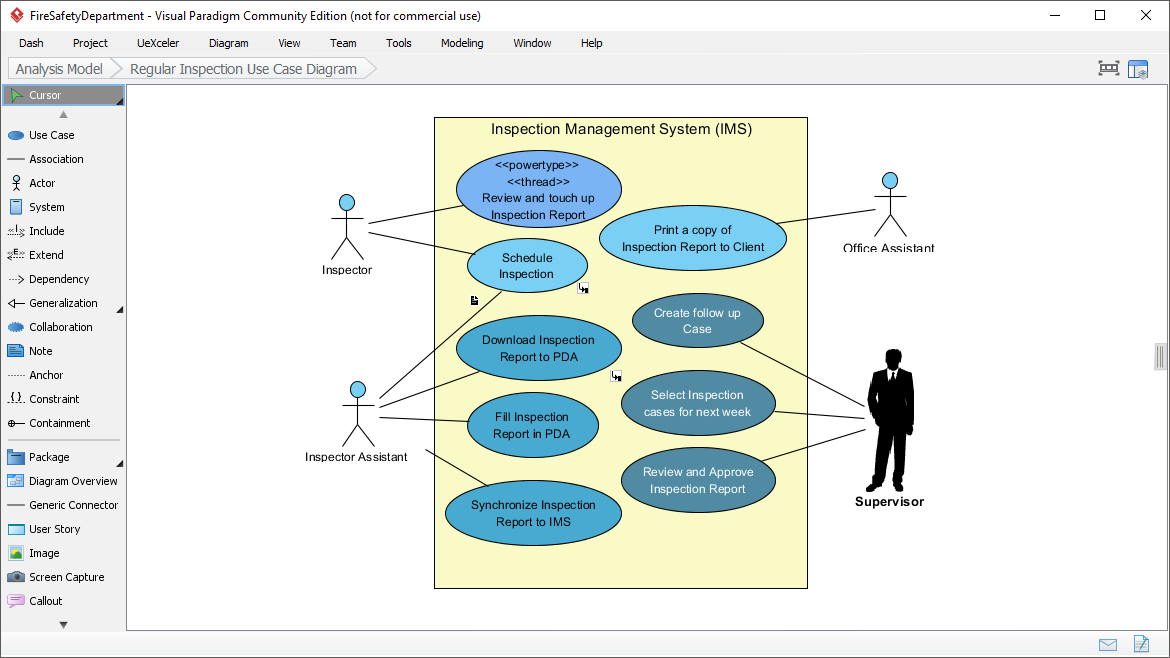 Mastering System Design: A Deep Dive into the Inspection Management System Use Case Diagram
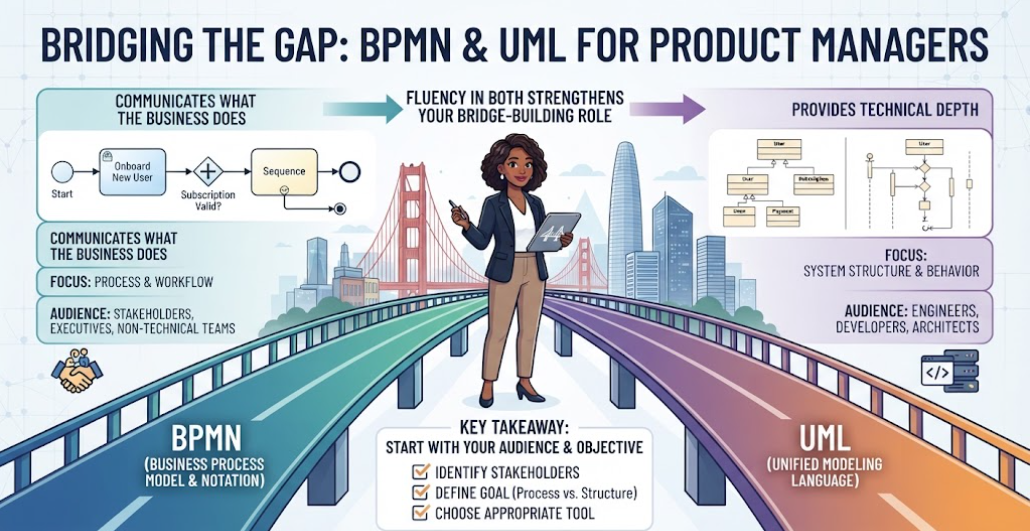 Bridging the Gap: A Product Manager’s Guide to BPMN vs. UML Modeling
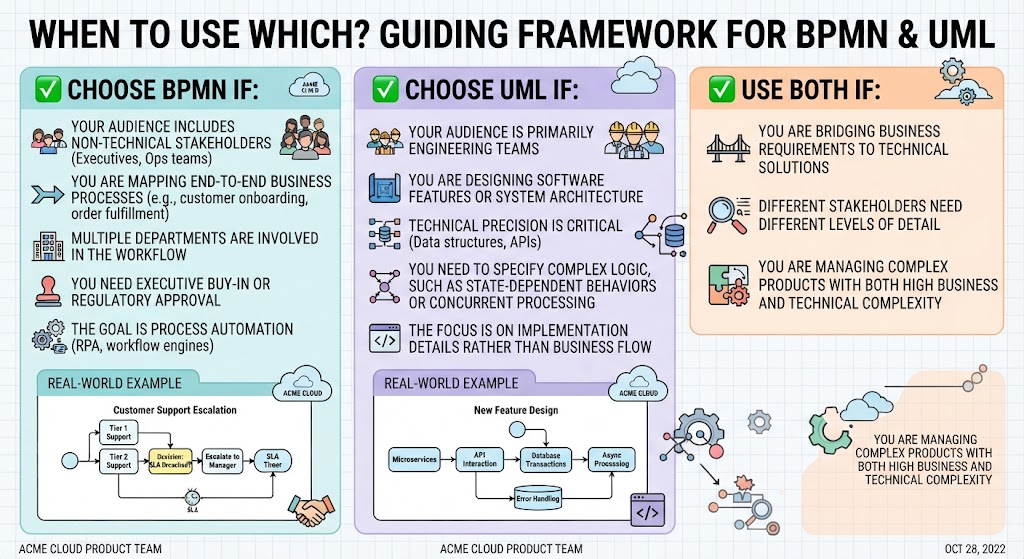 Mastering System Architecture: When to Use BPMN vs. UML for Effective Product Design
 Automating Weekly Status Checks for Working Groups: A BPMN Guide