In the world of process modeling, clarity is currency. Whether you are an Agile Product Manager refining a user journey or a Business Analyst mapping out enterprise workflows, the tool you choose to visualize your process dictates how effectively that process can be understood, executed, and improved.
Many professionals face a common dilemma: Should I draw a simple flowchart or a complex BPMN diagram? While they may look similar at a glance—both use shapes and arrows to represent steps—they serve fundamentally different purposes. This tutorial will guide you through the critical differences between these two visualization methods, helping you decide which tool fits your specific business needs.
1. The Case for Flowcharts: High-Level Logic
Flowcharts are the classic tool of the trade. They are designed for simple algorithms and high-level logic. If you need to map out a decision tree or a simple sequence of events without getting bogged down in organizational details, a flowchart is your best friend.
Key Characteristics of Flowcharts
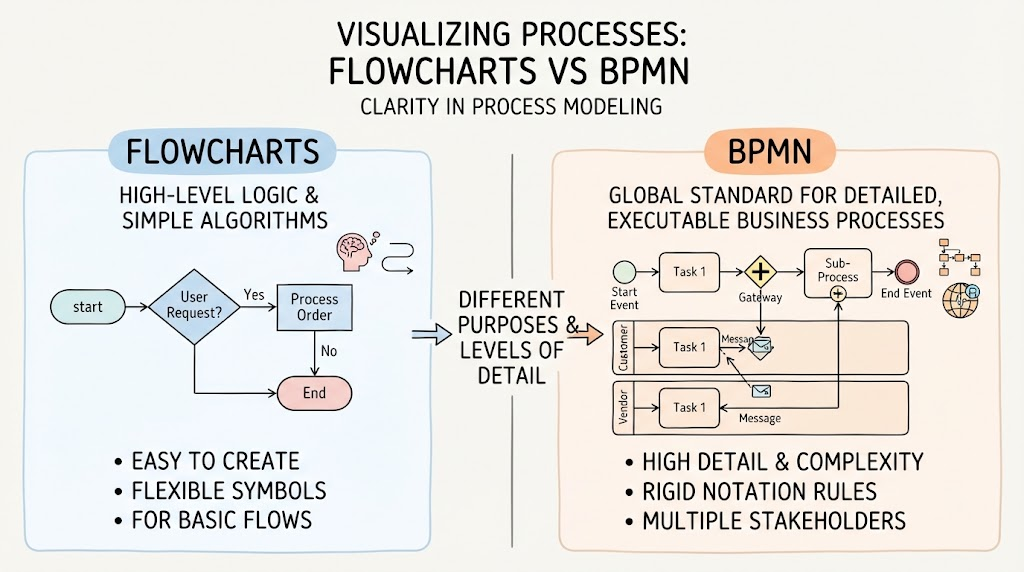
- Flexible Symbols: You aren’t bound by strict international standards. A diamond represents a decision, a rectangle a process, and an oval a start/end point.
- Easy to Create: They are intuitive and quick to draft, making them perfect for whiteboarding sessions or initial brainstorming.
- For Basic Flows: They excel at showing the “Yes/No” logic of a specific function, such as “User Request?” leading to “Process Order” or “End.”
As seen in the visual comparison, flowcharts are ideal when the goal is to understand the what and the how of a single logical path without worrying about who is doing it or the specific technical constraints.
2. The Case for BPMN: The Global Standard
Business Process Model and Notation (BPMN) is the global standard for detailed, executable business processes. It is not just a diagramming tool; it is a language designed to be read by both business stakeholders and technical developers.
Key Characteristics of BPMN
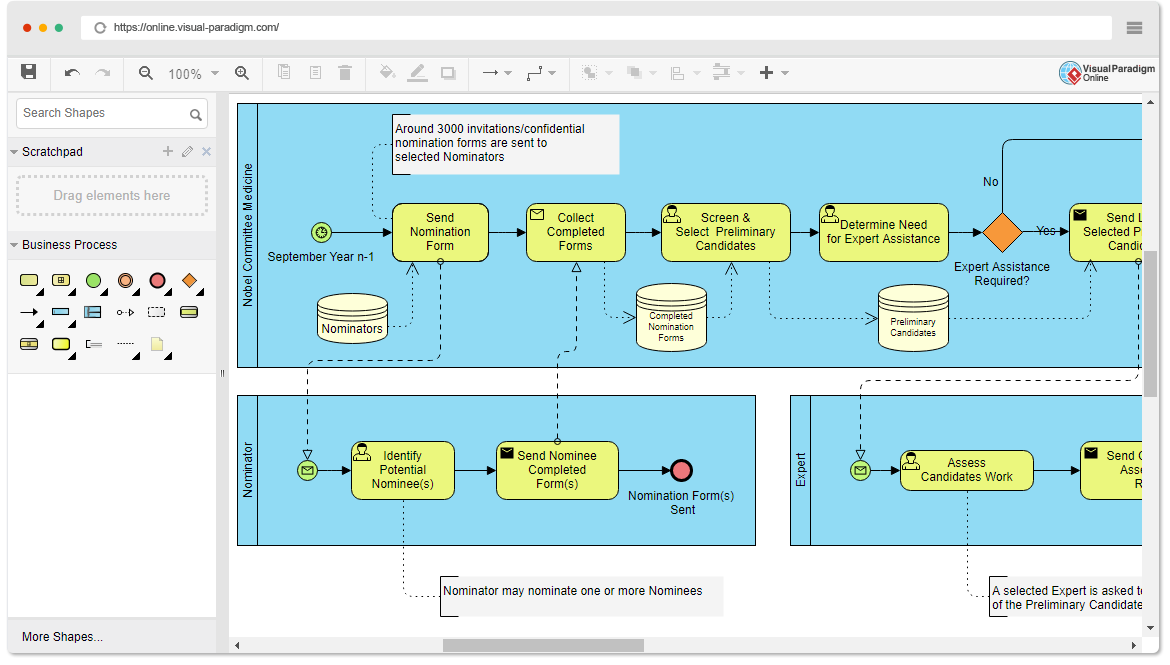
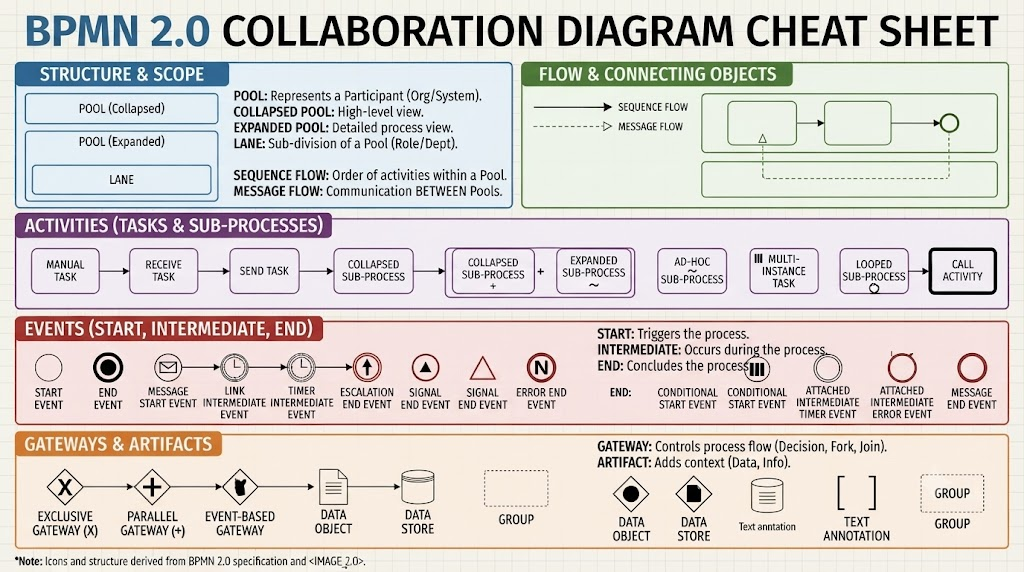
- High Detail & Complexity: BPMN allows for Swimlanes (like the “Customer” and “Vendor” lanes in the diagram), which clearly define who is responsible for each task.
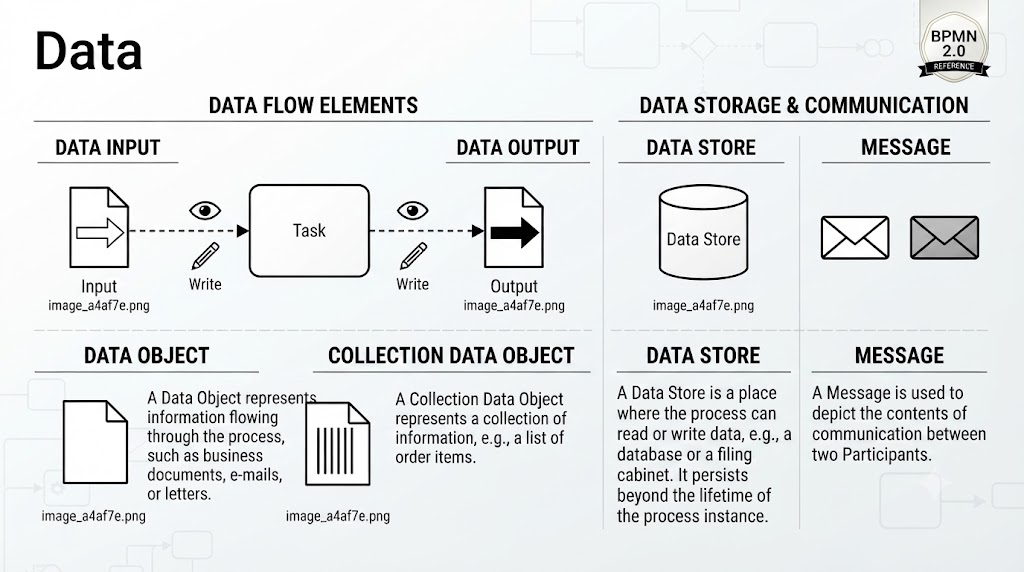
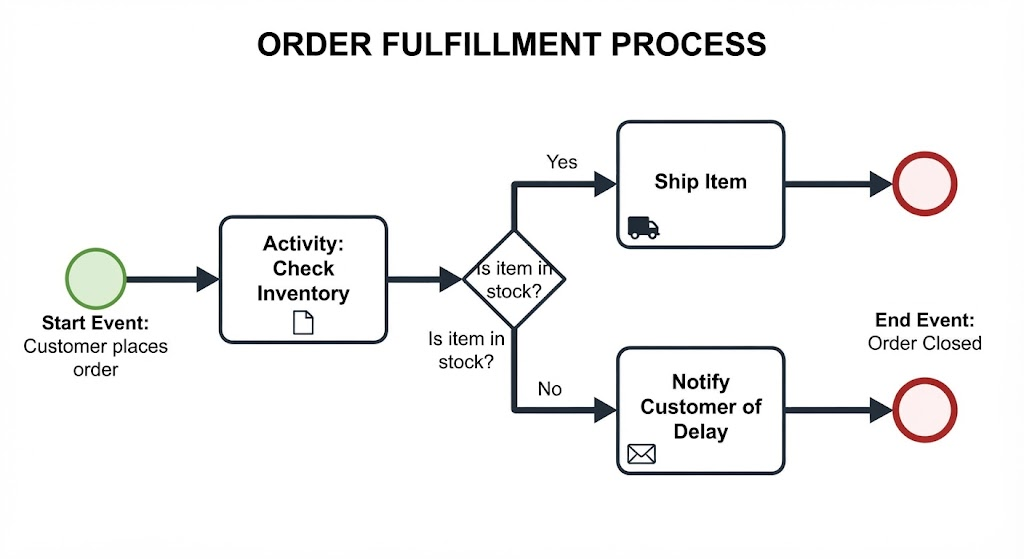
- Rigid Notation Rules: Every shape has a specific meaning. A circle with a thin border is a Start Event, a diamond with a cross is a Parallel Gateway, and a circle with a thick border is an End Event.
- Multiple Stakeholders: It excels at showing interactions between different parties. For example, the diagram shows a Message Flow (dashed arrow) between the Customer and Vendor, indicating an exchange of information rather than a direct process step.
BPMN is essential when the process needs to be executed by a system or when multiple departments need to collaborate on a complex workflow.
3. Bridging the Gap: Different Purposes & Levels of Detail
The core distinction lies in the Level of Detail required for your specific project.
When to Use Which?
- Choose a Flowchart if: You are defining a simple logic algorithm, a quick script, or a high-level feature requirement. You want speed and flexibility over strict adherence to rules.
- Choose BPMN if: You are designing a system that requires automation, compliance, or interaction between distinct departments. You need a diagram that can serve as a blueprint for developers.
4. Modern Tooling: From Narrative to Diagram
For Agile teams, the challenge is often balancing speed with precision. This is where modern AI-driven tooling, such as Visual Paradigm, becomes invaluable. These tools can bridge the gap between narrative requirements (like user stories) and precise, standards-compliant diagrams.
By understanding the strengths of both Flowcharts and BPMN, you can ensure that your process documentation is not just a picture, but a functional asset that drives business value.