


Welcome to this comprehensive tutorial on the evolution of Enterprise Architecture (EA). In the rapidly changing landscape of modern business, a rigid framework can often become a bottleneck rather than a catalyst. This article explores the paradigm shift found in TOGAF 10, focusing on its core philosophy of flexibility, customization, and practical application. By the end of this guide, you will understand how to tailor the framework to your specific organizational needs rather than forcing your organization to fit the framework.
The Core Philosophy: Configure, Don’t Adopt
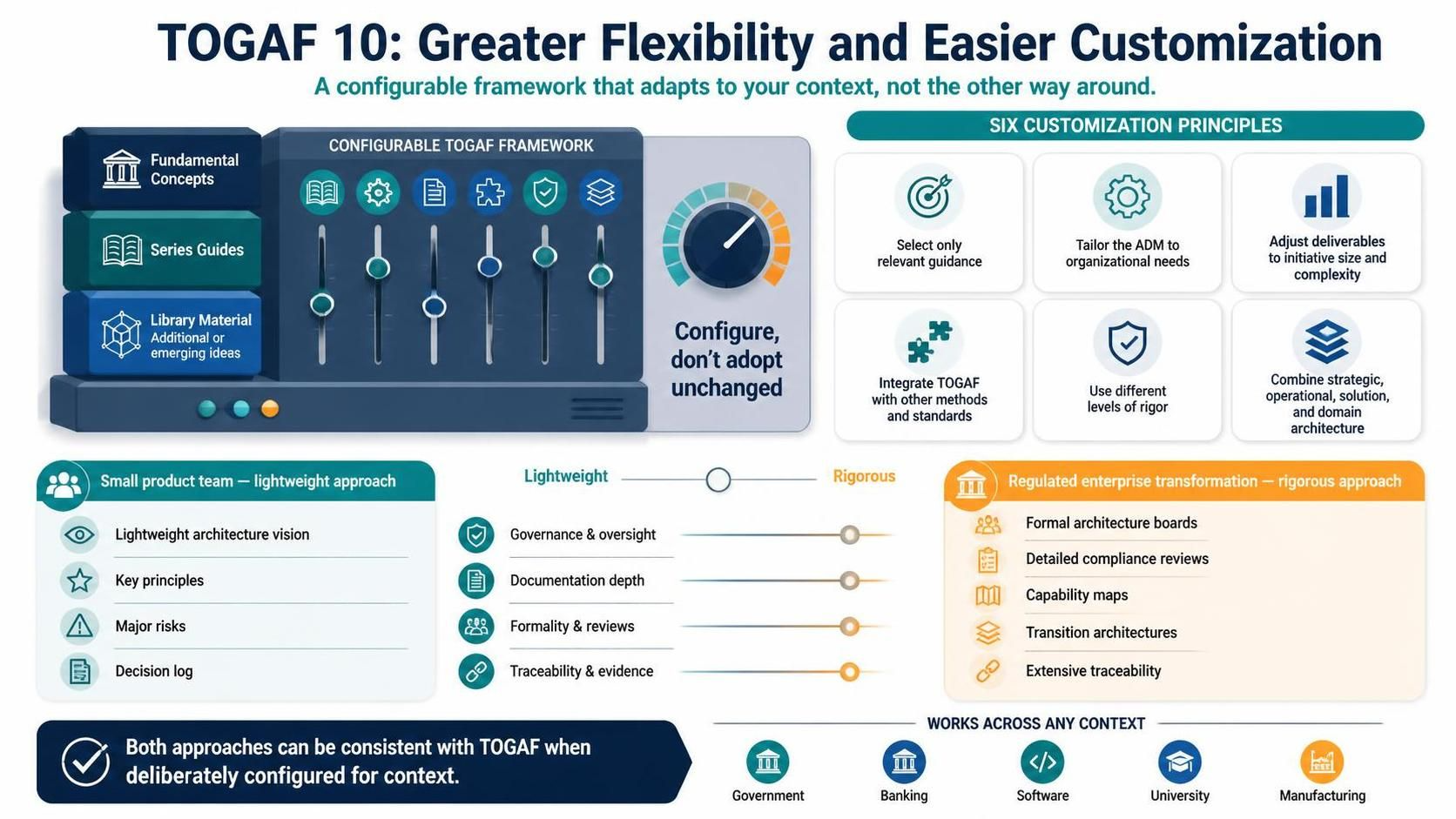
The central theme of TOGAF 10 is captured in the phrase “Configure, don’t adopt unchanged.” Unlike previous iterations that were sometimes viewed as monolithic “checklists,” TOGAF 10 presents itself as a configurable framework. It acknowledges that a “one-size-fits-all” approach rarely works for diverse contexts ranging from small product teams to large regulated enterprises.
This shift represents a move from simply explaining what Enterprise Architecture is to providing practical guidance on how architects can perform the work effectively. The framework is designed to adapt to your context, not the other way around.
The Building Blocks of the Framework
TOGAF 10 organizes its content into three primary pillars, allowing architects to select the specific materials they need:
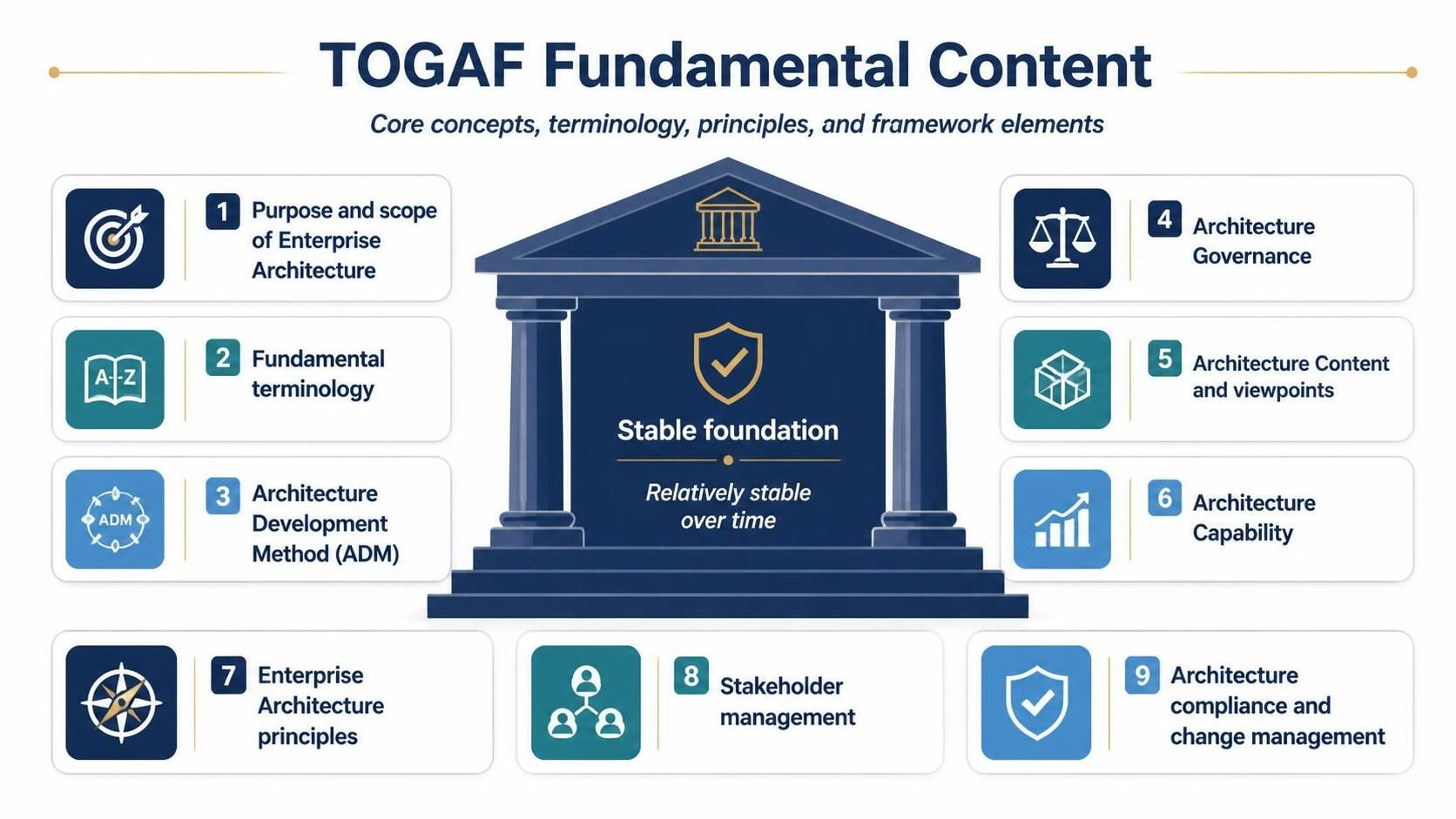
- Fundamental Concepts: The core definitions, principles, and architecture development method (ADM) that form the backbone of the practice.
- Series Guides: Practical, scenario-specific guidance intended to answer complex questions such as:
- How should an organization establish an Enterprise Architecture function?
- How can architects work effectively in an agile environment?
- How should security concerns be integrated into architecture development?
- How can architecture support digital transformation?
- Library Material: A repository for additional or emerging ideas that allows the framework to evolve with industry trends.
Six Principles for Customization
How do you configure the framework effectively? TOGAF 10 outlines six specific customization principles that empower practitioners to tailor the approach:
- Select only relevant guidance: You are not required to use every piece of content. Identify and utilize only the guidance that applies to your current initiatives.
- Tailor the ADM to organizational needs: The Architecture Development Method (ADM) remains the central method, but its steps and iterations can be adjusted to fit the specific pace and style of your organization.
- Adjust deliverables to initiative size and complexity: A startup’s digital transformation will require different documentation depth than a government infrastructure project.
- Integrate TOGAF with other methods and standards: The framework is designed to play nicely with others. You can blend TOGAF with agile methodologies, DevOps, or other industry standards.
- Use different levels of rigor: Not every project requires the highest level of scrutiny. You can calibrate the rigor based on the risk and impact of the project.
- Combine strategic, operational, solution, and domain architecture: Ensure that high-level strategy is effectively bridged to solution design and operational realities.
Lightweight vs. Rigorous Approaches
One of the most powerful features of TOGAF 10 is its ability to scale. The framework explicitly supports a spectrum of approaches, allowing you to select the right level of formality for your team.
The Lightweight Approach
Best suited for small product teams or agile environments, this approach focuses on agility and speed. It includes:
- Lightweight architecture vision.
- Focus on key principles.
- Identification of major risks.
- A simple decision log.
The Rigorous Approach
Best suited for regulated enterprise transformations, this approach ensures compliance and stability. It typically includes:
- Formal architecture boards.
- Detailed compliance reviews.
- Comprehensive capability maps.
- Extensive traceability and evidence.
Recommended Tooling: Visual Paradigm
To successfully implement these configurable principles, the right tooling is essential. You need software that supports both high-level strategic modeling and detailed technical specification.
The Recommended Tooling is Visual Paradigm TOGAF ADM Tool.
Visual Paradigm offers a robust environment that embodies the “Configure, don’t adopt unchanged” philosophy. It allows you to:
- Customize the ADM Lifecycle: Map your specific phases to the standard TOGAF ADM or create your own variations.
- Manage Artifacts: Create, store, and link architecture artifacts directly to the ADM phases.
- Generate Reports: Automatically generate reports ranging from lightweight executive summaries to rigorous compliance documentation.
- Collaborate: Support teams in both government and software sectors to work cohesively on the same architecture.
Conclusion
The transition to TOGAF 10 marks a significant maturation of the Enterprise Architecture discipline. By providing Six Customization Principles and a flexible structure that adapts to any context—from government and banking to software and manufacturing—TOGAF 10 ensures that architecture remains a strategic asset rather than a bureaucratic burden.
Whether you are a small product team needing a lightweight vision or a large enterprise requiring rigorous governance, TOGAF 10 offers the tools to succeed. By leveraging advanced tools like Visual Paradigm TOGAF ADM Tool, organizations can effectively configure the framework to their unique needs, ensuring that architecture truly drives value across the business.
Related posts:
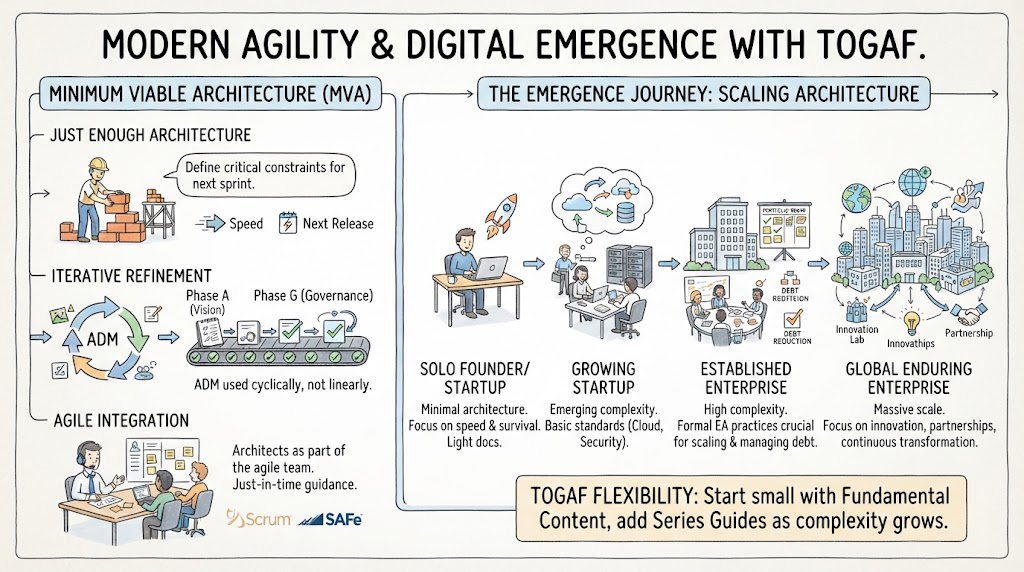 Mastering Modern Agility: A Tutorial on Minimum Viable Architecture and the Digital Emergence Journey
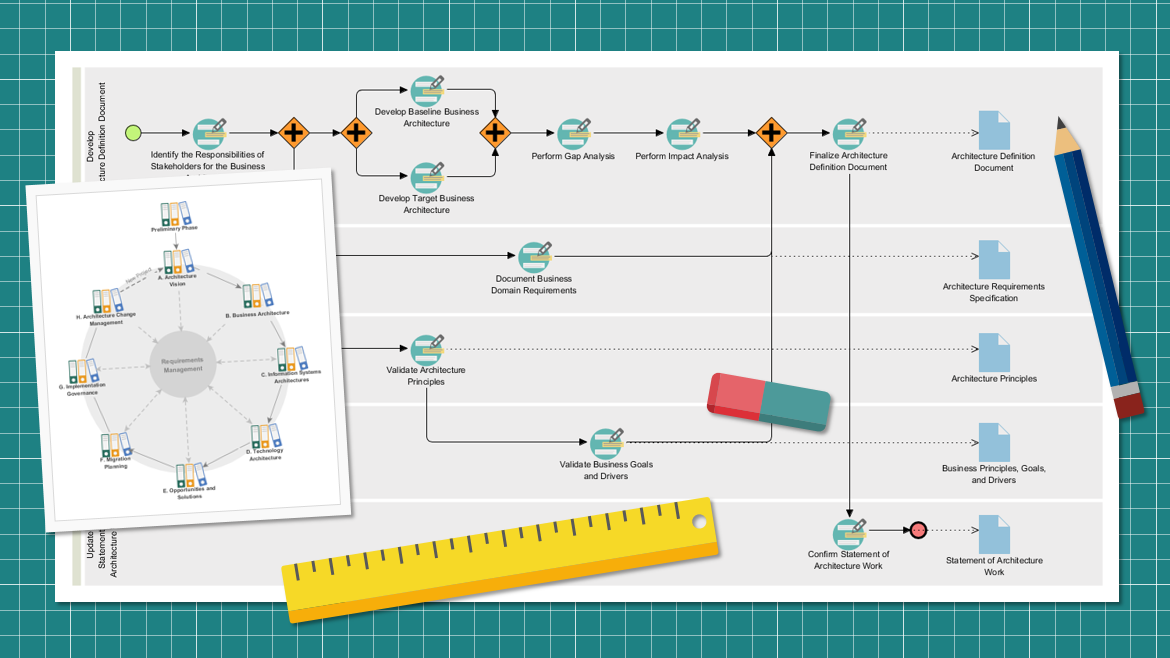 Mastering the TOGAF ADM Cycle: A Visual Guide to Enterprise Architecture Modeling
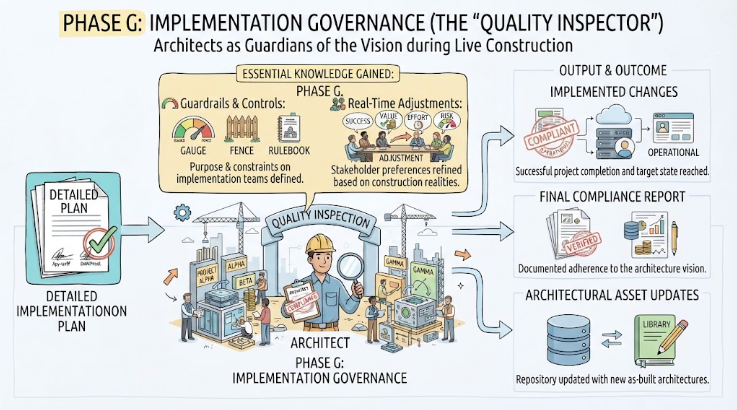 Mastering TOGAF Phase G: Implementation Governance with Visual Paradigm & ArchiMate
 Demystifying the TOGAF Foundation: A Comprehensive Guide to Fundamental Content