


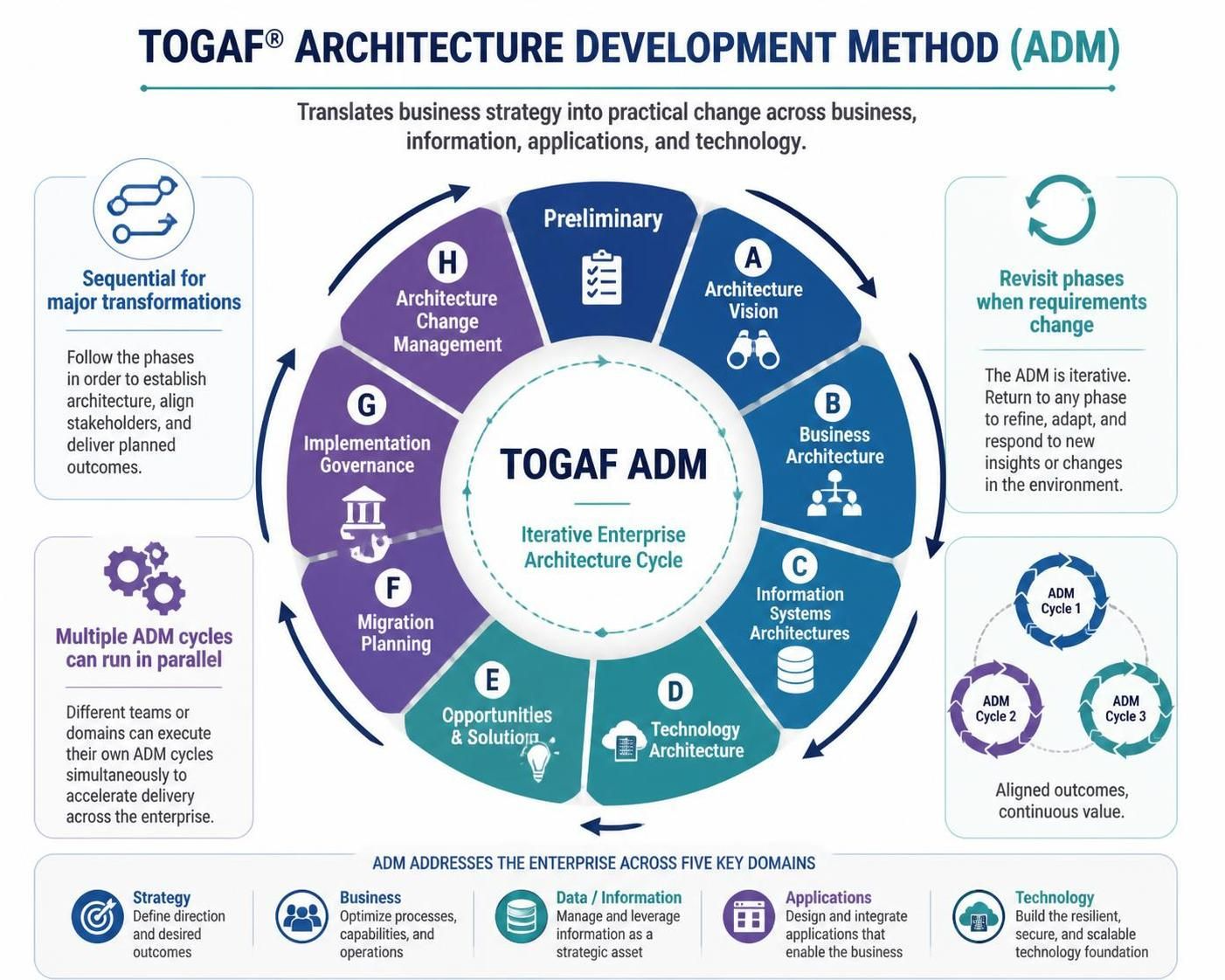
In the complex world of enterprise technology, bridging the gap between high-level business strategy and technical implementation is often the most difficult challenge organizations face. The TOGAF Architecture Development Method (ADM) provides a robust, structured solution to this problem. By translating business strategy into practical changes across business operations, information, applications, and technology, the ADM ensures that IT investments align with organizational goals.
Unlike a rigid, linear project plan, the ADM is designed as a dynamic, iterative cycle. This tutorial explores the architecture of this methodology, explaining how it navigates the complexities of enterprise change through its distinct phases and flexible execution models.
The Core Philosophy: An Iterative Enterprise Architecture Cycle
At the heart of the TOGAF standard lies the central wheel of the ADM. This circular model represents the Iterative Enterprise Architecture Cycle. The fundamental concept here is that architecture is not a “big bang” event; it is a continuous process of refinement.
The cycle is designed to move an organization from a current state to a target future state. However, the arrows surrounding the wheel indicate that this process is fluid. If requirements change, or if new insights are discovered during the process, the architect can return to previous phases to adapt the plan. This flexibility is crucial for modern enterprises where the market landscape shifts rapidly.
The Phases of the ADM: A Step-by-Step Journey
The ADM is divided into specific phases, labeled with letters from A to H, plus a preliminary phase. Each phase has a specific purpose, guiding the architect from the initial vision to the final implementation and governance.
1. The Foundation: Preliminary Phase & Phase A (Architecture Vision)
Before diving into specific designs, the Preliminary Phase sets the stage. It defines the “architecture principles” and the framework itself. Once the foundation is laid, Phase A focuses on the Architecture Vision. This is the strategic starting point where the scope is defined, stakeholders are identified, and the initial vision for the project is established.
2. Defining the Business and Data: Phases B & C
Once the vision is set, the architecture must be grounded in reality. This is achieved through:
- Phase B (Business Architecture): This phase defines the business strategy, governance, organization, and key business processes. It ensures the technical solution actually solves a business problem.
- Phase C (Information Systems Architectures): Here, we look at the data and applications required to support the business. This phase splits the work into Data Architecture (managing information as a strategic asset) and Application Architecture (designing the software systems that enable the business).
3. The Technology Layer: Phase D
Phase D (Technology Architecture) focuses on the infrastructure. It defines the hardware, software, and network capabilities required to support the data and applications. The goal is to build a resilient, secure, and scalable technology foundation.
4. Planning and Migration: Phases E & F
With the target state defined, the focus shifts to execution. Phase E (Opportunities and Solutions) involves identifying major projects and initiatives needed to move from the current state to the target state. Following this, Phase F (Migration Planning) creates a detailed plan for the implementation, ensuring that the transition is managed effectively.
5. Implementation and Governance: Phases G & H
The final phases ensure the plan is actually executed and stays on track:
- Phase G (Implementation Governance): This phase oversees the implementation projects to ensure they align with the architecture. It is the “quality control” step.
- Phase H (Architecture Change Management): Architecture does not end at implementation. This phase manages changes to the architecture over time, ensuring the enterprise adapts to new opportunities or threats.
Executing the Cycle: Sequential vs. Parallel
One of the most powerful aspects of the TOGAF ADM is its flexibility in execution. The method accommodates different organizational needs through three primary execution modes:
- Sequential for Major Transformations: For a massive, enterprise-wide overhaul, teams may follow the phases in strict order. This ensures that the architecture is fully established and aligned before moving to the next stage of development.
- Revisiting Phases (Iterative): The ADM is iterative by nature. As requirements change, architects can “loop back” to Phase B or Phase C to refine the design. This allows the architecture to respond to new insights or environmental changes without restarting the entire process.
- Multiple Cycles in Parallel: In large organizations, different teams or domains can execute their own ADM cycles simultaneously. For example, the IT infrastructure team might be in Phase D while the business process team is in Phase B. This accelerates delivery across the enterprise while keeping outcomes aligned.
Conclusion
The TOGAF ADM is a comprehensive framework that addresses the enterprise across five key domains: Strategy, Business, Data/Information, Applications, and Technology. It transforms abstract strategy into concrete technical reality.
To effectively navigate this complex cycle and visualize these architectures, it is highly recommended to utilize dedicated tooling that supports the TOGAF standard. Tools like Visual Paradigm TOGAF ADM Tool provide powerful capabilities for modeling these phases, managing artifacts, and facilitating collaboration across the enterprise, ensuring that the architecture development process is not just theoretical, but actionable and efficient.
Related posts:
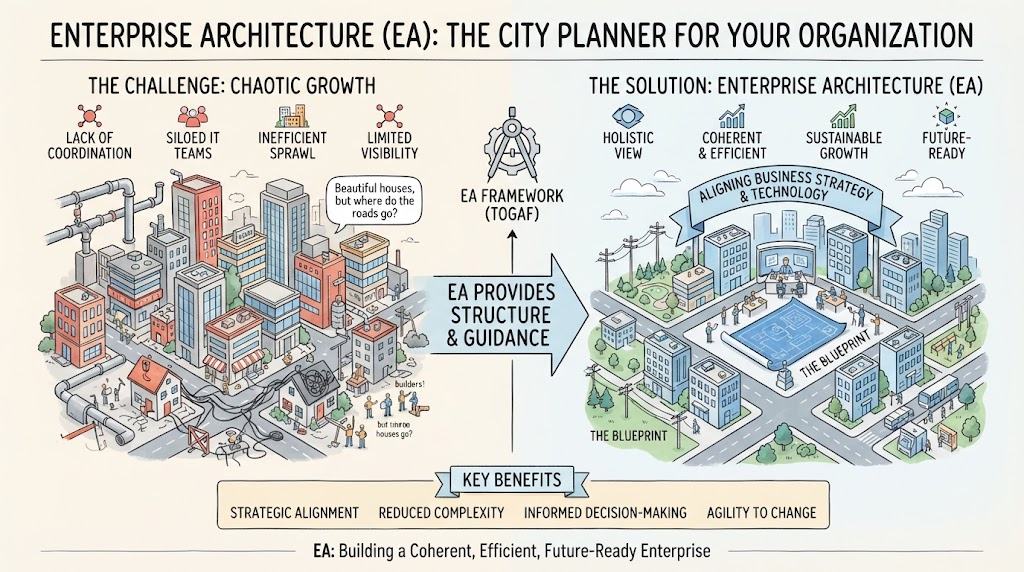 Enterprise Architecture as City Planning: A Visual Guide to TOGAF & Strategic Alignment
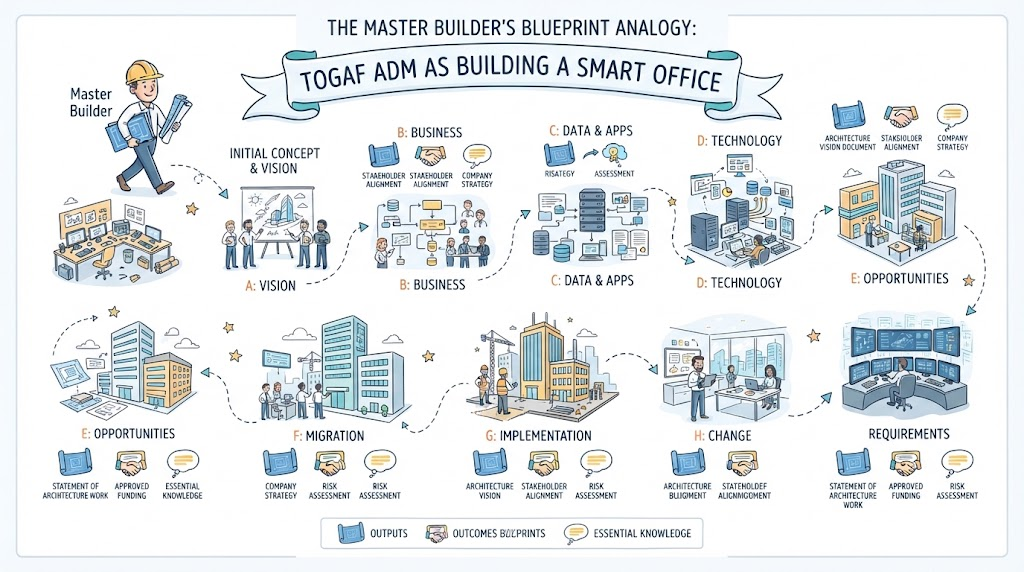 The Master Builder’s Blueprint Analogy: A Step-by-Step Guide to the TOGAF ADM
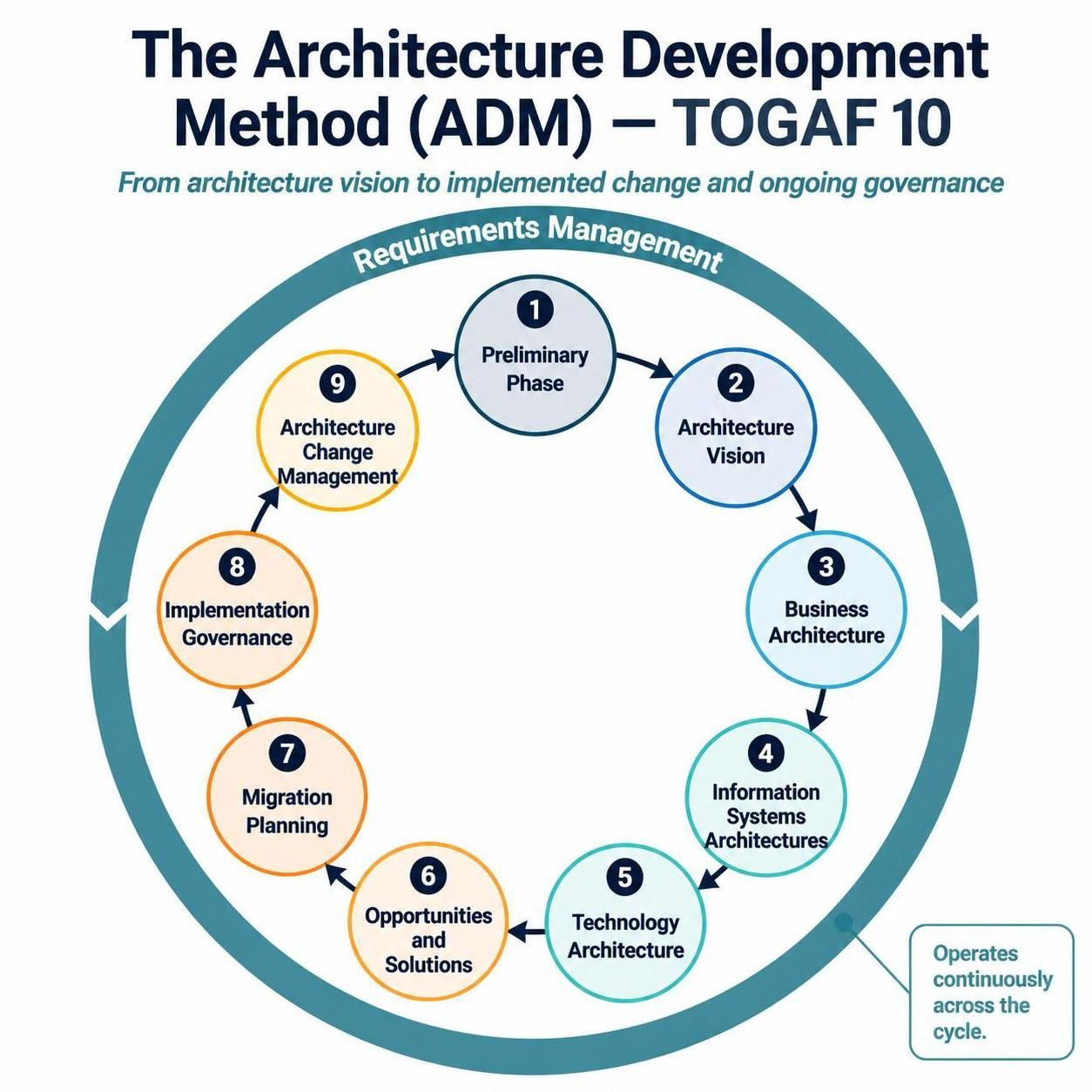 Mastering Enterprise Architecture: A Step-by-Step Guide to the TOGAF ADM Cycle
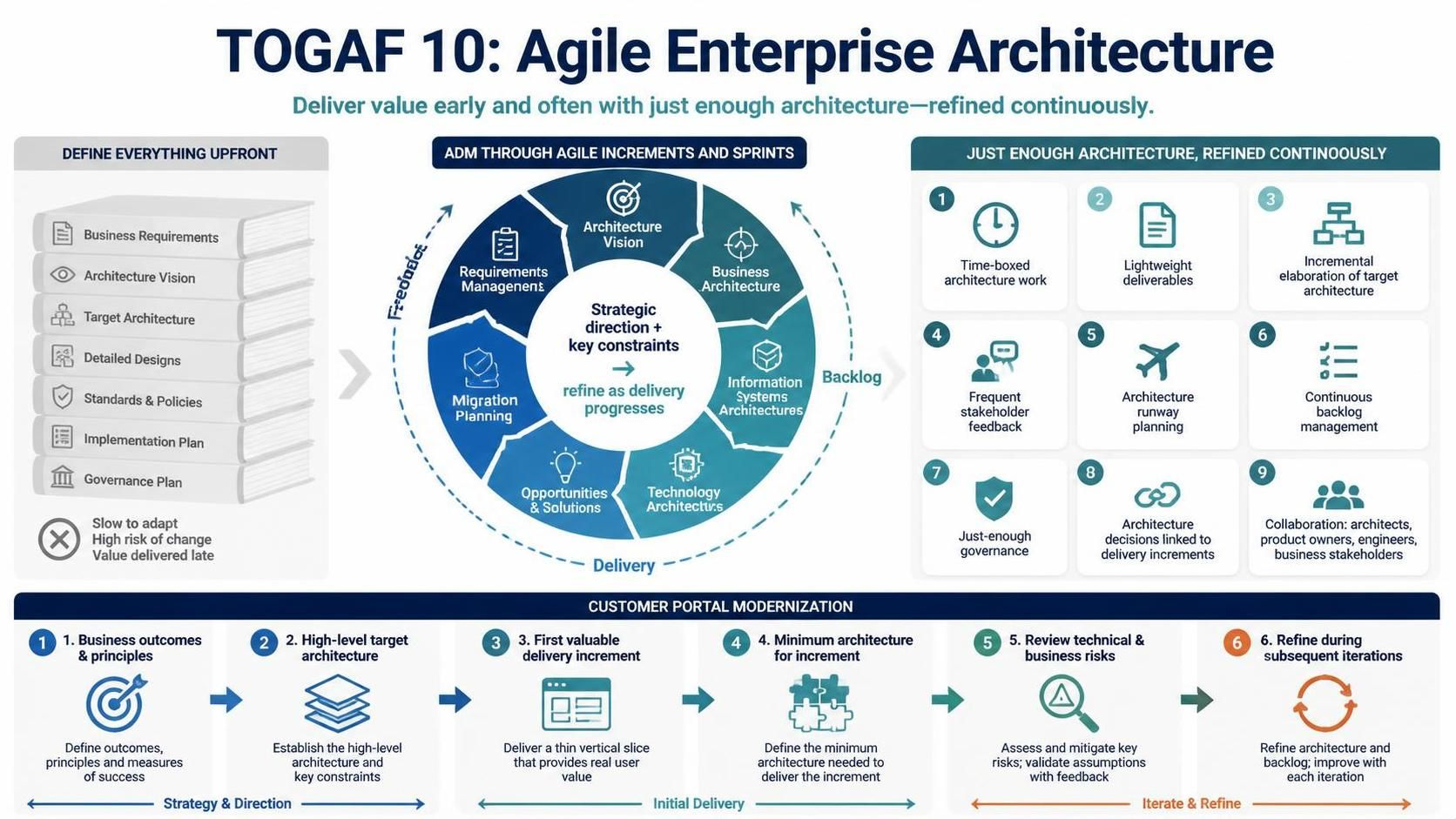 Mastering Agile Enterprise Architecture: A Step-by-Step Guide to TOGAF 10