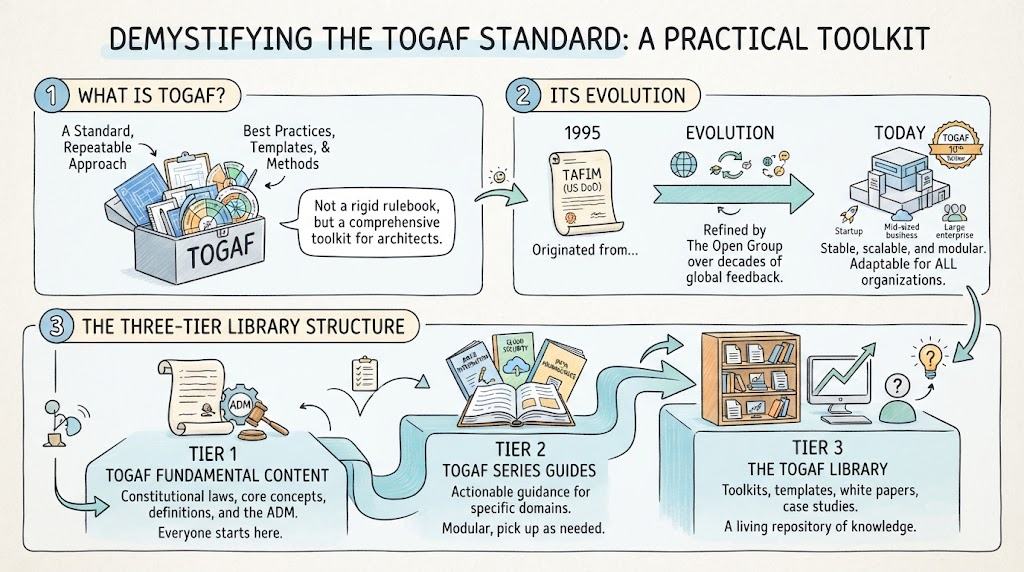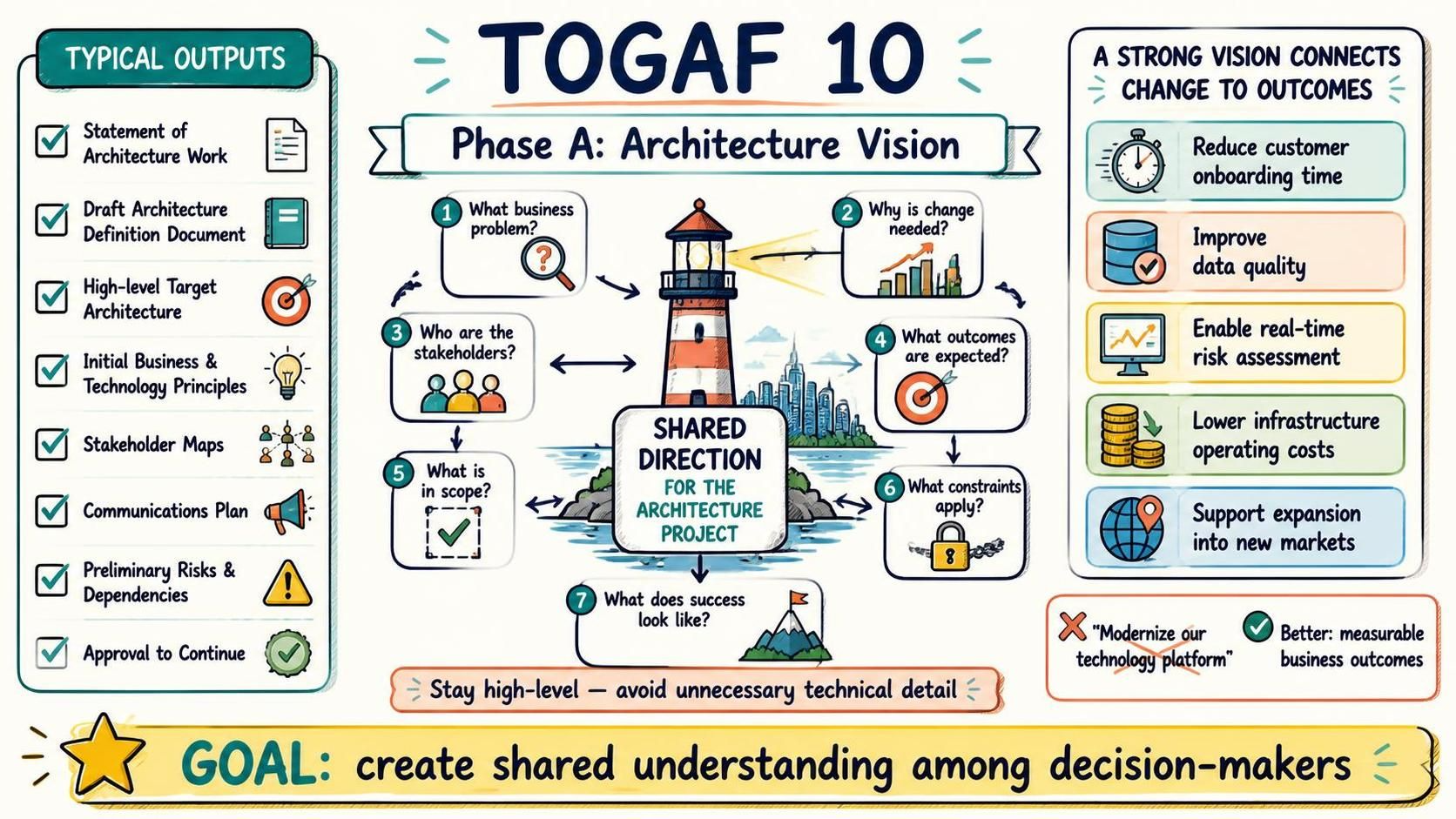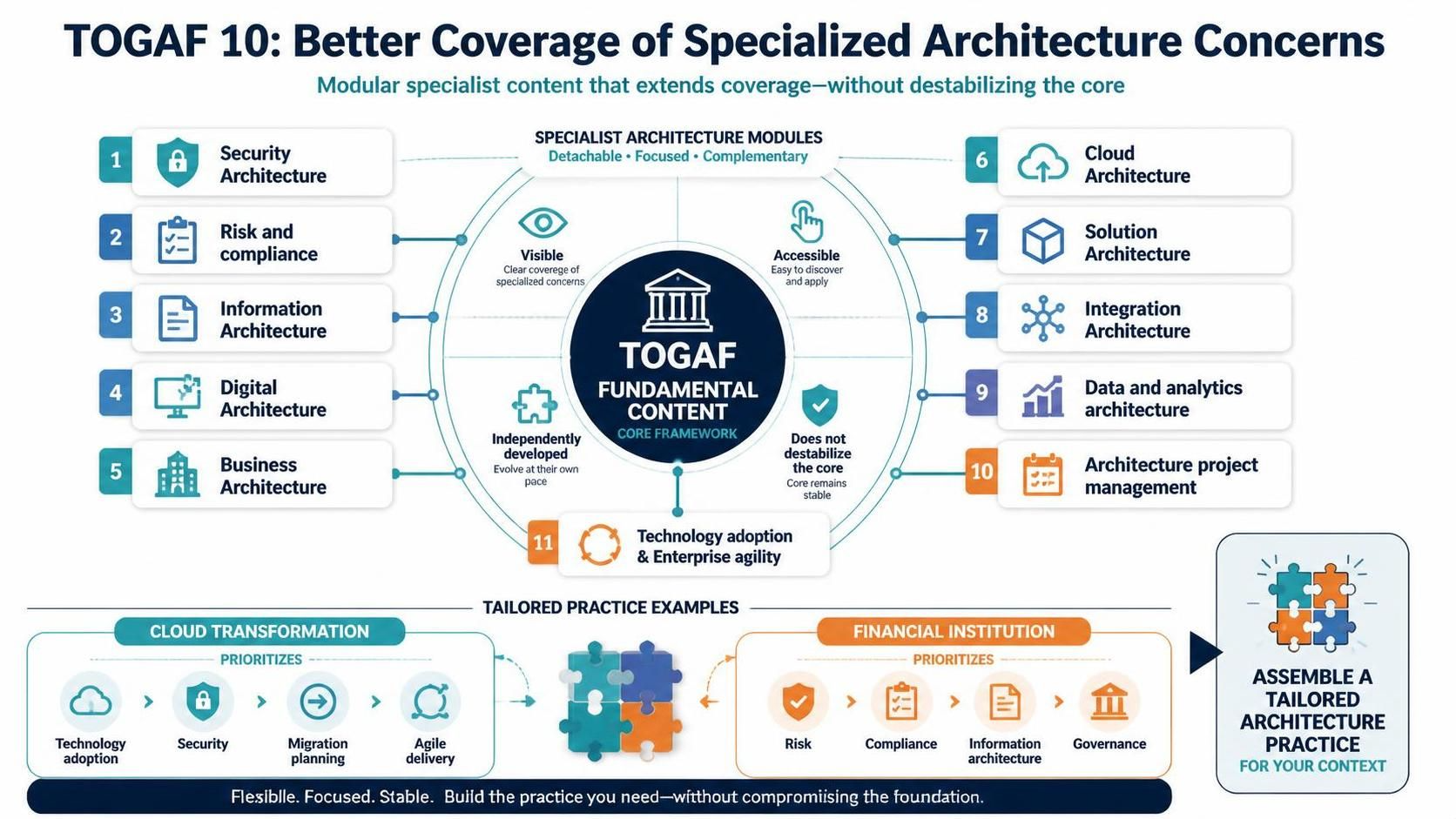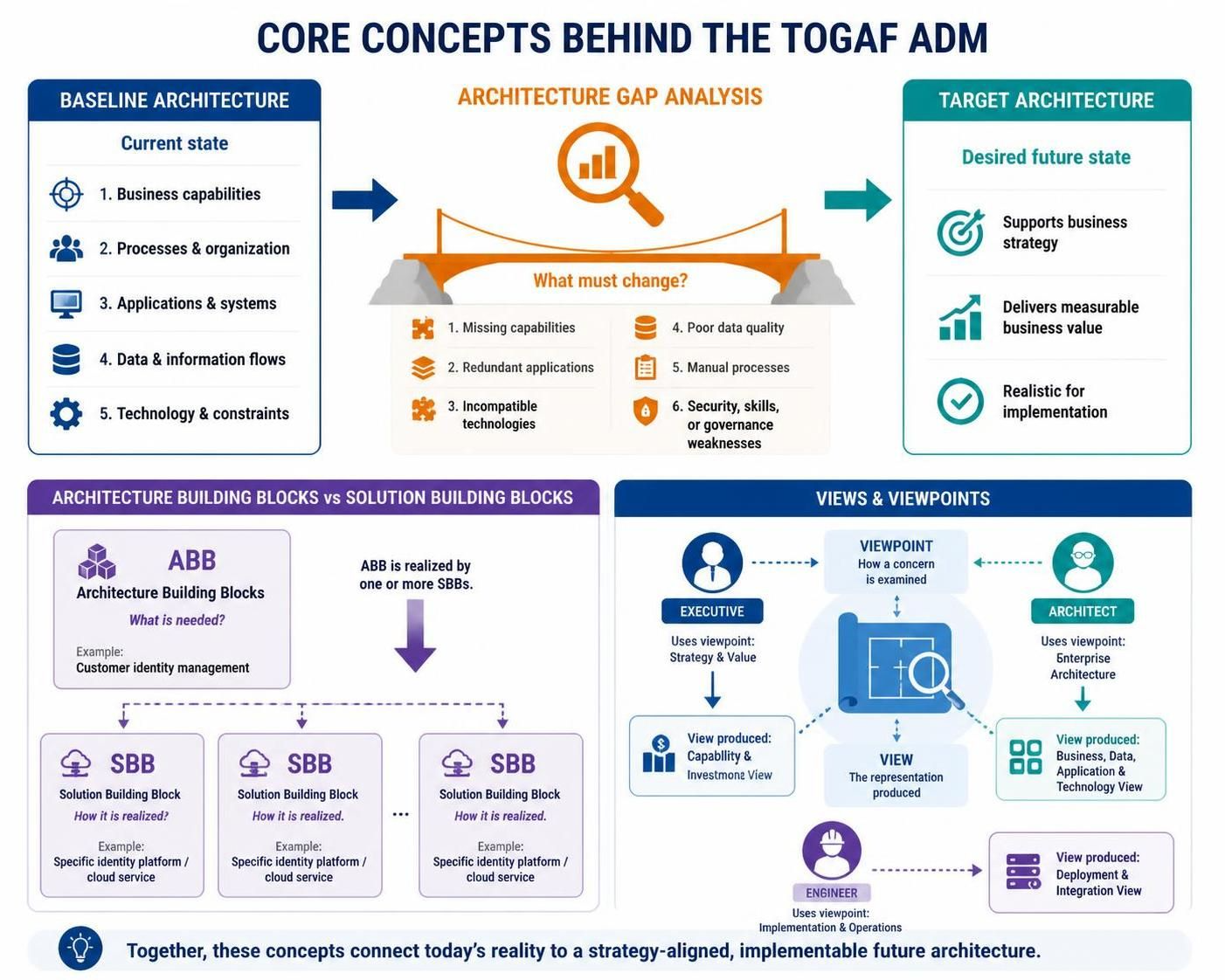
Enterprise architecture is a complex discipline that bridges the gap between business strategy and IT implementation. The TOGAF Architecture Development Method (ADM) provides a structured approach to this challenge. Before diving into the specific phases of the ADM, it is crucial to understand the core concepts that drive the entire methodology. These concepts—ranging from defining the “current state” to understanding the distinction between architectural needs and specific solutions—form the backbone of any successful enterprise transformation.
1. Understanding Architectural States: Baseline vs. Target
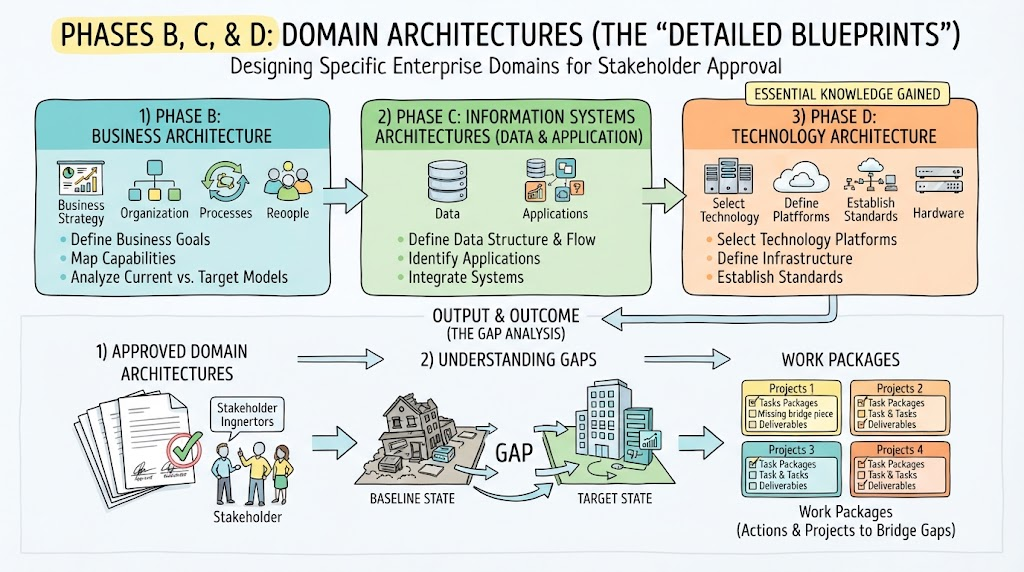
The journey of the ADM is essentially a movement from where an organization is today to where it wants to be tomorrow. This transition is defined by two critical states.
The Baseline Architecture (Current State)
The baseline architecture represents the organization’s reality right now. It is a snapshot of the existing environment and serves as the starting point for all architectural planning. A comprehensive baseline includes:
- Business Capabilities: What the organization actually does.
- Processes & Organization: How work gets done and who is involved.
- Applications & Systems: The software running the business.
- Data & Information Flows: How data moves across the enterprise.
- Technology & Constraints: The underlying infrastructure and any regulatory or budgetary limitations.
The Target Architecture (Desired Future State)
In contrast, the target architecture describes the ideal future state. This is not merely a wish list; it must be a realistic foundation for implementation that directly supports the overarching business strategy. A robust target architecture is characterized by:
- Strong alignment with business strategy.
- The delivery of measurable business value.
- Feasibility for actual implementation.
2. The Gap Analysis: Bridging the Distance
The “Architecture Gap” is the difference between the Baseline and the Target architectures. Identifying this gap is a critical analytical step known as Gap Analysis. By comparing the current state to the desired state, architects can identify exactly what needs to change. Common gaps identified during this phase include:
- Missing Capabilities: Functions the business needs but does not currently possess.
- Redundant Applications: Duplicate systems that increase cost and complexity.
- Incompatible Technologies: Legacy systems that do not integrate well.
- Process Inefficiencies: Manual processes that should be automated.
- Data Quality Issues: Poor data integrity or siloed information.
- Security & Governance Deficiencies: Weaknesses in security posture or skill gaps.
3. Architecture Building Blocks vs. Solution Building Blocks
One of the most powerful concepts in TOGAF is the separation of what is needed from how it is realized. This is achieved through the distinction between two types of building blocks.
Architecture Building Blocks (ABBs)
An ABB defines the functional capabilities required to meet business needs. It is vendor-neutral and focuses on the “what.” For example, an ABB might be defined simply as Customer Identity Management.
Solution Building Blocks (SBBs)
An SBB represents the specific implementation details. It is the product, system, component, or service used to realize the capability. SBBs are specific and often vendor-dependent. For instance, an SBB might be a specific Identity Platform / Cloud Service (e.g., Azure AD or Okta).
The relationship is hierarchical: An ABB is realized by one or more SBBs. This allows architects to design a flexible architecture that can adapt to different market solutions without changing the core functional requirements.
4. Views and Viewpoints: Communicating to Stakeholders
An enterprise architecture is too large to be understood through a single diagram. Different stakeholders have different concerns, and TOGAF addresses this through the concepts of Views and Viewpoints.
- Viewpoint: Defines how a concern should be examined. It sets the rules, conventions, and perspectives for a specific audience (e.g., “Strategy & Value” for executives).
- View: The actual representation produced using that viewpoint. It is the specific diagram, model, or document that answers the stakeholder’s specific questions.
Example of Views in Practice:
- Executive View: Uses a Strategy & Value viewpoint to produce a Capability & Investment View, focusing on high-level ROI and strategic alignment.
- Architect View: Uses an Enterprise Architecture viewpoint to produce a Business, Data, Application & Technology View, detailing the structural relationships.
- Engineer View: Uses an Implementation & Operations viewpoint to produce a Deployment & Integration View, focusing on technical integration and infrastructure.
Conclusion
Mastering these core concepts allows architects to effectively connect today’s reality to a strategy-aligned, implementable future architecture. By rigorously defining the baseline and target states, analyzing the gaps, distinguishing between functional needs (ABBs) and technical solutions (SBBs), and tailoring views for specific stakeholders, organizations can navigate complex transformations with clarity.
While these concepts are theoretical, implementing them requires practical tools. To visualize these flows and model these architectures effectively, we recommend using Visual Paradigm TOGAF ADM Tool. This tool provides the necessary infrastructure to manage the complexity of the ADM process, ensuring that your architectural decisions are documented, traceable, and actionable.