Welcome to this comprehensive tutorial on TOGAF 10 (The Open Group Architecture Framework). As organizations navigate the complexities of digital transformation, the need for a structured, yet flexible, approach to architecture has never been more critical. This guide is designed for Enterprise Architects, IT practitioners, and business stakeholders who want to understand how TOGAF 10 serves as the backbone for modern enterprise strategy.
1. What is TOGAF 10?
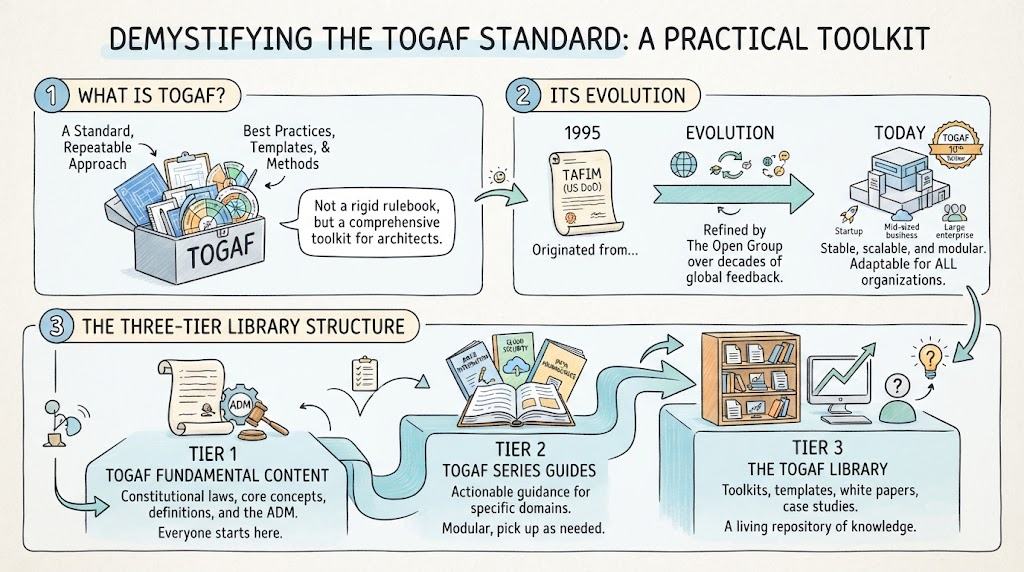
Released in 2022, TOGAF 10 represents a significant evolution from previous versions. It is the world’s most widely used enterprise architecture framework, designed to be modular and adaptable to modern digital transformation needs.
At its core, TOGAF provides a comprehensive approach to designing, planning, implementing, and governing enterprise information architecture. It is not just a set of diagrams; it is a methodology for aligning IT strategy with business goals.
Key Principles of the Framework
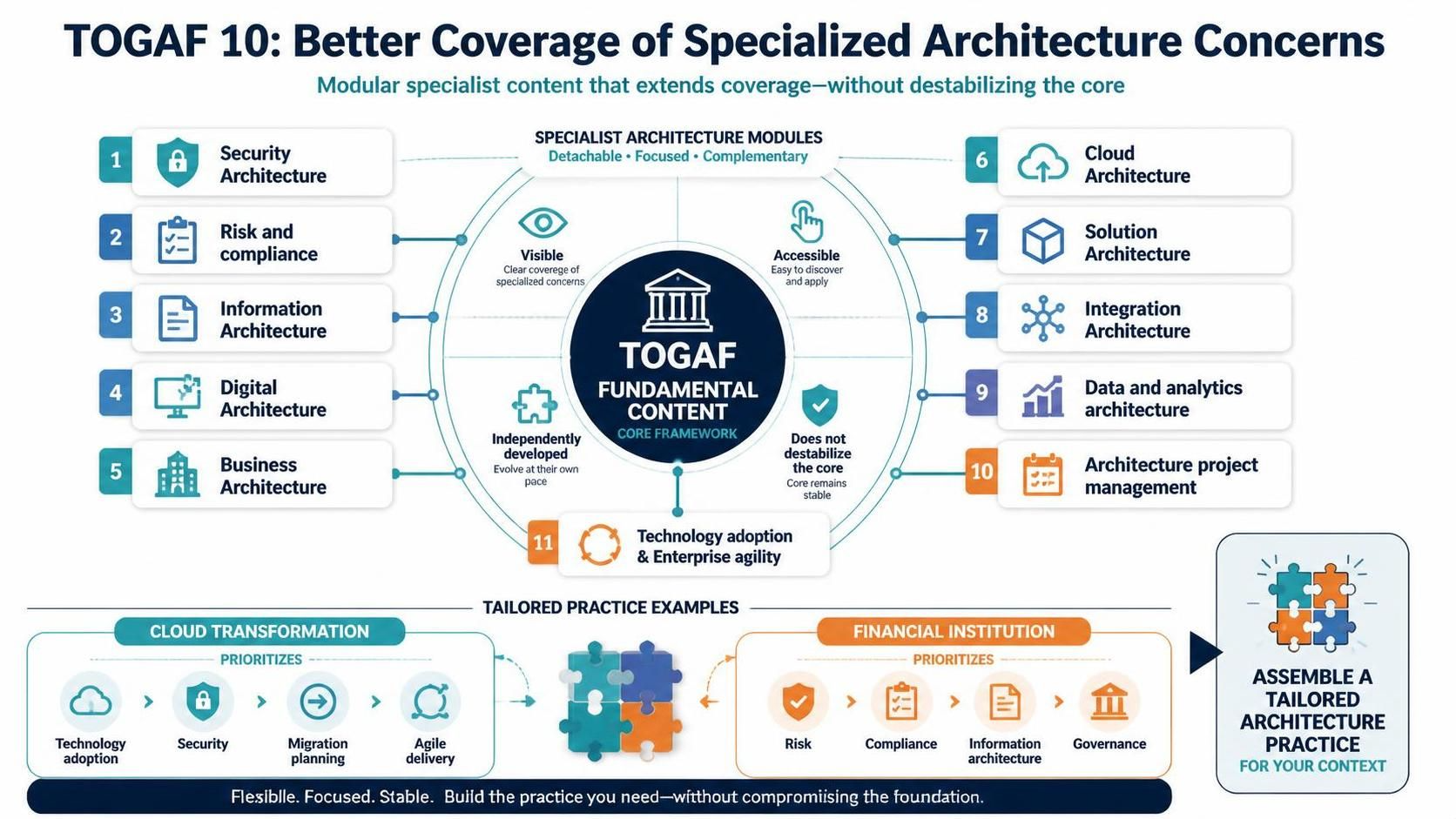
- Modularity: Unlike rigid frameworks, TOGAF 10 is modular, allowing organizations to select only the parts they need.
- Flexibility: It adapts to the specific context of the organization, whether it is a startup or a global enterprise.
- Comprehensive Scope: It covers the entire lifecycle from strategy to governance.
2. The Core Purpose: Why Use TOGAF?
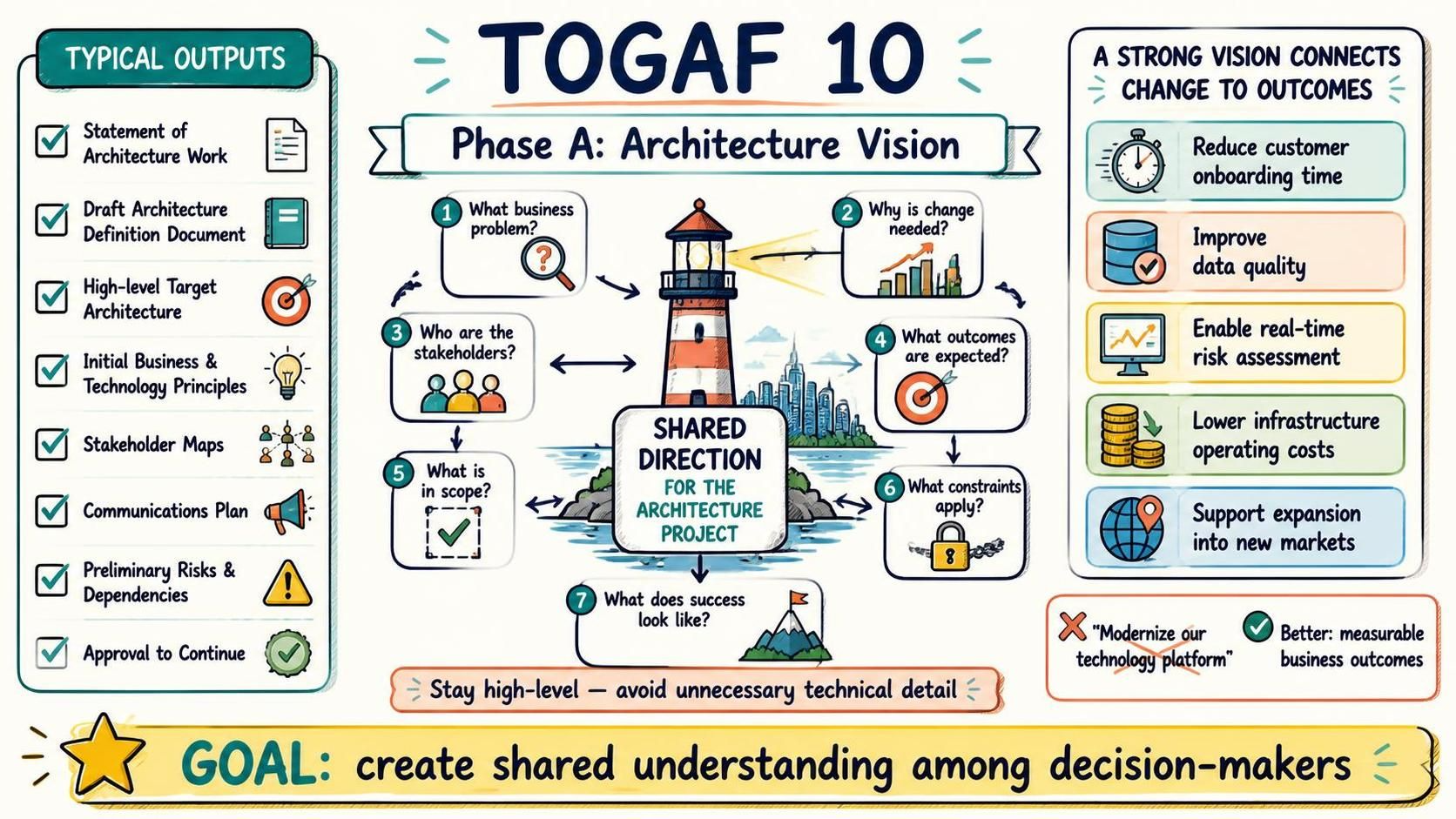
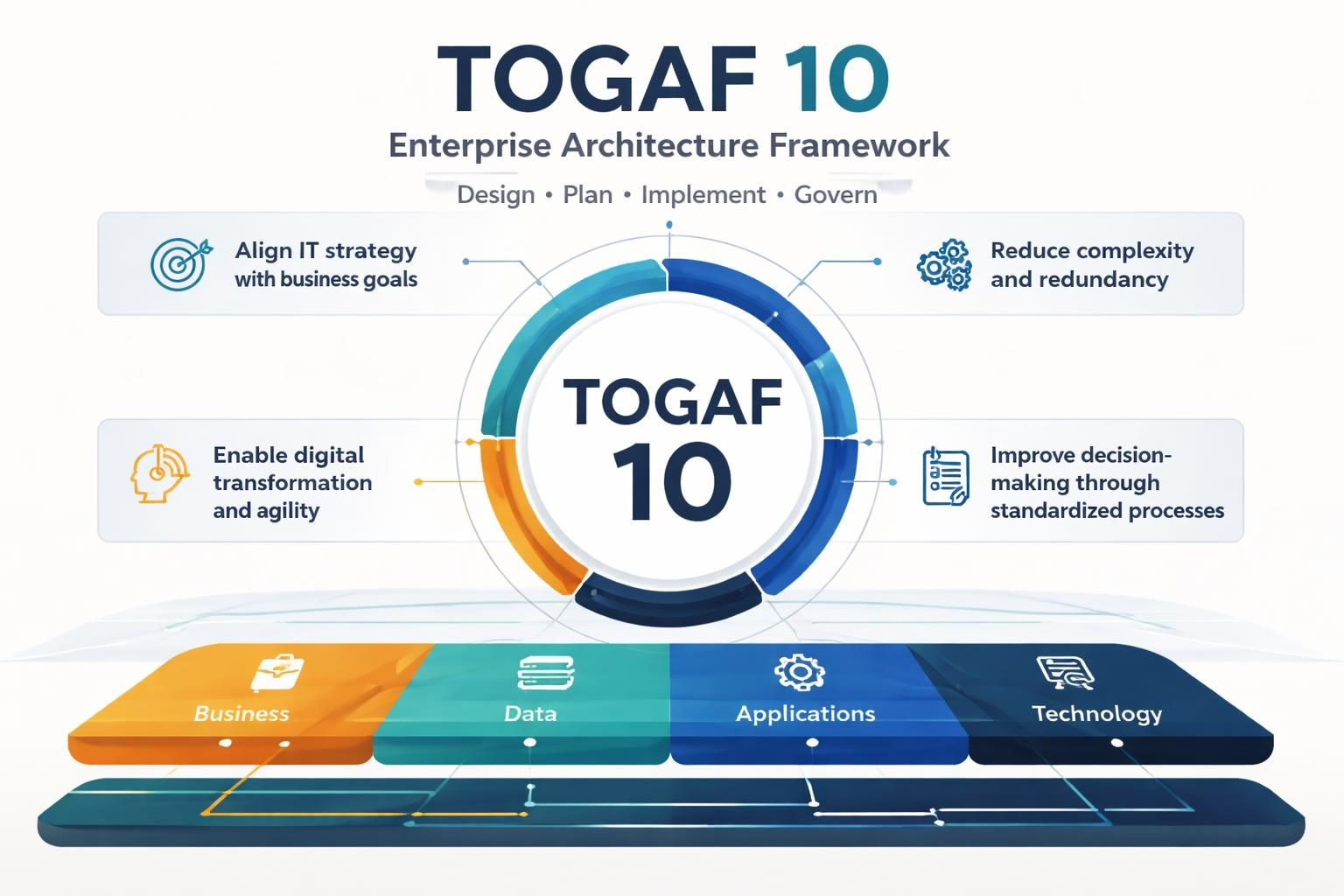
The central goal of TOGAF is to help organizations achieve their business vision through technology. The image provided in our context highlights four pillars that define the framework’s value proposition:
- Align IT Strategy with Business Goals: Architecture is often seen as a technical silo, but TOGAF bridges the gap. It ensures that every software deployment, server upgrade, or data migration directly supports a business objective.
- Reduce Complexity and Redundancy: By standardizing processes, organizations can eliminate duplicate systems and streamline operations.
- Improve Decision-Making: TOGAF provides standardized processes and documentation that allow leaders to make informed decisions based on data, not intuition.
- Enable Digital Transformation and Agility: In a rapidly changing market, the ability to pivot is essential. TOGAF helps build the “agile infrastructure” required to support innovation.
3. Understanding the Architectural Layers
A crucial aspect of the TOGAF framework is how it structures the enterprise. The visual representation of TOGAF 10 often depicts a layered approach, breaking down the enterprise into four distinct but interconnected domains:
The Four Pillars of Architecture
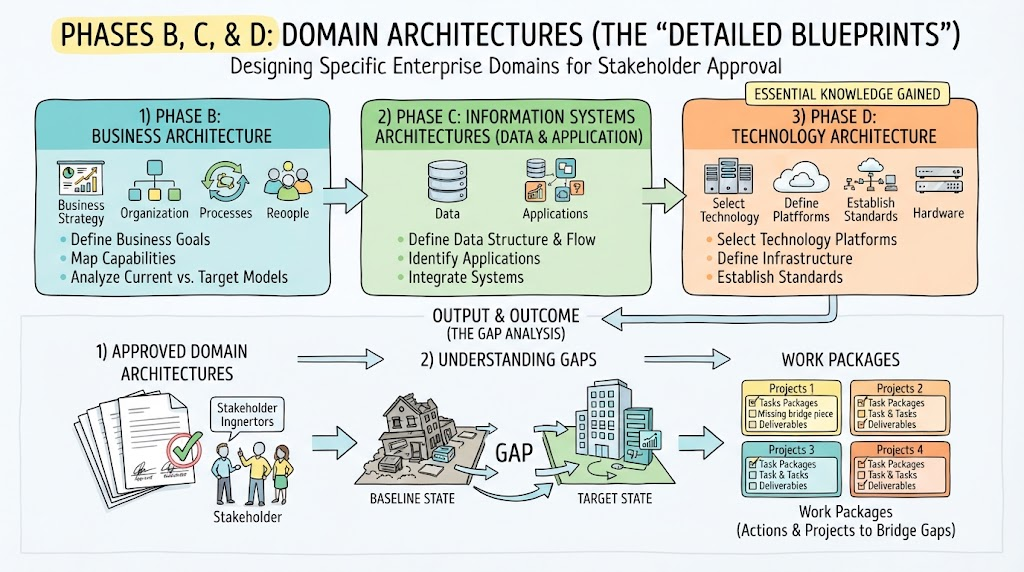
- Business Architecture: This is the foundation. It defines the business strategy, governance, organization, and key business processes. It answers the question: “What do we do and how do we do it?”
- Data Architecture: Once the business processes are defined, we must determine how data is stored and managed. This layer ensures that information assets are treated as valuable resources.
- Applications Architecture: This describes the blueprint for the individual application systems, their interactions, and their relationships to the core business processes of the organization.
- Technology Architecture: The final layer describes the hardware, software, and network infrastructure required to support the applications and data layers.
4. Implementation and Governance
The framework follows a cycle of Design, Plan, Implement, and Govern. This is not a linear process but a continuous loop. Once an architecture is implemented, it must be governed to ensure it remains compliant with the business strategy. If the strategy changes, the architecture must evolve.
Who is this for?
- Beginners: Those new to enterprise architecture need TOGAF to understand the vocabulary and structure of the field.
- EA Teams: Practitioners use TOGAF to implement or refine their specific architecture practice within their company.
- Stakeholders: Business leaders use TOGAF concepts to understand the value of Enterprise Architecture and how it drives ROI.
Conclusion
TOGAF 10 is more than just a framework; it is a strategic asset for any organization aiming to thrive in the digital age. By providing a standardized yet flexible approach, it allows businesses to reduce complexity, align technology with goals, and drive meaningful digital transformation.
To effectively implement these concepts, visualization is key. You cannot manage what you cannot see. For architects looking to model these complex layers, map the Architecture Development Method (ADM), and create professional diagrams, the recommended tooling is Visual Paradigm TOGAF Tool. This tool integrates seamlessly with the TOGAF methodology, allowing teams to visualize the Business, Data, Application, and Technology layers with precision and clarity.