Understanding Gap Analysis: Bridging the Distance Between Reality and Vision
Welcome to this comprehensive tutorial on Gap Analysis. In the world of business process improvement, one of the most critical questions a management team can ask is, “How do we get from where we are today to where we want to be tomorrow?” The answer lies in a structured technique known as Gap Analysis.
At its core, Gap analysis involves the comparison of actual performance with potential performance. It is the systematic process of examining your current state (the As-Is process) against your desired state (the To-Be process) to identify the differences, or the “gap,” that must be closed to achieve organizational goals.
The Core Concept: As-Is vs. To-Be
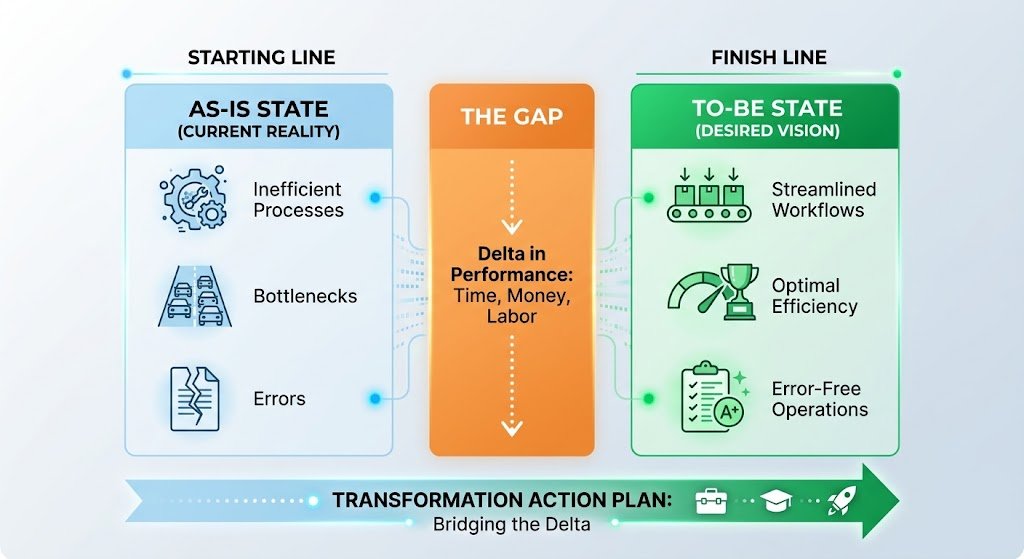
To effectively perform a gap analysis, you must clearly define two distinct states of a business process. Think of these as the starting line and the finish line of a race.
The As-Is Process (The Current State)
The As-Is state represents the “now.” It is an accurate, objective description of how a process currently operates before any changes or improvements are made. This includes the existing culture, capabilities, resources, and the specific steps taken to complete a task. Documenting the As-Is state is crucial because you cannot improve what you do not understand. It often reveals inefficiencies, bottlenecks, and areas of waste.
The To-Be Process (The Future State)
In contrast, the To-Be process describes the future state. This is the idealized version of the process after improvements have been implemented. It outlines how the organization’s process, culture, and capabilities will appear in the future. The To-Be state is driven by the company’s vision and strategic objectives.
The Gap: Identifying the Delta
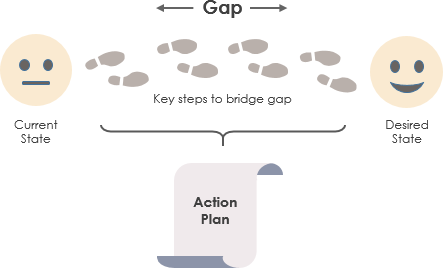
The Gap is the space between “where we are” (the present state) and “where we want to be” (the target state). It is the difference in performance metrics, such as time, money, and labor.
Consider the following visualization of this concept:
- Current State: A process that is slow, manual, and prone to errors.
- Desired State: A process that is fast, automated, and error-free.
- The Gap: The missing technology, training, or policy changes required to get from the current state to the desired state.
By defining and analyzing these gaps, the management team can create a targeted Action Plan to move the organization forward and fill in the performance gaps.
Visualizing the Gap with BPMN
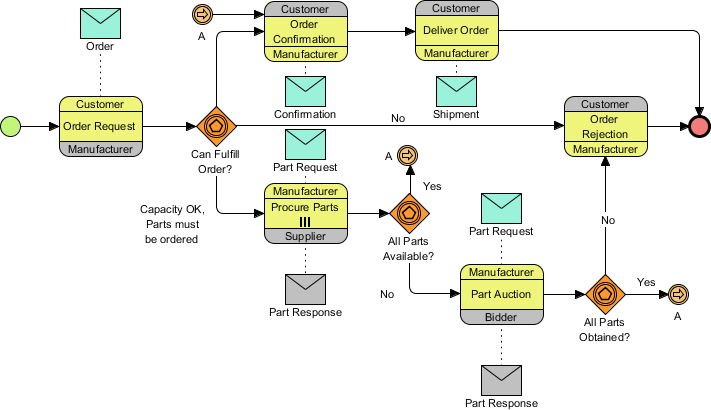
One of the most effective techniques for transforming vision into results is to develop and populate As-Is and To-Be BPMN diagrams. BPMN (Business Process Model and Notation) is the most widely used notation for documenting gap analysis because it provides a standardized visual language that stakeholders can easily understand.
When you map out your processes using BPMN, the gap becomes visually apparent. You can literally see the steps that exist in the As-Is diagram that are missing or modified in the To-Be diagram. This visual representation is far more powerful than a written report for communicating complex changes to a team.
How Visual Paradigm Facilitates Gap Analysis
Implementing Gap Analysis requires robust modeling tools, and Visual Paradigm is an industry-leading solution for this purpose. Visual Paradigm streamlines the entire lifecycle of a gap analysis project:
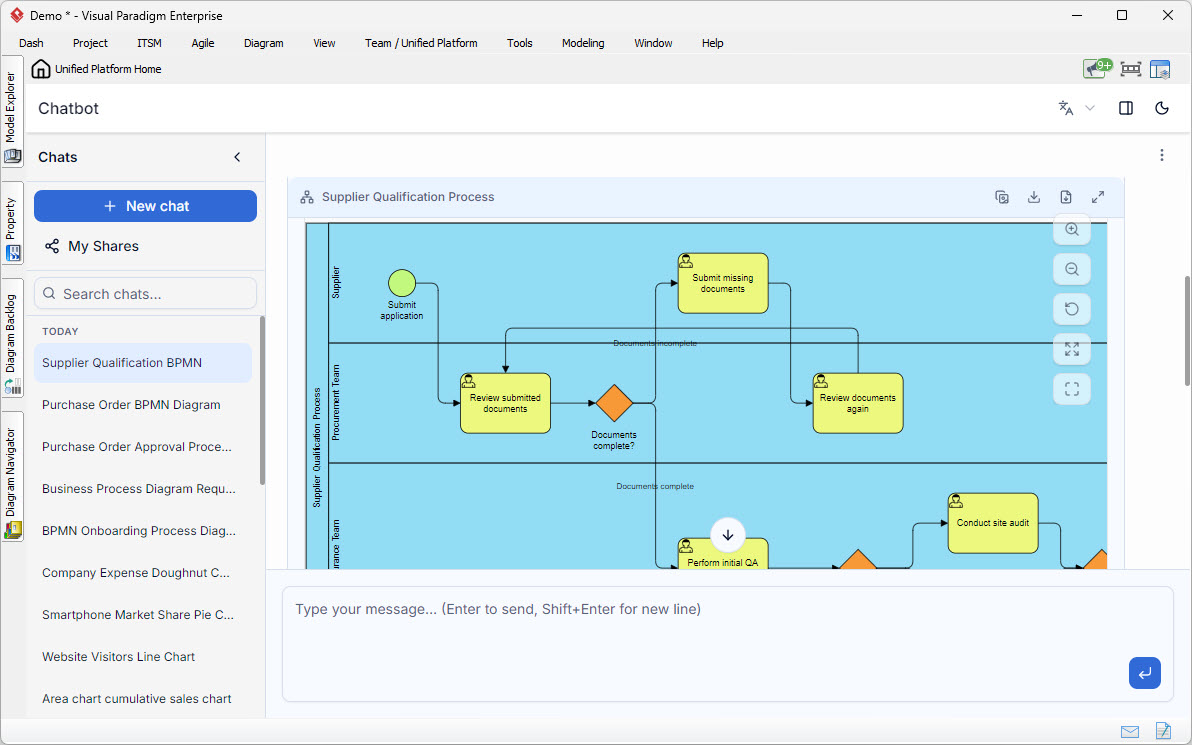
- Standardized BPMN Modeling: Visual Paradigm offers a comprehensive set of BPMN 2.0 tools, allowing you to effortlessly design both As-Is and To-Be diagrams. You can drag and drop symbols to represent tasks, gateways, and events.
- Side-by-Side Comparison: Using Visual Paradigm, you can create a single project containing both diagrams. This allows you to easily toggle between the As-Is and To-Be views to highlight exactly what has changed.
- Gap Management: Visual Paradigm supports the creation of requirement specifications and traceability matrices. You can link specific “To-Be” features back to the “Gap” identified in the analysis, ensuring that every improvement addresses a specific deficiency.
Step-by-Step Guide to Conducting a Gap Analysis
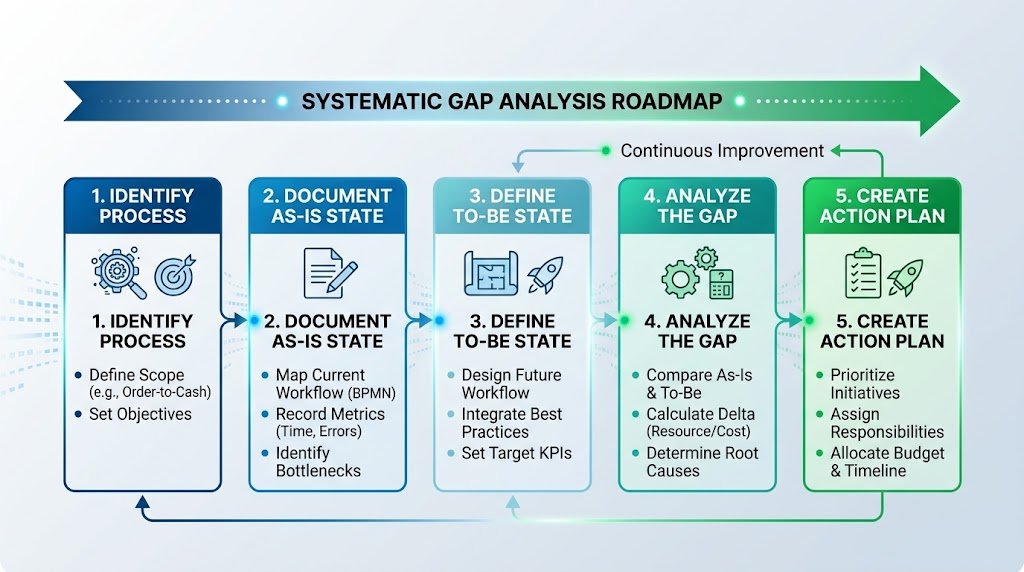
Ready to start? Here is a structured approach to conducting a Gap Analysis for your business process improvement program.
Step 1: Identify the Process
Select a specific process that needs improvement. This could be anything from “Order-to-Cash” to “Employee Onboarding.” Ensure the scope is manageable.
Step 2: Document the As-Is State
Map out the current process as it exists today. Do not judge it yet; just record it. Use BPMN to capture the workflow, including all handoffs, systems used, and decision points. In Visual Paradigm, you might use the “Process Analysis” feature to simulate the current flow and identify bottlenecks.
Step 3: Define the To-Be State
Based on your strategic vision, design the future process. How should it look? What technologies should be used? What KPIs should be met? Create the To-Be BPMN diagram. This is your target.
Step 4: Analyze the Gap
Compare the two diagrams. Ask the following questions:
- What steps are missing in the As-Is state?
- What steps are redundant?
- What resources (time, money, people) are required to bridge the gap?
- Is the gap due to a lack of technology, lack of training, or poor policy?
Step 5: Create an Action Plan
The final output of a gap analysis is an action plan. This document outlines the specific steps required to close the gap. It should assign responsibilities, set deadlines, and define the budget needed for the transformation.
Real-World Examples and Use Cases
To make these concepts concrete, let’s look at two common scenarios where Gap Analysis is applied.
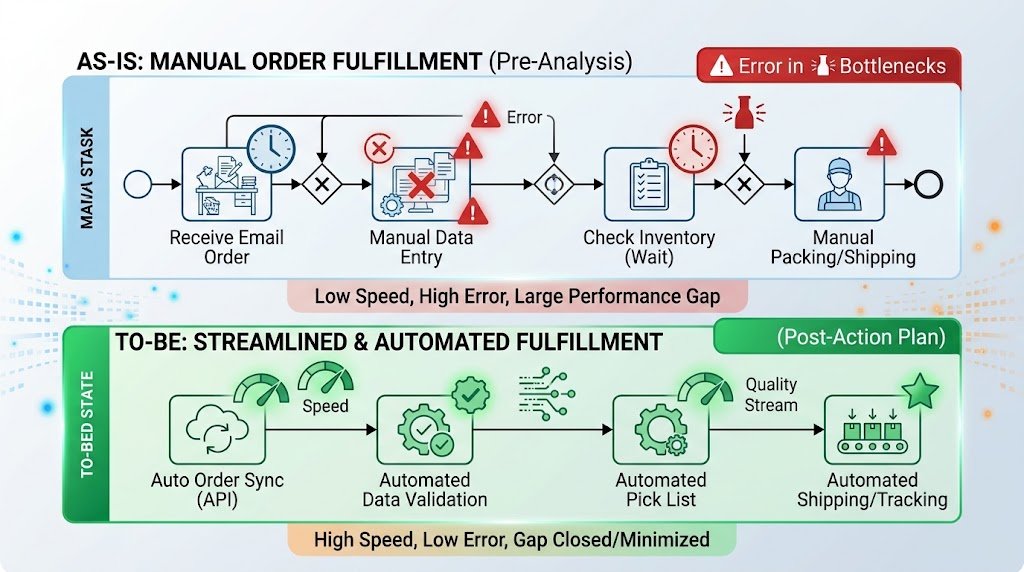
Example 1: Streamlining the Order Fulfillment Process
Current State (As-Is): A retail company receives orders via email. Staff manually type these orders into the inventory system. This takes an average of 4 hours per day and results in a 5% error rate in data entry.
Desired State (To-Be): Orders are automatically synced from the website to the inventory system in real-time. Staff only intervene for exceptions.
The Gap: The company lacks an API integration between their e-commerce platform and their ERP system. The action plan involves purchasing and implementing middleware software to automate the data transfer.
Example 2: Improving Customer Support Response Time
Current State (As-Is): Customer support tickets are managed in a shared spreadsheet. Agents have to manually check availability and assign tickets. Response time averages 24 hours.
Desired State (To-Be): A ticketing system automatically assigns tickets based on agent skill and workload. Response time is reduced to 2 hours.
The Gap: The company is using a manual, non-automated tool (spreadsheet) instead of a dedicated CRM. The action plan involves migrating to a cloud-based ticketing solution and retraining staff.
Conclusion
Gap analysis is not just a theoretical exercise; it is a practical tool for driving organizational change. By clearly defining the As-Is and To-Be states using visual tools like BPMN, organizations can pinpoint exactly where they are falling short and create a roadmap to success. Whether you are using Visual Paradigm to model complex workflows or simply sketching out ideas on paper, the key to a successful gap analysis is the clarity of your vision and the rigor of your current state assessment.