Unlocking Flexibility with Diagram-as-Code
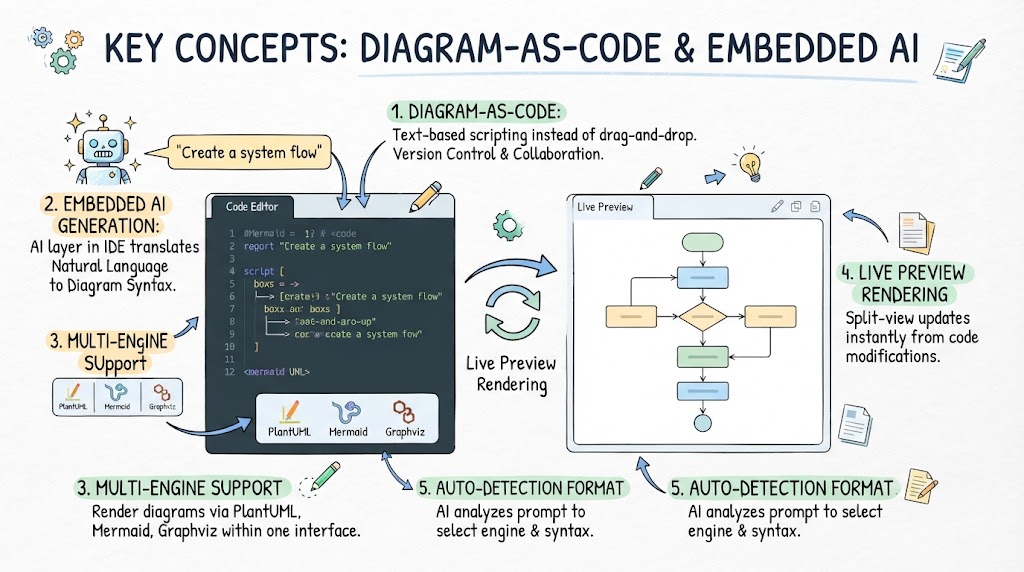
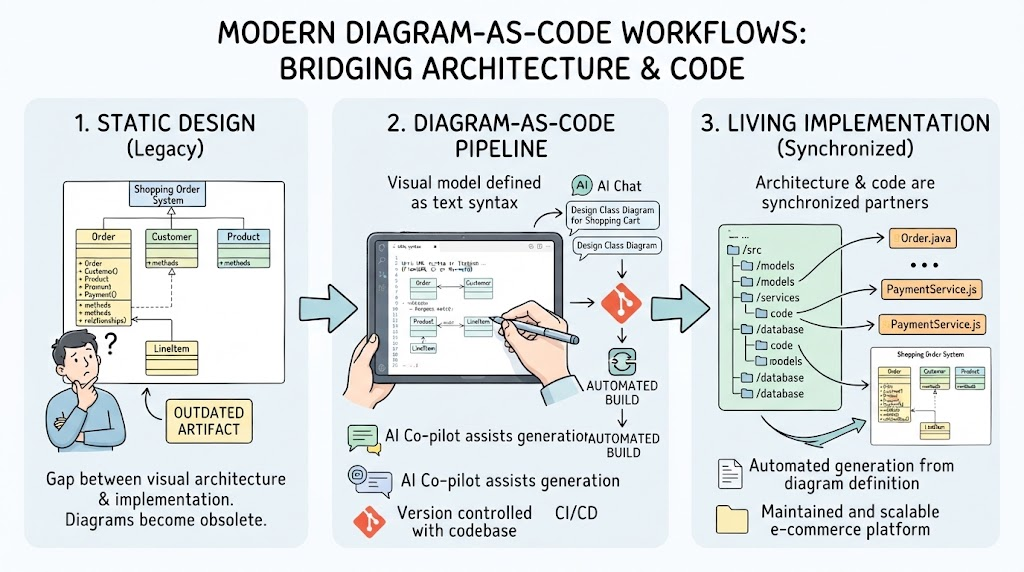
Welcome, developers and architects. Today we are diving into a modern approach to software modeling that breaks the chains of proprietary software lock-in. In the world of software architecture, you often face a dilemma: do you stick to a rigid, expensive tool that owns your data, or do you embrace an open standard that keeps your intellectual property safe? VPasCode offers a compelling third path. It is a centralized workspace that acts as a bridge between raw text and visual diagrams, supporting three leading open-source text syntax standards.
Let’s explore how this tool empowers you to design, model, and implement your systems effectively while maintaining full control over your assets.
The Power of Three: Choosing the Right Engine
One of the most distinct features of VPasCode is its multi-engine capability. Instead of forcing you to learn a new, proprietary syntax, it leverages the engines you likely already know or prefer. Each engine is optimized for specific use cases, allowing you to switch contexts seamlessly.
PlantUML: The Enterprise Standard
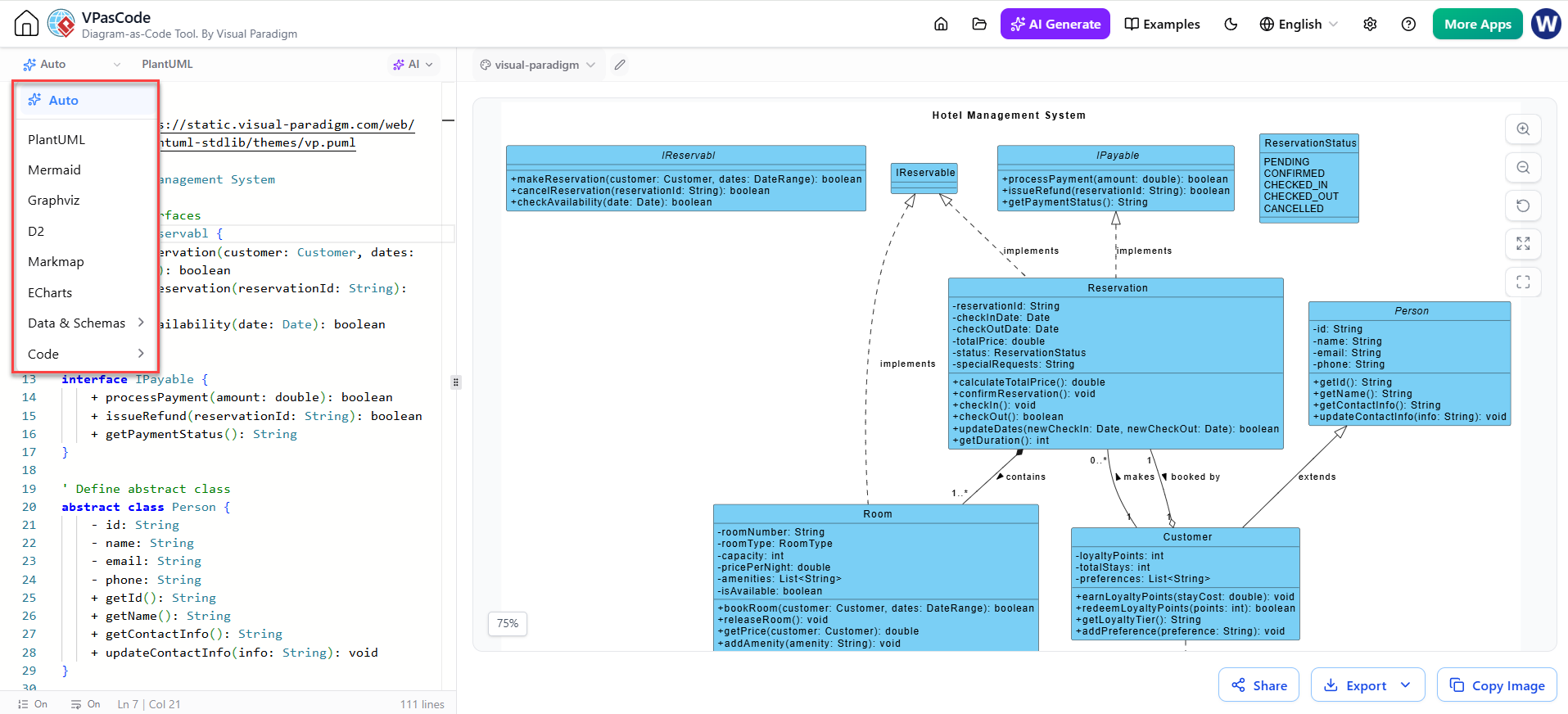
For robust enterprise software architecture, PlantUML remains the industry heavyweight. If you look at the Hotel Management System diagram currently displayed in the workspace, you are looking at a classic PlantUML output. This engine excels at creating detailed class models and component diagrams.
In the screenshot, notice how the engine handles complex object-oriented concepts:
- Interfaces and Implementation: The diagram clearly shows the IPayable and IReservable interfaces and how the Reservation class implements them.
- Abstract Classes: The Person class is defined as an abstract class, serving as a parent to Customer via an inheritance relationship.
- Association and Composition: The relationships between Room, Customer, and Reservation are mapped out with precise multiplicity constraints (like 1.. and 0..).
This level of detail is crucial for software architects who need to visualize the structural integrity of their applications before a single line of Java or C# code is written.
Mermaid.js: The Documentation Specialist
While PlantUML is great for deep architectural models, sometimes you need speed and simplicity. Mermaid.js is optimized for markdown-inspired charts. It is the ideal choice when you are writing technical documentation and need to embed diagrams directly into README files or wikis. Whether you are creating user flows, timelines, mind maps, or Gantt charts, Mermaid allows you to generate visuals without leaving your text editor.
Graphviz (DOT): The Data Structure Expert
Finally, for those dealing with massive network graphs or complex data structures, Graphviz (DOT) is the tool of choice. Its strength lies in its automatic layout algorithms. When you have high node counts where manual placement would be a nightmare, Graphviz ensures that the relationships between data points remain clear and readable without human intervention.
Seamless Integration with the Visual Paradigm Ecosystem
Adopting a “Diagram-as-Code” approach often raises a valid question: “What happens when I need to do advanced, model-based editing?” This is where the integration with Visual Paradigm becomes a game-changer.
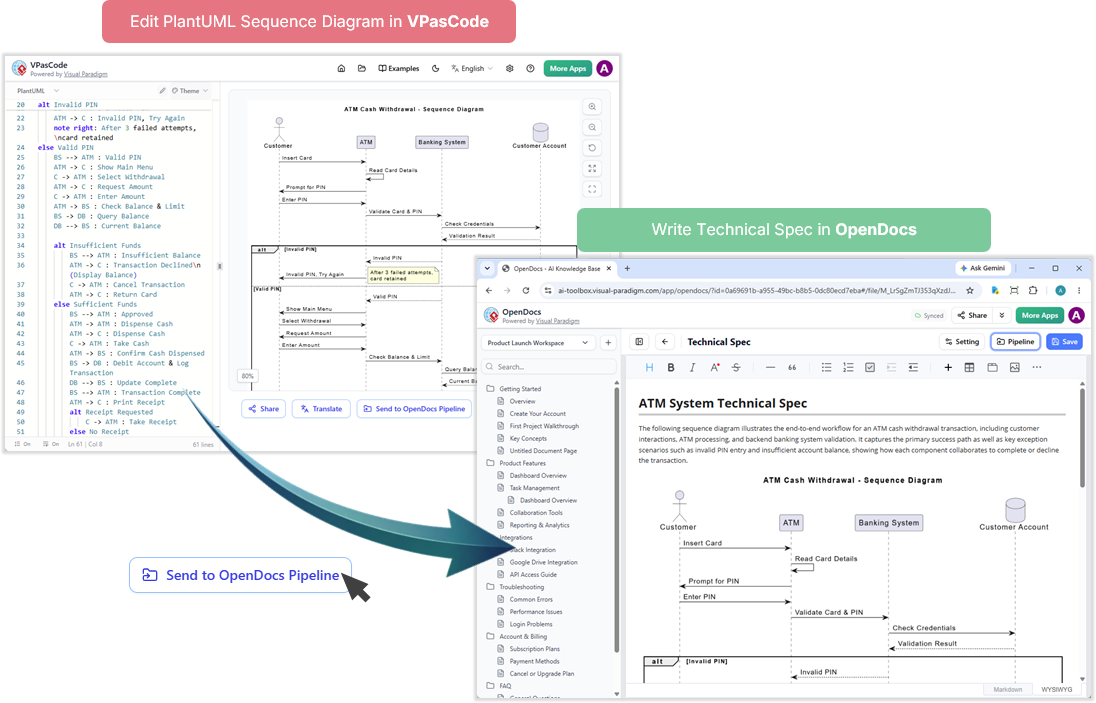
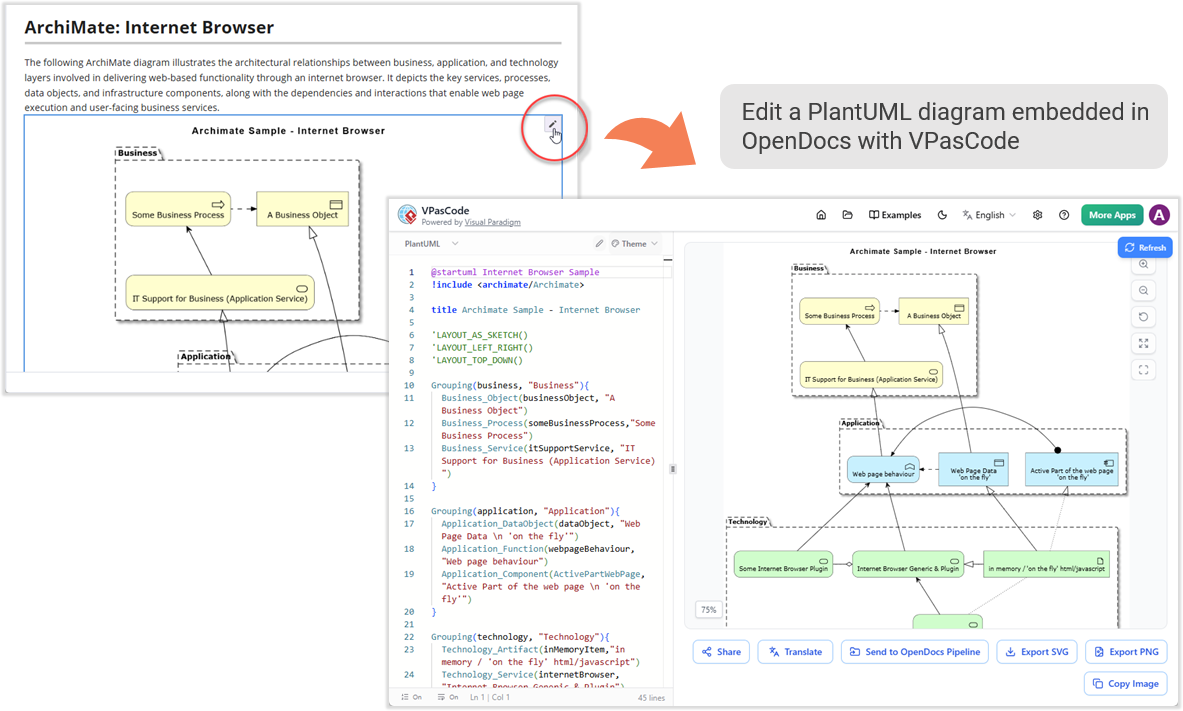
VPasCode is not a walled garden. By supporting open formats, it ensures your intellectual property remains portable. You can copy your raw text syntax directly into Git repositories for effortless version control, treating your diagrams just like your source code. When it comes time to export, you can generate scalable vector files (SVG), high-resolution images (PNG), or printable documents (PDF) instantly.
Furthermore, the workflow is bidirectional. If you find yourself needing to take a diagram from VPasCode and move it into a more traditional visual editor, you can do so effortlessly. Layouts generated in VPasCode can be seamlessly imported into Visual Paradigm Desktop or VP Online. This means you get the speed and version-control benefits of writing code, but you retain the powerful, advanced modeling capabilities of the Visual Paradigm platform when the project demands it.
By blending the agility of text-based coding with the visual power of industry-standard tools, VPasCode ensures that your modeling process is as flexible and robust as the software you are building.