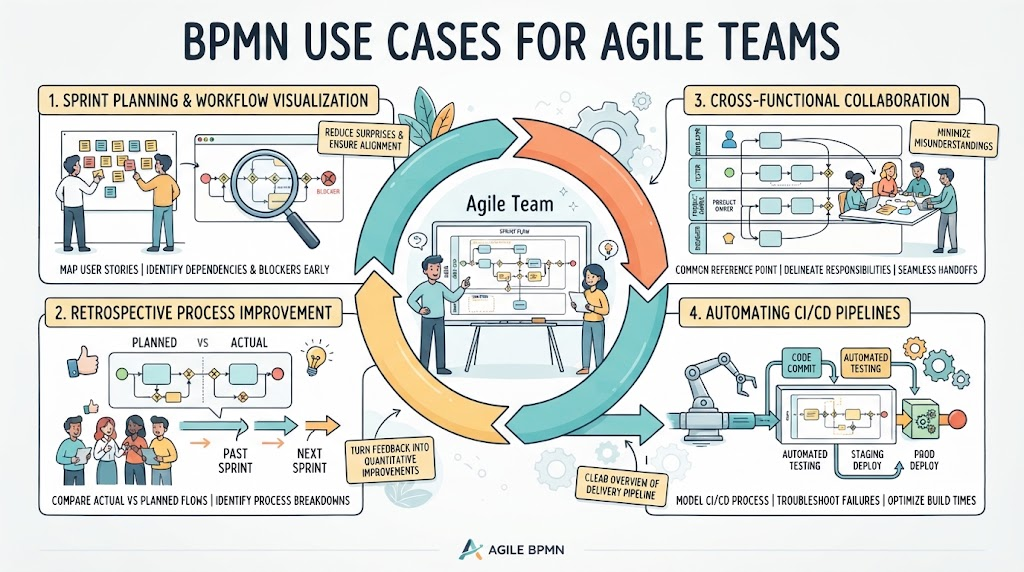
In the fast-paced environment of modern healthcare, efficiency is not just a goal—it is a necessity. The image provided, “BPMN Use Cases for Agile Teams,” serves as a perfect backdrop to understand how formal process modeling can revolutionize patient care. This tutorial explores a specific application of Business Process Model and Notation (BPMN) in a healthcare setting: Optimizing Patient Onboarding.
We will deconstruct the challenge, analyze the solution, and walk through the specific BPMN modeling concepts that transformed a chaotic administrative process into a streamlined, digital workflow.
The Challenge: Fragmentation in Patient Care
Imagine a large hospital network where a patient arrives for an appointment. Before they can see a doctor, they must navigate a complex maze of administrative tasks. In the scenario described in our context:
- Inconsistent Experiences: Different departments (e.g., Cardiology vs. Orthopedics) use different procedures for the same basic tasks.
- Paper Records: Reliance on physical forms leads to lost data and illegible handwriting.
- Delayed Treatments: Critical information, such as insurance verification or medical history, is often missing, halting the clinical workflow.
This “As-Is” state represents a classic process bottleneck. Without a standardized model, errors propagate, and the patient experience suffers.
The Solution: Standardization via BPMN
The hospital network adopted a BPMN Solution to unify their operations. By treating the onboarding process as a software-like system, they could visualize, model, and automate it. Here is how the technical implementation works.
1. The As-Is Analysis: Identifying the Chaos
The first step was stakeholder interviews and process mapping. In BPMN terms, the team created a map of the current state. They discovered that while the goal (patient onboarding) was the same, the sequence of activities varied wildly.
- Insurance Verification: Sometimes done before arrival, sometimes during.
- Medical History: Collected via phone, email, or paper forms.
Without a diagram, these variations are invisible. The BPMN diagram made the discrepancies obvious, highlighting the need for a To-Be Design.
2. The To-Be Design: Creating the “Single Source of Truth”
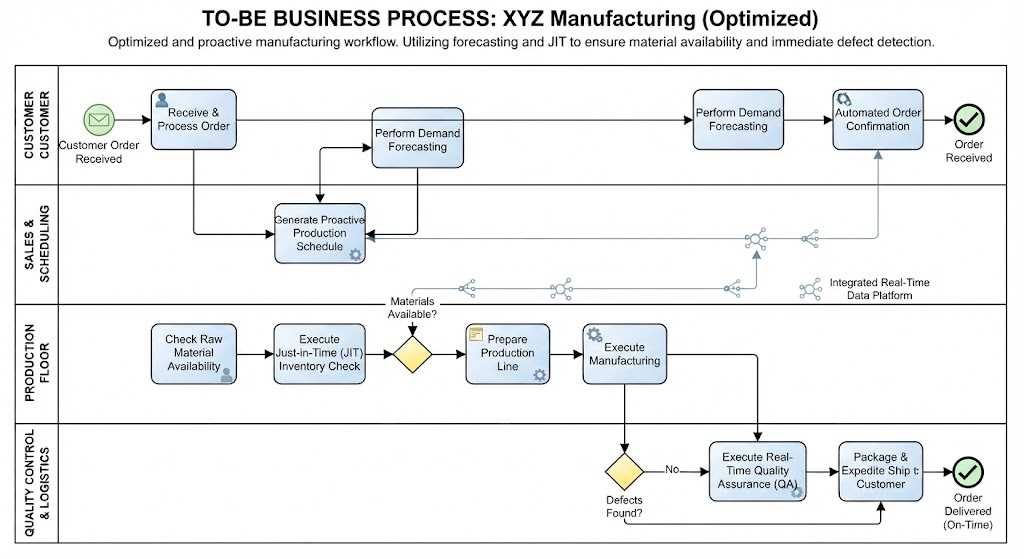
The core of the solution was creating a standardized BPMN diagram. This diagram acts as the blueprint for the new digital workflow. It defines exactly how a patient moves from “Check-in” to “Ready for Treatment.”
Key BPMN Modeling Concepts Used:
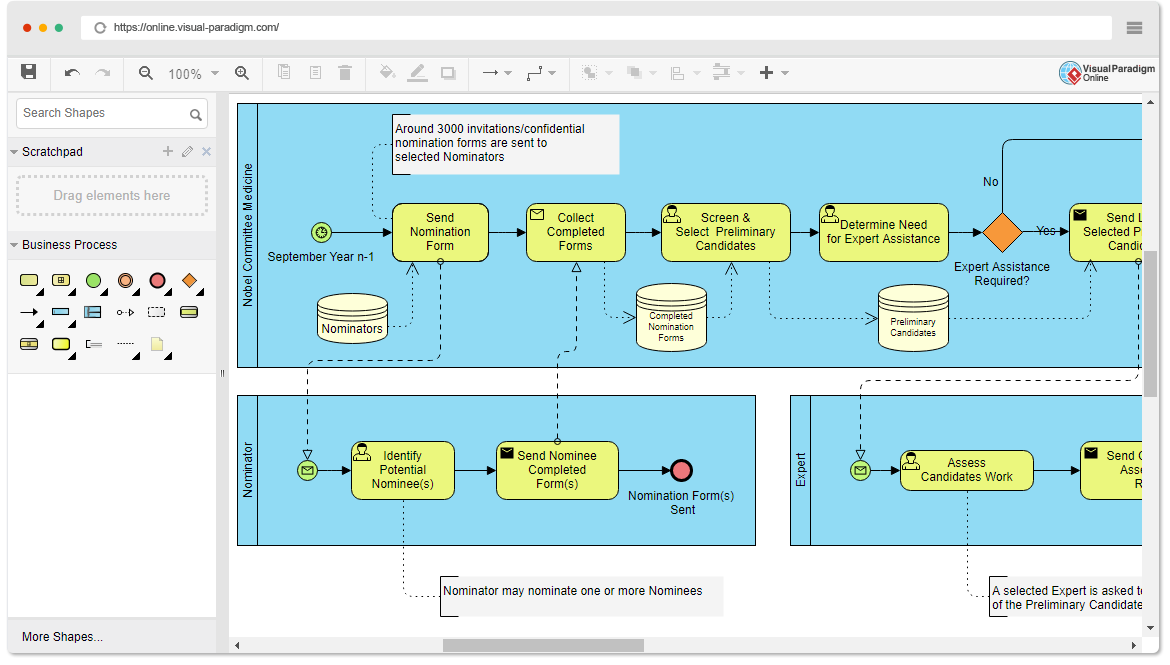
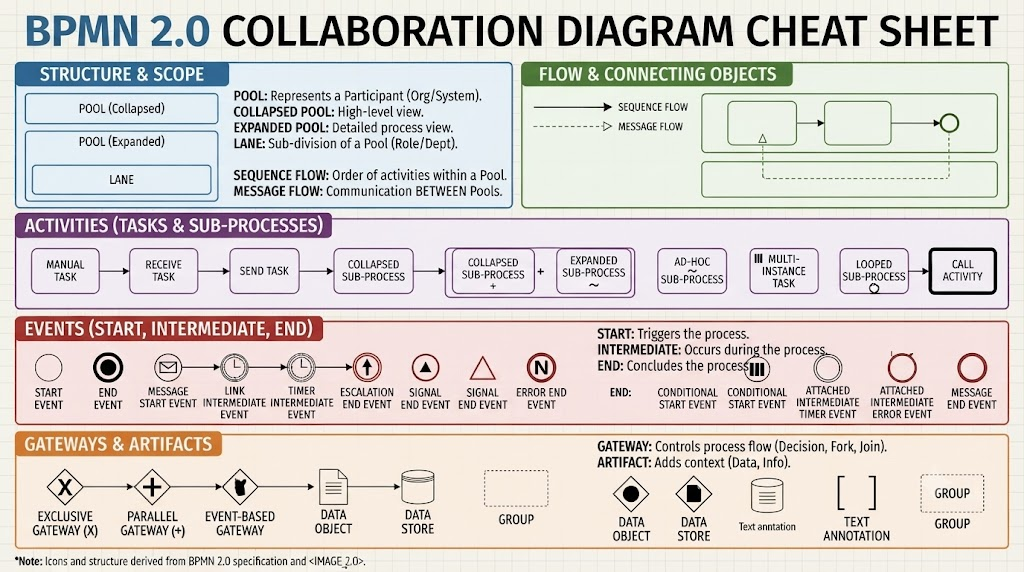
- Standardized Sequence Flows: The new process enforces a strict order. For example, Insurance Verification must be completed before Medical History Collection. This is represented by a directed arrow (Sequence Flow) connecting the tasks.
- Gateways for Decision Making: The process includes decision points. A Exclusive Gateway (XOR) checks: “Is Insurance Verified?”
- Yes: Proceed to Medical History.
- No: Trigger an alert to the billing department.
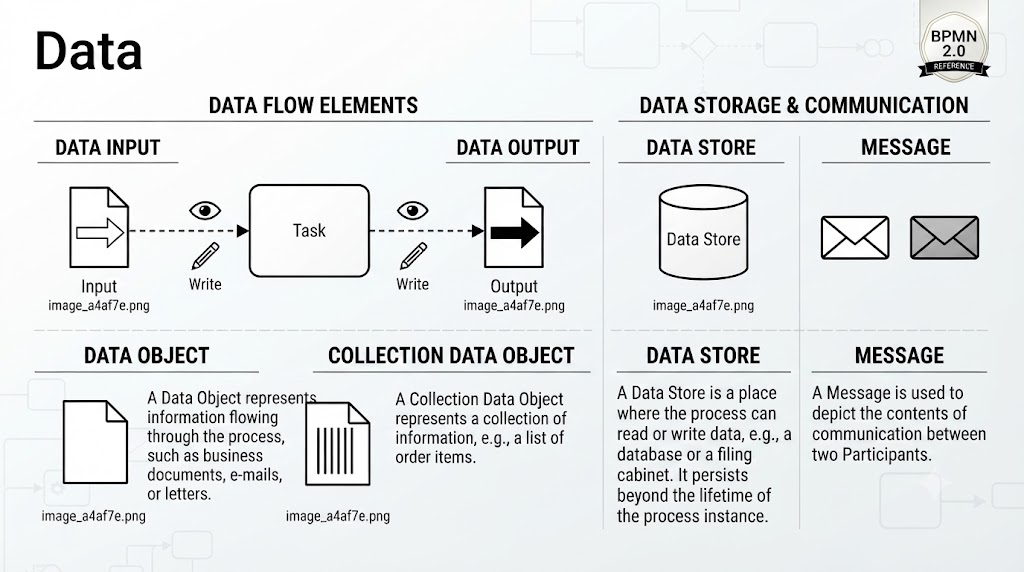
- Intelligent Data Handling: The model explicitly links digital forms to the data fields. When a patient fills out a form, the data is automatically validated against the process requirements.
3. Automation and Alerts
The BPMN diagram was not just for humans; it was executed by software. The diagram defined the logic for Automated Alerts.
Instead of a human realizing a form is missing, the BPMN engine detects a missing token in the process flow. It triggers an automated notification to the staff member responsible, ensuring no step is skipped. This transforms the process from reactive (fixing errors after they happen) to proactive (preventing errors before they happen).
Outcome: The Quantifiable Impact
By implementing this BPMN-driven architecture, the hospital network achieved the results shown in the context:
- 30% Reduction in Administrative Workload: Automation handled the routing and data entry, freeing up staff.
- Decreased Wait Times: Patients no longer waited for missing paperwork to be found.
- Improved Data Accuracy: Digital forms eliminated illegible handwriting and missing fields.
This case study demonstrates that BPMN is not just about drawing boxes and arrows. It is a rigorous engineering approach to service delivery. By modeling the process first, the hospital could ensure that every digital interaction with a patient was reliable, consistent, and efficient.
Conclusion
Just as the “Agile Team” in the reference image uses BPMN to visualize workflows and automate CI/CD pipelines, healthcare providers can use these same tools to save lives. Standardizing the onboarding process is the first step toward a smarter, safer healthcare system.