


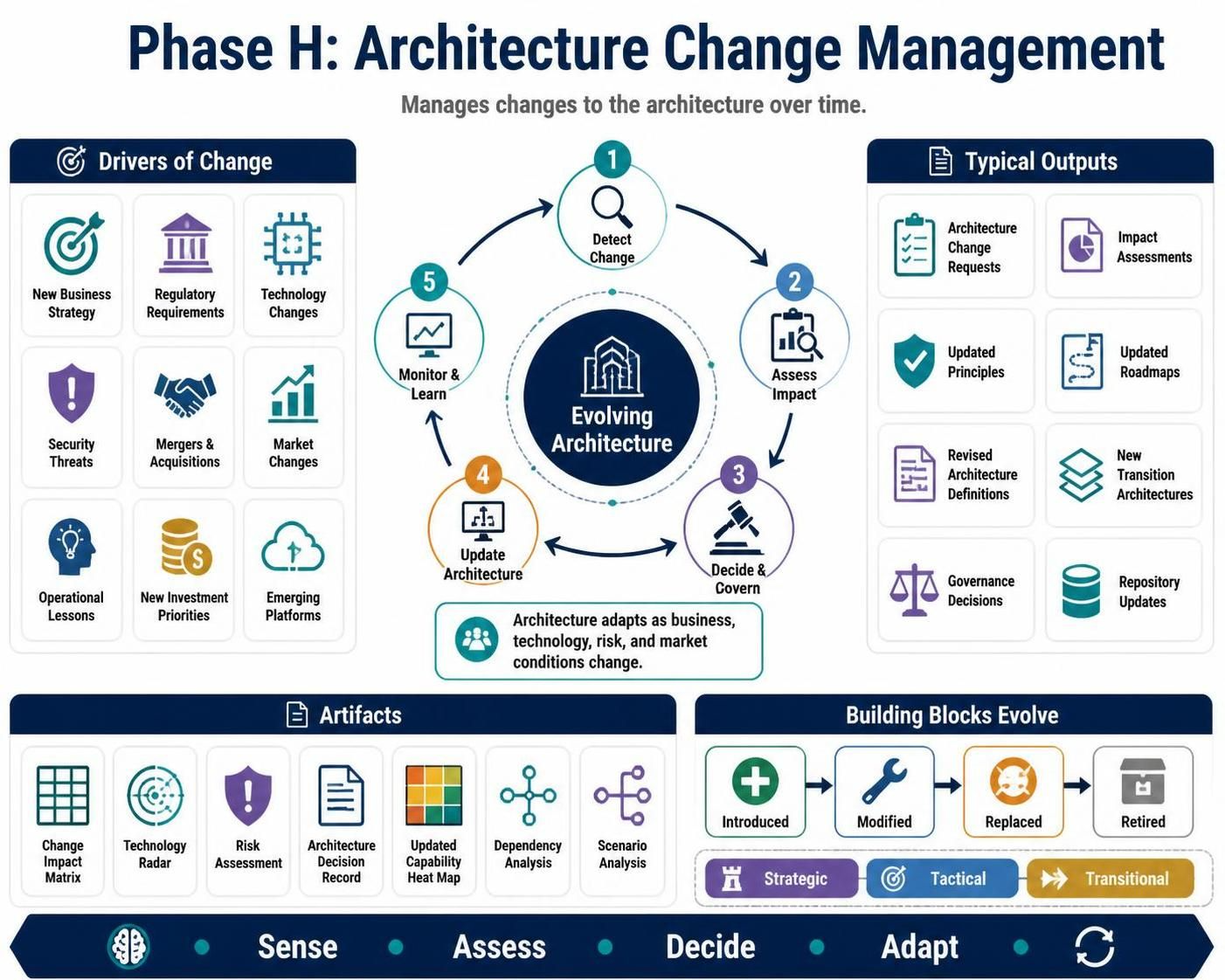
In the rapidly evolving landscape of enterprise technology, an architecture that remains static is an architecture destined to fail. This is the core philosophy behind Phase H: Architecture Change Management in the TOGAF (The Open Group Architecture Framework) standard. This phase is not merely a procedural checkpoint; it is the mechanism that ensures an enterprise’s architecture remains relevant, secure, and aligned with business goals over time.
This tutorial will deconstruct Phase H, exploring the drivers of change, the lifecycle of architectural artifacts, and the iterative process required to maintain an “Evolving Architecture.”
The Imperative for Change
Why does architecture change? Phase H acknowledges that the environment in which a business operates is dynamic. The “Drivers of Change” are the external and internal forces that necessitate an update to the architectural blueprint. These are categorized into several critical areas:
- Strategic Shifts: New business strategies or mergers and acquisitions can fundamentally alter the direction of the enterprise.
- External Pressures: Regulatory requirements and security threats often force immediate architectural adjustments to ensure compliance and safety.
- Technological Evolution: Emerging platforms, technology changes, and new investment priorities mean that the tools available today may differ vastly from those used yesterday.
- Operational Reality: Market changes and operational lessons learned from implementation provide the feedback loop necessary for refinement.
The Lifecycle of Change: The 5-Step Cycle
At the heart of Phase H is a continuous cycle that transforms the “Evolving Architecture.” This cycle ensures that change is managed methodically rather than reactively.
1. Detect Change (Sense)
The process begins with the detection of a change. This is the “Sense” phase, where the architecture team identifies a deviation or a new requirement. Whether it is a new regulatory clause or a competitor’s disruptive technology, the architecture must be aware of the shift.
2. Assess Impact (Assess)
Once a change is detected, its impact must be understood. This involves analyzing how the change affects the existing architecture. Does it require a new database? Does it impact security protocols? This step relies heavily on impact assessments and scenario analysis to predict the ripple effects of the proposed change.
3. Decide & Govern (Decide)
With the impact assessed, the phase moves to governance. This is where Architecture Decision Records (ADRs) are crucial. Stakeholders must decide whether to approve, reject, or modify the change. This step ensures that the proposed change aligns with business priorities and architectural principles.
4. Update Architecture (Adapt)
Upon approval, the actual architecture is updated. This is the “Adapt” phase where the artifacts—such as roadmaps, capability heat maps, and dependency analyses—are revised to reflect the new reality.
5. Monitor & Learn
The cycle closes with monitoring. The implementation of the change is tracked, and the results are fed back into the system. This “Learn” aspect ensures that the organization improves its understanding of how changes are managed over time.
Artifacts and Building Blocks
To successfully manage this cycle, architects rely on a suite of specific Artifacts. These are not just documents but living tools that provide insight into the system’s health.
- The Change Impact Matrix: A tool used to map the consequences of a change across different domains.
- The Technology Radar: A visual representation of the technologies that are relevant to the organization, helping to identify emerging platforms.
- Architecture Decision Record (ADR): A concise record of the rationale behind a significant architectural decision.
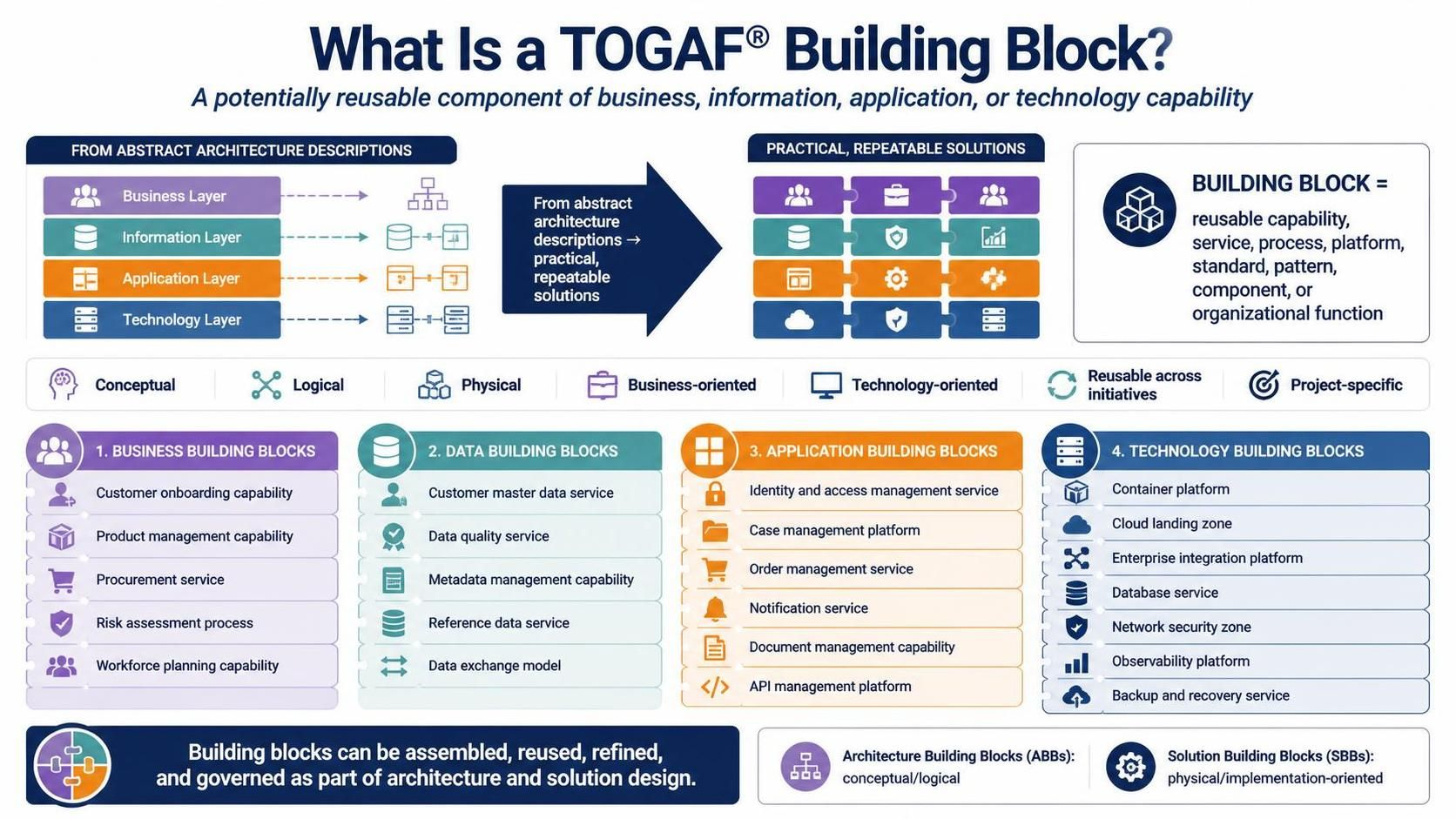
Furthermore, the diagram highlights how Building Blocks (the fundamental components of the architecture) evolve. They are not static; they follow a lifecycle:
- Introduced: New components are added to the architecture.
- Modified: Existing components are updated to meet new requirements.
- Replaced: Outdated components are swapped for newer, more efficient ones.
- Retired: Components that are no longer needed are decommissioned.
Additionally, building blocks are reclassified based on their strategic value, shifting between Strategic, Tactical, and Transitional roles as the enterprise evolves.
Conclusion
Phase H: Architecture Change Management is the engine that keeps an enterprise architecture alive and relevant. By systematically detecting, assessing, deciding, and updating, organizations can navigate the complexities of modern business environments.
To effectively implement this rigorous process, it is highly recommended to utilize specialized tooling that supports the TOGAF ADM methodology. Tools like Visual Paradigm TOGAF ADM Tool provide a robust environment for modeling these complex cycles, managing artifacts, and visualizing the evolution of the architecture. By leveraging such tools, architects can ensure that the “Evolving Architecture” remains a strategic asset rather than a liability.
Related posts:
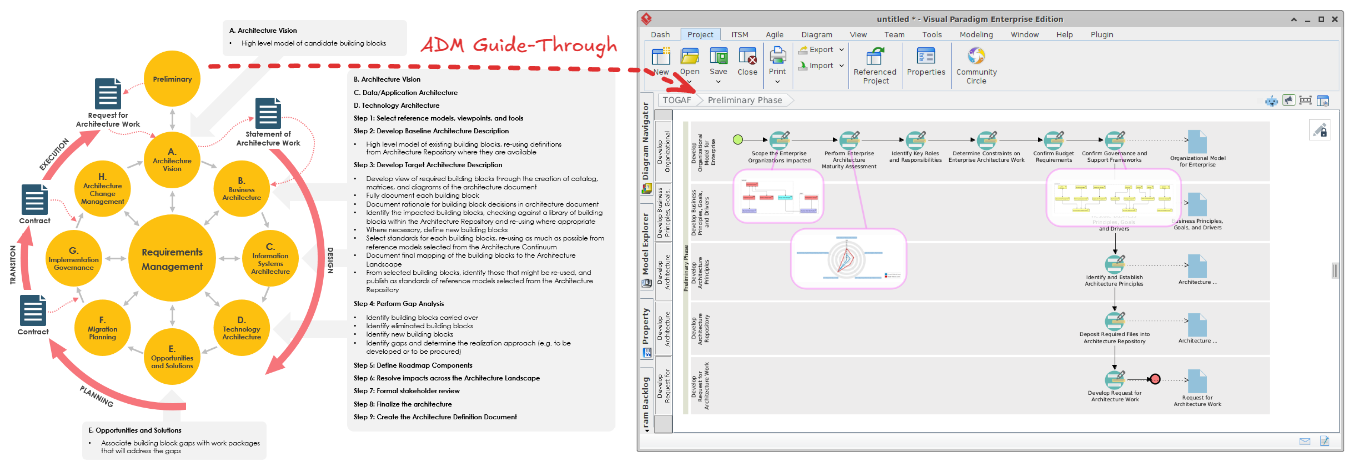 Mastering the TOGAF ADM: A Visual Paradigm Step-by-Step Guide
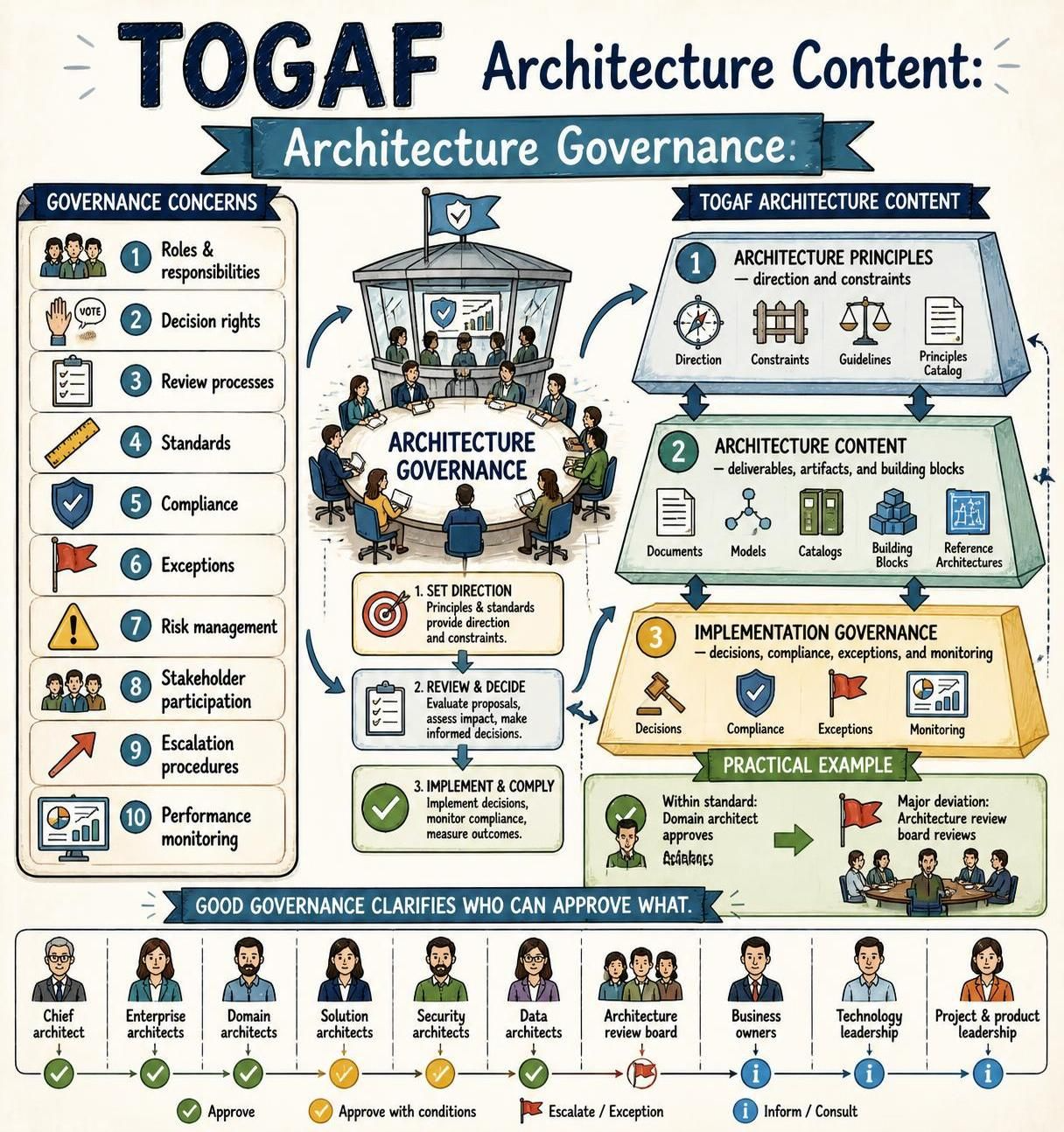 Mastering TOGAF Architecture Governance: A Comprehensive Guide to Roles, Principles, and Decision Rights
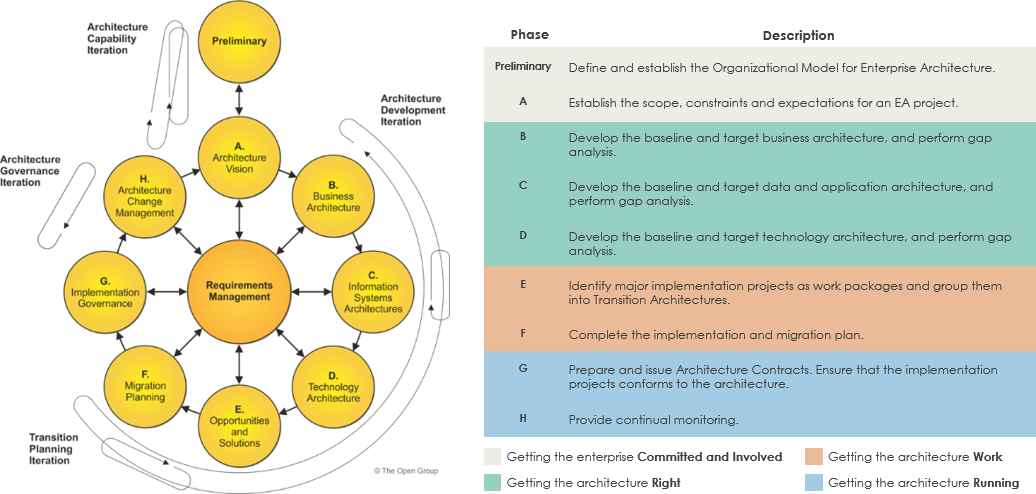 Mastering the TOGAF ADM: A Comprehensive Guide to Enterprise Architecture Development
 Mastering TOGAF Building Blocks: From Abstract Architecture to Practical Implementation