


In the complex landscape of Enterprise Architecture (EA), the difference between a thriving digital transformation and a chaotic IT environment often comes down to one factor: Architecture Governance. Governance is not merely about bureaucracy; it is the framework that ensures IT investments align with business strategy, standards are maintained, and risks are managed.
This tutorial explores the core components of TOGAF Architecture Governance, breaking down how decisions are made, who is responsible for them, and how to effectively model these processes using industry-standard tooling.
What is Architecture Governance?
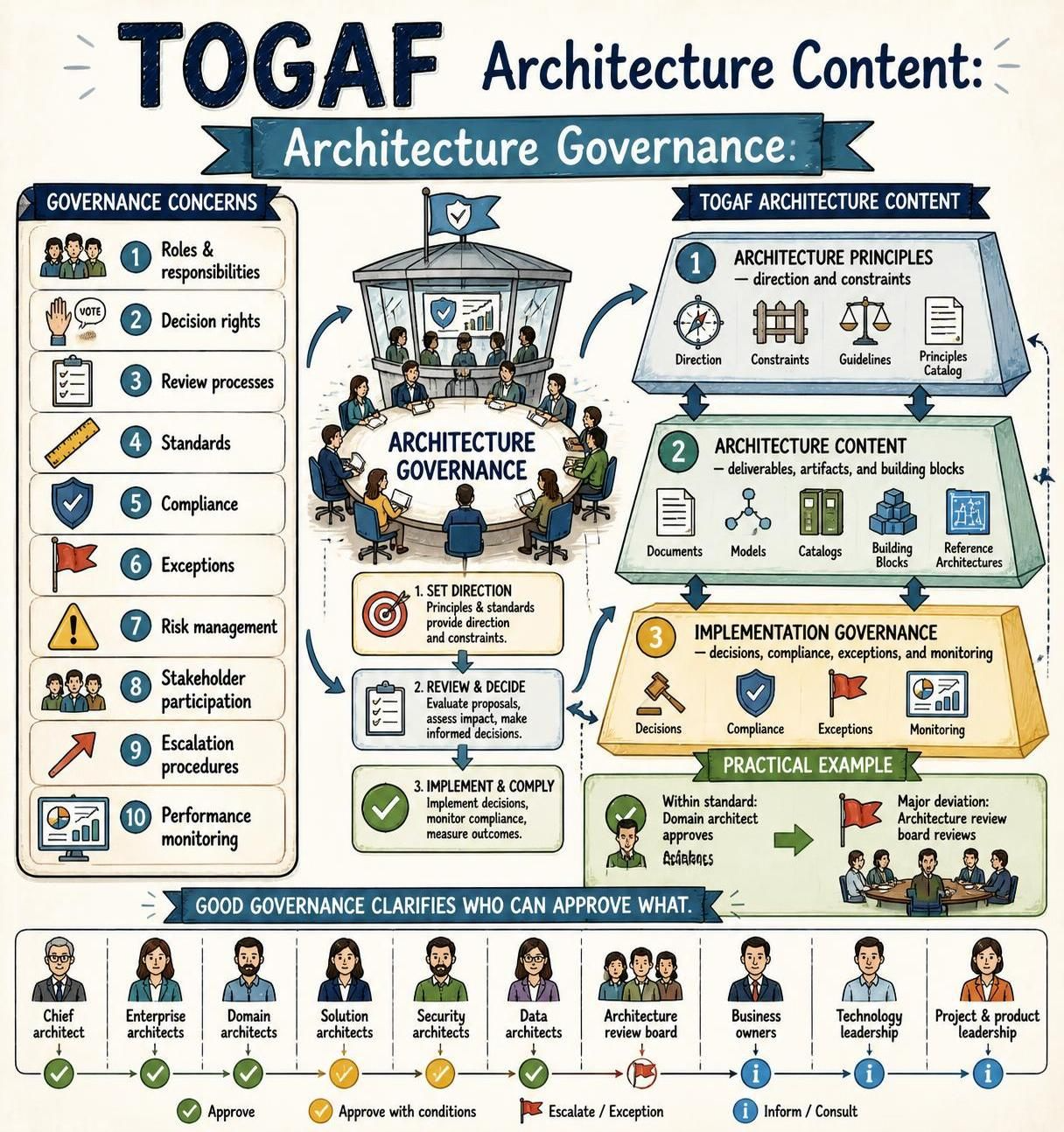
Architecture governance defines the processes for how architecture-related decisions are made, reviewed, monitored, and enforced. It acts as the “governor” of the enterprise, ensuring that the organization stays on course. As illustrated in the TOGAF content model, governance is a continuous loop involving setting direction, reviewing proposals, and implementing decisions.
The Three Pillars of Governance
Effective governance rests on three primary pillars, often visualized as a hierarchy in TOGAF documentation:
1. Architecture Principles (Setting Direction)
Before making decisions, the enterprise must establish its guiding principles. These are high-level statements of intent that define the organization’s direction and constraints.
- Direction: Where is the enterprise going? (e.g., “Cloud First”)
- Constraints: What are the boundaries? (e.g., “Must comply with GDPR”)
- Guidelines: Best practices to follow.
2. Architecture Content (The Artifacts)
This layer encompasses the actual deliverables, artifacts, and building blocks that support the principles. This includes:
- Documents: Policies and standards.
- Models: Visual representations of the architecture.
- Catalogs: Lists of services and applications.
- Building Blocks: Reusable components.
3. Implementation Governance (The Action)
This is the operational layer where decisions are actualized. It involves:
- Decisions: Approving or rejecting designs.
- Compliance: Ensuring the built solution matches the design.
- Exceptions: Handling necessary deviations from standards.
- Monitoring: Tracking performance and adherence.
Key Governance Concerns
To function correctly, governance must address ten specific concerns. These act as the checklist for any governance framework:
- Roles & Responsibilities: Who does what?
- Decision Rights: Who has the authority to approve?
- Review Processes: How are proposals evaluated?
- Standards: What technical rules apply?
- Compliance: Are we following the rules?
- Exceptions: How do we handle non-compliance?
- Risk Management: What are the potential pitfalls?
- Stakeholder Participation: Who needs to be involved?
- Escalation Procedures: What happens when a decision cannot be made?
- Performance Monitoring: Is the architecture delivering value?
The Hierarchy of Approval: Who Decides What?
One of the most critical aspects of governance is clarifying Decision Rights. Not every decision requires the full attention of the Architecture Review Board (ARB). A clear hierarchy ensures efficiency:
- The Chief Architect: Provides overall strategic oversight.
- Enterprise Architects: Define cross-domain standards.
- Domain Architects: Focus on specific areas (e.g., Data, Security). They typically approve designs that fall within established standards.
- Solution Architects: Design specific projects.
- Architecture Review Board (ARB): The highest authority for strategic decisions. They review major deviations from enterprise principles.
- Business Owners & Technology Leadership: Ensure alignment with business goals and technical feasibility.
Practical Example: The Decision Flow
Imagine a project team is designing a new customer portal:
- Scenario A: The team uses a standard library of UI components and approved cloud services. Result: The Domain Architect approves the design. No further review is needed.
- Scenario B: The team wants to use a proprietary database that conflicts with the “Open Source First” enterprise principle. Result: This is a major deviation. The proposal is escalated to the Architecture Review Board for a formal vote.
Implementing Governance with Visual Paradigm TOGAF ADM Tool
To effectively manage these complex workflows, organizations need robust tooling. While spreadsheets and slides are common, they often fail to capture the dynamic nature of governance.
Recommended Tooling: Visual Paradigm TOGAF ADM Tool
For a comprehensive approach to Architecture Governance, the Visual Paradigm TOGAF ADM Tool is highly recommended. It allows architects to:
- Visualize the ADM: Navigate through the TOGAF Architecture Development Method phases seamlessly.
- Manage Artifacts: Store and link documents, models, and standards directly to specific phases.
- Enforce Governance: Set up approval workflows where specific roles (e.g., Security Architect) must sign off before a phase can be marked complete.
- Traceability: Ensure that every business requirement is traced back to an architectural principle and a specific design decision.
Conclusion
Good governance clarifies who can approve what. By establishing clear roles, adhering to defined principles, and utilizing the right tooling like Visual Paradigm, organizations can ensure their architecture serves as a stable foundation for business growth rather than a bottleneck.
Related posts:
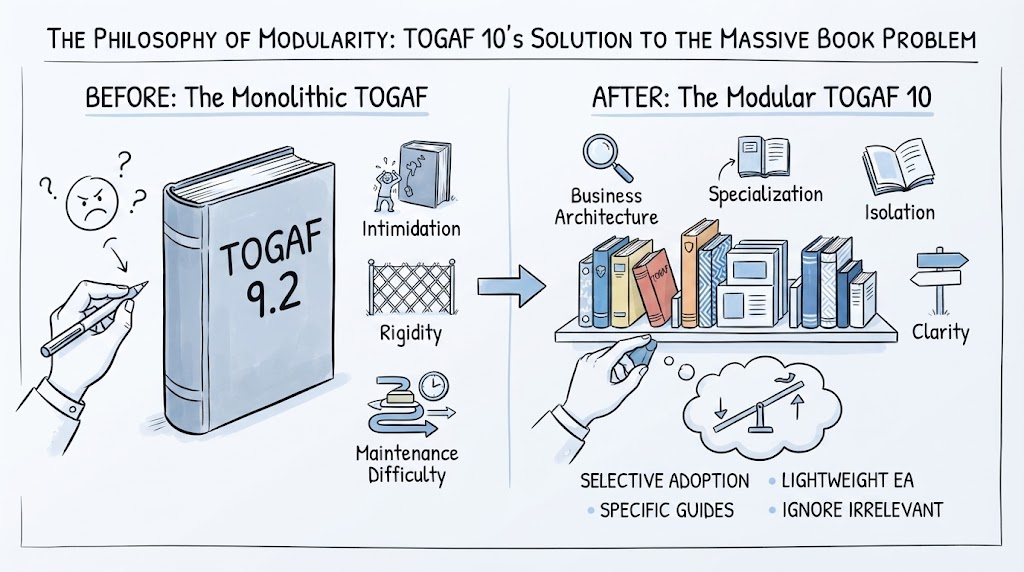 Mastering Modularity: How TOGAF 10 Solves the “Massive Book Problem” with Strategic Flexibility
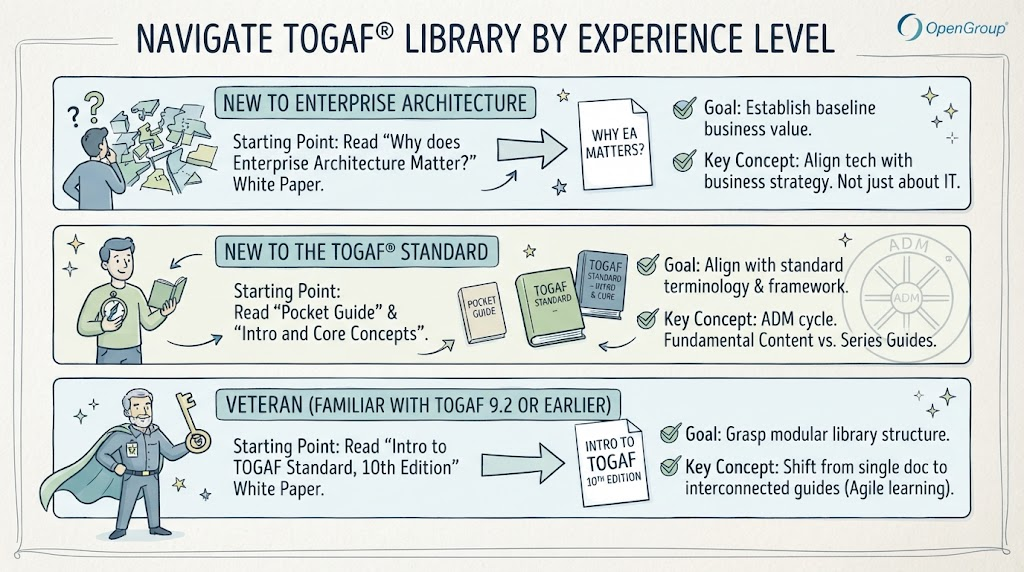 Navigating the TOGAF® Library: A Tiered Approach to Enterprise Architecture Mastery
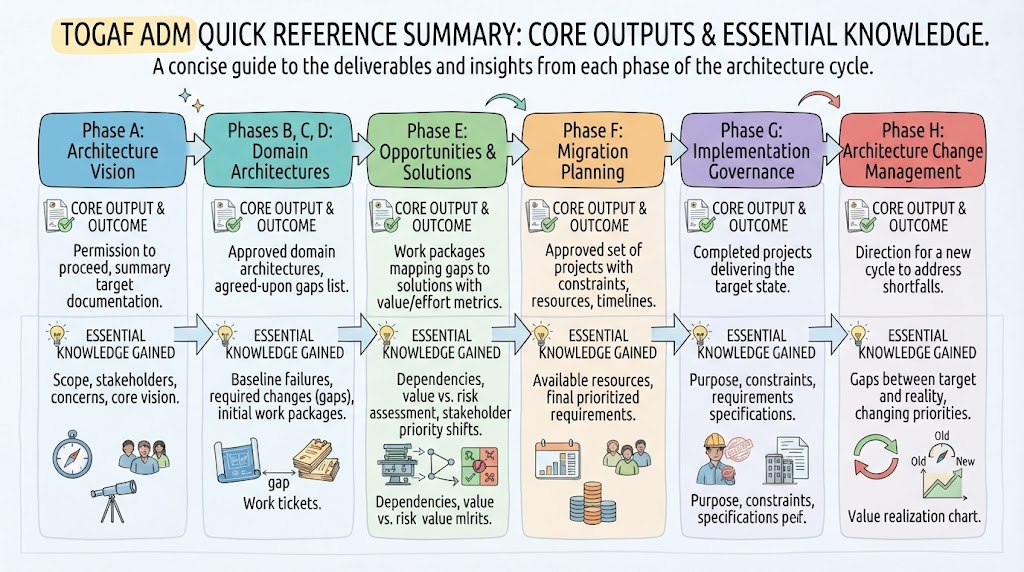 Mastering the TOGAF ADM Cycle: A Visual Guide to Architecture Outputs and Outcomes
 Accelerating Enterprise Architecture: Why Visual Paradigm is the Ideal Companion for TOGAF 10