


In the complex world of enterprise architecture, one of the most critical challenges is ensuring that the software we build actually solves the business problems we set out to fix. This is where Requirements Traceability becomes the backbone of successful system design. Based on the principles of the TOGAF Architecture Development Method (ADM), this tutorial explores how to map high-level strategic goals down to specific test cases, ensuring nothing is lost in translation.
The Continuous Nature of Requirements Management
Before diving into the specific steps of traceability, it is essential to understand the environment in which these requirements live. Requirements Management is not a one-time task performed at the beginning of a project. Instead, it is a continuous activity that operates across all phases of the Architecture Development Method (ADM).
Its primary purpose is to:
- Identify, document, and prioritize requirements.
- Relate requirements to business outcomes.
- Track changes over time and resolve conflicts.
- Confirm that delivered solutions satisfy approved requirements.
Decoding the Traceability Chain
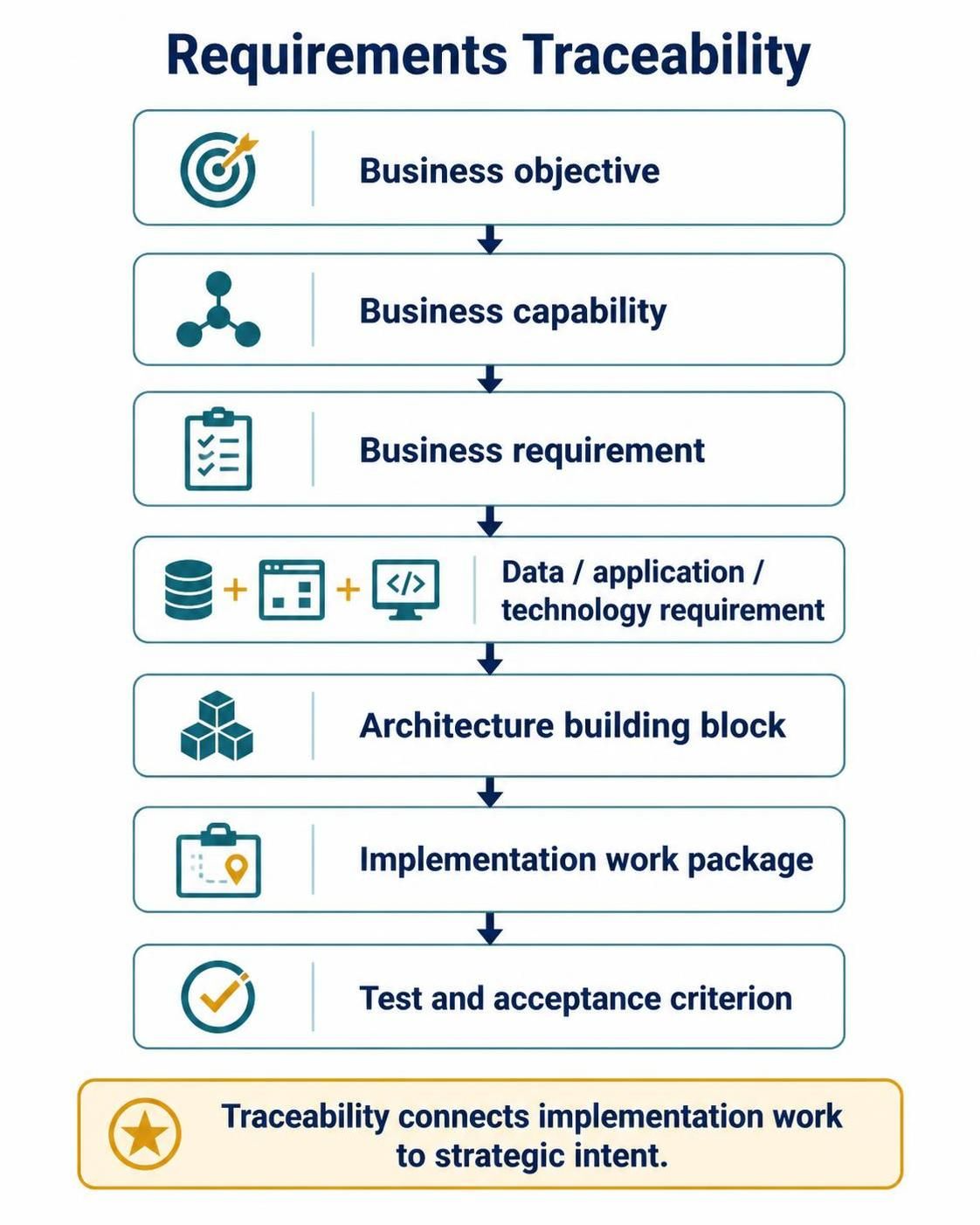
The diagram provided illustrates a “Traceability Chain,” a vertical flow that demonstrates how a high-level business objective eventually transforms into a concrete test case. Let’s walk through this lifecycle step-by-step.
1. The Strategic Anchor: Business Objective
The chain begins at the very top with the Business Objective. This is the “Why.” It represents the strategic intent of the organization—such as “Increase market share by 20%” or “Reduce operational costs by 15%.” Without a clear objective, no other requirement matters. This is the starting point for all architectural decisions.
2. The Functional Bridge: Business Capability
Once the objective is set, we must define Business Capability. This step translates the “Why” into the “What.” A business capability is an ability that a business entity has, such as “Customer Management” or “Order Processing.” This links the abstract goal to specific areas of business function that need to be developed or improved.
3. The Specific Need: Business Requirement
Capabilities are often too broad to build against directly. Therefore, we break them down into Business Requirements. These are specific, measurable statements of what the business needs to achieve to support the capability. For example, “The system must allow customers to reset passwords via email.”
4. The Technical Breakdown: Data / Application / Technology Requirement
Here, the diagram shifts from pure business logic to technical implementation. A business requirement is decomposed into specific technical constraints and needs across three domains:
- Data Requirements: What information must be stored, and what are the quality rules?
- Application Requirements: What functionality must the software provide?
- Technology Requirements: What hardware, platforms, or programming languages are required?
This step ensures that the abstract business need is grounded in the physical reality of the IT environment.
5. The Design Solution: Architecture Building Block
Based on the technical requirements, architects design Architecture Building Blocks (ABBs). These are the reusable components, patterns, or solutions that make up the system architecture. An ABB might be a specific microservice, a database schema, or an integration pattern. This is the blueprint phase where the solution is defined.
6. The Execution Plan: Implementation Work Package
Architects do not typically build the system themselves; they hand off the design to development teams. The Implementation Work Package is the unit of work assigned to a project team. It contains the specific tasks, code changes, and configuration steps required to realize the Architecture Building Block.
7. The Verification: Test and Acceptance Criterion
The chain concludes with Test and Acceptance Criteria. This is the final proof. To verify that the work package successfully met the original objective, testers must validate it against specific criteria. If the test passes, it confirms that the implementation work is connected to the strategic intent.
Why Traceability Matters
The yellow banner at the bottom of the diagram states: “Traceability connects implementation work to strategic intent.” This is the most valuable takeaway of this tutorial. Without this vertical link, organizations risk “scope creep,” where development teams build features that look cool but do not align with the business goals. By maintaining this traceability chain, you ensure that every line of code written can be traced back to a specific business need.
Summary of the Lifecycle
- Identify: Capture the requirement.
- Classify: Determine if it is business, data, or technical.
- Trace: Link it to objectives and capabilities.
- Allocate: Assign it to an architecture block or work package.
- Verify: Confirm satisfaction during implementation and testing.
By mastering this flow, you ensure that your system architecture is not just a collection of diagrams, but a robust framework for delivering real business value.
Related posts:
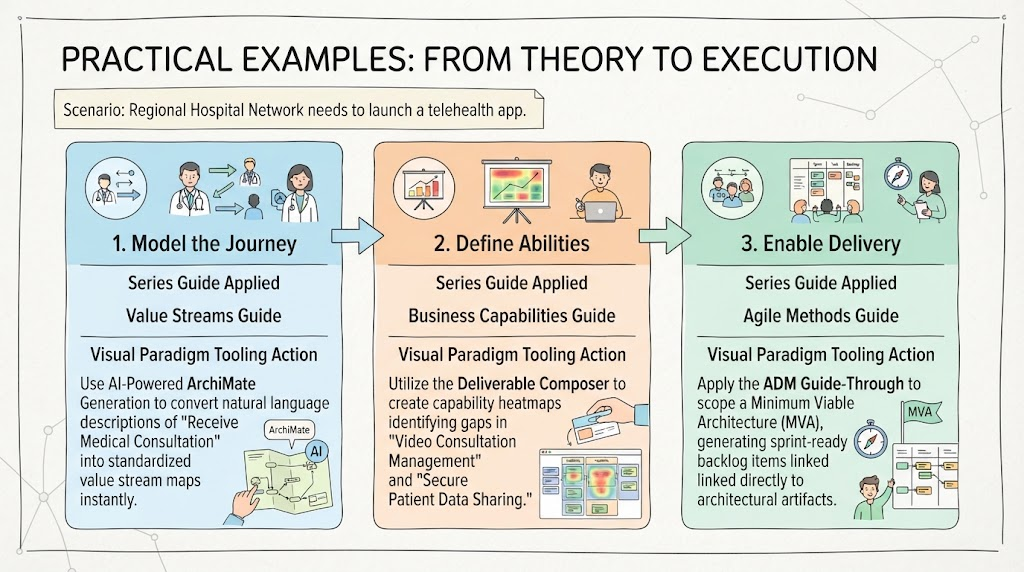 From Theory to Execution: A Practical Guide to Enterprise Architecture with Visual Paradigm
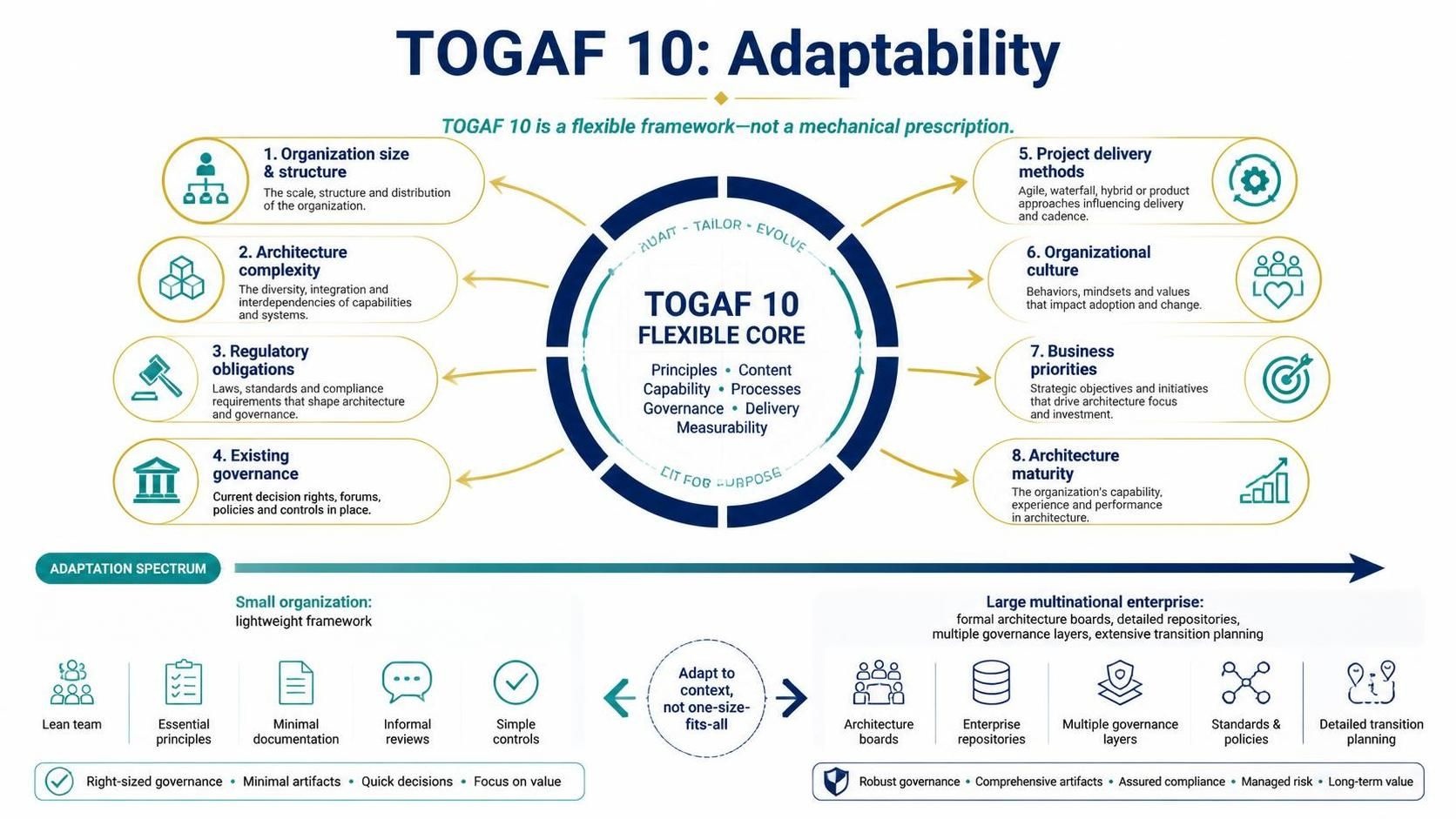 Mastering TOGAF 10 Adaptability: From Concept to Implementation
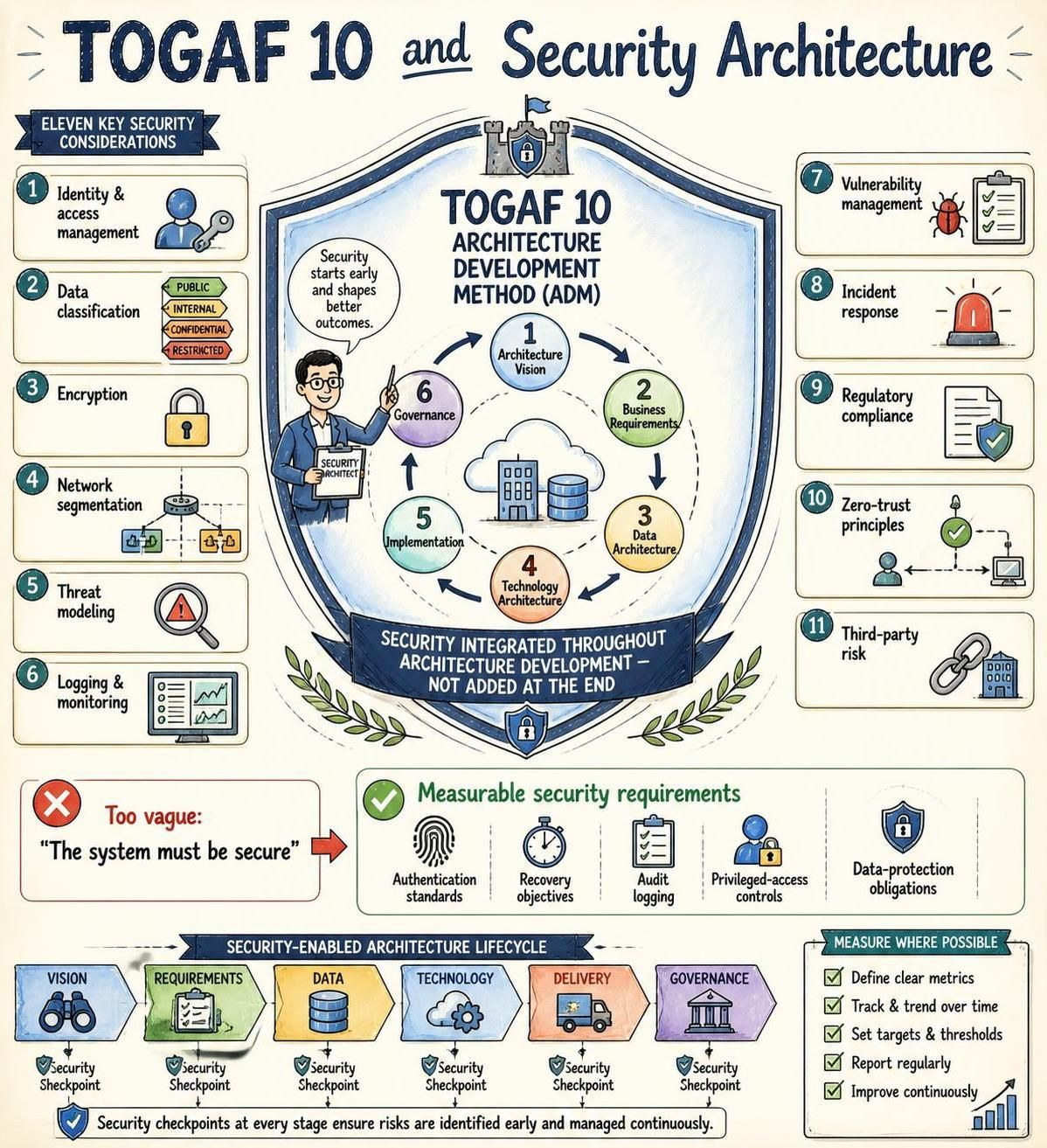 Mastering TOGAF 10 Security Architecture: From Principles to Implementation
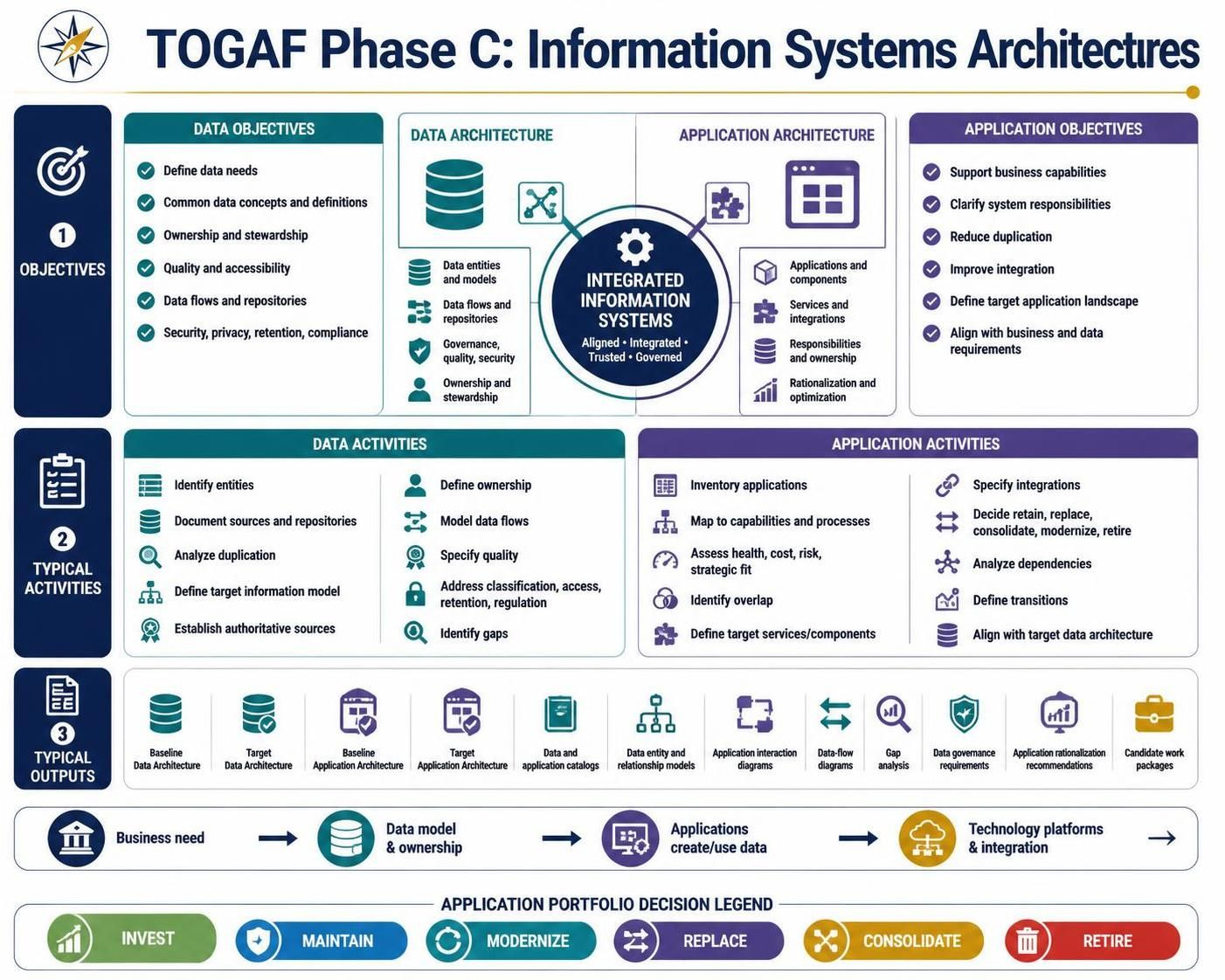 Mastering TOGAF Phase C: A Comprehensive Guide to Information Systems Architecture