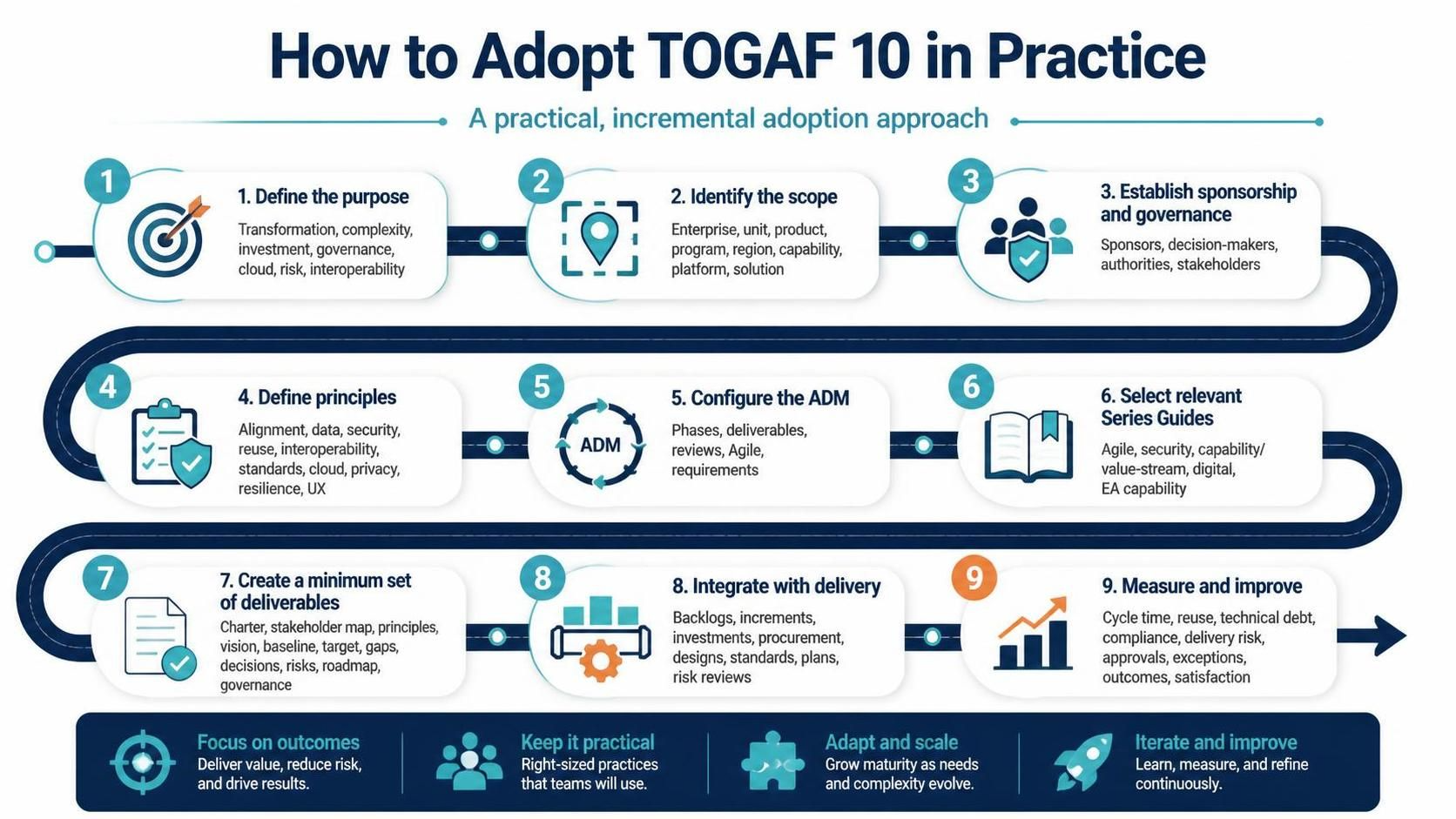
Enterprise Architecture (EA) often gets a reputation for being overly theoretical or bureaucratic. However, TOGAF 10 (The Open Group Architecture Framework) is designed to be a practical, flexible toolkit for organizations of all sizes. The key to success is not to implement the entire framework immediately, but to adopt it incrementally.
This tutorial breaks down the 9-step practical adoption approach, guiding you from defining your initial purpose to measuring your success and improving your architecture capability over time.
Phase 1: Laying the Foundation (Steps 1-3)
Before drawing a single diagram or configuring a tool, you must establish the “Why” and “Who” of your architecture initiative. This phase ensures you have the political and strategic backing to succeed.
Step 1: Define the Purpose
Don’t adopt EA for the sake of it. You need a clear business driver. Common objectives that justify the investment in architecture include:
- Supporting a transformation program: Helping the business move from its current state to a future target.
- Reducing technology complexity: Consolidating disparate tools and systems.
- Improving investment decisions: Ensuring IT spend aligns with business strategy.
- Managing regulatory risk: Ensuring compliance with laws like GDPR or HIPAA.
- Enabling digital adoption: Preparing the organization for cloud migration or modernization.
Step 2: Identify the Scope
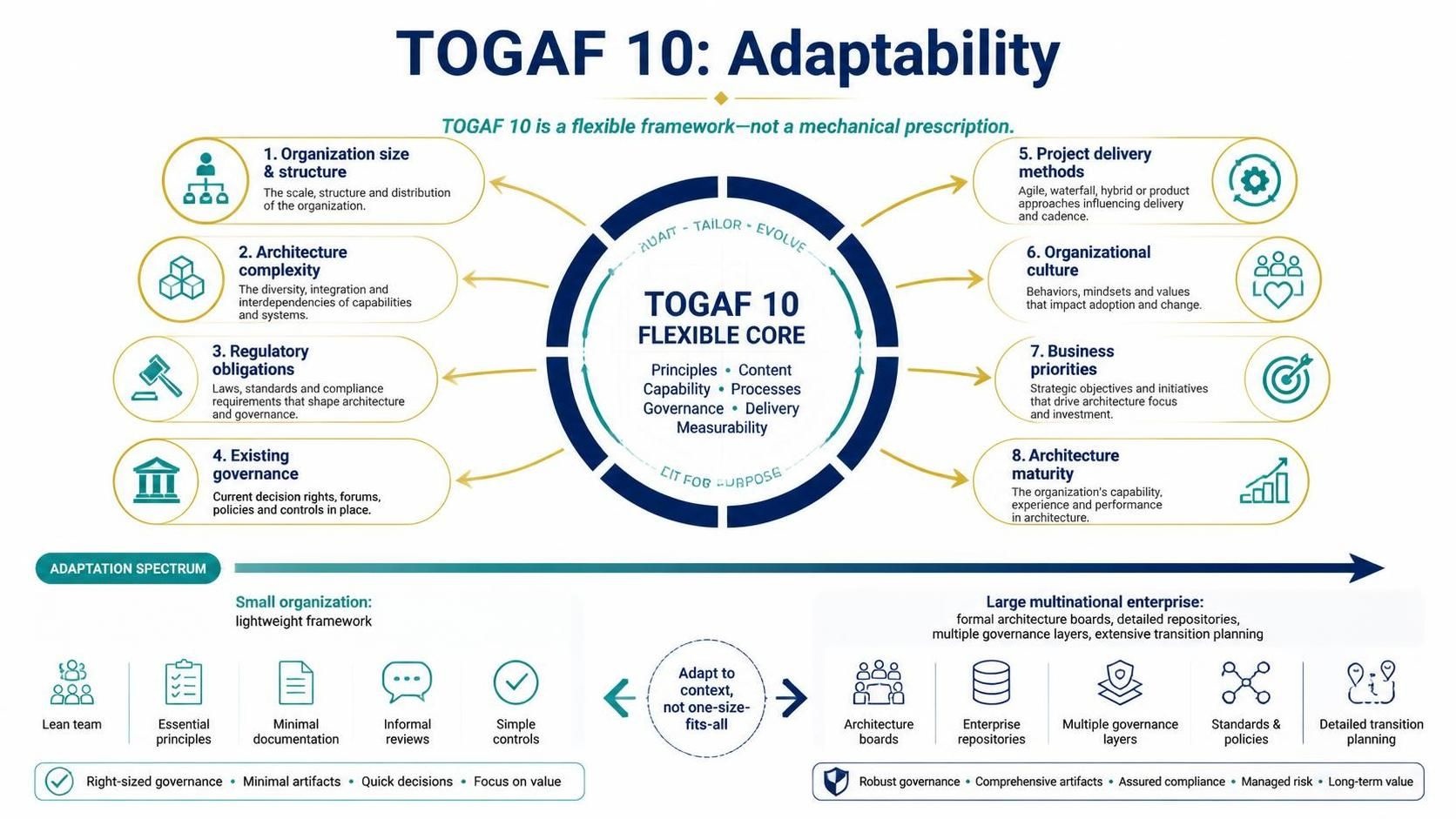
One of the most common mistakes is trying to model the entire enterprise at once. Instead, define a clear boundary for your initial effort. The scope could be:
- The entire enterprise (for large-scale transformation).
- A specific business unit or product line.
- A geographic region.
- A specific platform or capability (e.g., “Identity Management”).
Step 3: Establish Sponsorship and Governance
Architecture requires authority. You need to identify the decision-makers, sponsors, and architecture authorities who will approve or challenge decisions. Without a steering committee or established governance board, architectural decisions will likely be ignored by project teams.
Phase 2: Setting the Rules and Method (Steps 4-6)
Once the foundation is set, you need to establish the “How.” This involves defining the rules of engagement and tailoring the TOGAF methodology to your specific environment.
Step 4: Define Principles
Principles are the fundamental rules that guide the organization’s behavior. Create a manageable set of principles that cover critical areas such as:
- Data Ownership: Who owns the data and who is accountable for its quality?
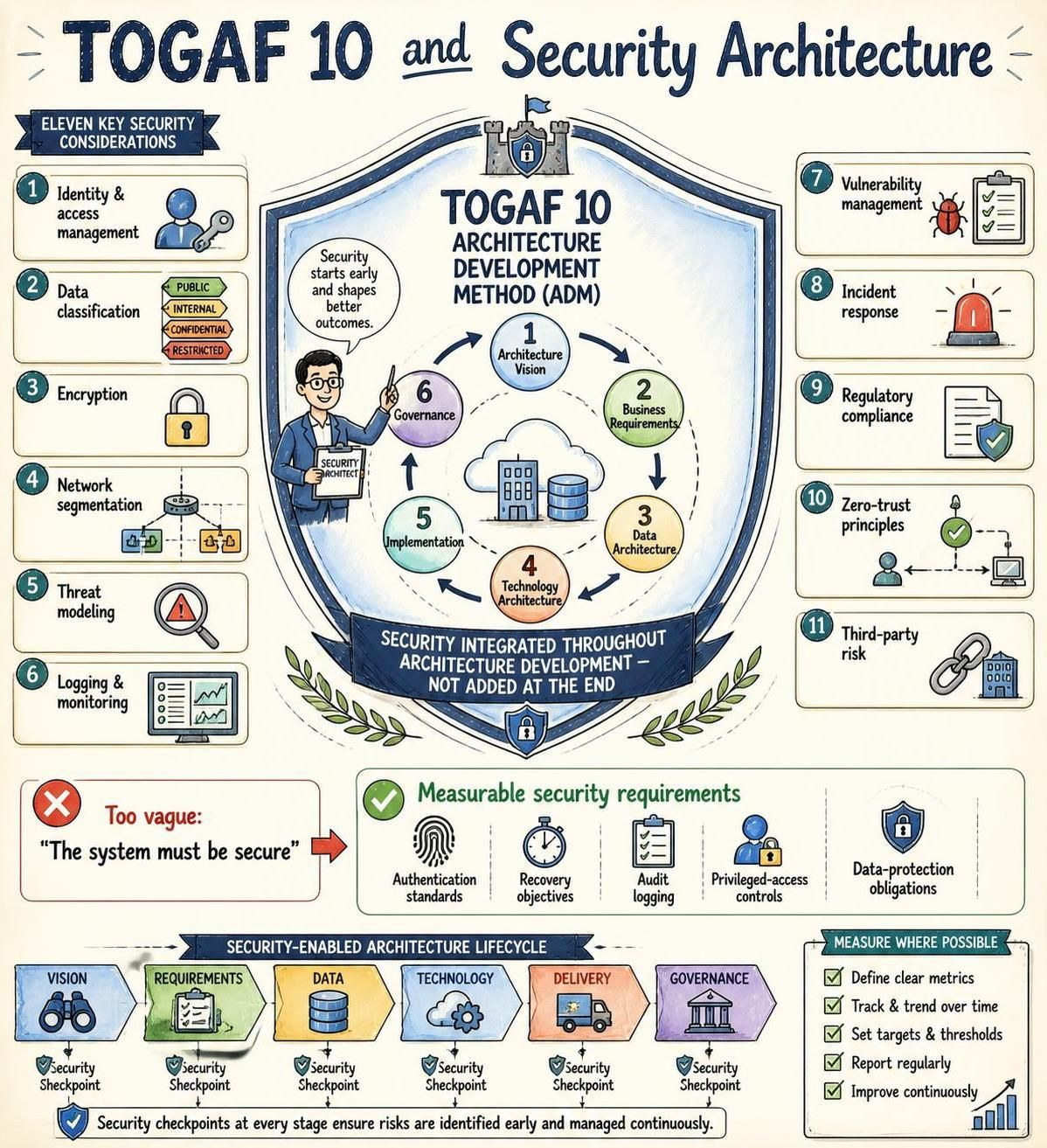
- Security & Privacy: Standards for protecting data and meeting regulatory requirements.
- Reuse: A mandate to use existing services before building new ones.
- Cloud Adoption: Guidelines on when to move to the cloud versus on-premise.
- Resilience: Requirements for system uptime and disaster recovery.
Step 5: Configure the ADM
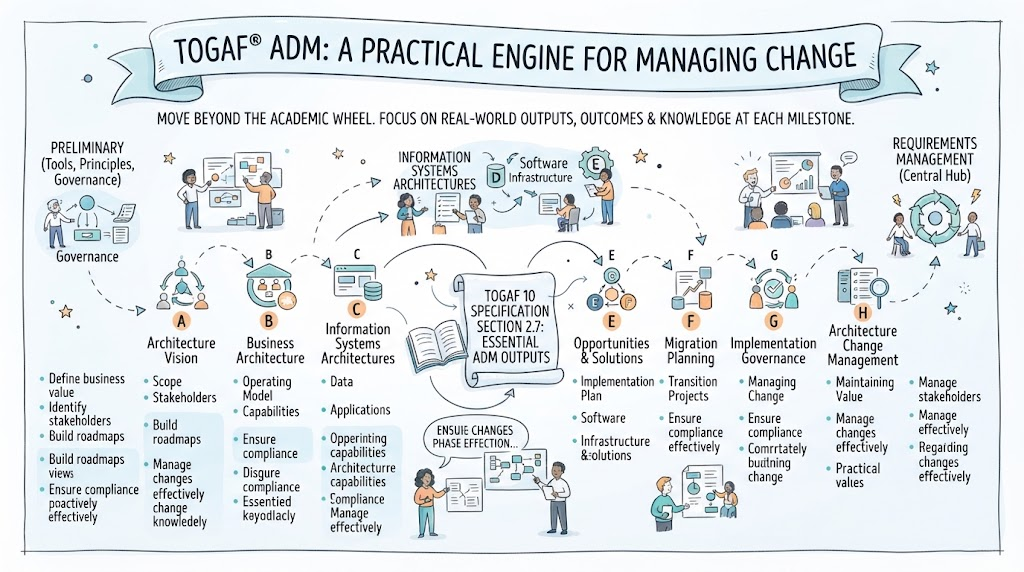
The Architecture Development Method (ADM) is the heart of TOGAF. It is not a rigid checklist but a flexible cycle. You must decide:
- Which phases are actually needed for your current project?
- Which phases can be combined or skipped?
- How will the method integrate with Agile or existing project management processes?
- Which deliverables are mandatory versus optional?
Step 6: Select Relevant Series Guides
TOGAF 10 is modular. Instead of reading the entire manual, select the guidance that fits your problem. For example:
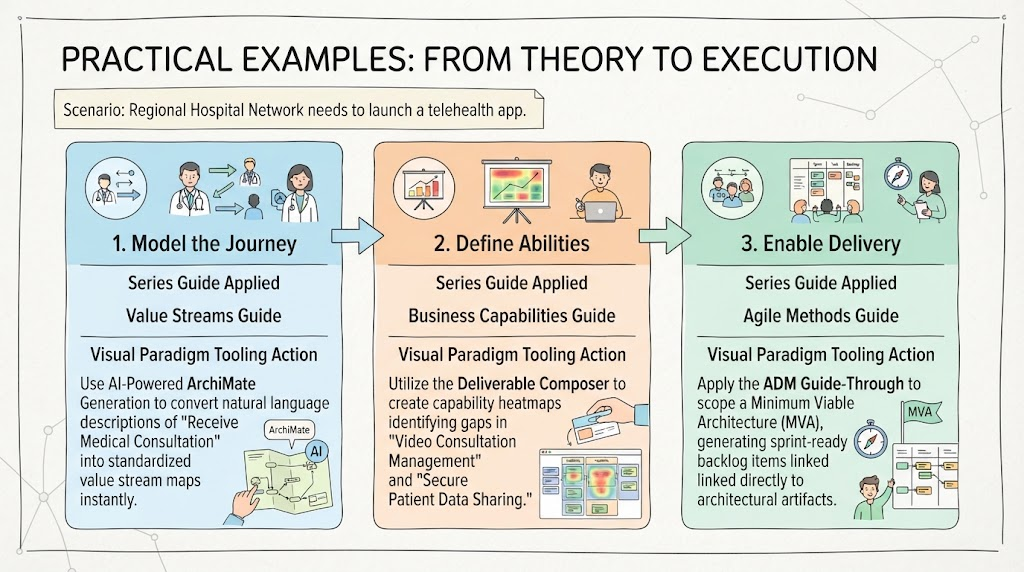
- Use Agile Guidance for iterative product delivery.
- Use Security Guidance for regulated or high-risk systems.
- Use Business Capability Guidance for operating-model transformations.
- Use Digital Guidance for customer experience initiatives.
Phase 3: Execution and Delivery (Steps 7-8)
Now you are ready to produce actual architecture work. The goal here is to keep the output lean and ensure it actually influences real-world decisions.
Step 7: Create a Minimum Set of Deliverables
Don’t create massive documents that no one reads. Start with a “Minimum Viable Architecture” package. A useful initial set includes:
- Architecture Charter: Defining the scope and stakeholders.
- Architecture Principles: The rules you defined in Step 4.
- Baseline & Target Architecture Summaries: High-level views of where you are and where you are going.
- Gap Analysis: Identifying the differences between the baseline and target.
- Roadmap: A high-level plan to achieve the target state.
- Architecture Decisions: A log of key choices made and why.
Step 8: Integrate with Delivery
Architecture is useless if it sits in a silo. You must ensure your outputs influence real decisions. Architecture should directly impact:
- Product Backlogs: Ensuring features align with architectural standards.
- Investment Cases: Justifying budget based on architectural benefits.
- Procurement: Selecting vendors that fit the target architecture.
- Implementation Plans: Ensuring technical designs are feasible.
Phase 4: Evolution and Improvement (Step 9)
Adopting TOGAF is not a one-time event. You must measure success and refine your approach.
Step 9: Measure and Improve
How do you know if architecture is working? Track metrics such as:
- Decision Cycle Time: Are we approving designs faster or slower?
- Reuse of Building Blocks: Are teams actually reusing existing components?
- Reduction in Technical Debt: Is the system becoming more stable over time?
- Business Outcomes Achieved: Did the architecture help deliver the project on time and under budget?
- Stakeholder Satisfaction: Do developers and business leaders find the architecture helpful?
Recommended Tooling for Success
To effectively manage the complexity of the ADM cycle and visualize these models, it is essential to use the right software. For this practical adoption approach, the recommended tool is Visual Paradigm TOGAF ADM Tool.
Visual Paradigm offers a robust environment that supports the entire TOGAF lifecycle. It allows architects to:
- Visualize the ADM cycle easily.
- Manage architecture repositories and versioning.
- Generate standardized reports and deliverables automatically.
- Collaborate with stakeholders in real-time.
By following these 9 steps and leveraging a tool like Visual Paradigm, organizations can move from abstract theory to a practical, value-driven Enterprise Architecture practice.