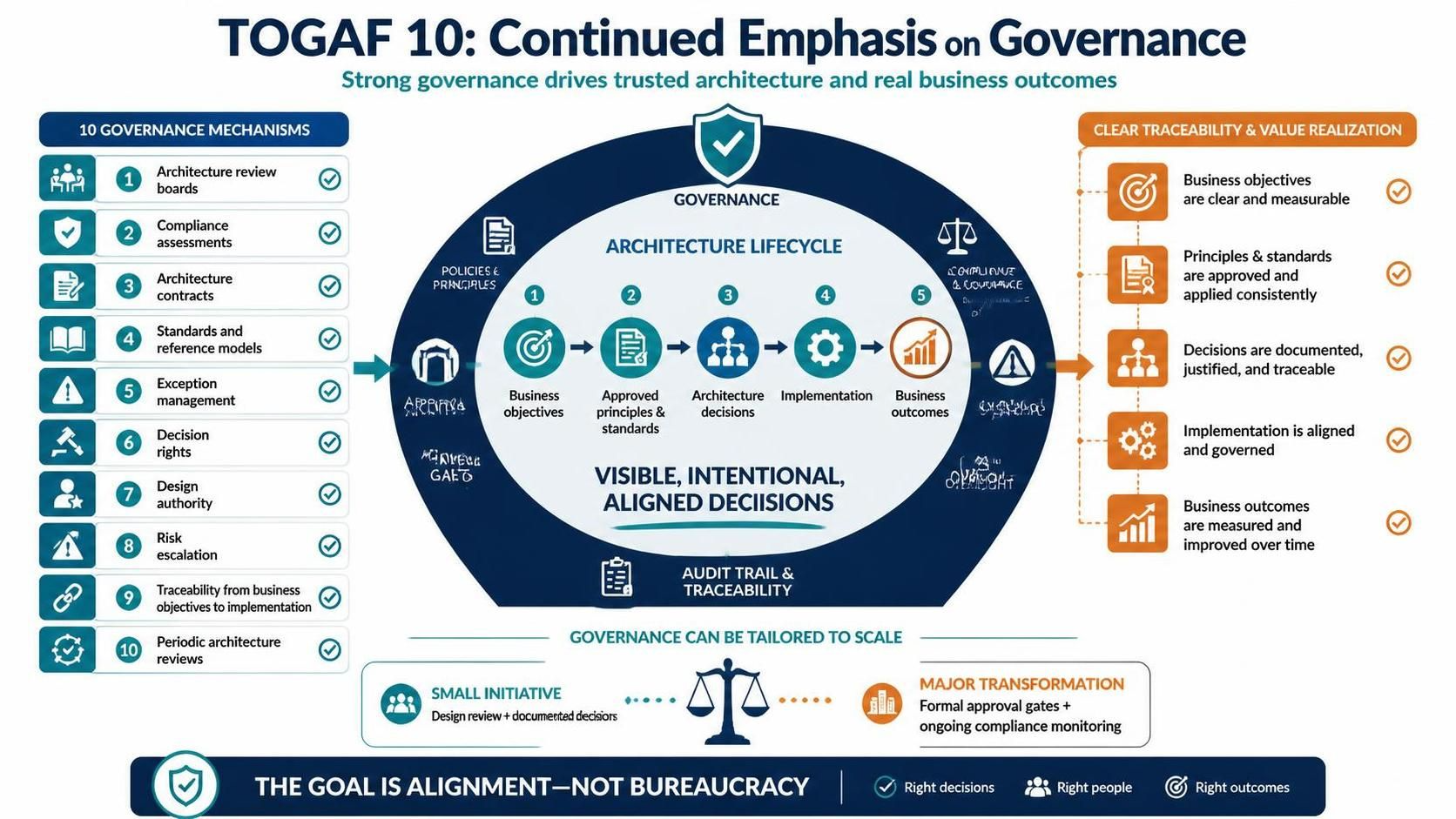
In the rapidly evolving landscape of enterprise technology, the gap between business strategy and IT execution is often where organizations struggle. The TOGAF 10 standard addresses this challenge by placing a renewed, heavy emphasis on Architecture Governance. This tutorial explores the mechanics of governance within the Architecture Development Method (ADM), how it ensures alignment, and how modern tooling can facilitate these processes.
What is Architecture Governance?
Architecture governance is the process by which an enterprise ensures that its architecture decisions are not only made but are also consistently implemented. It acts as the “guardrail” of the enterprise, ensuring that implementation decisions remain consistent with approved principles, standards, and target architectures.
Think of governance not as a bureaucratic hurdle, but as a mechanism for trust. It provides the assurance that the system being built is actually solving the business problem it was designed to solve.
The 10 Core Governance Mechanisms
According to TOGAF 10, effective governance relies on a specific set of ten mechanisms. These are the tools you use to control, monitor, and direct the architecture lifecycle.
- Architecture Review Boards (ARB): A group of stakeholders responsible for reviewing architecture decisions to ensure they meet enterprise standards.
- Compliance Assessments: Audits performed to verify that a project is adhering to the defined architecture.
- Architecture Contracts: Agreements between the architecture team and implementation teams that define the scope and requirements.
- Standards and Reference Models: The baseline rules and patterns that guide design decisions.
- Exception Management: A formal process for handling cases where a project cannot strictly adhere to the standard architecture.
- Decision Rights: Clearly defining who has the authority to approve specific types of architectural changes.
- Design Authority: The individuals or teams responsible for maintaining the integrity of the design during implementation.
- Risk Escalation: A pathway for identifying and reporting architectural risks that threaten project success.
- Traceability: Ensuring a clear link exists from high-level business objectives down to the specific implementation details.
- Periodic Architecture Reviews: Scheduled checkpoints to evaluate the health of the architecture over time.
Visualizing the Governance Lifecycle
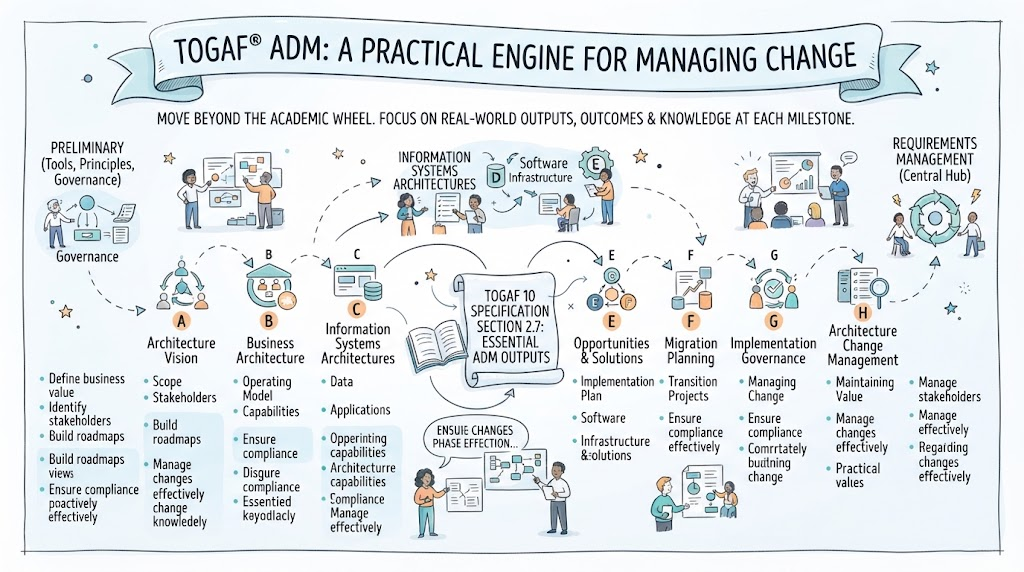
At the heart of TOGAF 10 is the Architecture Lifecycle. The image provided illustrates how governance wraps around this lifecycle to ensure “Visible, Intentional, Aligned Decisions.”
Step-by-Step Flow
- Business Objectives: The cycle begins with clear, measurable business goals. Without this, governance has no target.
- Approved Principles & Standards: Before work begins, the rules of engagement must be established.
- Architecture Decisions: The core design work is performed, creating the blueprint.
- Implementation: The solution is built based on the blueprint.
- Business Outcomes: The final measurement of success against the original objectives.
The Role of Governance in this Flow:
Governance is not a single step; it is the environment surrounding the steps. It includes Architecture Gates (approval points) and an Audit Trail that records the history of decisions. On the right side of the lifecycle, we see Clear Traceability & Value Realization, ensuring that every decision is justified and the implementation is aligned with the original vision.
Scaling Governance: From Small Initiatives to Major Transformations
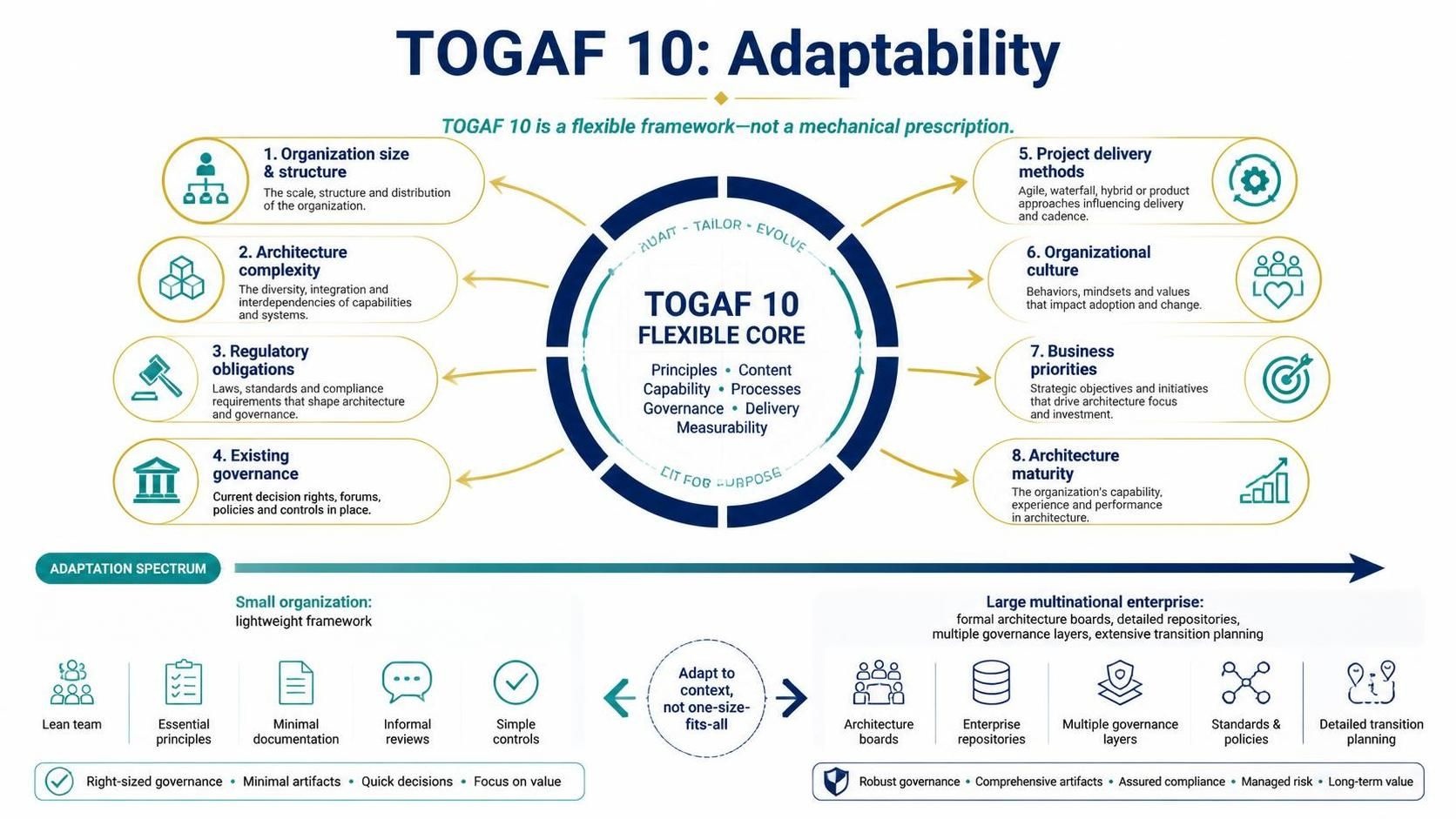
One of the most common misconceptions about TOGAF is that it requires heavy bureaucracy for every project. TOGAF 10 explicitly states that governance can be tailored to scale.
- Small Initiative: For minor changes or low-risk projects, governance might simply require a design review and documented decisions. The goal is to be efficient.
- Major Transformation: For large-scale enterprise changes, the governance model scales up to include formal approval gates and ongoing compliance monitoring. This ensures the massive investment is safe and aligned.
The ultimate goal is Alignment, Not Bureaucracy. We want “Right decisions” made by “Right people” to achieve “Right outcomes.”
Recommended Tooling: Visual Paradigm TOGAF ADM
To effectively implement the complex traceability and governance mechanisms described above, manual spreadsheets are rarely sufficient. You need a robust, integrated solution.
We highly recommend Visual Paradigm TOGAF ADM Tool. This tool is specifically designed to handle the full spectrum of TOGAF requirements:
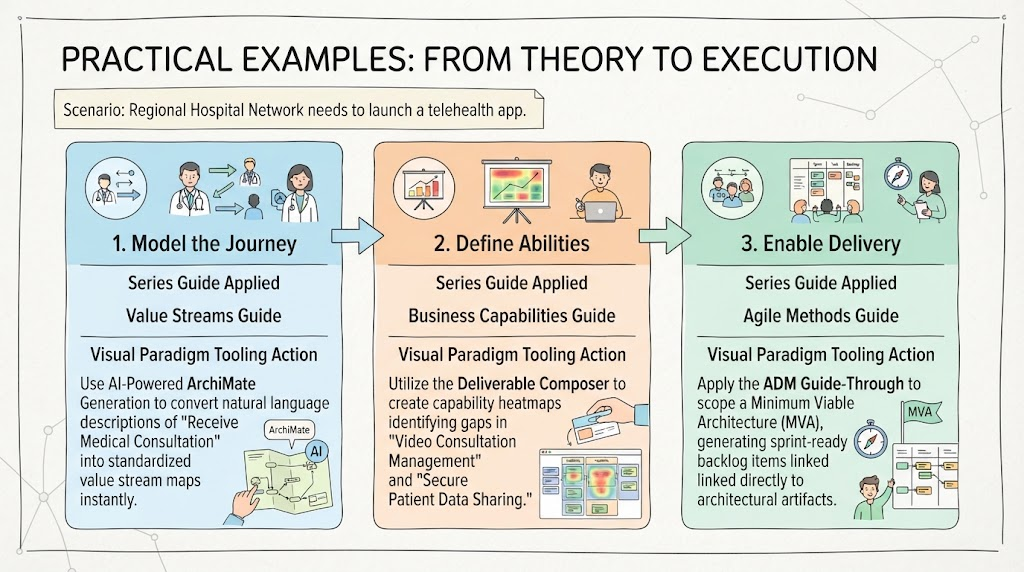
- Automated Traceability: It automatically links business objectives to specific architectural decisions and implementation artifacts, solving the challenge of “Traceability from business objectives to implementation.”
- Collaborative Governance: Built-in features for Architecture Review Boards allow stakeholders to review, comment, and approve models directly within the platform.
- Scalability: It supports the full lifecycle, from high-level strategy (Business Architecture) to detailed system design, allowing you to scale your governance efforts as your organization grows.
- Visual Modeling: It provides the visual language necessary to make architecture visible and intentional to all stakeholders.
By leveraging the Visual Paradigm TOGAF ADM Tool, organizations can move beyond theoretical governance and achieve real, measurable business outcomes.