


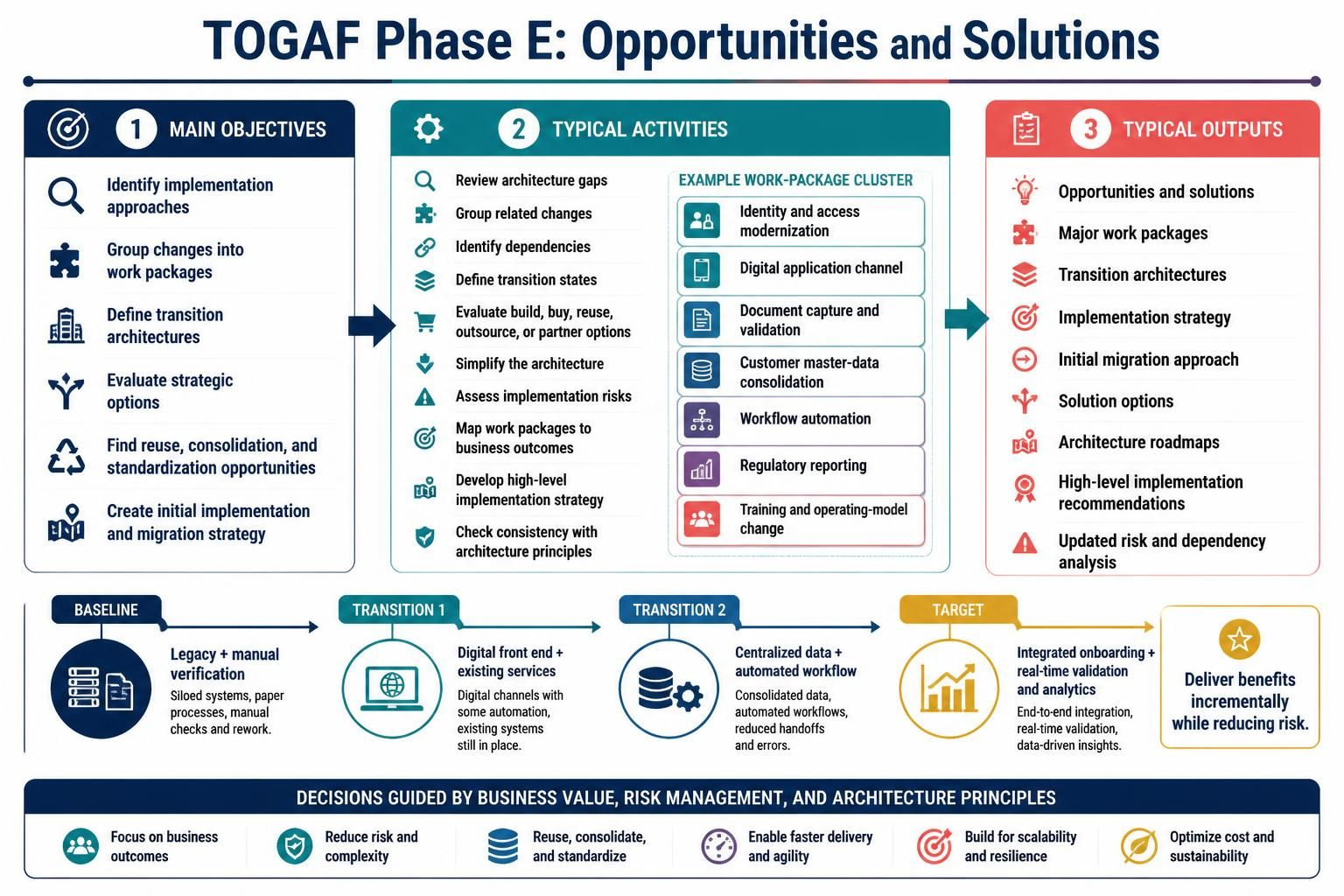
Welcome to this comprehensive tutorial on TOGAF Phase E: Opportunities and Solutions. In the TOGAF Architecture Development Method (ADM), this phase is often considered the most critical bridge between strategic design and real-world execution. It is the moment where abstract architectural concepts transform into concrete implementation projects.
Unlike previous phases that focus on defining what the architecture should look like, Phase E answers the practical question: How will we get there? This tutorial breaks down the objectives, activities, and strategic outputs defined in the infographic, providing a step-by-step guide to understanding this pivotal stage of enterprise architecture.
1. The Core Mission: What is Phase E?
Phase E moves the organization from architectural definition to implementation strategy. Its primary goal is to identify major solution approaches and group related changes into manageable units. Think of this phase as the “planning and scheduling” department of the architecture world. It ensures that the gap between the current state (Baseline) and the future state (Target) is filled with a logical, executable roadmap.
2. Main Objectives
To successfully execute Phase E, architects must focus on six key objectives:
- Identify Implementation Approaches: Determine the best high-level strategy for moving forward.
- Group Changes into Work Packages: Cluster related architectural changes so they can be delivered together efficiently.
- Define Transition Architectures: Create intermediate states (milestones) that make the journey to the target architecture feasible.
- Evaluate Strategic Options: Analyze different ways to solve architectural problems (e.g., Build vs. Buy).
- Find Reuse and Consolidation: Identify opportunities to save costs by reusing existing components or consolidating data.
- Create Initial Strategy: Draft the initial implementation and migration strategy.
3. Typical Activities and The Work Package Cluster
Once the objectives are set, architects perform specific activities to flesh out the plan. These activities involve reviewing gaps, identifying dependencies, and assessing risks. A central concept in this phase is the Work Package—a coherent set of changes that can be planned and delivered together.
In the context of the diagram, we see a specific example of a Work-Package Cluster for a digital onboarding program. This illustrates how a broad architectural goal is broken down into tangible deliverables:
- Identity and Access Modernization: Updating how users log in and access systems.
- Digital Application Channel: Creating the user-facing interface for the service.
- Document Capture and Validation: Automating the collection and checking of customer documents.
- Customer Master-Data Consolidation: Unifying customer data from disparate sources.
- Workflow Automation: Removing manual steps from the business process.
- Regulatory Reporting: Ensuring the system meets legal compliance requirements.
- Training and Operating-Model Change: Preparing the staff and the business operations for the new system.
4. The Journey: Transition Architectures
A common pitfall in large-scale IT projects is attempting to move from the Baseline to the Target state in a single, massive “Big Bang” release. Phase E argues against this. Instead, it advocates for Transition Architectures—practical intermediate states that allow benefits to be delivered incrementally.
The diagram illustrates a classic four-stage journey:
- Baseline: The starting point, characterized by legacy systems, siloed data, and manual verification processes.
- Transition 1 (Digital Front End): The organization introduces a new digital interface but relies on existing verification services. This improves the user experience immediately without fully rewriting the backend.
- Transition 2 (Centralized Data): The organization consolidates customer data and automates workflows. This reduces errors and handoffs.
- Target (Fully Integrated): The final state featuring fully integrated onboarding, real-time validation, and data-driven analytics.
5. Typical Outputs
By the end of Phase E, the architecture team will have produced a suite of documents that guide the subsequent phases of the project. These outputs include:
- Opportunities and Solutions: A list of potential projects and their value.
- Major Work Packages: The detailed breakdown of work to be done.
- Transition Architectures: The roadmap of intermediate states.
- Implementation Strategy: The “how-to” guide for the transformation.
- Initial Migration Approach: The specific plan for moving data and systems.
- Architecture Roadmaps: A high-level timeline of the journey.
Conclusion
Phase E is where the rubber meets the road. It transforms the “Dream” of the Target Architecture into a “Plan” that stakeholders can fund and execute. It ensures that the organization understands the risks, the costs, and the incremental benefits of the proposed changes.
To effectively manage the complexity of this phase—tracking work packages, defining dependencies, and visualizing transition architectures—architects need robust tooling. For this tutorial, I highly recommend using Visual Paradigm TOGAF ADM Tool. This software is specifically designed to support the TOGAF ADM cycle, allowing you to model these transitions, generate the required documentation automatically, and visualize the path from baseline to target with precision.
Related posts:
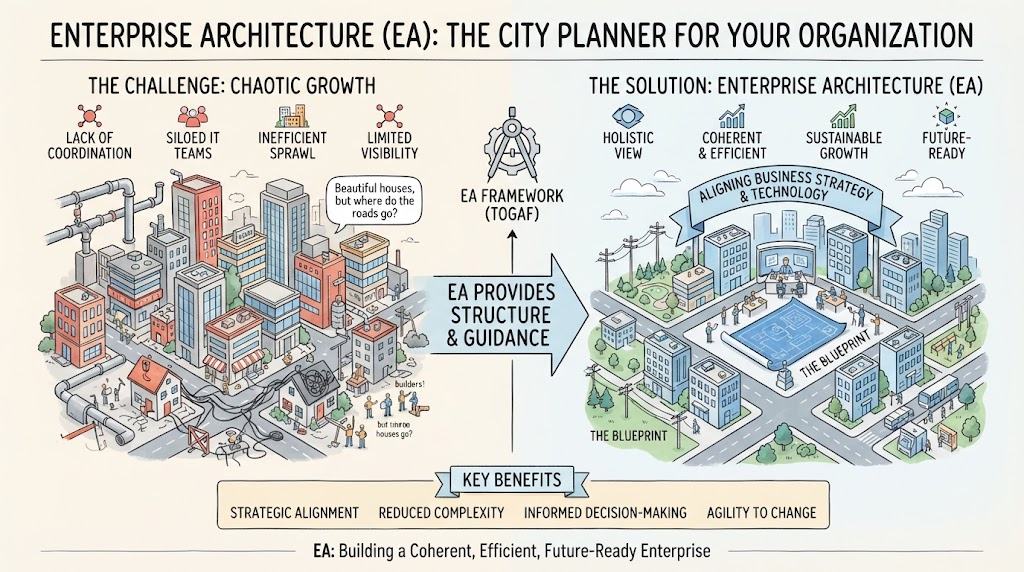 Enterprise Architecture as City Planning: A Visual Guide to TOGAF & Strategic Alignment
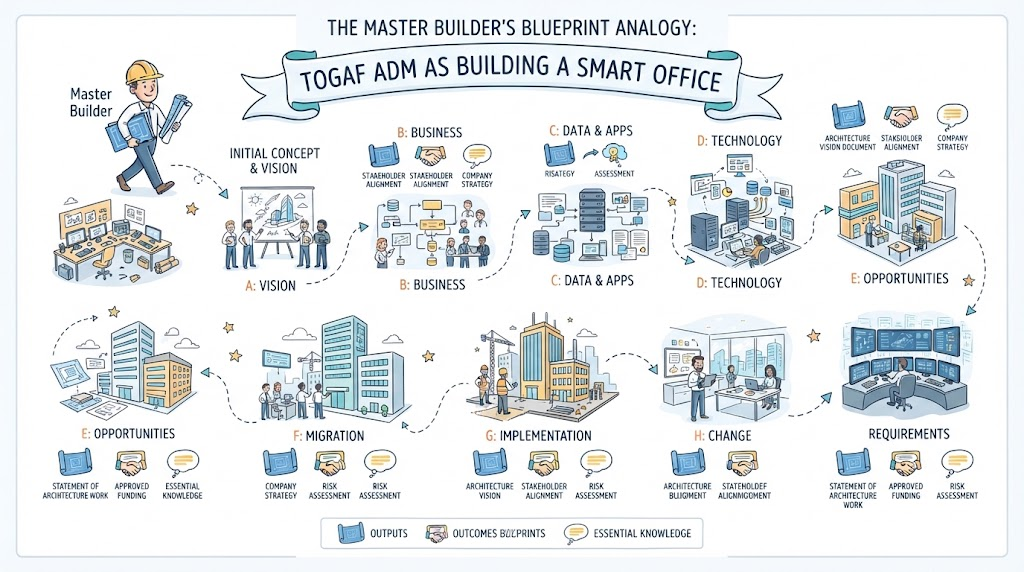 The Master Builder’s Blueprint Analogy: A Step-by-Step Guide to the TOGAF ADM
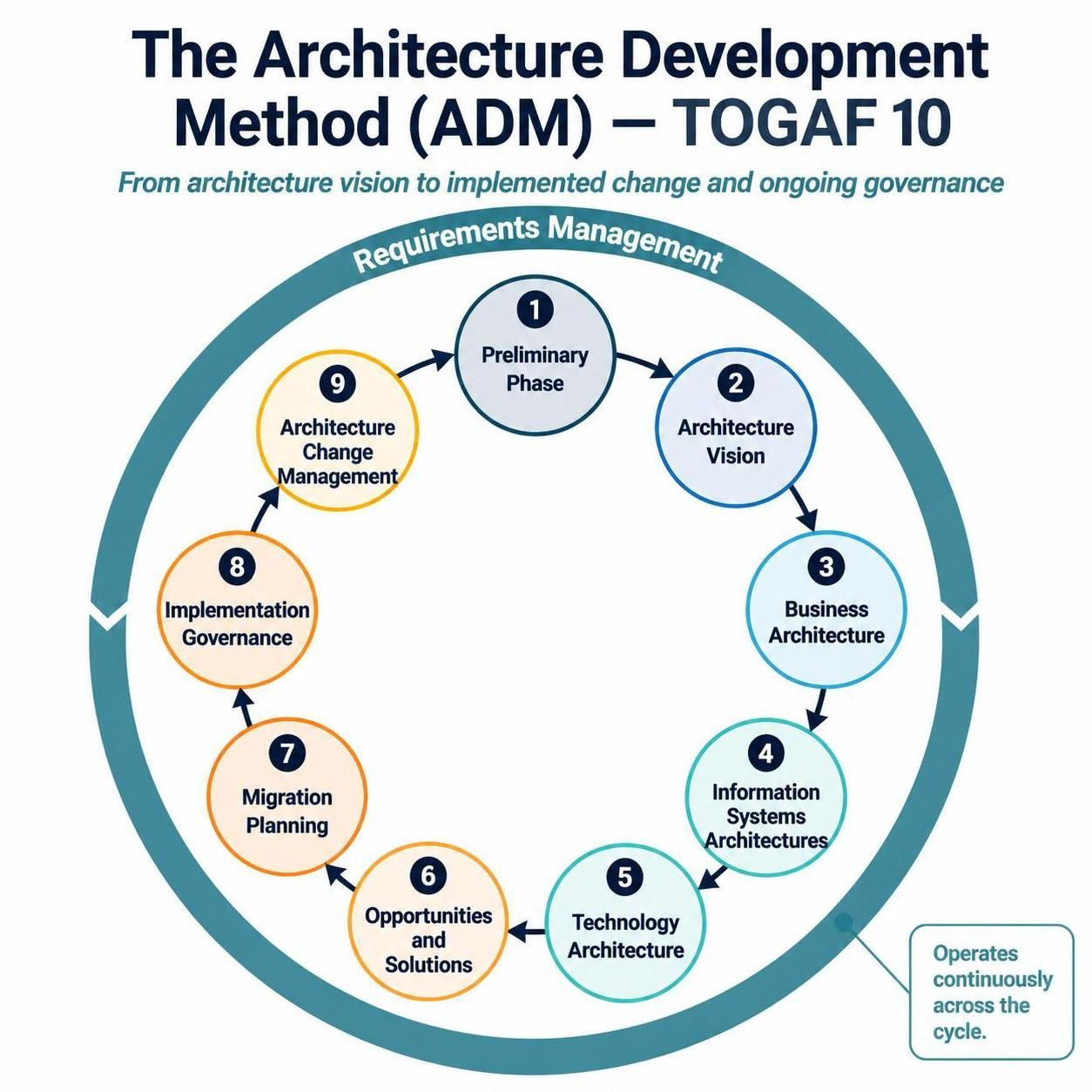 Mastering Enterprise Architecture: A Step-by-Step Guide to the TOGAF ADM Cycle
 Mastering Agile Enterprise Architecture: A Step-by-Step Guide to TOGAF 10