


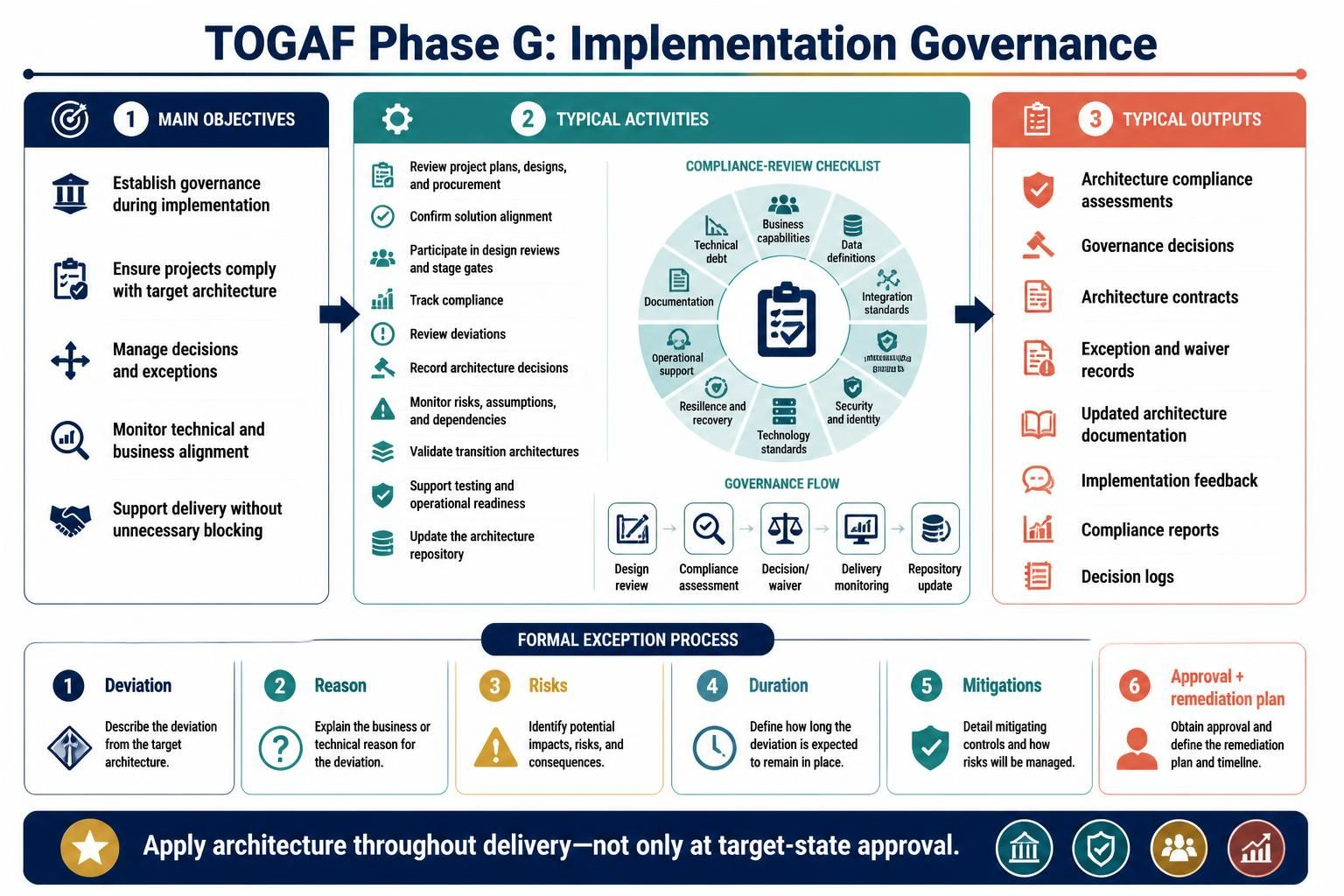
Welcome to this comprehensive tutorial on Phase G: Implementation Governance within the TOGAF Architecture Development Method (ADM). This phase is often the critical bridge between theoretical architecture and practical reality. While earlier phases define the “Target State,” Phase G ensures that the actual implementation projects conform to that approved architecture.
In this guide, we will break down the system architecture of the governance process, explore the modeling concepts used to verify compliance, and detail the formal procedures for managing exceptions.
1. The Core Philosophy: Architecture in Action
A common misconception in enterprise architecture is that the work is finished once the target-state diagrams are approved. Phase G challenges this by asserting that architecture is not a static artifact; it is a living standard that must be applied throughout the delivery lifecycle.
The primary goal is to establish Architecture Governance during the implementation of projects. This involves:
- Ensuring Compliance: Verifying that projects align with the target architecture.
- Managing Decisions: Handling deviations and exceptions formally.
- Supporting Delivery: Providing guidance without unnecessarily blocking progress.
2. Typical Activities: The Architect’s Workflow
Architects in Phase G act as auditors and consultants simultaneously. The workflow is continuous, involving review, tracking, and validation. Here are the key activities involved:
Review and Alignment
Architects must review project plans, designs, and procurement decisions. This ensures that the solution design aligns with the approved architecture before construction begins. Participation in design reviews and stage gates is crucial for early detection of non-compliance.
Tracking and Validation
The process involves tracking architecture compliance and reviewing requested deviations. A critical output of this tracking is the validation of transition architectures—ensuring that the temporary states between the current and target architectures are implemented exactly as intended.
Operational Readiness
Governance does not end at deployment. Architects must support testing and operational readiness to confirm that delivered solutions update the architecture repository, keeping the organization’s blueprint current.
3. The Compliance-Review Checklist
How do we objectively measure compliance? The infographic highlights a comprehensive Compliance-Review Checklist. This circular model represents the multidimensional nature of enterprise architecture. When auditing a project, you must examine:
- Business Capabilities: Is the project delivering the intended business value?
- Data Definitions: Are approved data standards being used?
- Integration Standards: Does the solution integrate seamlessly with existing systems?
- Security and Identity: Are security controls and identity management protocols adhered to?
- Technology Standards: Are the correct hardware and software technologies being utilized?
- Resilience and Recovery: Is the solution capable of recovering from failure?
- Operational Supportability: Can the IT operations team support the new solution?
- Technical Debt: Are we managing technical debt effectively?
4. Managing Exceptions and Waivers
In the real world, not every project will comply perfectly with the target architecture. Sometimes, a deviation is necessary due to immediate constraints or legacy limitations. However, allowing informal deviations to become permanent is a recipe for architectural decay.
The system requires a Formal Exception Process to document any deviation. This process consists of six critical steps:
- Deviation: Clearly describe the deviation from the target architecture.
- Reason: Explain the business or technical reason for the deviation.
- Risks: Identify potential impacts, risks, and consequences.
- Duration: Define how long the deviation is expected to remain in place.
- Mitigations: Detail the controls used to manage the identified risks.
- Approval & Remediation: Obtain approval and define a plan to remediate or retire the exception.
5. Governance Flow and Outputs
The governance process follows a logical flow: Design Review $\rightarrow$ Compliance Assessment $\rightarrow$ Decision/Waiver $\rightarrow$ Delivery Monitoring $\rightarrow$ Repository Update.
Successful governance produces tangible outputs, including:
- Architecture compliance assessments
- Governance decisions
- Architecture contracts
- Exception and waiver records
- Updated architecture documentation
- Compliance reports and decision logs
Conclusion and Recommended Tooling
Implementing Phase G effectively requires a robust process to manage the complex interplay between business goals, technical standards, and project delivery constraints. To visualize these workflows, create the compliance review checklists, and manage the exception processes described above, it is highly recommended to use the Visual Paradigm TOGAF ADM Tool.
Visual Paradigm allows architects to model the governance flow, track compliance against the checklist items, and document exceptions within a unified platform, ensuring that the architecture remains a living, governing force rather than a forgotten document.
Related posts:
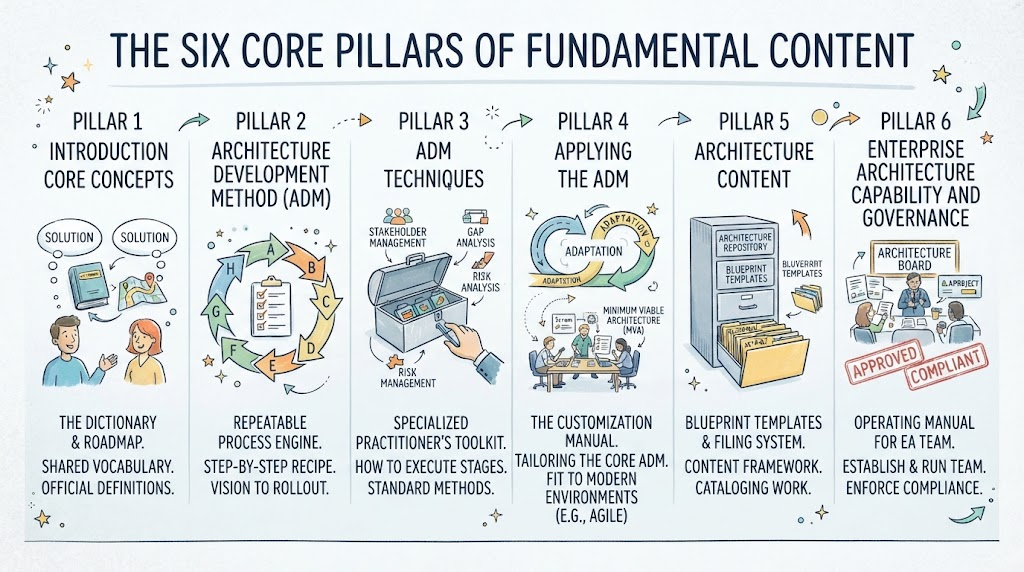 Mastering Enterprise Architecture: A Step-by-Step Guide to the Six Core Pillars of TOGAF
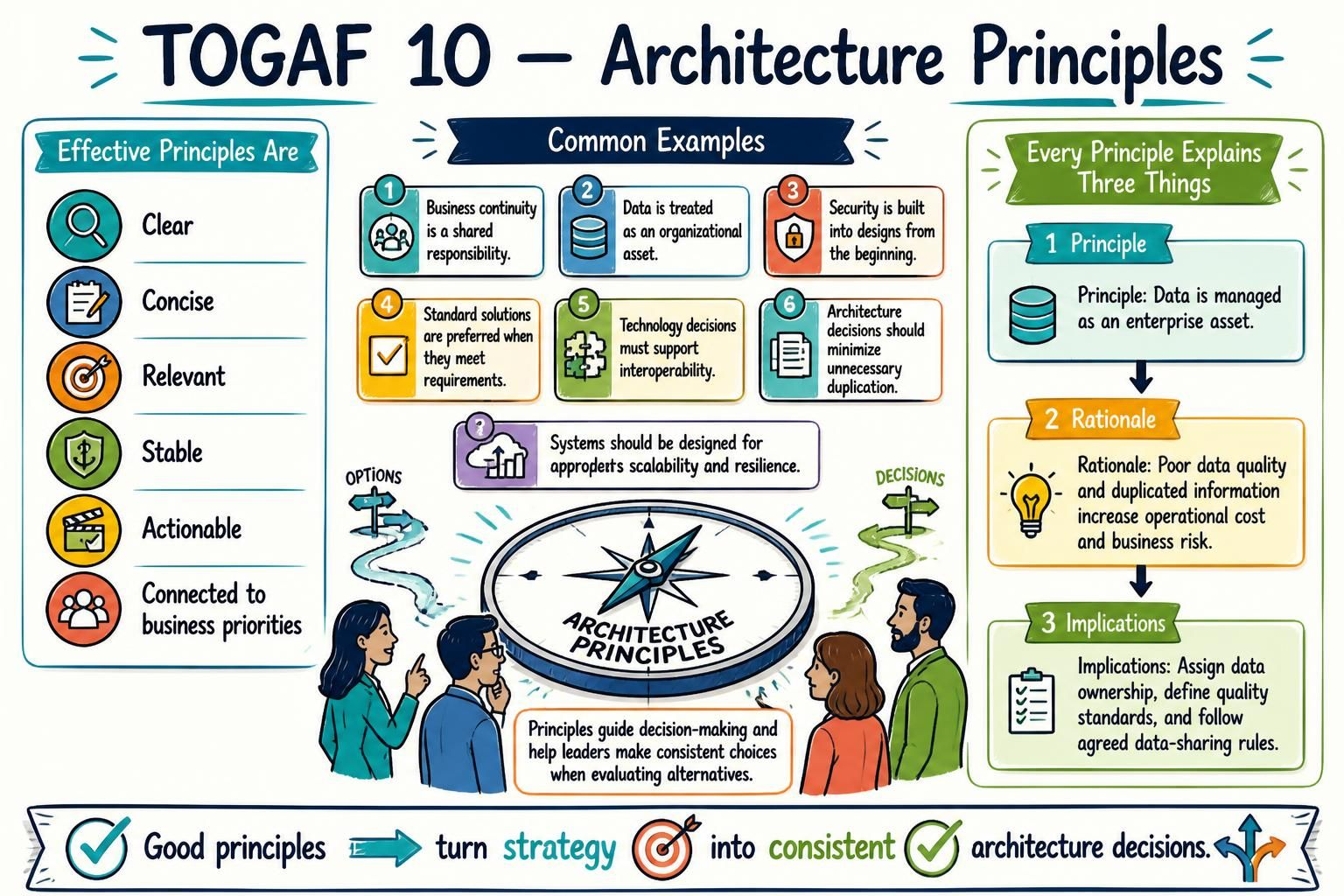 Mastering TOGAF 10: A Comprehensive Guide to Defining Architecture Principles
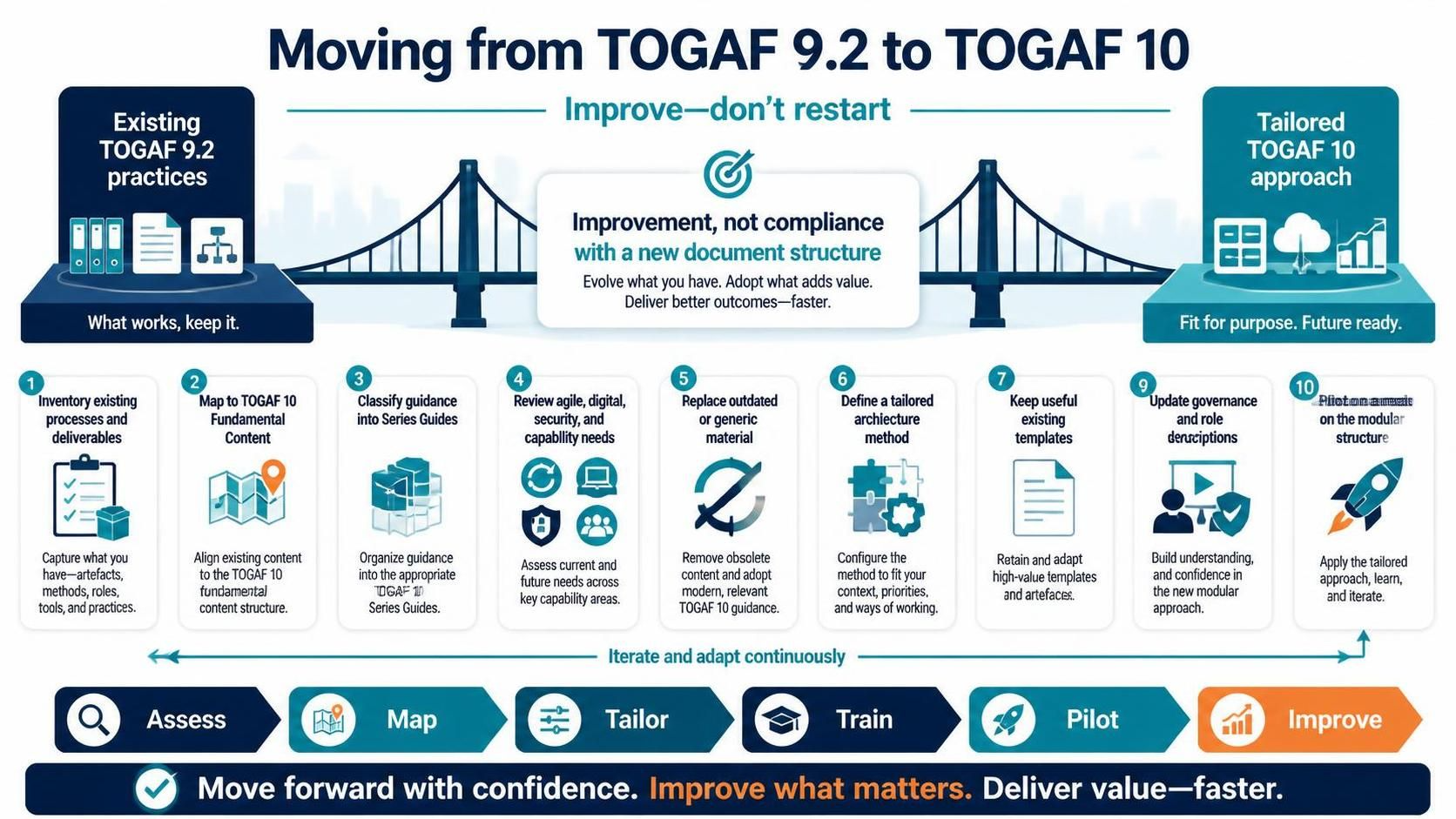 Mastering the TOGAF 10 Migration: A Strategic Guide to Evolution, Not Restart
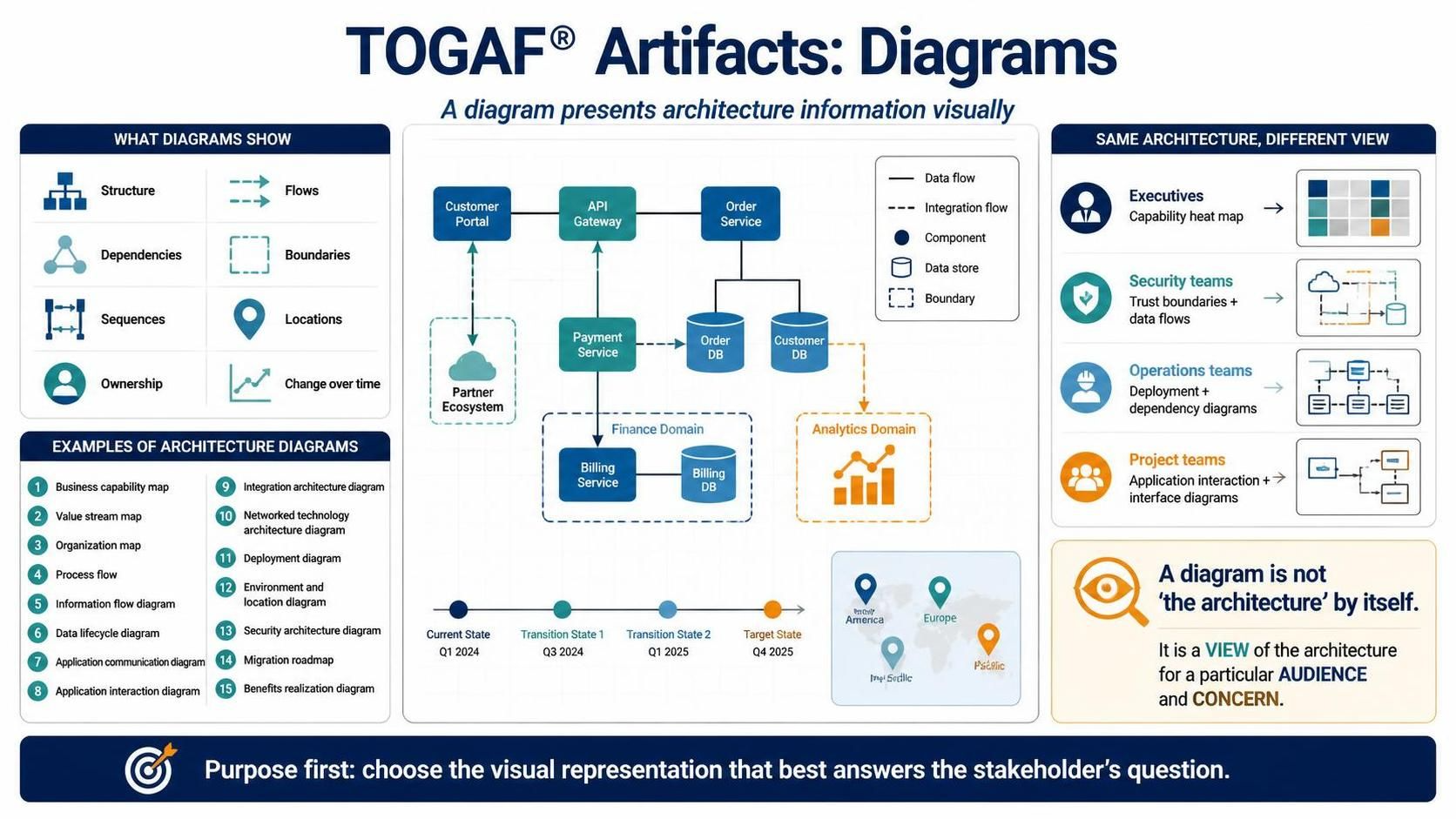 Mastering TOGAF Architecture Diagrams: From Concept to Stakeholder Value