


Mastering Business Process Modeling with BPMN
As we embark on this tutorial session, we must first understand the fundamental language of business analysis: Business Process Model and Notation (BPMN). BPMN is not merely a set of drawing rules; it is a standardized graphical representation designed to make business workflows understandable to all stakeholders, from business analysts to developers.
When you visualize a workflow, you transform abstract ideas into concrete processes. This aids significantly in business process analysis and improvement. However, drawing these diagrams by hand or using basic drawing tools often leads to confusion and inconsistency. This is where professional tools like Visual Paradigm’s Online BPMN Tool become indispensable.
Deconstructing a Complex Workflow: The Nobel Committee Example
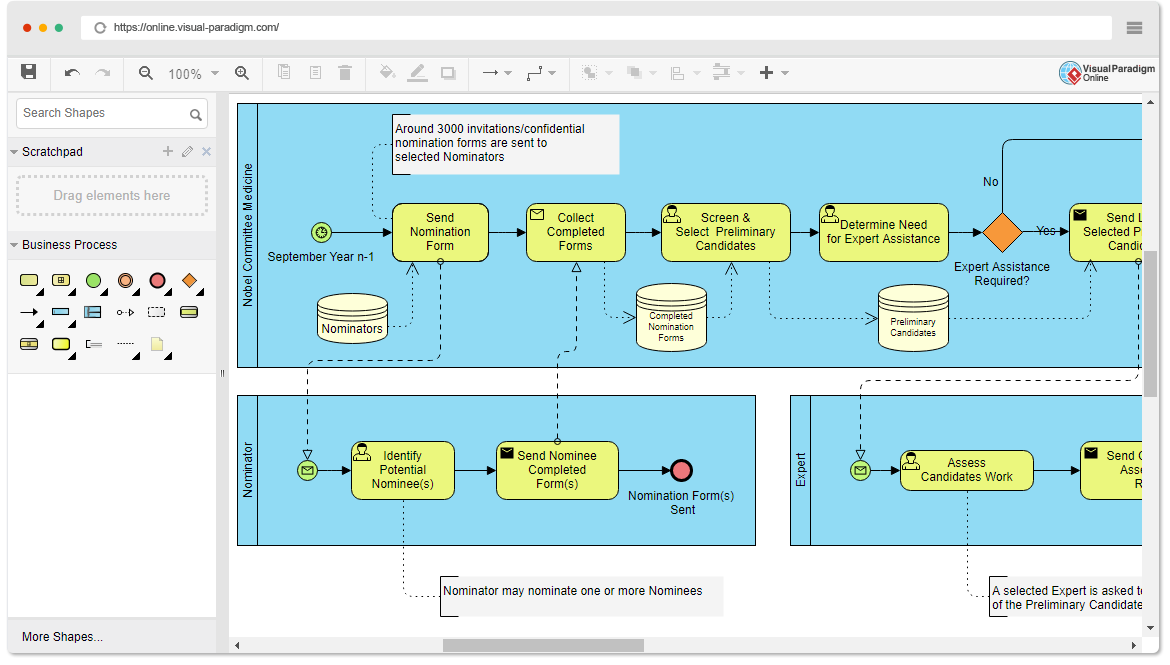
To truly understand how BPMN works in practice, let us analyze a sophisticated example: the Nobel Committee Medicine nomination process. By examining this diagram, we can see how Visual Paradigm facilitates the creation of complex, multi-party workflows.
The diagram is structured using Swimlanes. You will notice distinct horizontal partitions labeled “Nobel Committee Medicine,” “Nominator,” and “Expert.” This is a critical feature of BPMN. It clearly delineates responsibility. It answers the question: “Who does what?” In Visual Paradigm, you can easily drag and drop these lanes to organize your processes logically, ensuring that the flow of responsibility is crystal clear.
Tracing the Flow of Events
Let’s look at the journey of a single process. The workflow begins with a Start Event (the green circle with a clock), indicating that the process is triggered by a specific time: “September Year n-1.” This temporal trigger is a powerful way to model time-based business rules.
From there, the process moves through a series of Tasks, represented by rounded rectangles. For instance, the Committee “Send Nomination Form,” followed by the Nominator “Identify Potential Nominee(s).” Visual Paradigm allows you to link these tasks with sequence flows (the solid black arrows), creating a logical narrative of how the process unfolds.
Navigating Decisions and Data
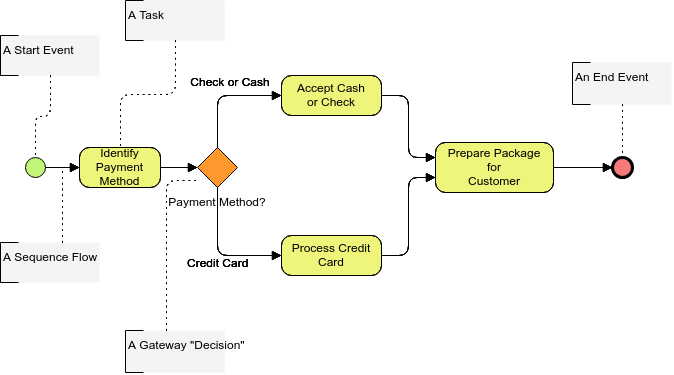
Real-world processes are rarely linear; they involve decisions. In the diagram, we see a diamond shape labeled “Expert Assistance Required?”. This is a Gateway. It represents a decision point where the process can branch in different directions based on a condition (Yes or No). Visual Paradigm makes managing these complex logic branches intuitive, allowing you to define the “Yes” and “No” paths clearly.
Furthermore, the diagram includes Data Objects (represented by documents and cylinders). You can see “Completed Nomination Forms” flowing between tasks. This visualizes not just the action, but the data being consumed or produced. Visual Paradigm’s ability to handle these data flows ensures that your process model is not just a drawing, but a comprehensive blueprint of the system’s information architecture.
Why Visual Paradigm Stands Out for BPMN Modeling
While there are many tools on the market, Visual Paradigm offers a distinct advantage for both beginners and experts. Here is why it is the preferred choice for creating professional BPMN diagrams:
- Intuitive Interface: As seen in the interface, the “Scratchpad” and “Business Process” panels provide easy access to all necessary shapes. You don’t need to search for icons; they are organized logically for drag-and-drop convenience.
- Professional Templates: If you are starting from scratch, the platform offers inspiration. You can view pre-built examples, such as the Pizza Order Process or the complex Nobel Committee model we discussed, to understand best practices before building your own.
- Collaboration and Accessibility: Being an online tool, it removes the barrier of software installation. You can draw business workflows directly in your browser, making it easy to share diagrams with colleagues for feedback and editing.
- Comprehensive Notation Support: Whether you are a novice or an expert, the tool supports the full BPMN standard. This ensures that your diagrams are readable by anyone familiar with the notation, bridging the gap between business and IT.
Conclusion: Start Modeling Today
Business Process Modeling is about clarity and efficiency. By using the right tools, you can transform chaotic business requirements into streamlined, optimized workflows. Visual Paradigm’s online BPMN diagram tool provides the professional environment you need to execute this transformation. Whether you are analyzing the Nobel Committee’s rigorous selection process or streamlining your local pizza delivery service, the power to visualize, analyze, and improve lies in your hands.
Ready to get started? Explore the templates available in the online drawing tools of Visual Paradigm Online and begin your journey into professional process modeling today.
Related posts:
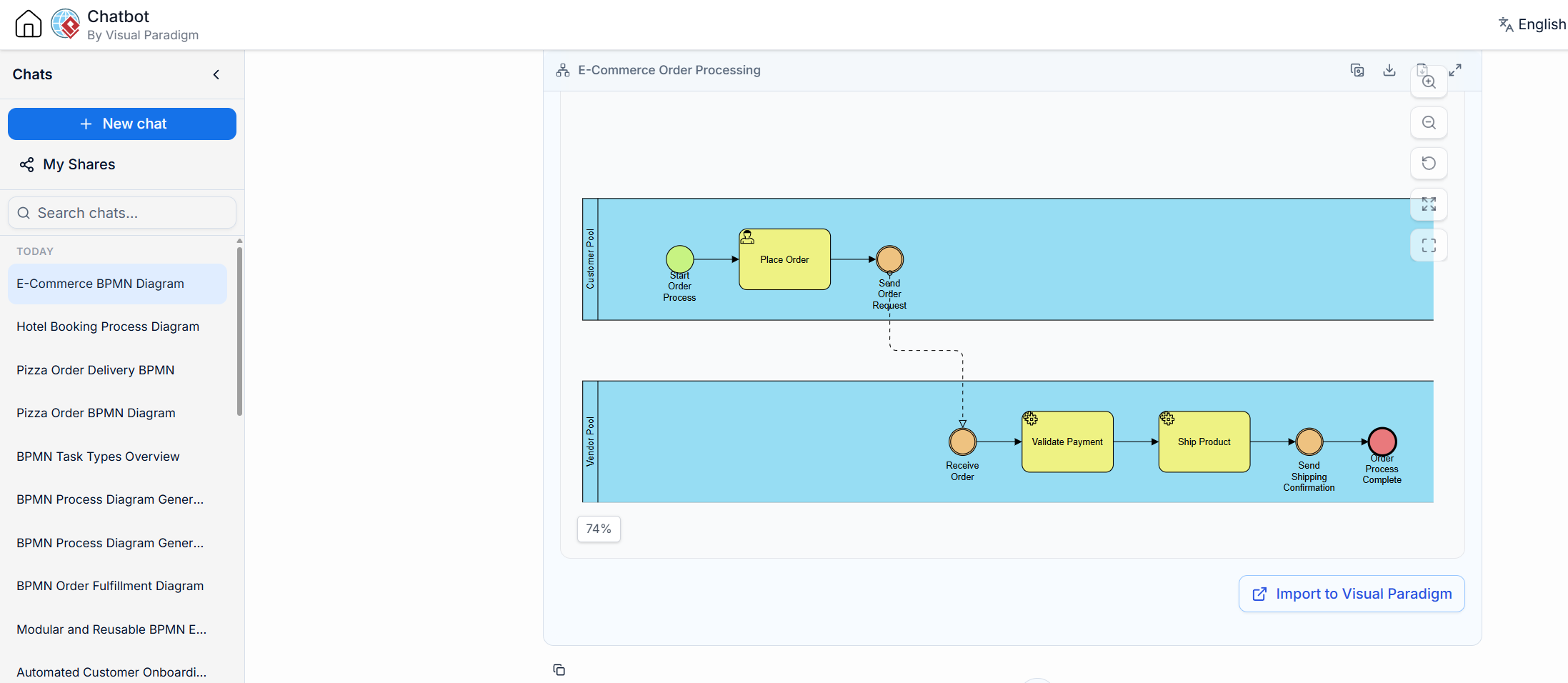 Mastering BPMN: A Practical Guide to E-Commerce Order Processing
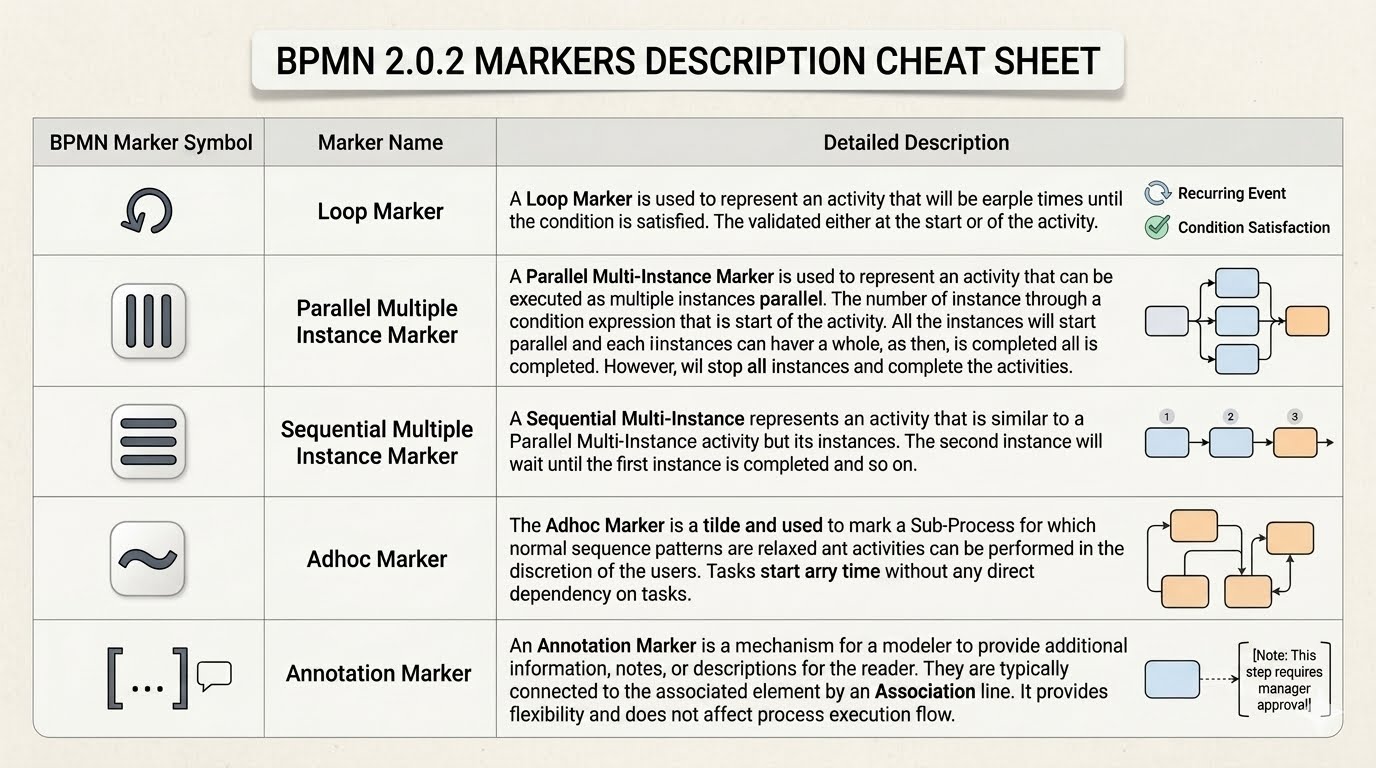 Mastering BPMN 2.0 Markers: The Hidden Modifiers That Control Process Execution
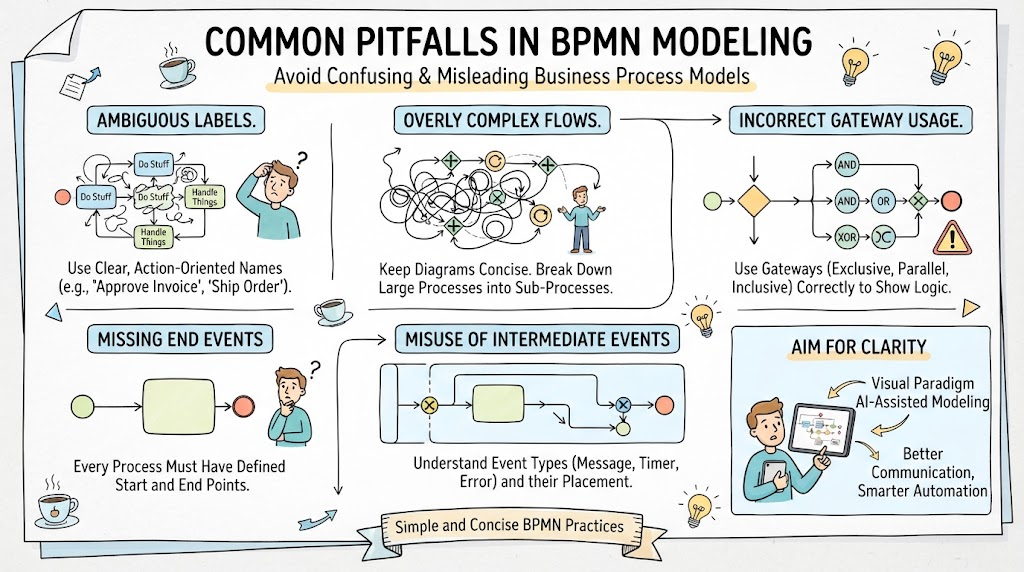 Mastering BPMN: A Guide to Avoiding Common Modeling Pitfalls
 Mastering BPMN Basics: A Step-by-Step Guide to Process Modeling with Start Events, Gateways, and Tasks