In the rapidly evolving landscape of modern software development and business analysis, one enemy consistently hinders efficiency: ambiguity. Whether you are mapping a complex legacy workflow for migration or designing a robust microservices orchestration layer, the gap between business intent and technical execution can be disastrous if not bridged correctly.
This tutorial explores the strategies for effective Business Process Model and Notation (BPMN) documentation. We will break down how to transform abstract workflows into actionable, executable assets, utilizing the industry-standard Visual Paradigm as our primary tool for implementation.
1. The Challenge: Eliminating Ambiguity
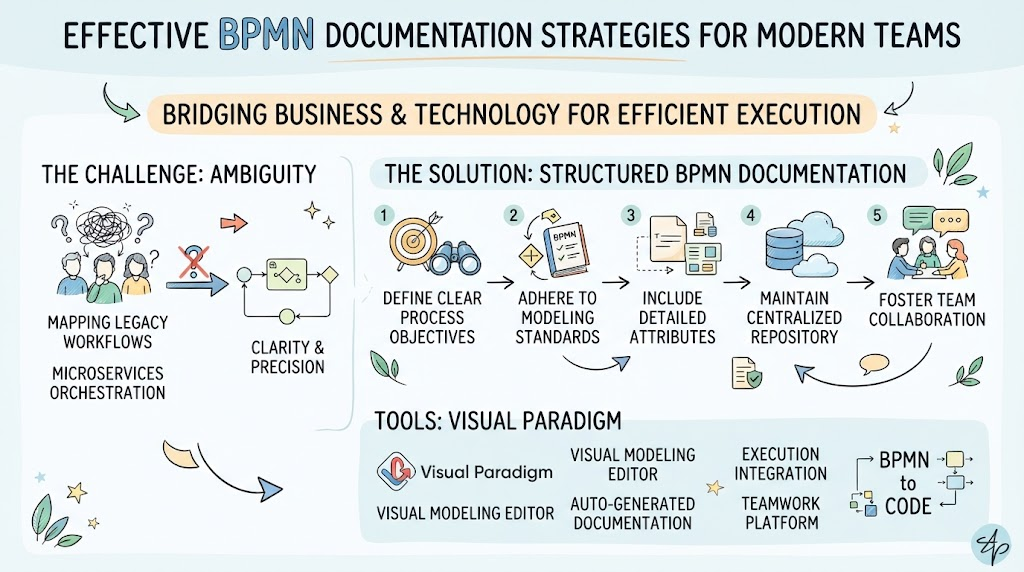
The starting point of any successful project is understanding the problem. As illustrated in our workflow analysis, the primary challenge for many teams is the lack of clarity.
Legacy Workflows and Microservices
Teams often face two distinct but related hurdles:
- Mapping Legacy Workflows: Extracting logic from outdated systems often reveals hidden dependencies and undocumented manual steps.
- Microservices Orchestration: Designing distributed systems requires precise communication between services to ensure data consistency and availability.
Without a standardized language, these tasks result in confusion. The solution lies in achieving Clarity & Precision, which requires moving beyond vague descriptions to structured, visual modeling.
2. The Solution: Structured BPMN Documentation
To bridge the gap between business stakeholders and technical teams, we must adopt a structured approach to BPMN documentation. This process is not just about drawing diagrams; it is about creating a rigorous system of communication. We can break this down into five essential steps:
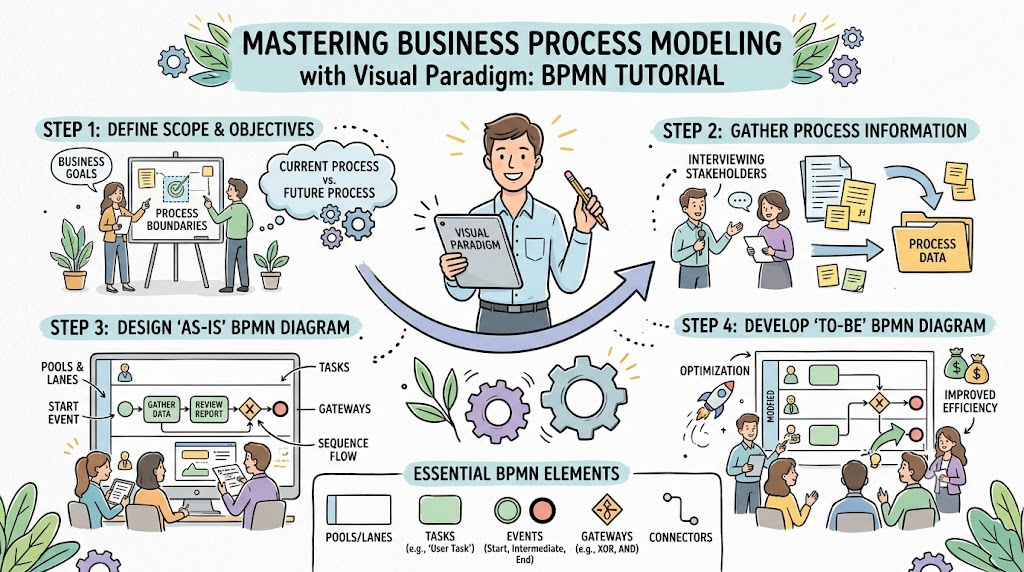
- Define Clear Process Objectives: Before drawing a single shape, identify the goal of the process. Are we optimizing speed? Reducing errors? Mapping the “To-Be” state requires a clear understanding of the desired outcome.
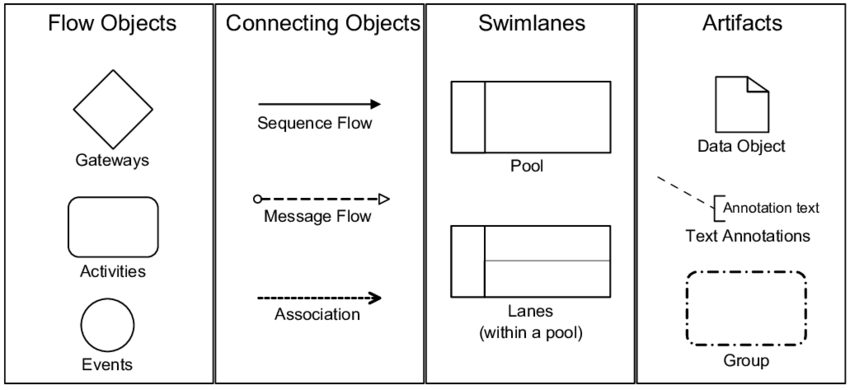
- Adhere to Modeling Standards: Ambiguity often stems from non-standard notation. By strictly following BPMN 2.0 standards, we ensure that a “Gateway” or “Event” means the same thing to a business analyst as it does to a developer.
- Include Detailed Attributes: A diagram is only a skeleton. To make it actionable, we must enrich it with metadata. This includes defining input/output parameters, error handling logic, and specific service calls.
- Maintain a Centralized Repository: Documentation must be a living artifact. A centralized repository ensures that all team members are working from the latest version of the truth, preventing version control conflicts.
- Foster Team Collaboration: The ultimate goal is alignment. Structured documentation facilitates dialogue, allowing business and IT to iterate on solutions together rather than in silos.
3. The Tool: Visual Paradigm
While the methodology is critical, the tooling you use dictates your efficiency. Visual Paradigm is recommended as the premier platform for this implementation because it serves multiple roles in the development lifecycle.
A Unified Ecosystem
Visual Paradigm is not just a diagramming tool; it is a comprehensive modeling editor that integrates seamlessly with modern development practices.
- Visual Modeling Editor: Provides an intuitive drag-and-drop interface for creating complex BPMN diagrams with high fidelity.
- Auto-Generated Documentation: One of the most time-consuming aspects of development is writing the text. Visual Paradigm automates this by generating comprehensive documentation directly from your models.
- Execution Integration & Teamwork Platform: It supports the full Software Development Life Cycle (SDLC), allowing teams to collaborate in real-time and manage projects centrally.
- BPMN to Code: The ultimate test of a process model is its execution. Visual Paradigm allows you to transform your diagrams into executable code, effectively turning your documentation into the actual software application.
Conclusion
By combining a rigorous documentation strategy with powerful tooling like Visual Paradigm, development teams can stop fighting ambiguity. Instead, they can focus on what matters: building efficient, scalable, and well-understood systems.