


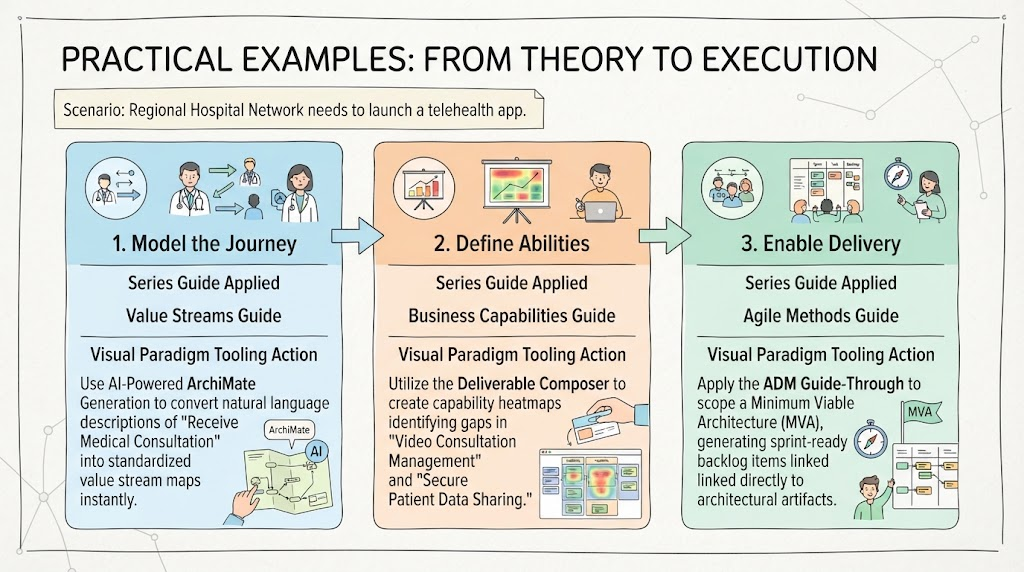
Understanding Enterprise Architecture (EA) categories is often just the beginning. The true power of EA lies in its application—combining specific strategic guides with powerful tooling to solve real-world business problems. This tutorial explores a practical scenario involving a regional hospital network launching a telehealth app, demonstrating how to move seamlessly from high-level modeling to agile delivery execution.
The Scenario: Telehealth Transformation
Imagine a regional hospital network that needs to launch a new telehealth application. The challenge is significant: a Business Analyst must map out complex patient journey changes without stalling the development team. This requires a methodology that bridges the gap between abstract business needs and concrete technical implementation.
Step 1: Model the Journey
The first phase involves understanding the business flow. Instead of creating static diagrams manually, modern EA processes leverage automation to capture the essence of the business.
- Series Guide Applied: Value Streams Guide
- The Action: Use AI-Powered ArchiMate Generation.
In this step, the analyst inputs natural language descriptions of the business process, such as “Receive Medical Consultation.” The tool instantly converts these text descriptions into standardized ArchiMate value stream maps. This ensures that the visual model accurately reflects the business reality while adhering to industry standards, saving significant time on manual diagramming.
Step 2: Define Abilities
Once the journey is mapped, the focus shifts to identifying the internal capabilities required to support it. This step ensures the organization has the necessary “muscle” to execute the strategy.
- Series Guide Applied: Business Capabilities Guide
- The Action: Utilize the Deliverable Composer.
By utilizing the Deliverable Composer, architects can generate capability heatmaps. These heatmaps provide a visual representation of the organization’s strengths and weaknesses. For the telehealth app, this specifically helps identify critical gaps in areas like “Video Consultation Management” and “Secure Patient Data Sharing.” This data-driven approach ensures that resources are allocated exactly where they are needed most.
Step 3: Enable Delivery
The final phase connects the architectural vision to the software development lifecycle. This is where Enterprise Architecture meets Agile development.
- Series Guide Applied: Agile Methods Guide
- The Action: Apply the ADM Guide-Through.
Using the ADM Guide-Through, the team scopes a Minimum Viable Architecture (MVA). This involves generating sprint-ready backlog items that are linked directly to the architectural artifacts created in previous steps. This linkage ensures that every line of code written by the development team serves a specific architectural purpose, maintaining alignment from day one.
Recommended Tooling: The Power of Integration
To successfully execute this process, the synergy between specific tools and frameworks is essential. Here is how the combination of Visual Paradigm, TOGAF ADM, and ArchiMate features enhances the EA process:
1. Visual Paradigm
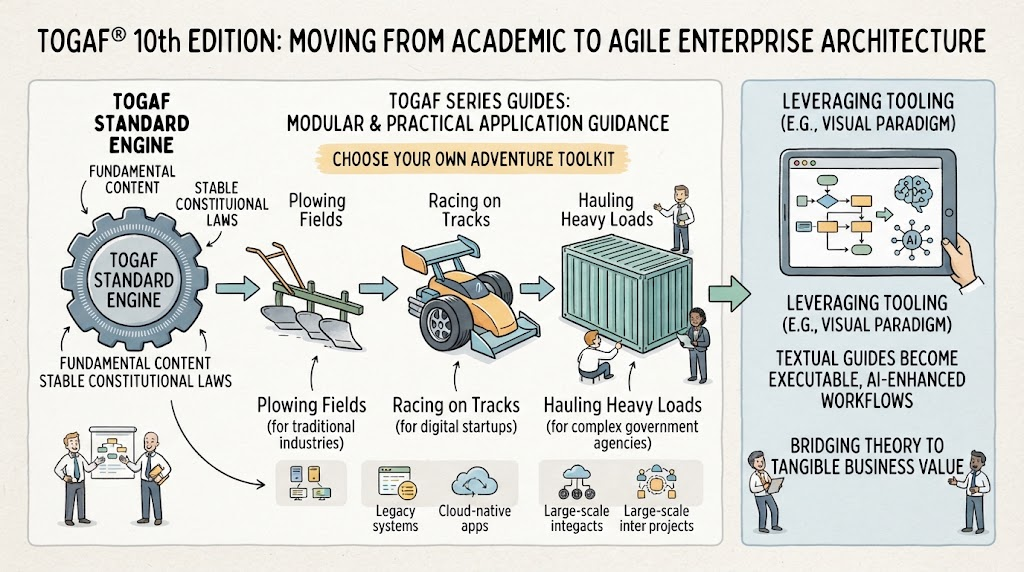
As the central modeling platform, Visual Paradigm provides the environment for creating diagrams, managing data, and generating reports. Its “Series Guides” offer a structured workflow that prevents users from getting lost in the complexity of enterprise architecture.
2. TOGAF ADM (Architecture Development Method)
TOGAF provides the proven methodology for structuring the architecture project. The ADM Guide-Through mentioned in Step 3 is a direct application of the TOGAF framework, ensuring that the development of the telehealth app follows a rigorous, industry-standard lifecycle.
3. ArchiMate
ArchiMate is the standard language for Enterprise Architecture modeling. By leveraging AI-Powered ArchiMate Generation (as seen in Step 1), organizations can ensure their diagrams are not just drawings, but standardized, executable models that can be analyzed for consistency and gaps.
The Synergy
When you combine these three elements, you create a seamless loop: TOGAF provides the process, ArchiMate provides the language, and Visual Paradigm provides the automation. This allows a hospital network to transform from theory to execution rapidly, ensuring that their telehealth app is built on a solid architectural foundation.
Related posts:
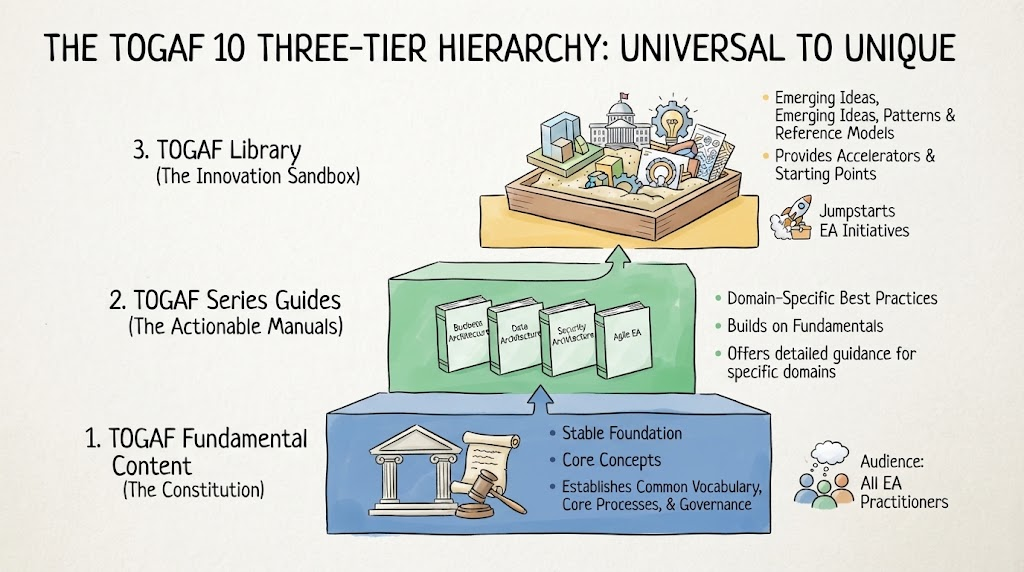 Navigating TOGAF 10: A Deep Dive into the Three-Tier Hierarchy System
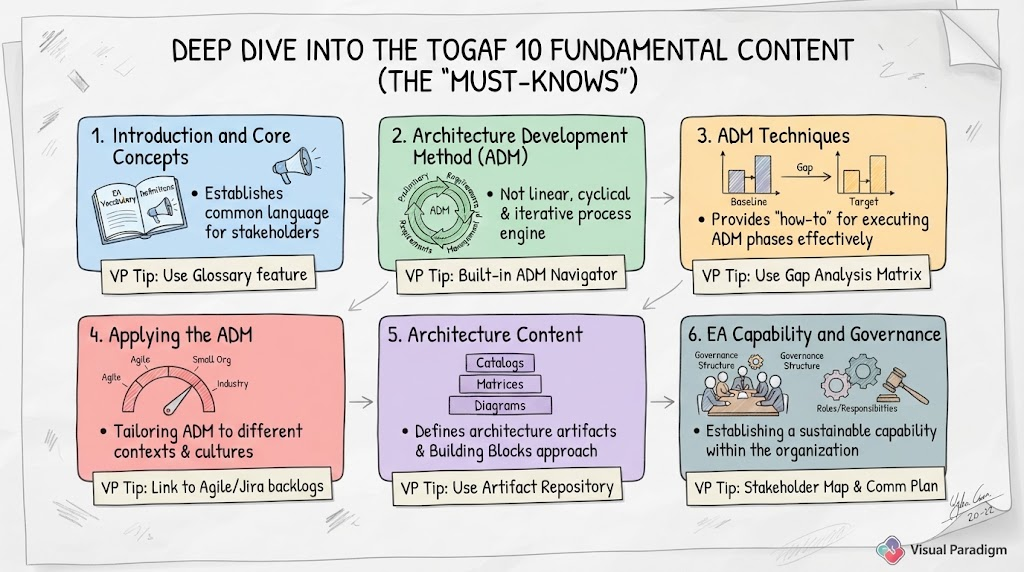 Mastering TOGAF 10: A Step-by-Step Guide to the Six Fundamental Content Pillars
 Accelerating TOGAF ADM with Visual Paradigm: A Guide to AI-Assisted Impact Analysis
 Mastering TOGAF 10th Edition: Bridging Theory, Agility, and AI with Visual Paradigm