


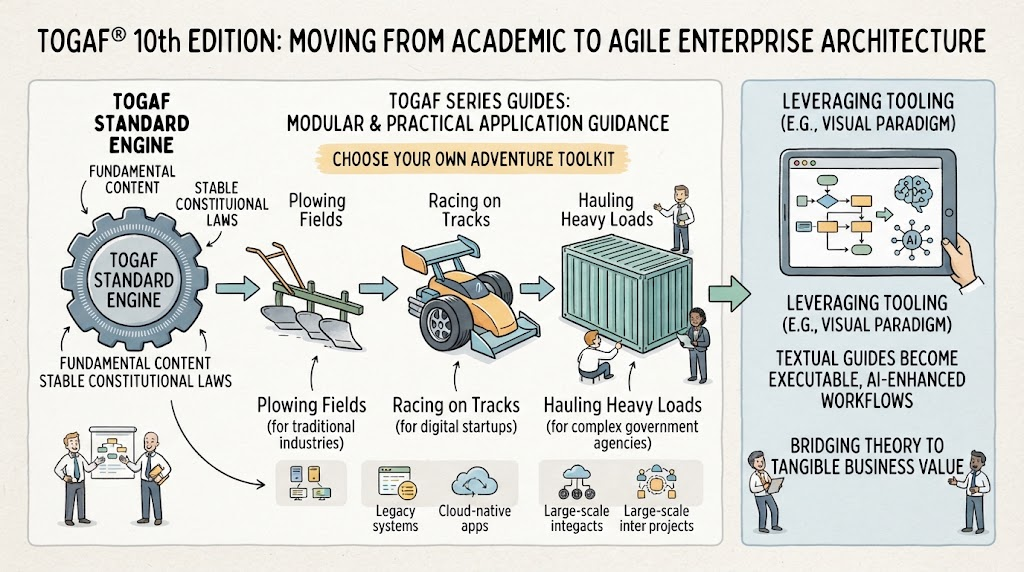
Welcome to this comprehensive tutorial on navigating the transformative landscape of Enterprise Architecture (EA). For years, the field of EA has struggled with a reputation of being overly academic and disconnected from the fast-paced realities of modern business. However, the release of TOGAF® 10th Edition marks a fundamental paradigm shift. This guide will walk you through the new “Choose Your Own Adventure” architecture of the framework, specifically focusing on the TOGAF Series Guides, and demonstrate how leveraging modern tooling like Visual Paradigm allows us to operationalize these standards into tangible business value.
The Core Shift: From Monolith to Modular Engine
To understand TOGAF 10th Edition, we must first visualize its architecture. Think of the framework not as a rigid book of rules, but as a powerful engine designed for versatility.
1. The TOGAF Standard Engine
At the heart of the ecosystem is the TOGAF Standard Engine. This represents the Fundamental Content—the stable, “constitutional laws” of Enterprise Architecture. These are the principles and standards that remain constant regardless of the industry. This core engine provides the structural integrity required for any serious architectural endeavor.
2. The Series Guides: Specialized Attachments
While the engine provides power, it needs attachments to perform specific tasks. This is where the TOGAF Series Guides come into play. They decouple the practical application guidance from the core standard, allowing architects to “plug in” only what is necessary for their specific context. This is a move from a “one-size-fits-all” approach to a modular toolkit.
- Plowing Fields (Traditional Industries): For organizations managing legacy systems and complex, large-scale inter-projects. This module focuses on stability and rigorous governance.
- Racing on Tracks (Digital Startups): For companies building cloud-native applications where speed and agility are paramount.
- Hauling Heavy Loads (Government Agencies): For entities managing massive, complex inter-agency projects that require heavy integration and compliance.
Operationalizing the Guides: The Role of Tooling
A critical challenge in EA is the gap between the textual description of a guide and the executable workflow required to implement it. How do we ensure that an architect reading about “Cloud-Native” architecture actually knows how to model it?
The answer lies in advanced tooling. By utilizing platforms like Visual Paradigm, we can transform static text into dynamic, AI-enhanced workflows. This section explores how specific features of Visual Paradigm integrate with TOGAF and ArchiMate to bridge the gap between theory and delivery.
Recommended Tooling: How Visual Paradigm + TOGAF ADM + ArchiMate Enhance the EA Process
In the modern architecture stack, the synergy between a robust modeling tool and the architectural framework is the key to efficiency. Here is how Visual Paradigm specifically supports the TOGAF Series Guides and the ADM (Architecture Development Method).
1. Contextualizing the ADM with Series Guides
Visual Paradigm allows you to tailor the TOGAF ADM to the specific “Series Guide” you are using. Whether you are “Racing on Tracks” or “Plowing Fields,” the tooling adapts the deliverables and workflows. Instead of forcing a startup to use the same heavy documentation as a government agency, you can configure the tool to focus on rapid prototyping and cloud-native patterns.
2. ArchiMate® Integration for Visualization
ArchiMate is the language of Enterprise Architecture, but it can be dense. Visual Paradigm simplifies this by providing:
- Drag-and-Drop Modeling: Instantly map business processes to applications and infrastructure layers.
- Dynamic Diagramming: Visualize the impact of changes across layers without breaking the model.
- Standard Compliance: Ensure your models adhere to the latest ArchiMate 3.x standards, ensuring your diagrams are universally understood by stakeholders.
3. AI-Enhanced Workflows
The most significant leap forward comes from AI integration. With Visual Paradigm’s advanced capabilities (as highlighted in the 2026 roadmap), the tooling moves beyond simple drawing to active assistance:
- Text-to-Diagram: Input a textual requirement from a Series Guide, and the AI can generate the initial ArchiMate diagram structure.
- Workflow Automation: The tool can automatically check for consistency across the model, ensuring that if you change a business driver, the corresponding application and technology layers are updated accordingly.
- Executable Workflows: Transform your architectural decisions into executable logic, bridging the gap between design and actual delivery.
Conclusion: Delivering Tangible Value
The transition from an academic reputation to an agile, value-driven practice is the defining characteristic of TOGAF 10th Edition. By adopting the Series Guides as a modular toolkit and leveraging Visual Paradigm for AI-enhanced execution, architects can finally deliver on the promise of Enterprise Architecture: creating tangible business value that is both robust and adaptable.
Related posts:
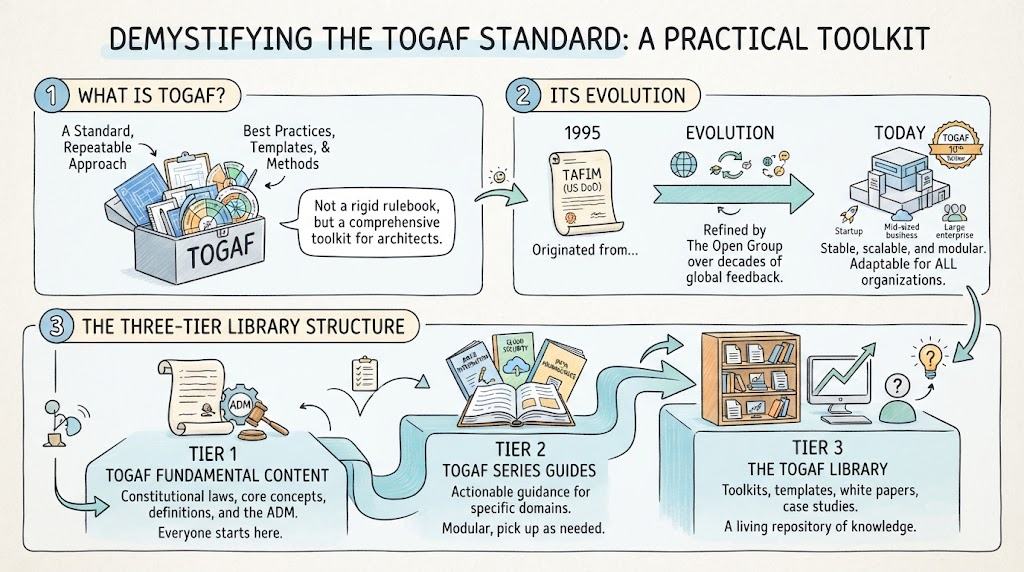 Demystifying the TOGAF Standard: A Practical Toolkit for Modern Enterprise Architecture
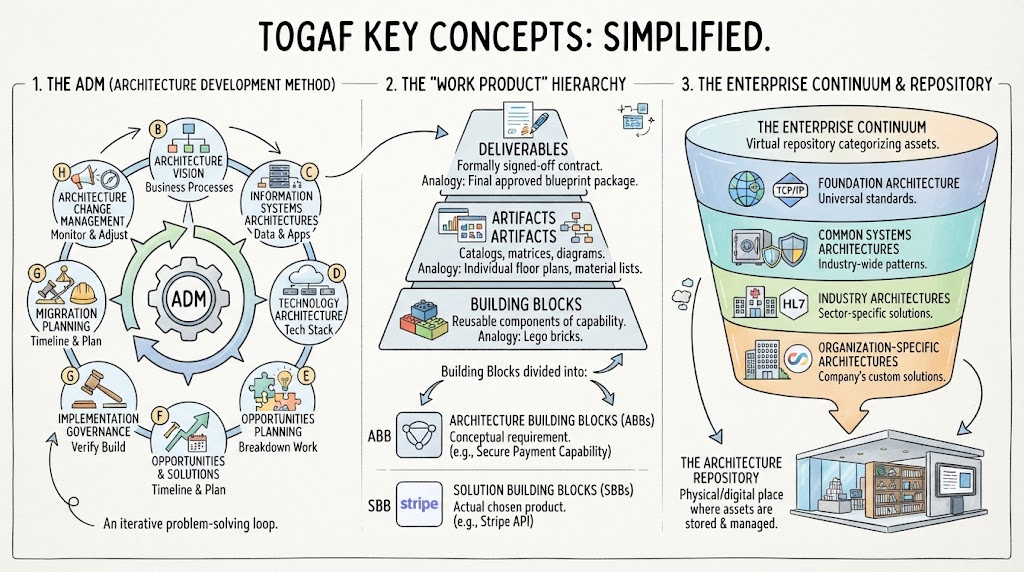 Mastering TOGAF: A Step-by-Step Guide to the ADM Cycle and Enterprise Architecture
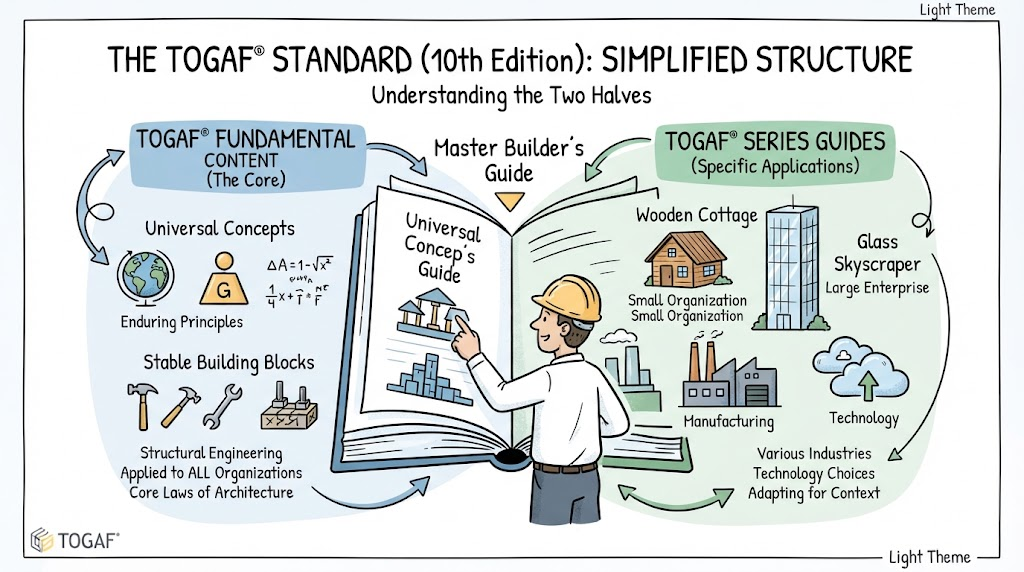 Mastering the TOGAF Standard: The Core vs. The Guides
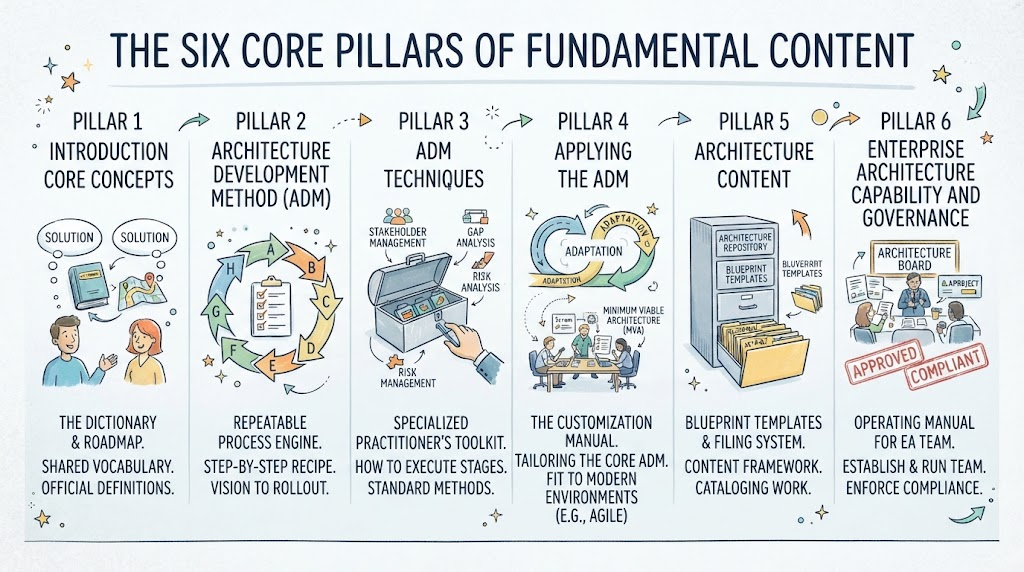 Mastering Enterprise Architecture: A Step-by-Step Guide to the Six Core Pillars of TOGAF