


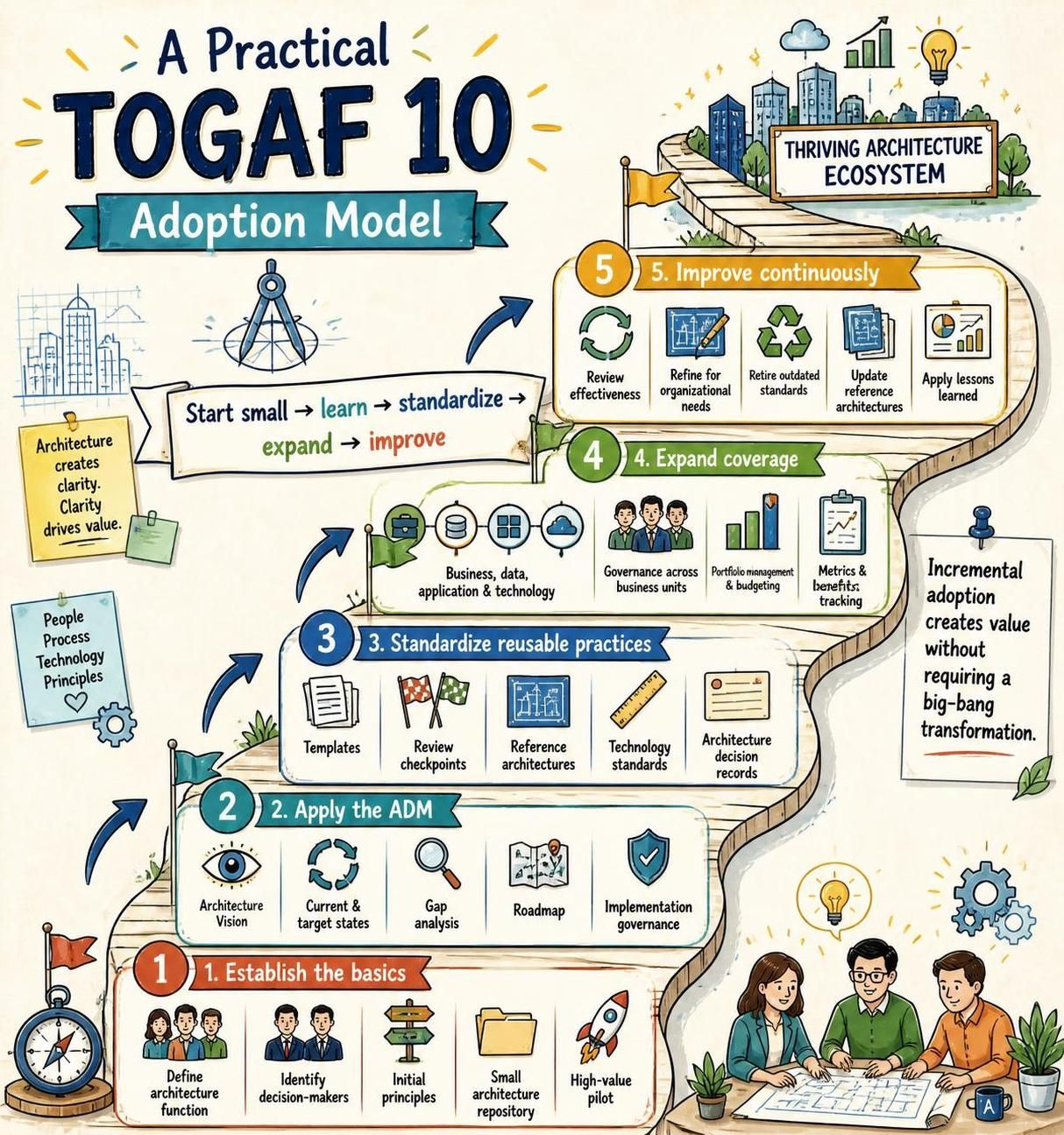
Enterprise Architecture (EA) can often feel like a maze of complex diagrams and heavy documentation. However, the TOGAF 10 Adoption Model illustrated in the provided image offers a refreshing, pragmatic approach. It reframes EA not as a bureaucratic hurdle, but as a strategic journey from “starting small” to building a “thriving architecture ecosystem.”
In this tutorial, we will walk through the five distinct stages of the model, explaining the technical and organizational concepts behind each step and how to apply them to modernize your organization.
Phase 1: Establish the Basics
The journey begins at the bottom of the ladder. Many organizations fail at EA because they attempt to govern the entire enterprise immediately. The first stage focuses on setting up the necessary infrastructure for value creation without overwhelming stakeholders.
Key Actions:
- Define Architecture Function: Establish who the architects are and what their mandate is. Are they consultants, governance enforcers, or builders?
- Identify Decision-Makers: Map out who holds the budget and authority. You must know who you are designing for.
- Set Initial Principles: Draft a “Bill of Rights” for technology. These are high-level rules (e.g., “We will prioritize cloud-native solutions”) that guide future decisions.
- Run a High-Value Pilot: Do not try to fix everything at once. Select a specific, high-impact project to demonstrate the value of architecture.
Phase 2: Apply the ADM
Once the basics are in place, the model moves to the core engine of TOGAF: the Architecture Development Method (ADM). This is the iterative process used to design, plan, and govern IT architecture.
Core ADM Concepts:
- Architecture Vision: The starting point. You define the scope and constraints of the project based on business requirements.
- Current & Target States: You must clearly understand the As-Is (current environment) and the To-Be (desired future state).
- Gap Analysis: This is the critical technical step of comparing the current state against the target state to identify missing components, technologies, or capabilities.
- Roadmap: Based on the gaps, you create a timeline for transition.
- Implementation Governance: Ensuring that the actual build follows the architectural plan.
Phase 3: Standardize Reusable Practices
After applying the ADM to a few projects, you begin to see patterns. This stage is about codifying those patterns into a library of assets that can be reused across the organization.
Key Artifacts:
- Templates: Standardized formats for Architecture Definition Documents (ADD) or Project Charters.
- Review Checkpoints: Formal gates where architects review designs to ensure compliance before development begins.
- Reference Architectures: Pre-approved blueprints for common scenarios (e.g., a standard “Customer 360” view architecture).
- Technology Standards: A whitelist of approved software and hardware.
Phase 4: Expand Coverage
With standardized practices in place, the scope of the EA function expands. You are no longer just looking at one department; you are looking at the holistic enterprise.
Technical Scope Expansion:
- Business, Data, Application & Technology: The model emphasizes a “4-domain” view. You cannot have a modern data strategy without understanding the application layer that generates it.
- Governance Across Business Units: Architecture becomes a shared service, aligning siloed departments.
- Portfolio Management: You begin managing the entire IT portfolio, optimizing budget and reducing redundancy.
Phase 5: Improve Continuously
The final stage represents a mature architecture ecosystem. The focus shifts from “building” to “optimizing.” This is a feedback loop where the architecture itself is treated as a product that requires maintenance and evolution.
Continuous Improvement Cycle:
- Review Effectiveness: Are the decisions we made actually delivering business value?
- Refine Standards: Update the reference architectures to reflect new technologies (e.g., moving from monolithic to microservices).
- Retire Outdated Standards: A crucial but often overlooked task. If a technology is being phased out, your standards must reflect that.
Tooling for Success: Visual Paradigm
Implementing the TOGAF 10 model requires robust tooling to manage the complexity of models, repositories, and workflows. To effectively execute this adoption model, Visual Paradigm TOGAF ADM Tool is highly recommended.
Why Visual Paradigm?
- Integrated Repository: It provides a centralized database for your models, ensuring that your “Reusable Practices” (Phase 3) are actually stored and accessible.
- Automated ADM Workflow: It guides teams through the ADM steps, ensuring that no stage (like Gap Analysis or Roadmap) is skipped.
- Collaboration: It supports the “People, Process, Technology” aspect of the model by allowing stakeholders to view and comment on architectures in real-time.
Final Takeaway
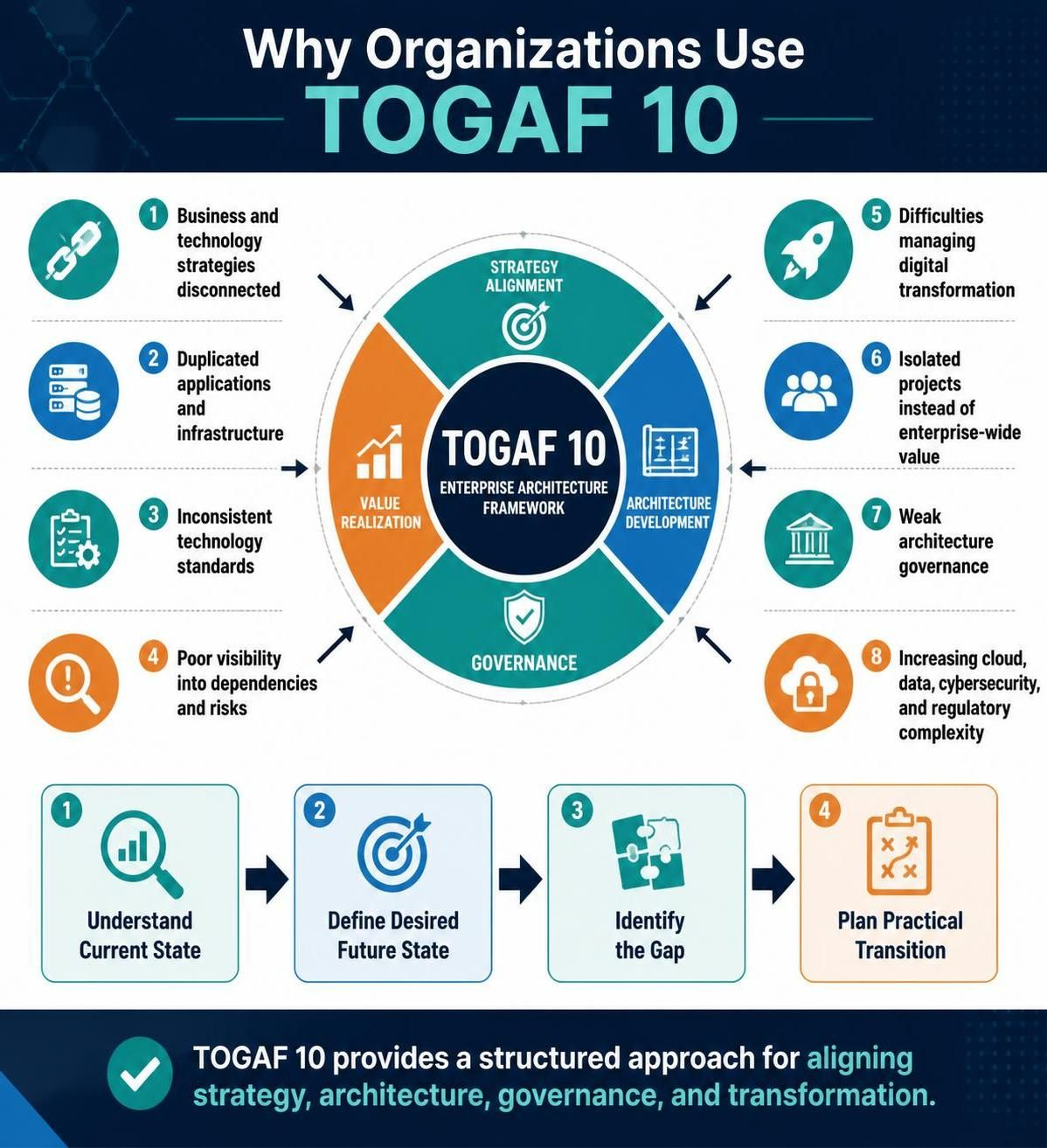
The image serves as a powerful reminder that TOGAF 10 is best understood as a flexible method and knowledge base for connecting business strategy with enterprise change. Its most important contribution is not a particular document or diagram, but a disciplined way to:
- Understand the current environment.
- Define a desired future state.
- Manage requirements and evaluate gaps.
- Plan transitions and govern implementation.
- Adapt architecture as conditions change.
Successful adoption depends on applying the framework proportionately. Organizations should use TOGAF 10 to improve decision-making, alignment, reuse, and governance—not to create documentation for its own sake. When tailored to the organization’s culture and delivery model, it provides a practical foundation for enterprise architecture, modernization, cloud adoption, and long-term technology planning.
Related posts:
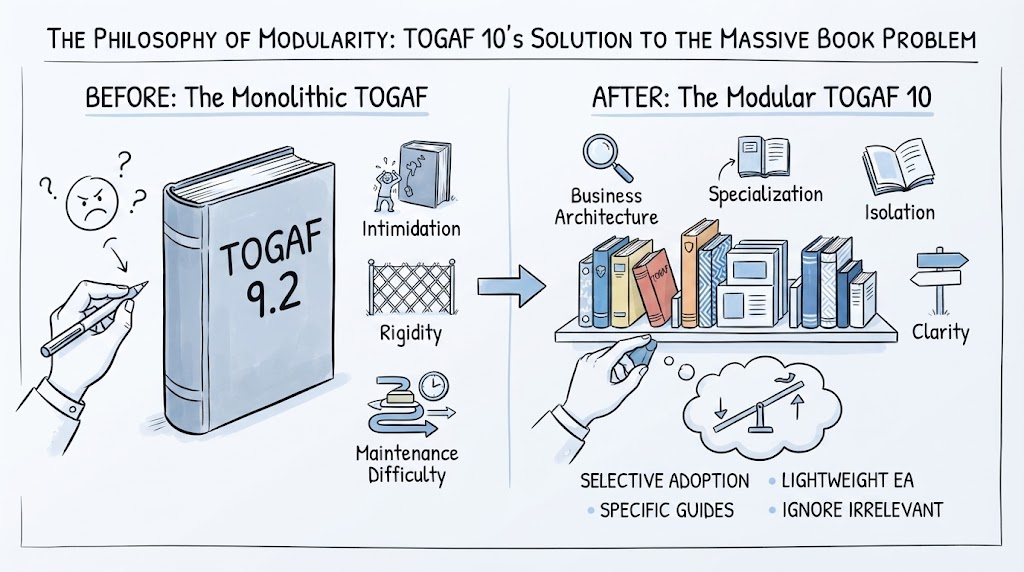 Mastering Modularity: How TOGAF 10 Solves the “Massive Book Problem” with Strategic Flexibility
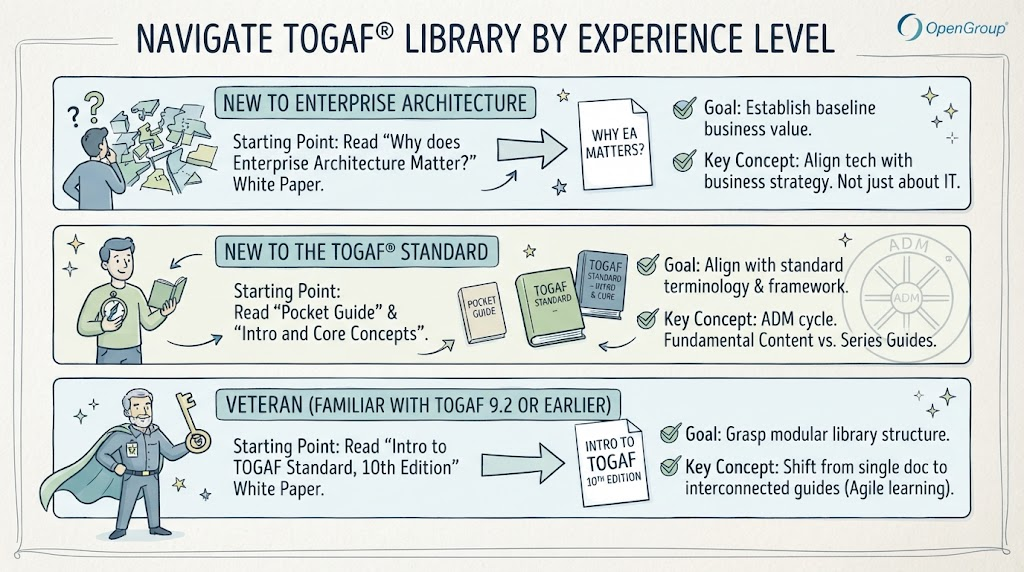 Navigating the TOGAF® Library: A Tiered Approach to Enterprise Architecture Mastery
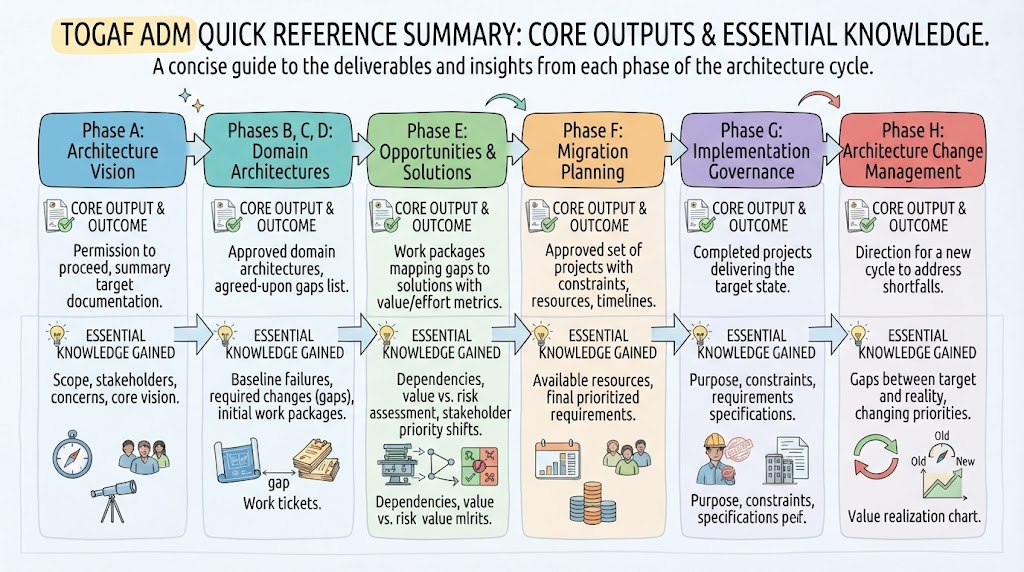 Mastering the TOGAF ADM Cycle: A Visual Guide to Architecture Outputs and Outcomes
 Accelerating Enterprise Architecture: Why Visual Paradigm is the Ideal Companion for TOGAF 10