


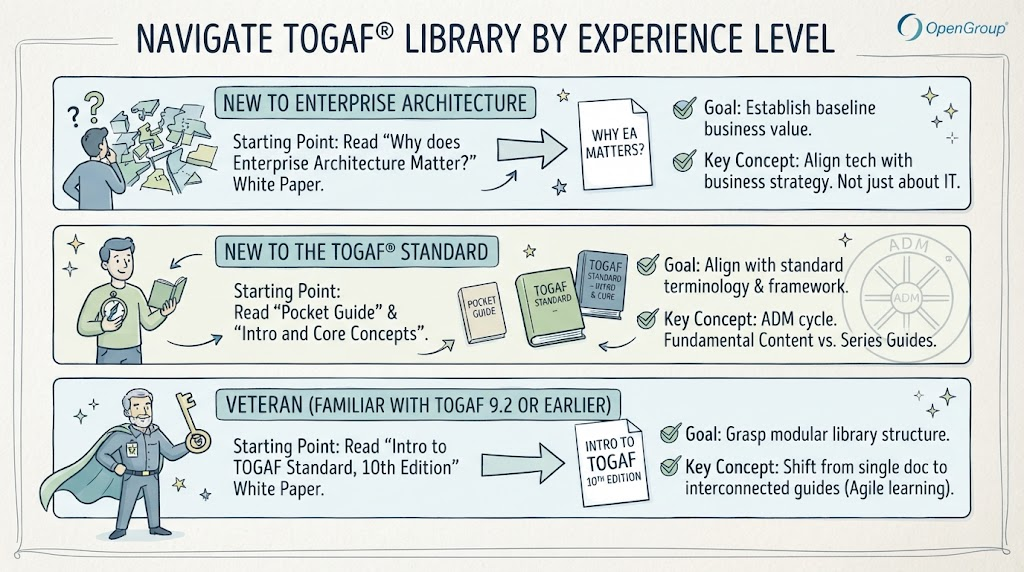
Enterprise Architecture (EA) is a discipline that requires a structured approach to learning, especially given the comprehensive nature of the TOGAF® Standard. As the industry moves toward the 10th Edition, the library has evolved from a single massive document into a modular library of interconnected guides. This shift allows for more agile and targeted learning paths.
This tutorial outlines a strategic roadmap for navigating the TOGAF library, categorized by your current experience level. Whether you are stepping into EA for the first time or transitioning from TOGAF 9.2, this guide provides the necessary steps to establish your baseline knowledge and align with standard terminology.
Phase 1: The Foundation for Newcomers
If you are New to Enterprise Architecture, the primary challenge is understanding the “why” before the “how.” Many beginners jump straight into technical diagrams without grasping the business value. To correct this, your learning journey must begin with strategic alignment.
Starting Point: The “Why EA Matters” White Paper
Your first step is to read the White Paper titled “Why does Enterprise Architecture Matter?”. This document serves as the entry point to the discipline.
- Goal: Establish the baseline business value of EA before engaging with formal processes.
- Key Concept: You will learn that EA is not merely about IT infrastructure; it is about aligning technology with business strategy to reduce uncertainty and drive tangible value.
Phase 2: Understanding the Framework
Once the business value is established, or if you are New to the TOGAF Standard but already familiar with EA concepts, the focus shifts to the mechanics of the framework itself.
Starting Point: The Pocket Guide & Core Concepts
To align with standard terminology and understand the basic framework structure, you should read the TOGAF Pocket Guide alongside the TOGAF Standard – Introduction and Core Concepts.
- Goal: Align with standard terminology and understand the basic framework structure.
- Key Concept: Familiarize yourself with the Architecture Development Method (ADM) cycle. Additionally, understand the distinction between Fundamental Content (the core assets) and Series Guides (specialized extensions).
Phase 3: The Veteran’s Transition
For the Veteran—those familiar with TOGAF 9.2 or earlier—the 10th Edition represents a significant structural shift. The goal is to quickly grasp the new modular library approach.
Starting Point: Introduction to TOGAF 10th Edition
Veterans should read the White Paper titled “An Introduction to the TOGAF Standard, 10th Edition”.
- Goal: Quickly grasp how the modular library and series guides restructure existing knowledge.
- Key Concept: Understand the shift from a single, monolithic document to a library of interconnected guides. This structure allows for more agile and targeted learning, enabling architects to focus only on the specific guides relevant to their current project needs.
Recommended Tooling: Visual Paradigm + TOGAF ADM + ArchiMate
To effectively apply these concepts in a real-world scenario, you need robust modeling tools that support the TOGAF ADM cycle and the ArchiMate modeling language. Visual Paradigm is a leading solution for this purpose.
How Visual Paradigm Enhances the EA Process
- Integration with TOGAF ADM: Visual Paradigm maps directly to the TOGAF ADM phases. This ensures that your modeling efforts are not just about drawing diagrams, but about following a rigorous architectural process that aligns with the “New to the TOGAF Standard” goals.
- ArchiMate Support: The tool provides deep support for ArchiMate, allowing you to create consistent Business, Application, and Technology layer models. This is essential for the “Key Concept” of aligning technology with business strategy.
- Collaboration and Governance: For the “Veteran” looking for agility, Visual Paradigm offers features to manage the library of content, allowing teams to collaborate on specific series guides rather than wrestling with a single massive document.
By following this structured navigation path and utilizing the right tooling, you can effectively master the TOGAF Standard and drive enterprise value through disciplined architecture.
Related posts:
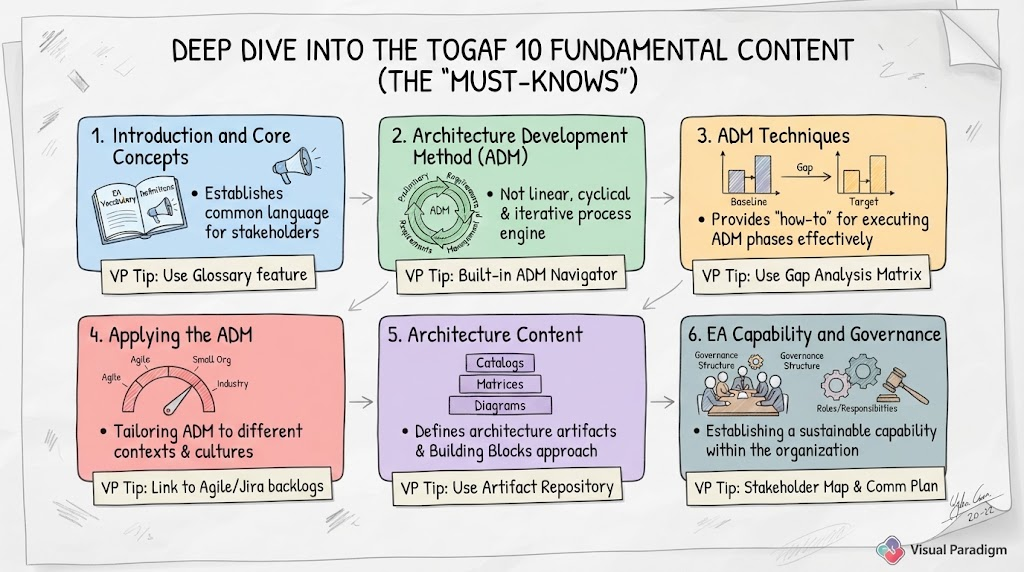 Mastering TOGAF 10: A Step-by-Step Guide to the Six Fundamental Content Pillars
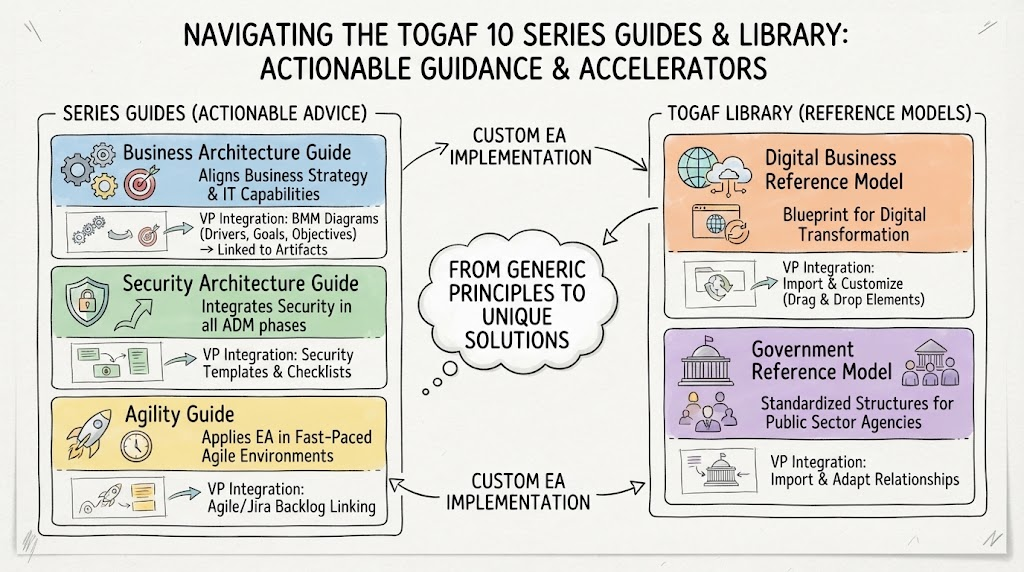 Navigating the TOGAF 10 Series Guides & Library: Actionable Guidance & Accelerators
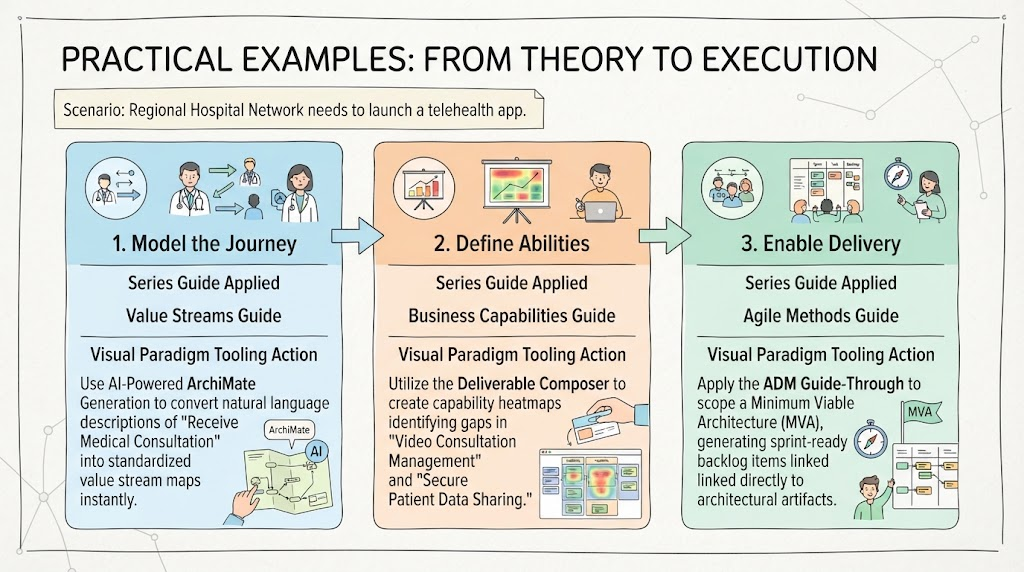 From Theory to Execution: A Practical Guide to Enterprise Architecture with Visual Paradigm
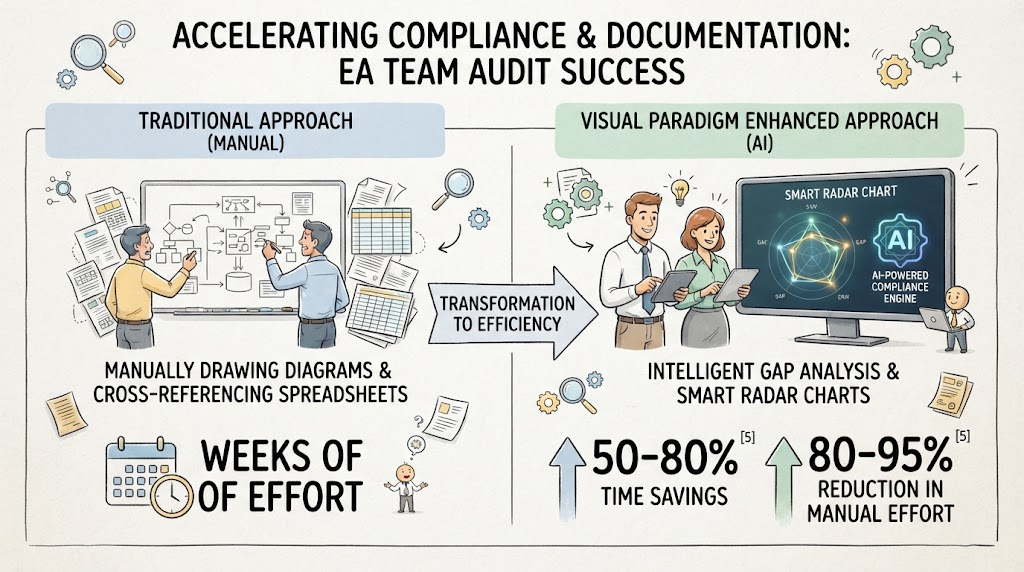 Accelerating Compliance & Documentation: Mastering the EA Audit Workflow with AI