


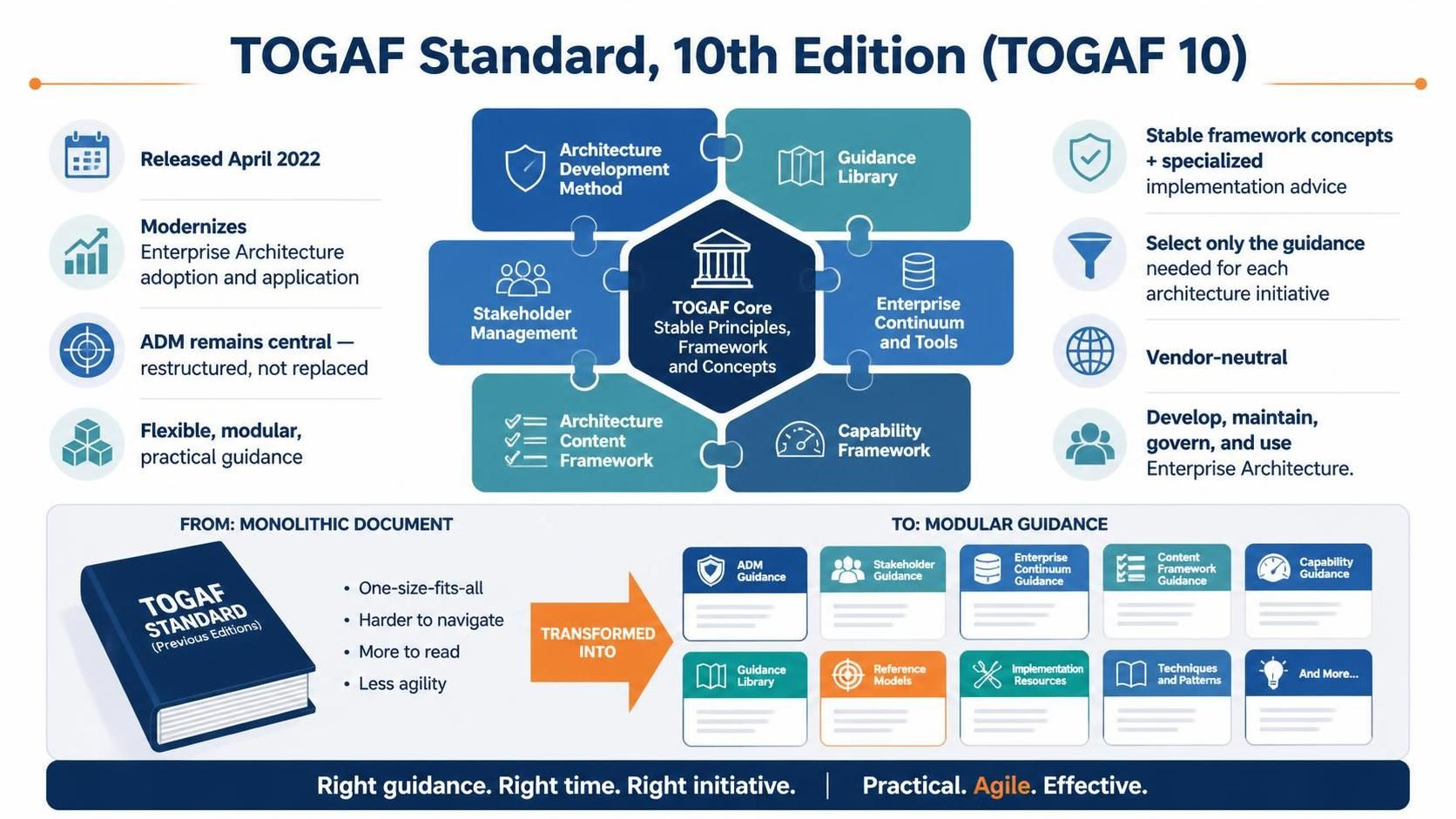
The landscape of Enterprise Architecture (EA) has undergone a significant transformation with the release of the TOGAF Standard, 10th Edition. Released in April 2022, this update is not merely a patch to previous versions but a fundamental modernization of how organizations adopt and apply architecture frameworks. This tutorial explores the core shifts in the TOGAF 10 ecosystem, moving from rigid documentation to flexible, modular guidance.
From Monolithic to Modular: The Core Shift
Historically, enterprise architects faced the challenge of navigating a massive, monolithic document. TOGAF 10 addresses this by restructuring the standard into a collection of smaller, manageable modules. The infographic illustrates this transition clearly:
- The Old Way (Monolithic): Previous editions were characterized by a “one-size-fits-all” approach. These documents were often difficult to navigate, required extensive reading, and offered less agility for specific project needs.
- The New Way (Modular Guidance): TOGAF 10 breaks the standard down into distinct components like ADM Guidance, Stakeholder Guidance, Content Framework Guidance, and Implementation Resources.
This modular structure allows architects to practice the “Right guidance, Right time, Right initiative” philosophy. Instead of forcing a specific methodology onto every project, you can select the exact guidance needed for your specific architecture initiative.
The Architecture Development Method (ADM) Remains Central
A common misconception upon hearing about “restructuring” is that the core engine of TOGAF—the Architecture Development Method (ADM)—has been replaced. This is incorrect.
As highlighted in the visual, the ADM remains central to the framework. However, its role has been restructured. It is now presented as a stable, core component surrounded by specialized implementation advice. This separation allows the stable framework concepts to coexist with specialized guidance, ensuring that the proven iterative cycle of the ADM is preserved while offering modern flexibility.
Key Pillars of the TOGAF 10 Ecosystem
The new structure is built upon several key pillars that work in unison to support the enterprise:
1. The Architecture Development Method (ADM)
The heart of the process. It provides the step-by-step cycle for developing, maintaining, governing, and using Enterprise Architecture. It remains the primary engine for driving architecture projects.
2. The Capability Framework
Architecture is not just about diagrams; it is about people and skills. The Capability Framework helps organizations assess and build the necessary skills and capabilities to run an effective EA practice.
3. The Enterprise Continuum and Tools
This module provides the context for how assets are categorized and reused across the enterprise, ensuring that architecture efforts are aligned with broader organizational goals and assets.
4. Stakeholder Management
In modern architecture, engaging with stakeholders is paramount. TOGAF 10 places a strong emphasis on managing stakeholder relationships to ensure that the architecture meets business needs.
5. The Architecture Content Framework
This defines the standards for how architectural information is represented, ensuring consistency and interoperability across different projects and teams.
Practical Application and Tooling
While the TOGAF Standard provides the theoretical and structural guidance, applying it effectively requires robust tooling. To navigate this modular landscape and visualize complex architecture diagrams, the Visual Paradigm TOGAF ADM Tool is highly recommended. This tool integrates seamlessly with the TOGAF 10 structure, allowing architects to manage the ADM cycles, maintain the architecture repository, and generate the necessary content frameworks efficiently.
Conclusion
The TOGAF Standard, 10th Edition represents a shift toward a more practical, agile, and effective approach to Enterprise Architecture. By decoupling stable concepts from specialized advice, it empowers organizations to be more selective and responsive. Whether you are utilizing the ADM Guidance or the Reference Models, the goal remains the same: to develop, maintain, govern, and use Enterprise Architecture effectively. For practitioners looking to implement this methodology, leveraging the Visual Paradigm TOGAF ADM Tool provides the necessary technical infrastructure to turn these concepts into reality.
Related posts:
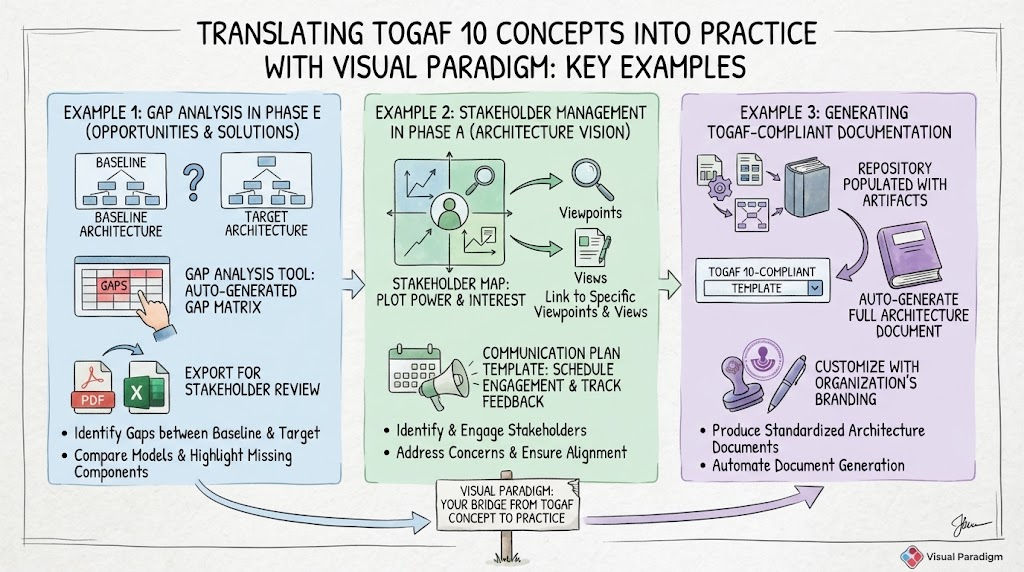 Mastering TOGAF 10 Implementation: A Visual Paradigm Tutorial on Architecture, Stakeholder Management, and Documentation
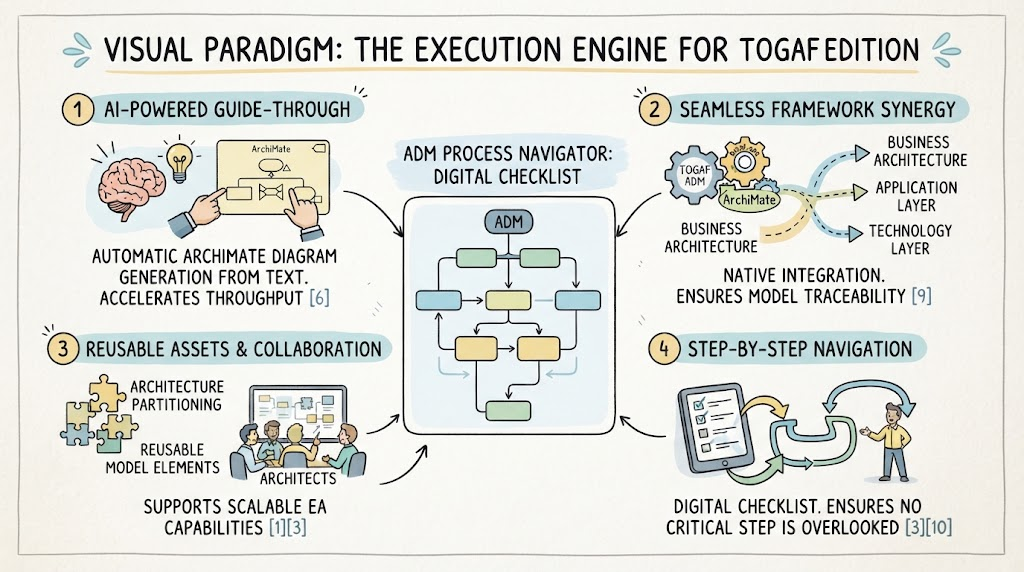 Mastering TOGAF 10 Execution: How Visual Paradigm Bridges the Gap Between Theory and Practice
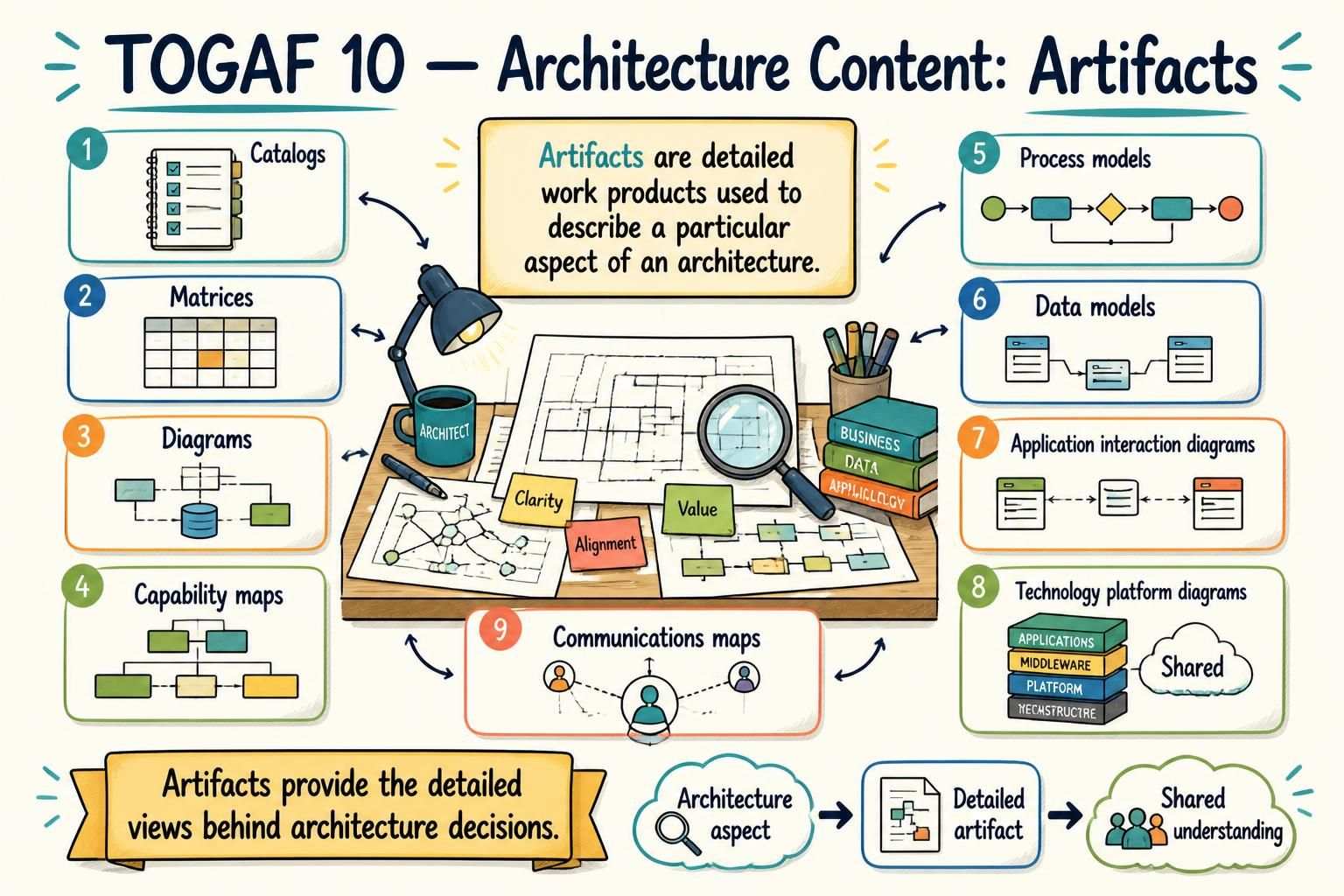 Mastering TOGAF 10: A Deep Dive into Architecture Content and Artifacts
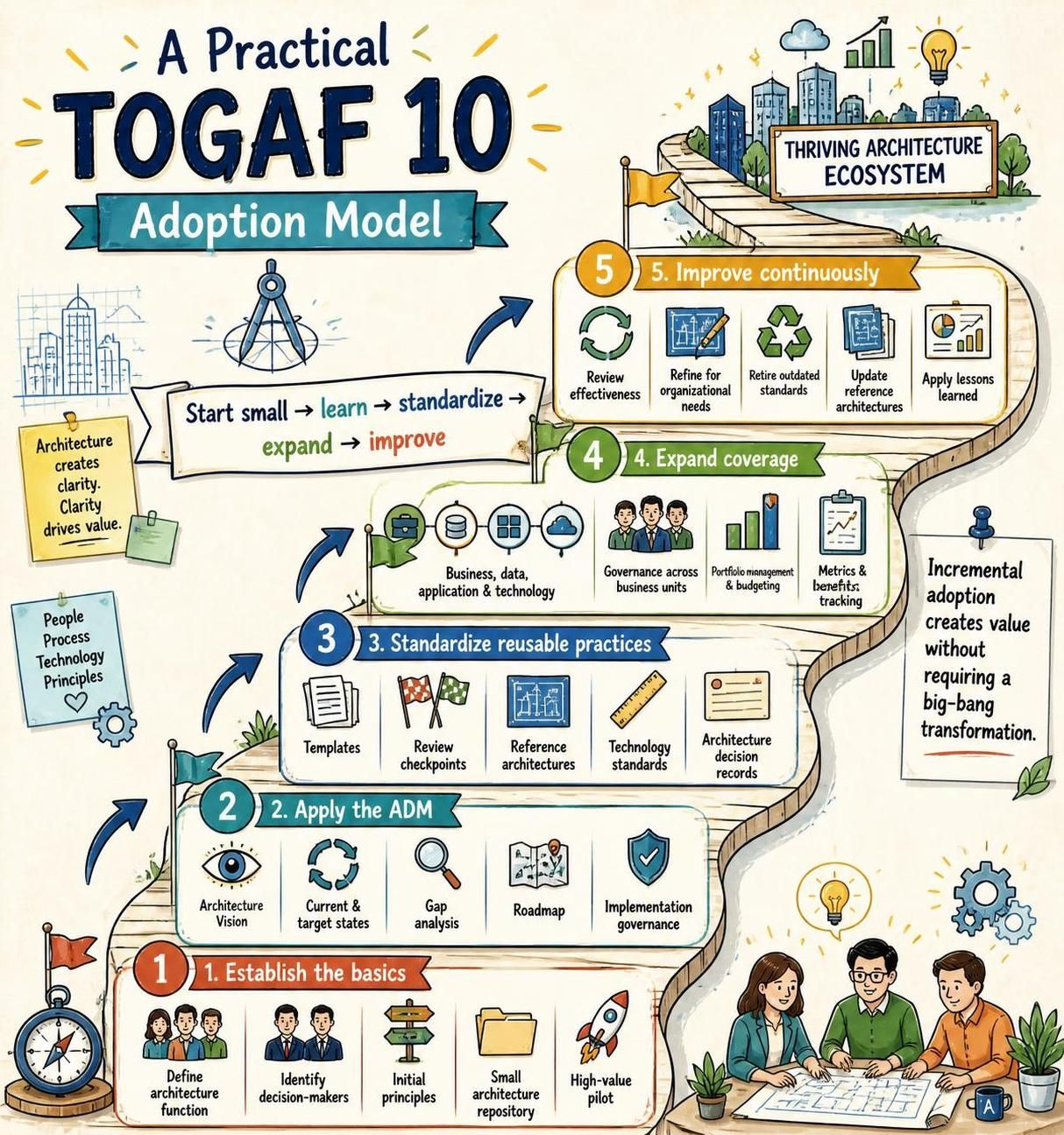 Mastering Enterprise Architecture: A Step-by-Step Guide to the TOGAF 10 Adoption Model