


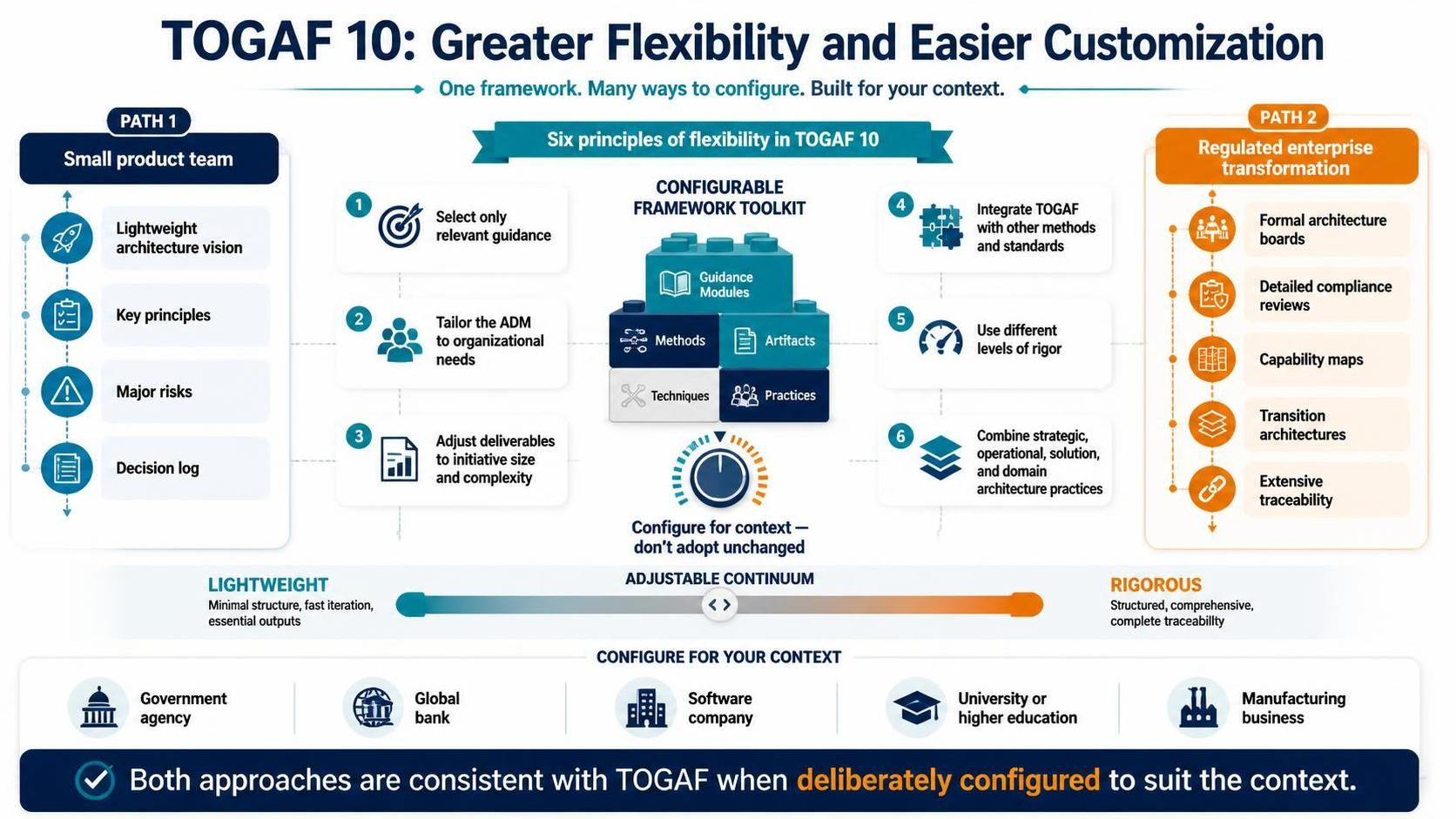
Architectural frameworks often suffer from being “one-size-fits-all,” imposing rigid structures that stifle innovation in agile environments or fail to capture the nuance of complex enterprise systems. TOGAF 10 fundamentally shifts this paradigm. It is designed around the philosophy that organizations should configure the framework rather than adopt it unchanged. Whether you are a small software team delivering a product or a global bank undergoing a massive regulated transformation, TOGAF 10 provides the tools to tailor the architecture to your specific context.
The Core Philosophy: One Framework, Many Ways
The central tenet of TOGAF 10 is flexibility. It recognizes that a government department, a global bank, a university, and a manufacturing business all require different architecture processes, governance structures, deliverables, and review cycles. Consequently, the framework emphasizes a “Configurable Framework Toolkit” approach, allowing architects to select only what is necessary.
To achieve this, TOGAF 10 introduces a Configurable Framework Toolkit consisting of four distinct components that can be mixed and matched:
- Guidance Modules: The core content and advice.
- Methods: The processes and activities to be performed.
- Artifacts: The tangible deliverables and outputs.
- Techniques: The specific tools used to perform the work.
This modular structure allows organizations to tailor the Architecture Development Method (ADM) to their specific needs, ensuring that the framework supports the business rather than hindering it.
Understanding the Adjustable Continuum
One of the most powerful concepts in TOGAF 10 is the “Adjustable Continuum.” This concept dictates that the rigor of the architecture process should scale with the complexity and risk of the initiative. The continuum ranges from Lightweight to Rigorous.
Path 1: The Lightweight Approach
For small product teams or agile projects, a full-blown architecture process is often overkill. In this “Path 1” scenario, the goal is minimal structure and fast iteration. The focus is on essential outputs that drive decision-making without creating bureaucratic overhead.
In a lightweight context, the architecture effort typically includes:
- Lightweight Architecture Vision: A brief statement of intent rather than a 50-page document.
- Key Principles: A small set of guiding rules.
- Major Risks: Identifying the top 3-5 hurdles.
- Decision Log: A simple record of why decisions were made.
Path 2: The Rigorous Approach
Conversely, in a “Regulated Enterprise Transformation” (Path 2), the stakes are high. This environment requires structured, comprehensive, and complete traceability. Here, the framework is applied with high rigor to ensure compliance and stability.
In this rigorous context, the architecture effort includes:
- Formal Architecture Boards: Governance bodies to review and approve decisions.
- Detailed Compliance Reviews: Ensuring adherence to strict regulations.
- Capability Maps: Detailed mapping of business capabilities to ensure alignment.
- Transition Architectures: Step-by-step blueprints for moving from the current state to the target state.
- Extensive Traceability: Tracking requirements from conception to implementation.
The Six Principles of Flexibility
To successfully navigate this continuum, TOGAF 10 recommends adhering to six key principles of flexibility:
- Select only relevant guidance: Ignore parts of the framework that do not apply to your specific industry or project.
- Tailor the ADM to organizational needs: Adapt the phases of the Architecture Development Method to fit your workflow.
- Adjust deliverables to initiative size: Scale the complexity of your documents to the size of the project.
- Integrate with other methods: Combine TOGAF with Agile, DevOps, or other standards as needed.
- Use different levels of rigor: Apply strict controls to high-risk areas and lighter controls to low-risk areas.
- Combine architecture practices: Seamlessly integrate strategic, operational, solution, and domain architecture.
Conclusion
The success of TOGAF 10 lies in its ability to be deliberately configured to suit the context. Whether you are aiming for a lightweight, fast-paced approach or a rigorous, compliant transformation, both are consistent with TOGAF provided you tailor the method correctly.
To effectively implement these configurations, manage your artifacts, and visualize your architecture models, the industry-standard tool is Visual Paradigm TOGAF ADM Tool. This software provides the necessary environment to handle the complexity of the ADM while supporting the flexibility required to customize the process for your unique organizational needs.
Related posts:
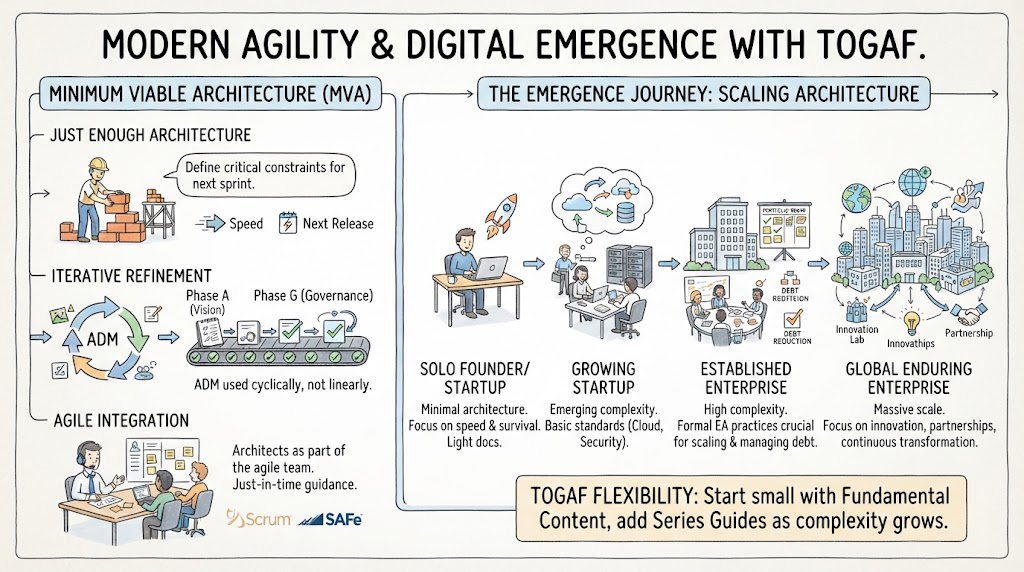 Mastering Modern Agility: A Tutorial on Minimum Viable Architecture and the Digital Emergence Journey
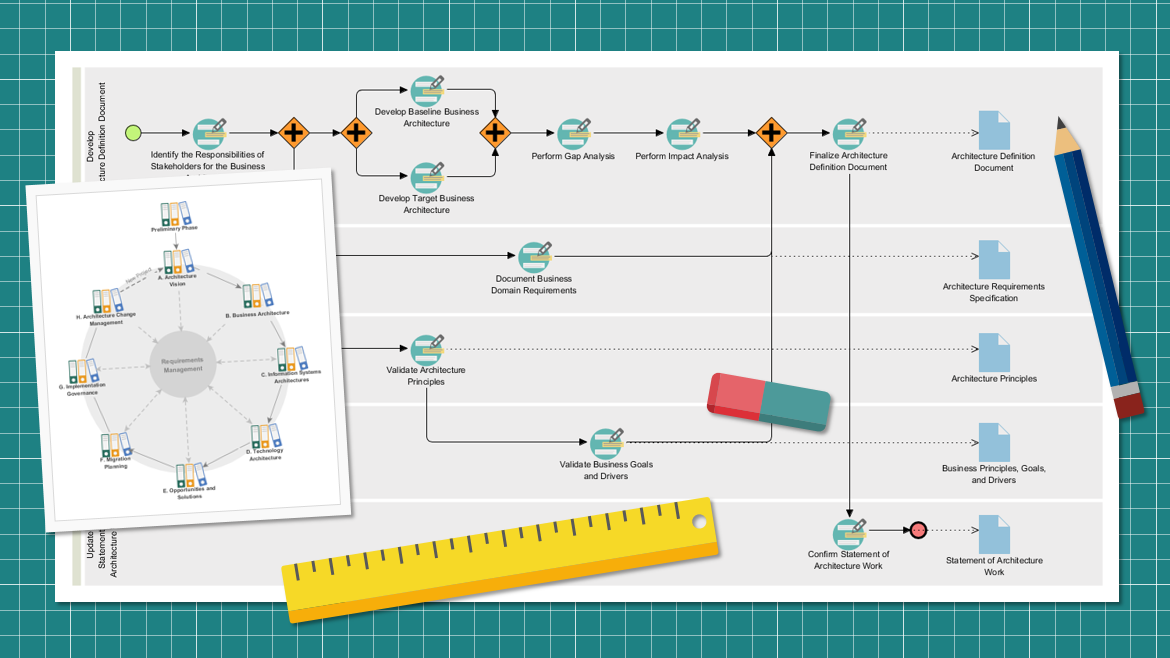 Mastering the TOGAF ADM Cycle: A Visual Guide to Enterprise Architecture Modeling
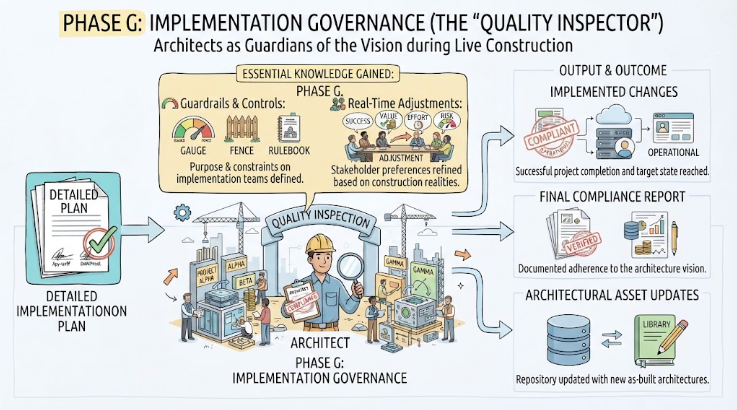 Mastering TOGAF Phase G: Implementation Governance with Visual Paradigm & ArchiMate
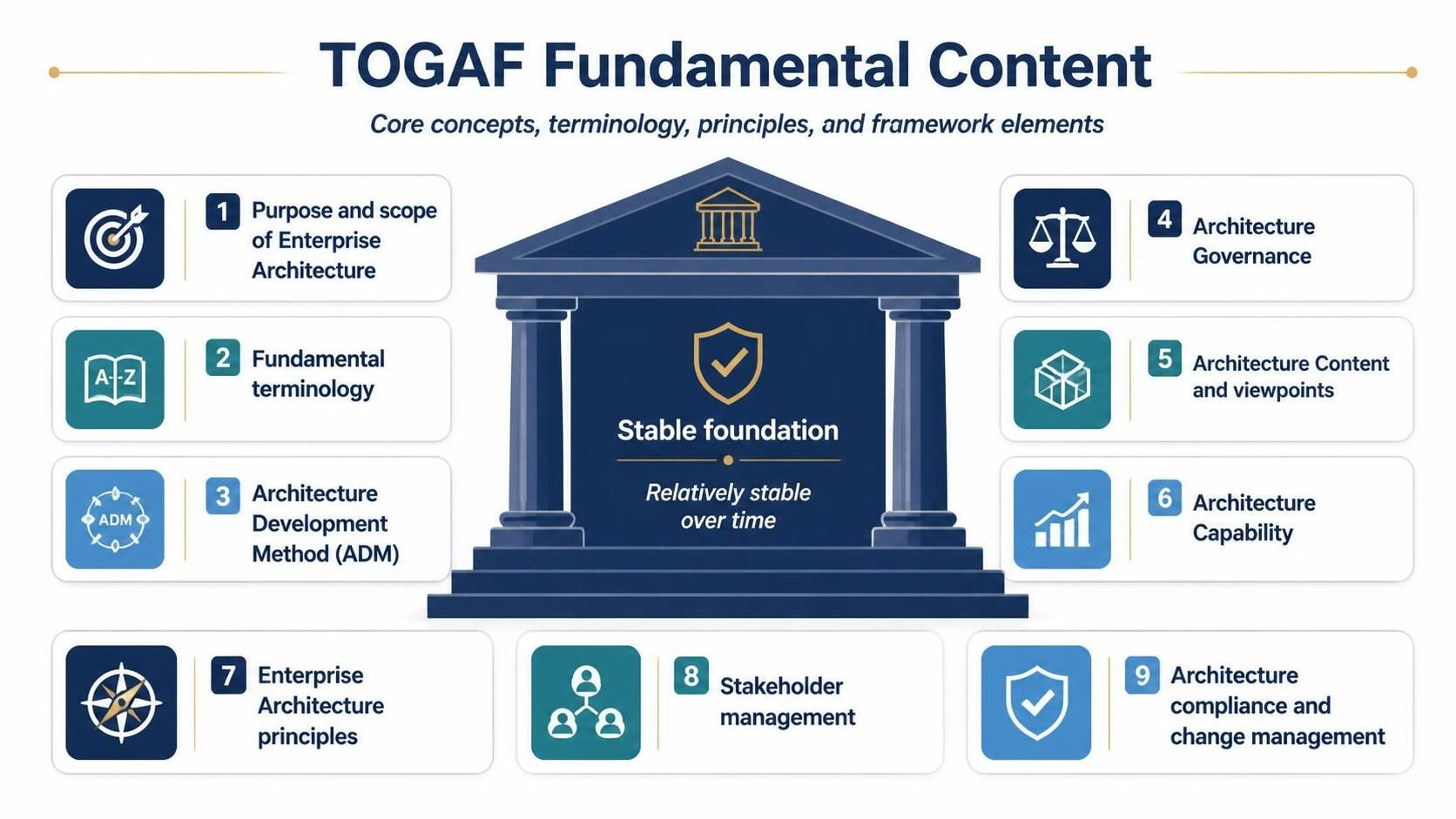 Demystifying the TOGAF Foundation: A Comprehensive Guide to Fundamental Content