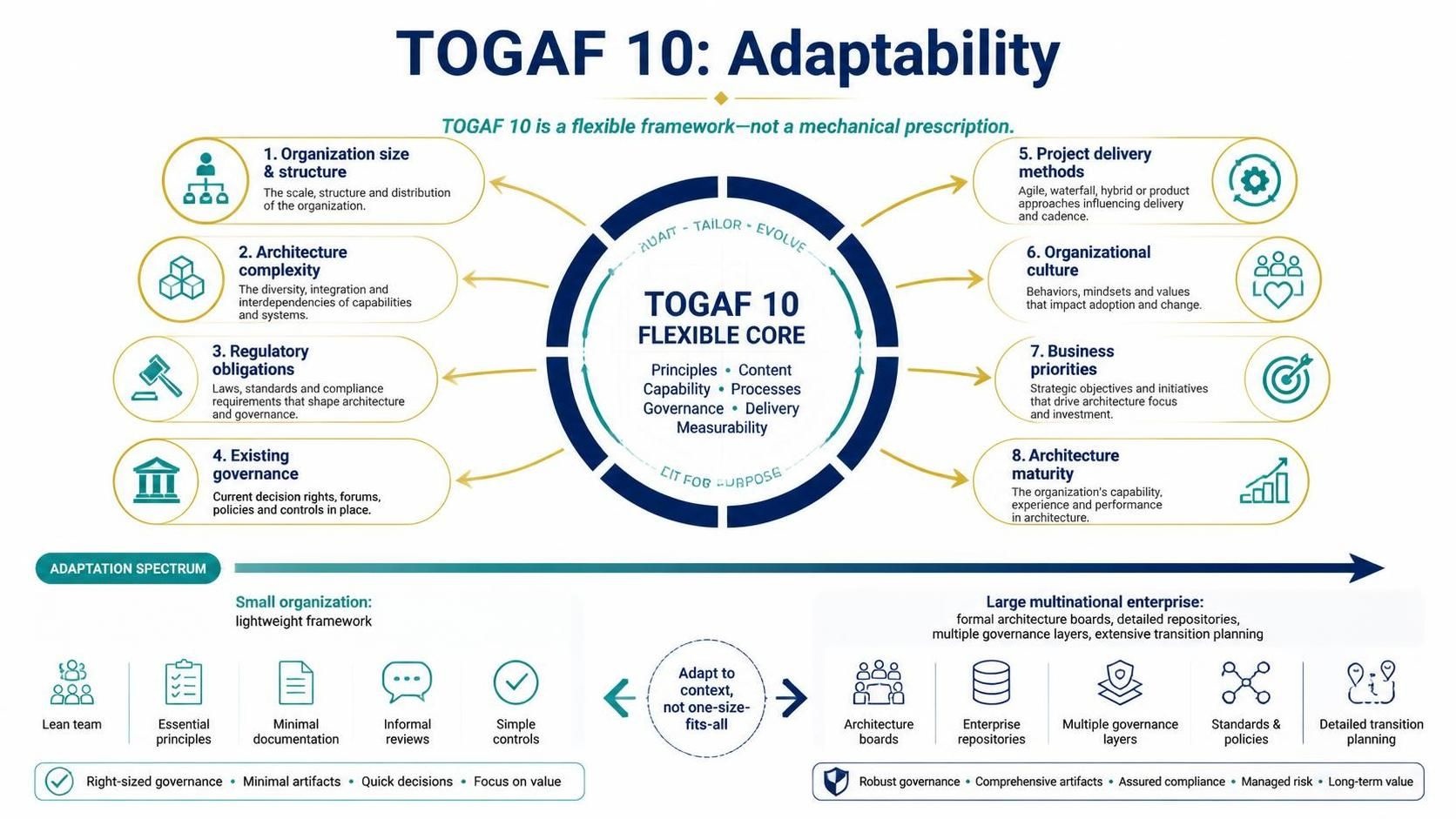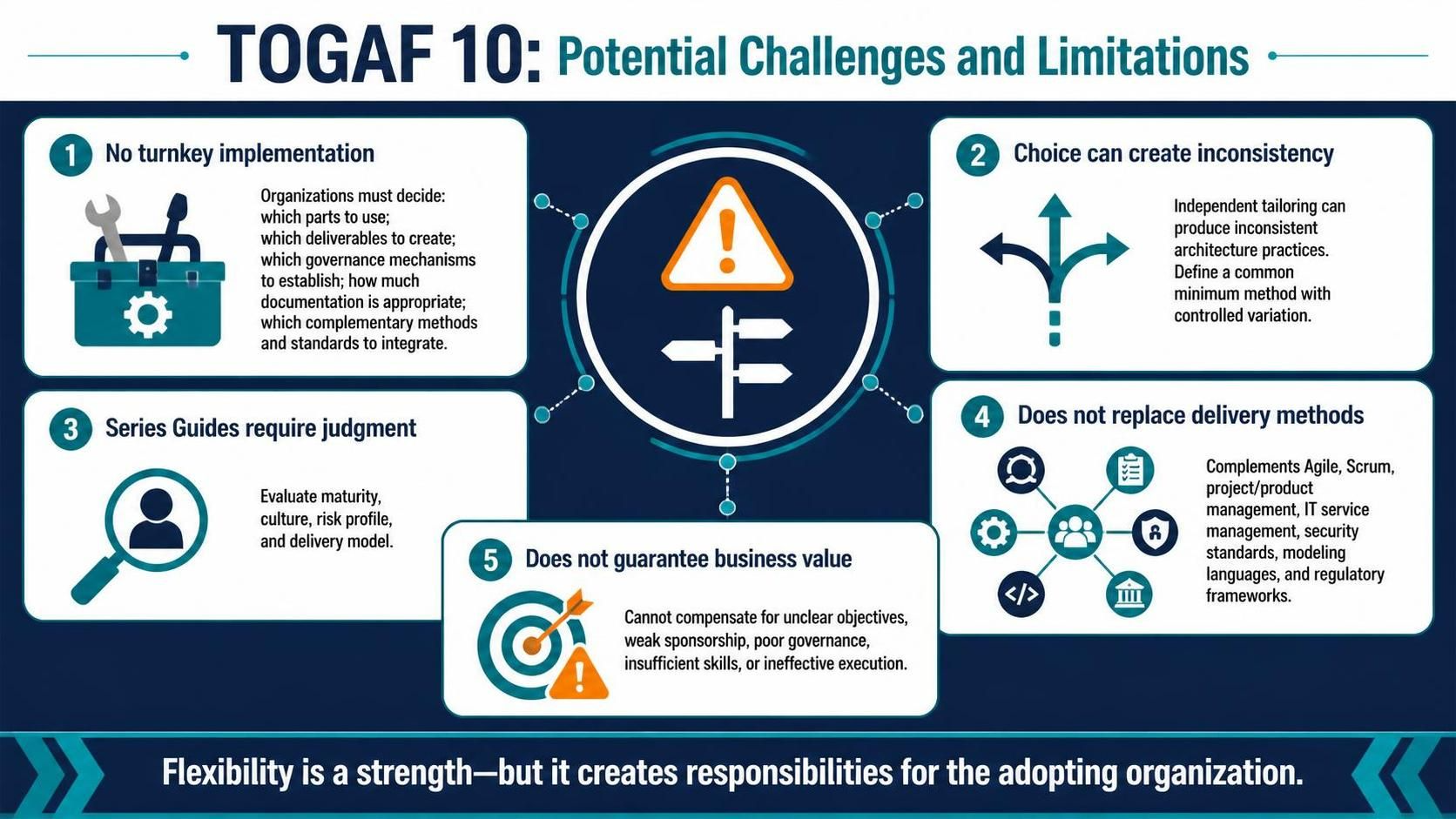
Enterprise Architecture (EA) is not a one-size-fits-all endeavor. The latest iteration of the Open Group Architecture Framework, TOGAF 10, is celebrated for its flexibility, designed to fit the unique needs of any organization. However, as the infographic on “Potential Challenges and Limitations” suggests, this flexibility is a double-edged sword. It offers a strength but simultaneously creates significant responsibilities for the adopting organization.
In this tutorial, we will break down the five critical challenges outlined in TOGAF 10 and explore how to navigate them effectively to ensure your architecture practice delivers real business value.
1. The Burden of “No Turnkey Implementation”
One of the most common misconceptions about adopting a framework like TOGAF is that it is a “turnkey” solution—simply flip the switch, and you have an architecture department. In reality, TOGAF provides a menu of options rather than a single prescription.
Organizations must make deliberate decisions regarding:
- Which parts to use: Do you need the full Enterprise Architecture suite, or just the Architecture Development Method (ADM)?
- Which deliverables to create: Not every project requires a full Capability Map or detailed Business Capability Model.
- Governance mechanisms: How strictly will you enforce architectural decisions?
- Documentation levels: Is a high-level slide deck sufficient, or do you need detailed technical specifications?
- Integration: Which complementary standards (e.g., ISO, ITIL) should be integrated?
2. The Risk of Inconsistency in Tailoring
Because the framework allows for customization, a major risk is fragmentation. If every project team tailors TOGAF independently, you risk creating a “Tower of Babel” scenario where architecture practices are inconsistent across the enterprise.
The Solution: A Common Minimum Method
To mitigate this, organizations should define a Common Minimum Method. This is the baseline set of processes and deliverables that every project must adhere to. Once this baseline is established, you can allow controlled variation for specific projects that have unique needs, ensuring that while you remain flexible, you do not lose standardization.
3. Judgment Required for Series Guides
TOGAF 10 includes a “Series of Guides” that provide supplementary advice. However, these guides are not universally applicable. They require professional judgment to apply correctly. Architects must evaluate:
- Organization Maturity: Is the organization ready for complex governance?
- Culture: Does the culture support top-down mandates or bottom-up collaboration?
- Risk Profile: Is the organization risk-averse or agile and experimental?
- Delivery Model: Are you delivering via Waterfall, Agile, or DevOps?
4. Complementing, Not Replacing, Delivery Methods
It is crucial to understand that TOGAF does not replace standard delivery methods. Instead, it acts as a meta-framework that complements them. It sits above and interacts with:
- Agile and Scrum methodologies
- Project Management (PMBOK)
- Product Management
- IT Service Management (ITSM)
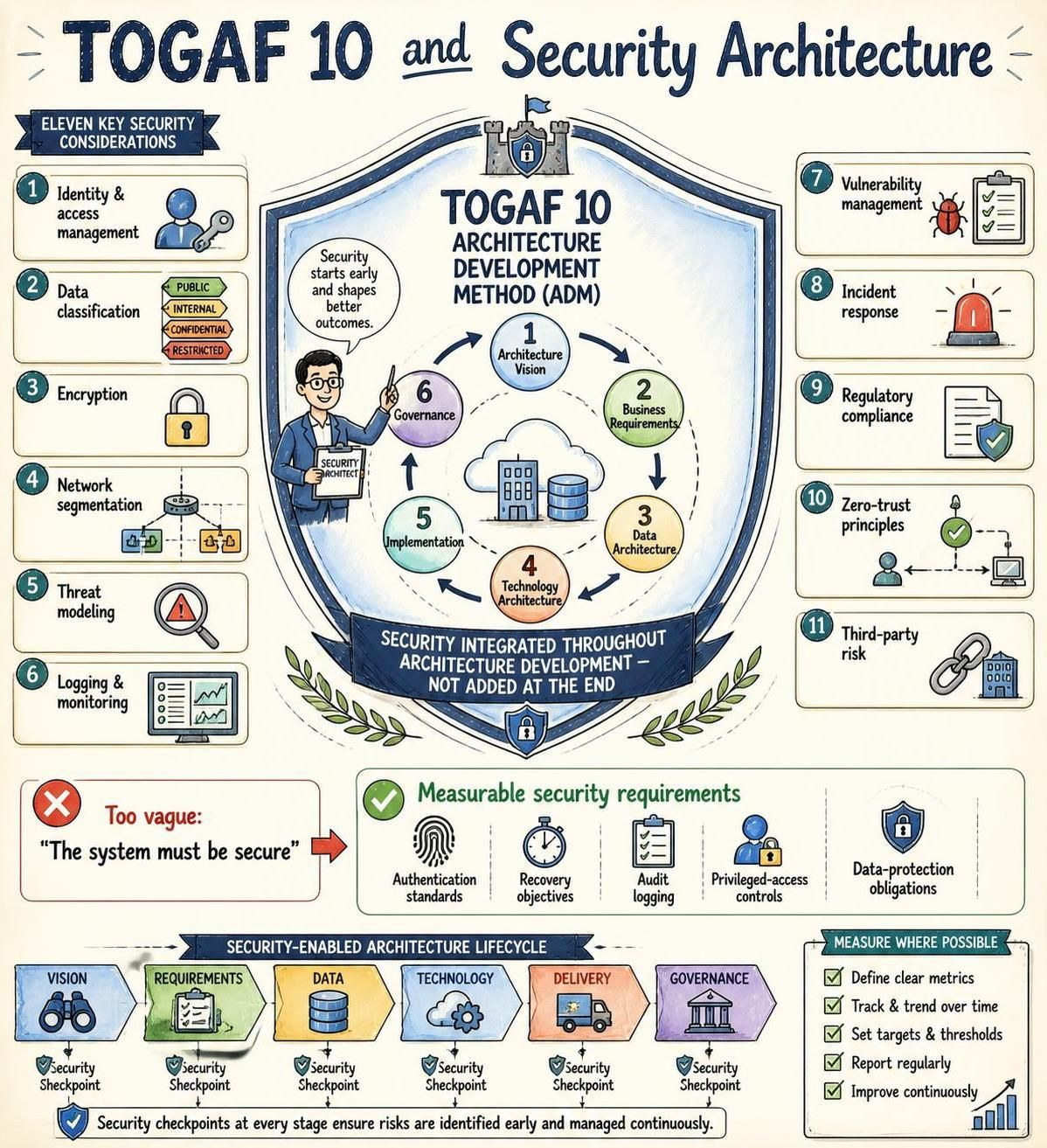
- Security Standards and Regulatory Frameworks
Think of TOGAF as the blueprint that ensures the building is safe and functional, while Agile and Scrum provide the tools and techniques to actually build the walls and install the wiring.
5. The Reality: No Guarantee of Business Value
Finally, and perhaps most importantly, a framework cannot compensate for fundamental organizational weaknesses. TOGAF cannot fix:
- Unclear business objectives
- Weak sponsorship from leadership
- Poor governance structures
- Insufficient skills within the team
- Ineffective execution
Flexibility is a strength, but it creates responsibilities. If the organization lacks the discipline to utilize the framework properly, the result will be chaos, regardless of how “flexible” the toolset is.
Conclusion: Leveraging the Right Tools
Successfully navigating these challenges requires not just a theoretical understanding of TOGAF 10, but the right technical enablers to manage the complexity. Because TOGAF involves managing vast amounts of data, modeling intricate diagrams, and coordinating governance across multiple projects, manual processes often fail.
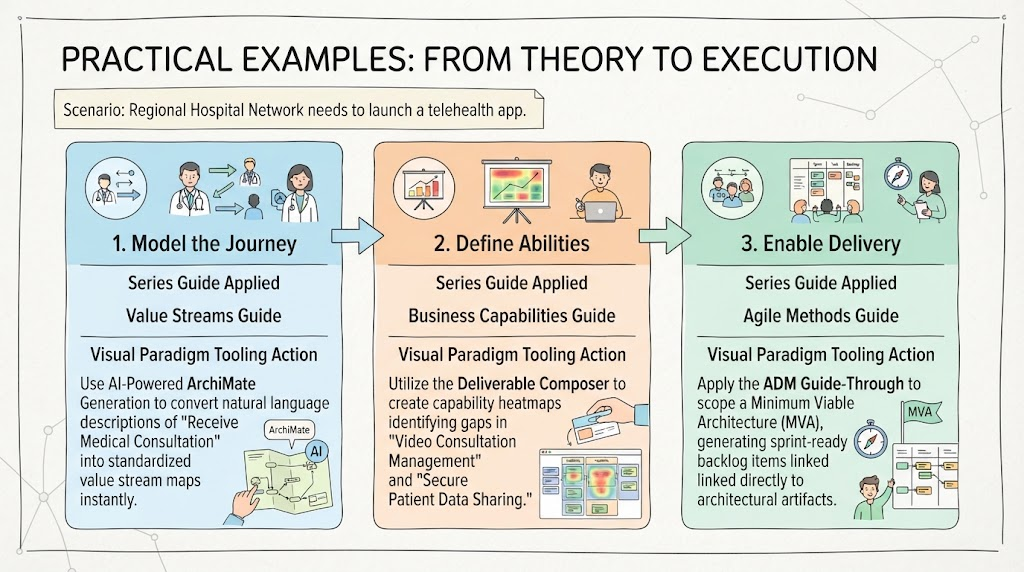
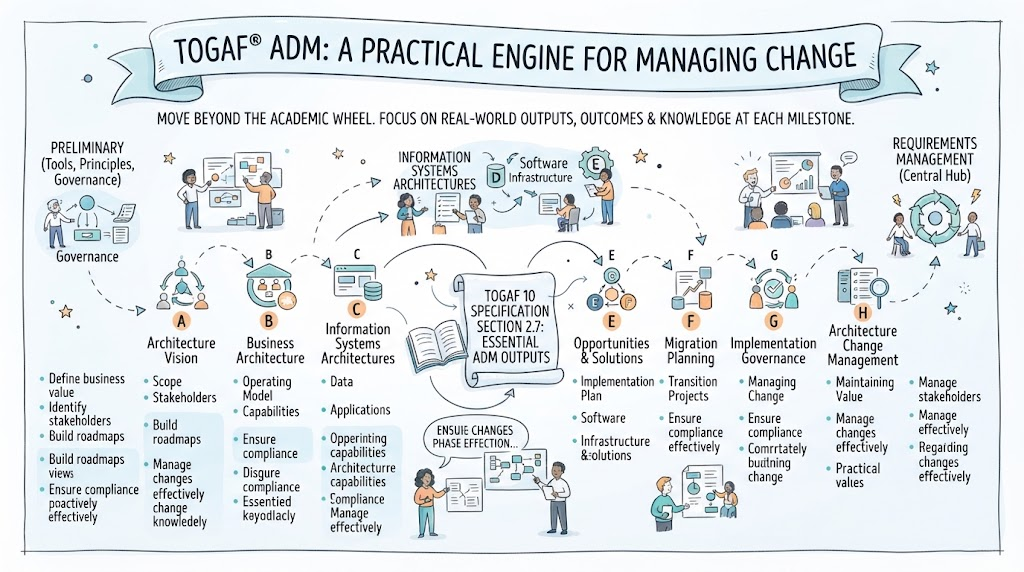
To overcome the challenges of consistency, documentation, and integration, we highly recommend the use of Visual Paradigm TOGAF ADM Tool. This tooling is specifically designed to support the TOGAF methodology by:
- Automating the generation of ADM diagrams and artifacts.
- Ensuring consistency across all models through a centralized repository.
- Facilitating the collaboration required to integrate TOGAF with Agile and other delivery methods.
By leveraging such robust tooling, organizations can ensure that the flexibility of TOGAF 10 becomes a true asset rather than a source of inconsistency.