


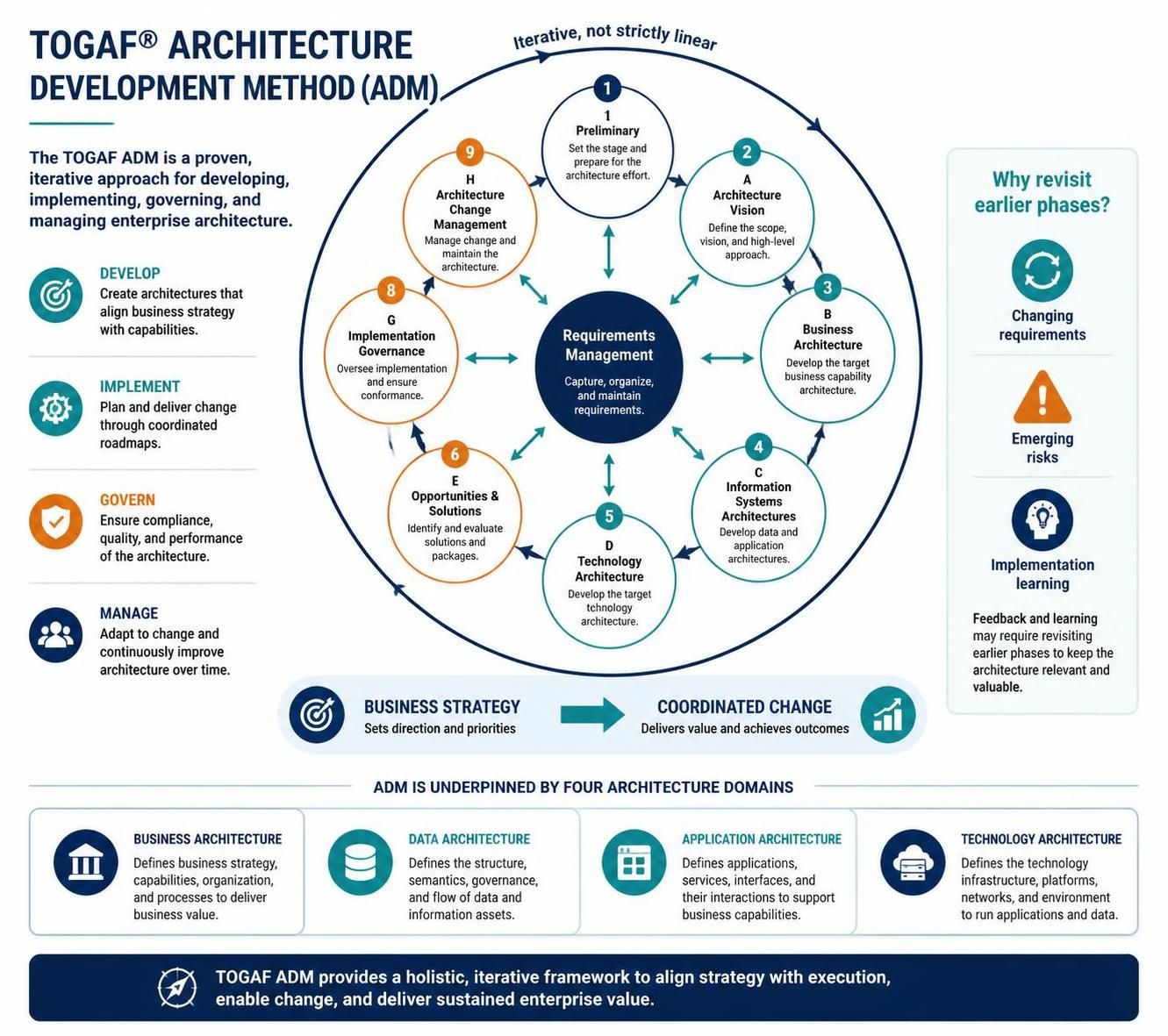
In the complex world of modern IT and business strategy, organizations often struggle to align their technology investments with their long-term goals. This is where the TOGAF Architecture Development Method (ADM) comes in. As a proven, iterative approach, the ADM provides a structured roadmap for developing, implementing, and governing enterprise architecture.
This tutorial will walk you through the TOGAF ADM cycle shown in the diagram above, explaining how it transforms business strategy into coordinated change.
Understanding the ADM Cycle
At the heart of the TOGAF framework is a circular process. Unlike a linear checklist, the ADM is designed to be iterative. This means that as you move through the phases, you can loop back to earlier stages if requirements change, new risks emerge, or implementation reveals the need for adjustments.
The cycle is anchored by a central engine: Requirements Management. This function operates continuously throughout the entire process, ensuring that all architectural decisions are driven by the organization’s specific needs.
The 9 Phases of the ADM
The cycle consists of nine distinct phases, often referred to as the “A through H” phases, plus the Preliminary phase.
1. Preliminary Phase
Set the stage and prepare for the architecture effort.
Before starting any specific project, this phase focuses on defining the “architecture principles” and the “framework” itself. It answers the question: “Are we ready to do this work?”
Phase A: Architecture Vision
Define the scope, vision, and high-level approach.
This phase is about setting the direction. Architects work with stakeholders to define the business goals and the high-level view of what the future state should look like.
Phase B: Business Architecture
Develop the target business capability architecture.
Here, we look at the business itself. This involves mapping out business strategy, governance, organization, and business processes to ensure the architecture supports the actual operations of the company.
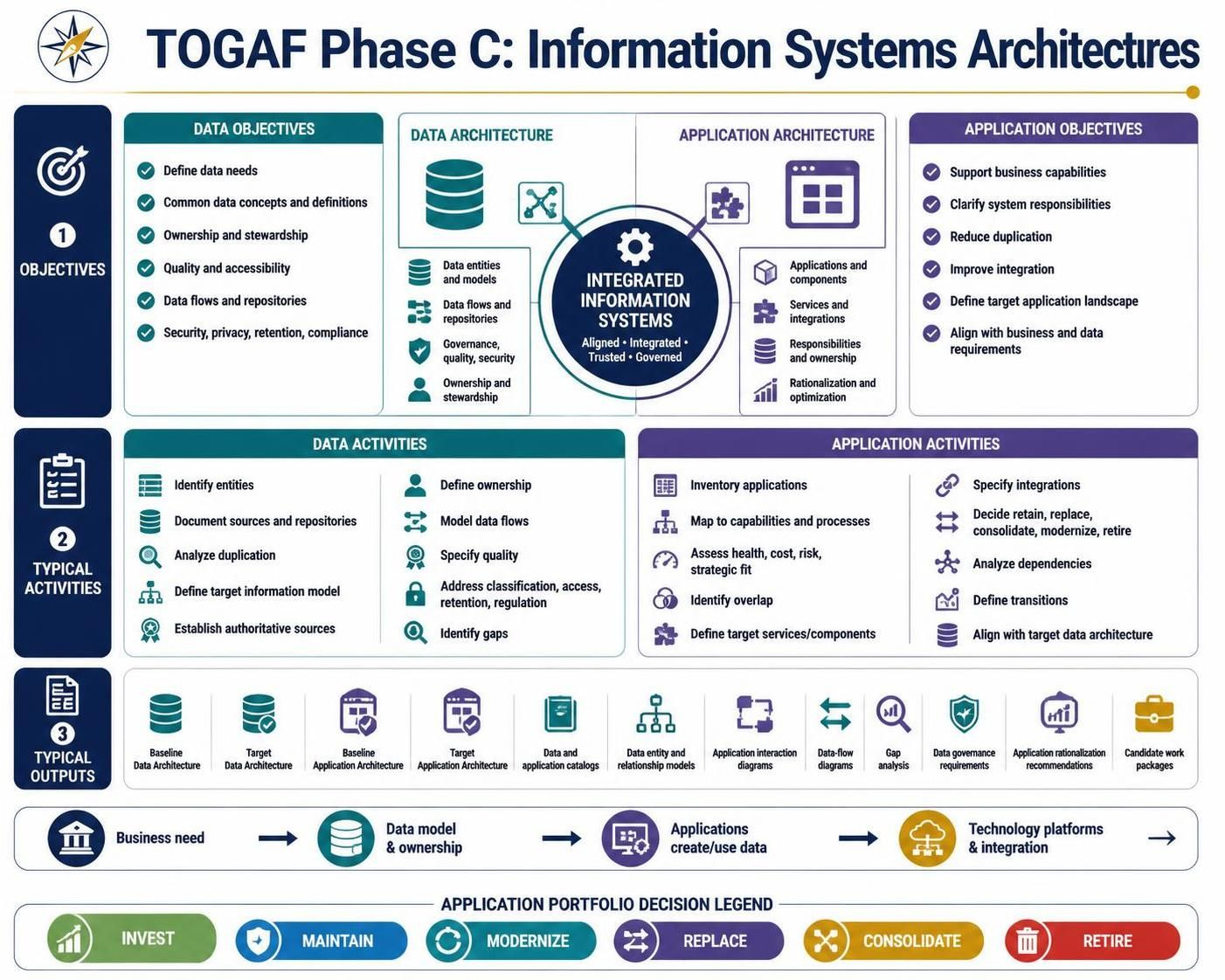
Phase C: Information Systems Architectures
Develop data and application architectures.
This phase is split into two critical domains: Data Architecture (defining the structure and flow of data assets) and Application Architecture (defining the applications and services required to support the business).
Phase D: Technology Architecture
Develop the target technology architecture.
This defines the hardware, software, and network infrastructure required to support the applications and data defined in the previous phase. It covers platforms, networks, and security technologies.
Phase E: Opportunities and Solutions
Identify and evaluate solutions and packages.
Now that we know what the target architecture looks like, we must figure out how to get there. This phase involves identifying gaps between the current state and the target state, and evaluating different solutions (e.g., buying software vs. building it).
Phase F: Migration Planning
Plan and deliver change through coordinated roadmaps.
This phase creates the detailed plan for implementation. It determines the sequence of projects and ensures that the transition from the current state to the target state is manageable.
Phase G: Implementation Governance
Oversee implementation and ensure conformance.
Once the project is underway, this phase ensures that the actual implementation matches the architectural design. It acts as a quality control mechanism.
Phase H: Architecture Change Management
Manage change and maintain the architecture.
Finally, this phase deals with the lifecycle of the architecture itself. As the business environment changes, the architecture must adapt. This phase ensures the architecture remains relevant over time.
The Four Core Architecture Domains
The ADM is underpinned by four distinct architecture domains. These are the pillars that support the entire framework:
- Business Architecture: Defines the strategy, governance, organization, and processes to deliver business value.
- Data Architecture: Defines the structure, semantics, governance, and flow of data and information assets.
- Application Architecture: Defines applications, services, interfaces, and their interactions to support business capabilities.
- Technology Architecture: Defines the technology infrastructure, platforms, networks, and environment to run applications and data.
Why Revisit Earlier Phases?
The diagram highlights that you do not always move forward in a straight line. The ADM explicitly encourages revisiting earlier phases due to:
- Changing Requirements: Business needs evolve.
- Emerging Risks: New threats may require a different technical approach.
- Implementation Learning: You may learn during the build phase that the original design was flawed.
Recommended Tooling
To effectively navigate this complex framework and create the necessary diagrams and documentation, professional tooling is essential. For a robust, industry-standard solution, we recommend using Visual Paradigm TOGAF ADM Tool.
Visual Paradigm provides a comprehensive environment for modeling the ADM phases, managing requirements, and ensuring that your enterprise architecture is both rigorous and visually clear.
Related posts:
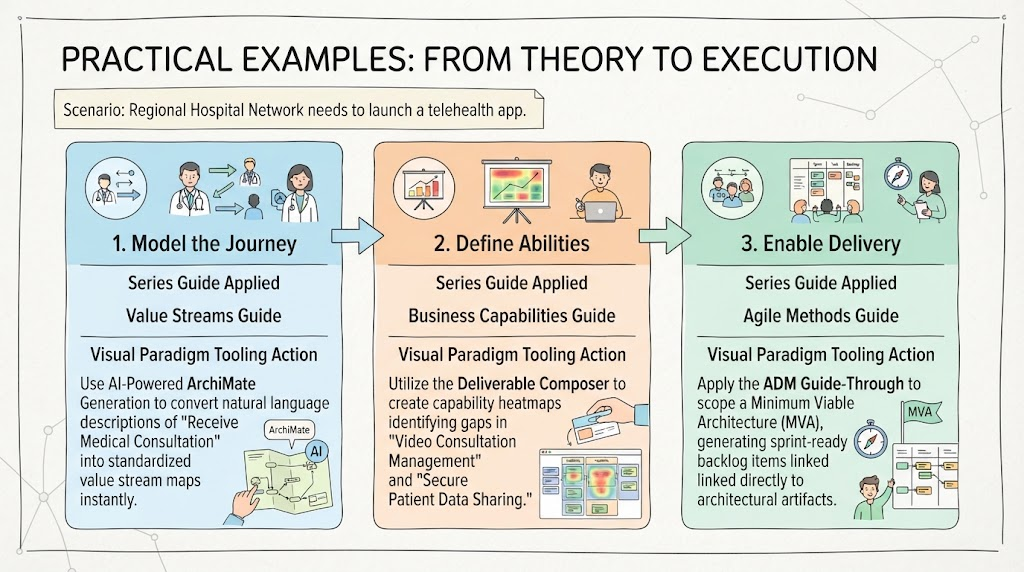 From Theory to Execution: A Practical Guide to Enterprise Architecture with Visual Paradigm
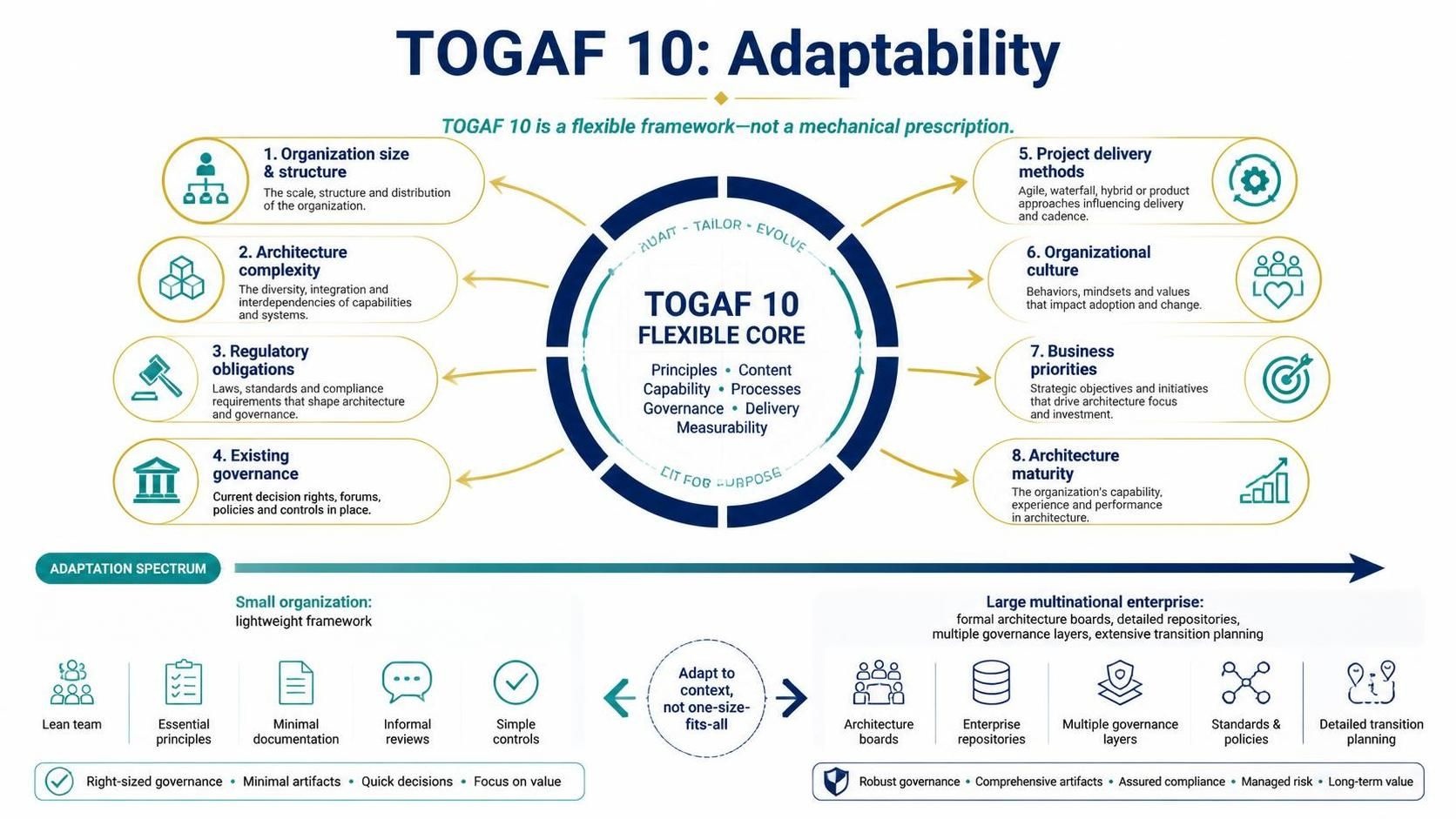 Mastering TOGAF 10 Adaptability: From Concept to Implementation
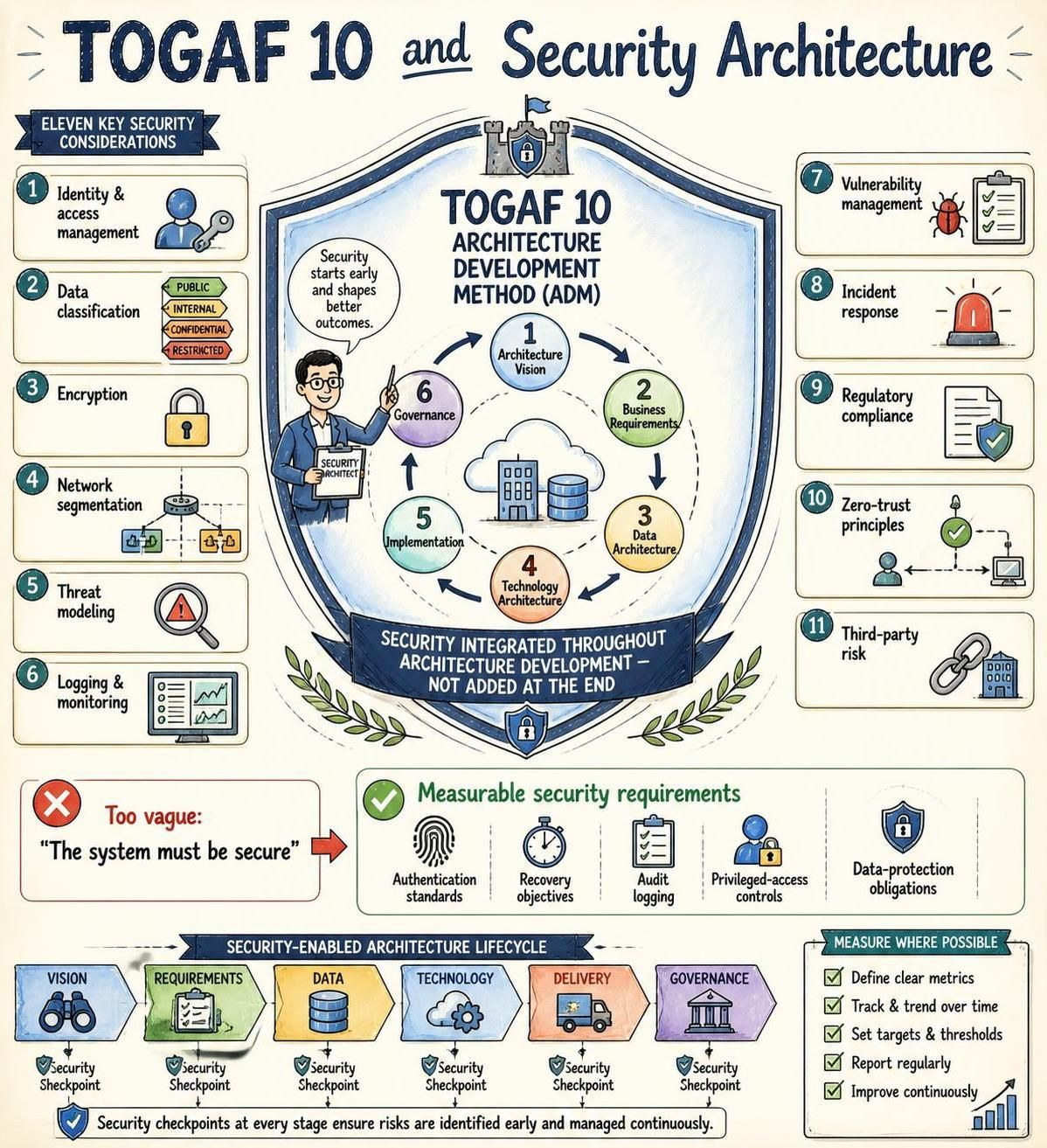 Mastering TOGAF 10 Security Architecture: From Principles to Implementation
 Mastering TOGAF Phase C: A Comprehensive Guide to Information Systems Architecture