


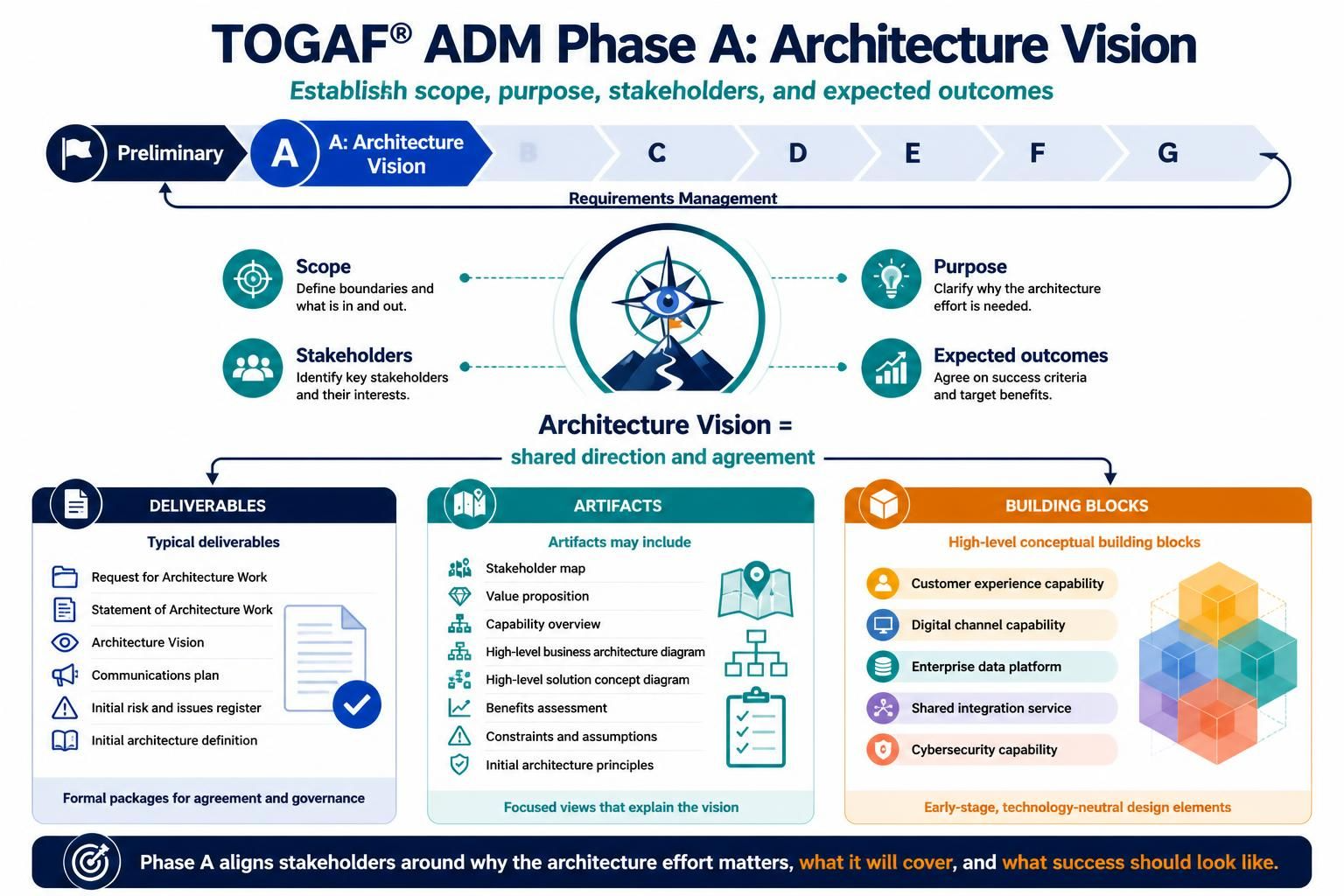
In the complex landscape of Enterprise Architecture, success often hinges not on the most sophisticated technology, but on the clarity of the initial vision. TOGAF ADM Phase A: Architecture Vision is the critical starting point where the architecture effort is defined, scoped, and aligned with business goals. This phase is the compass for the entire Architecture Development Method (ADM) cycle, ensuring that before a single line of code is written or a server is configured, the “Why” and “What” are clearly understood.
What is Phase A?
Phase A is the “pilot” phase of the architecture process. Its primary goal is to establish the scope, purpose, stakeholders, and expected outcomes of the architecture effort. It bridges the gap between business strategy and technical execution.
The core output of this phase is the Architecture Vision itself, which acts as a shared direction and agreement among all parties involved. Without this alignment, subsequent phases (B through G) risk building solutions that do not solve actual business problems.
The Four Pillars of Phase A
The infographic highlights four critical inputs that drive the Architecture Vision. Think of these as the foundational questions you must answer before proceeding:
- Scope: Define boundaries. What is in scope and what is out of scope? This prevents “scope creep” and keeps the project manageable.
- Purpose: Clarify the “Why.” Why is this architecture effort needed? This ensures the project aligns with strategic business objectives.
- Stakeholders: Identify key players and their interests. An architecture that ignores its stakeholders is doomed to fail.
- Expected Outcomes: Agree on success criteria and target benefits. How will we know if the project was a success?
Key Deliverables: The Formal Packages
The outputs of Phase A are formal packages designed for agreement and governance. These documents are not just paperwork; they are legal and strategic contracts that define the project’s trajectory.
1. Request for Architecture Work
This is often the trigger for the phase. It is a formal request from a business sponsor to initiate an architecture project, outlining the business drivers and the need for change.
2. Statement of Architecture Work
This is a crucial contract between the architecture team and the business sponsors. It defines the scope, constraints, and deliverables of the architecture project. It answers the question: “What are we building and how long will it take?”
3. Architecture Vision
This is the high-level description of the future state. It describes the target architecture and the benefits expected to be delivered. It is the “North Star” for the entire ADM cycle.
4. Communications Plan
Architecture is a communication-heavy discipline. This plan details how information about the architecture will be disseminated to stakeholders, ensuring everyone is on the same page.
5. Initial Risk and Issues Register
Every project has risks. This register captures potential pitfalls early on, allowing the team to plan mitigation strategies before they become critical problems.
6. Initial Architecture Definition
This includes the initial architecture principles and the preliminary scope. It sets the rules of the game for how the architecture will be developed.
Artifacts: The Visual Evidence
While deliverables are documents, Artifacts are the visual and conceptual models that explain the vision. These are often diagrams or conceptual models used to communicate complex ideas.
Stakeholder Map & Value Proposition
These artifacts help visualize the relationships between different groups (e.g., customers, employees, regulators) and articulate the unique value the architecture brings to the organization.
Capability Overview & High-Level Diagrams
High-level business architecture diagrams and High-level solution concept diagrams are essential for showing the big picture. Instead of getting bogged down in technical details, these diagrams illustrate the major capabilities and the general solution approach.
Benefits Assessment
This artifact quantifies the value. It breaks down the expected benefits into tangible and intangible categories, providing a basis for ROI analysis.
Constraints, Assumptions, and Principles
These are the guardrails. Constraints are limitations (e.g., budget, regulatory requirements). Assumptions are things we believe to be true but haven’t proven. Architecture Principles are the guiding rules (e.g., “Data is an asset,” “Systems should be interoperable”) that govern the design.
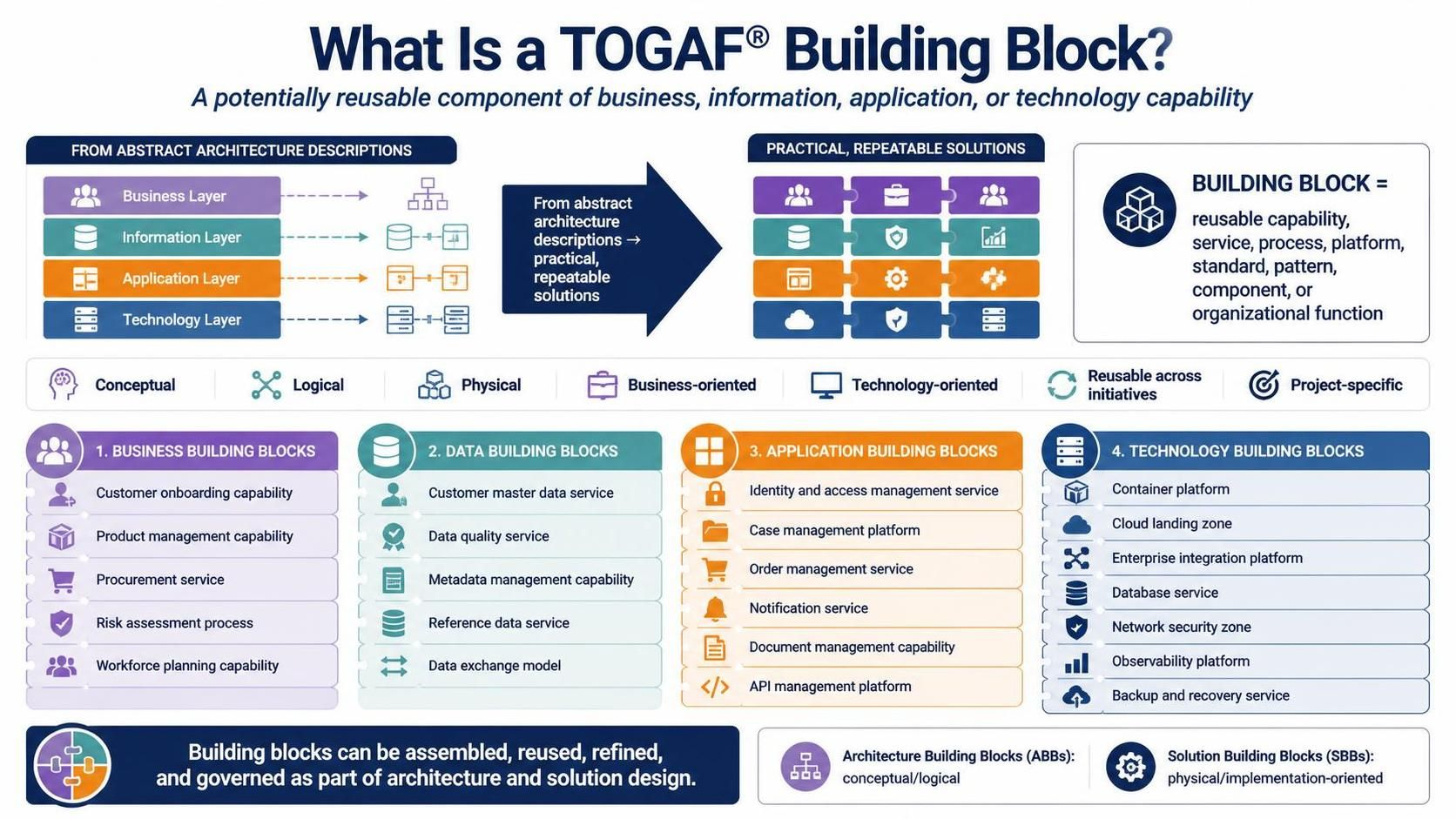
Building Blocks: The Conceptual Bricks
In Phase A, we don’t define specific products or technologies. Instead, we define Building Blocks (BBs) at a high, conceptual level. These are technology-neutral design elements that will later be instantiated into specific software or hardware.
Examples of conceptual building blocks include:
- Customer Experience Capability: The ability to interact with customers across all touchpoints.
- Digital Channel Capability: The infrastructure to support web and mobile interactions.
- Enterprise Data Platform: A centralized repository for managing data.
- Shared Integration Service: A mechanism to connect disparate systems.
- Cybersecurity Capability: The ability to protect assets and information.
Recommended Tooling: Visual Paradigm
To effectively manage the complexity of Phase A, you need the right tools. Visual Paradigm TOGAF ADM Tool is a recommended solution for architects.
Why Visual Paradigm?
- Comprehensive Support: It provides built-in support for all TOGAF phases, including the specific templates for Phase A deliverables like the Statement of Architecture Work.
- Visual Modeling: It allows you to create the high-level diagrams and stakeholder maps mentioned in the artifacts section easily.
- Traceability: It ensures that your initial principles and vision are traceable to the detailed designs in later phases.
- Collaboration: It facilitates the creation of the Communications Plan and stakeholder engagement through shared repositories.
Conclusion
Phase A is not just a bureaucratic hurdle; it is the strategic foundation of your architecture project. By rigorously defining the scope, purpose, and stakeholders, and by utilizing tools like Visual Paradigm to model these concepts, you set the stage for a successful transformation. Remember, Phase A aligns stakeholders around why the architecture effort matters, what it will cover, and what success should look like.
Related posts:
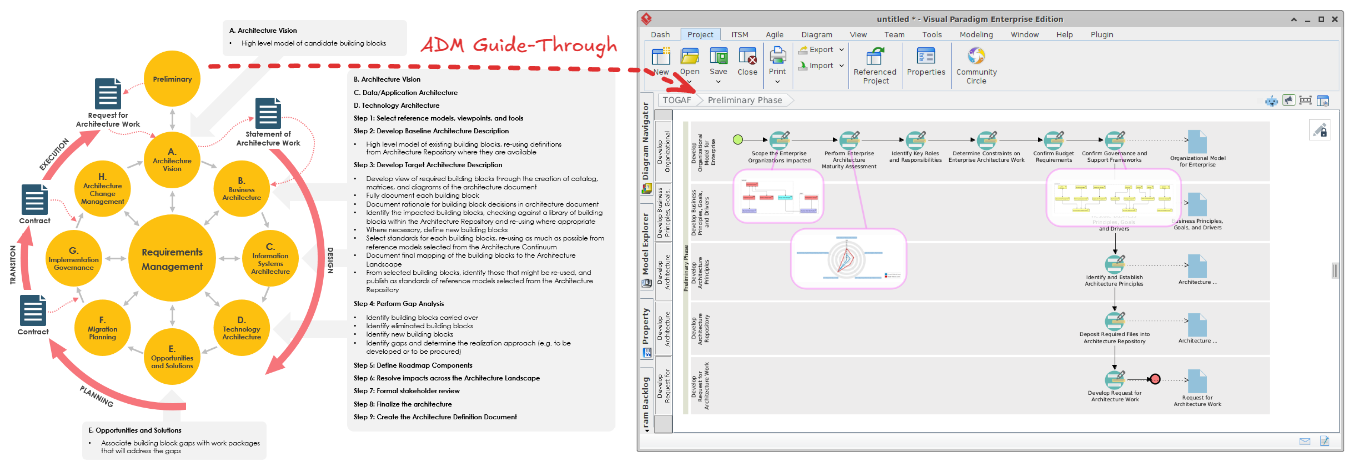 Mastering the TOGAF ADM: A Visual Paradigm Step-by-Step Guide
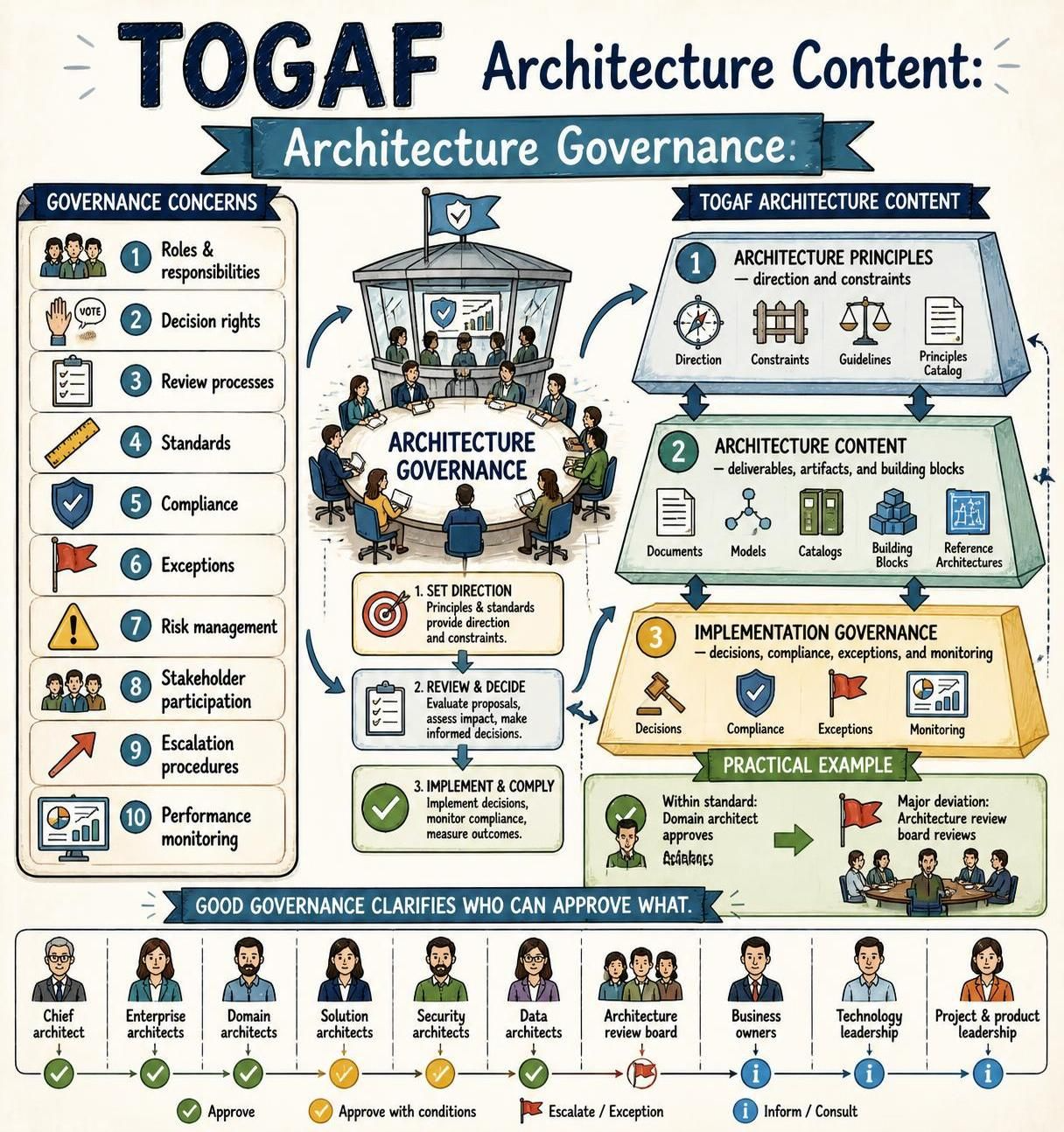 Mastering TOGAF Architecture Governance: A Comprehensive Guide to Roles, Principles, and Decision Rights
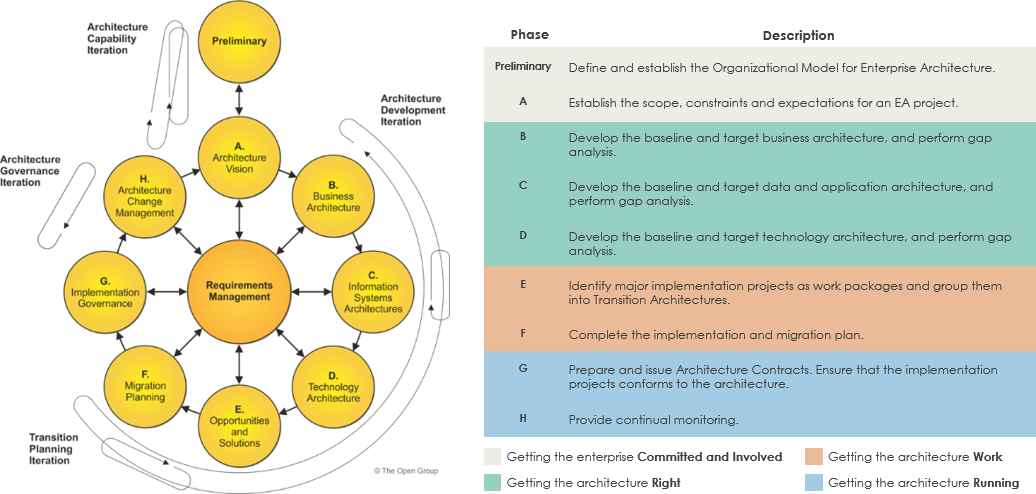 Mastering the TOGAF ADM: A Comprehensive Guide to Enterprise Architecture Development
 Mastering TOGAF Building Blocks: From Abstract Architecture to Practical Implementation