Enterprise Architecture (EA) is the backbone of modern organizational strategy, ensuring that IT systems align with business goals. For years, TOGAF 9.2 served as the industry standard. However, the rapid evolution of digital technologies has necessitated a paradigm shift. The release of TOGAF 10 marks a significant departure from its predecessor, moving from a rigid, monolithic standard to a flexible, modular framework. This tutorial explores the structural, strategic, and technical implications of this transition.
The Strategic Imperative: Why TOGAF 10 Matters
Organizations adopt TOGAF not just for documentation, but for value creation. The updated standard addresses critical business needs that the previous version struggled to cover comprehensively.
- Strategic Alignment: The framework ensures that every technology investment is directly traceable to a business objective, preventing “shadow IT” and wasted spend.
- Risk Reduction: By providing structured governance and compliance frameworks, organizations can navigate complex regulatory environments with confidence.
- Cost Efficiency: The modular nature allows organizations to identify redundancies and optimize resource allocation effectively.
- Agility: Perhaps most importantly, TOGAF 10 enables faster responses to market changes through a focus on modular architecture rather than rigid, long-term planning.
Architectural Shift: From Monolith to Modular
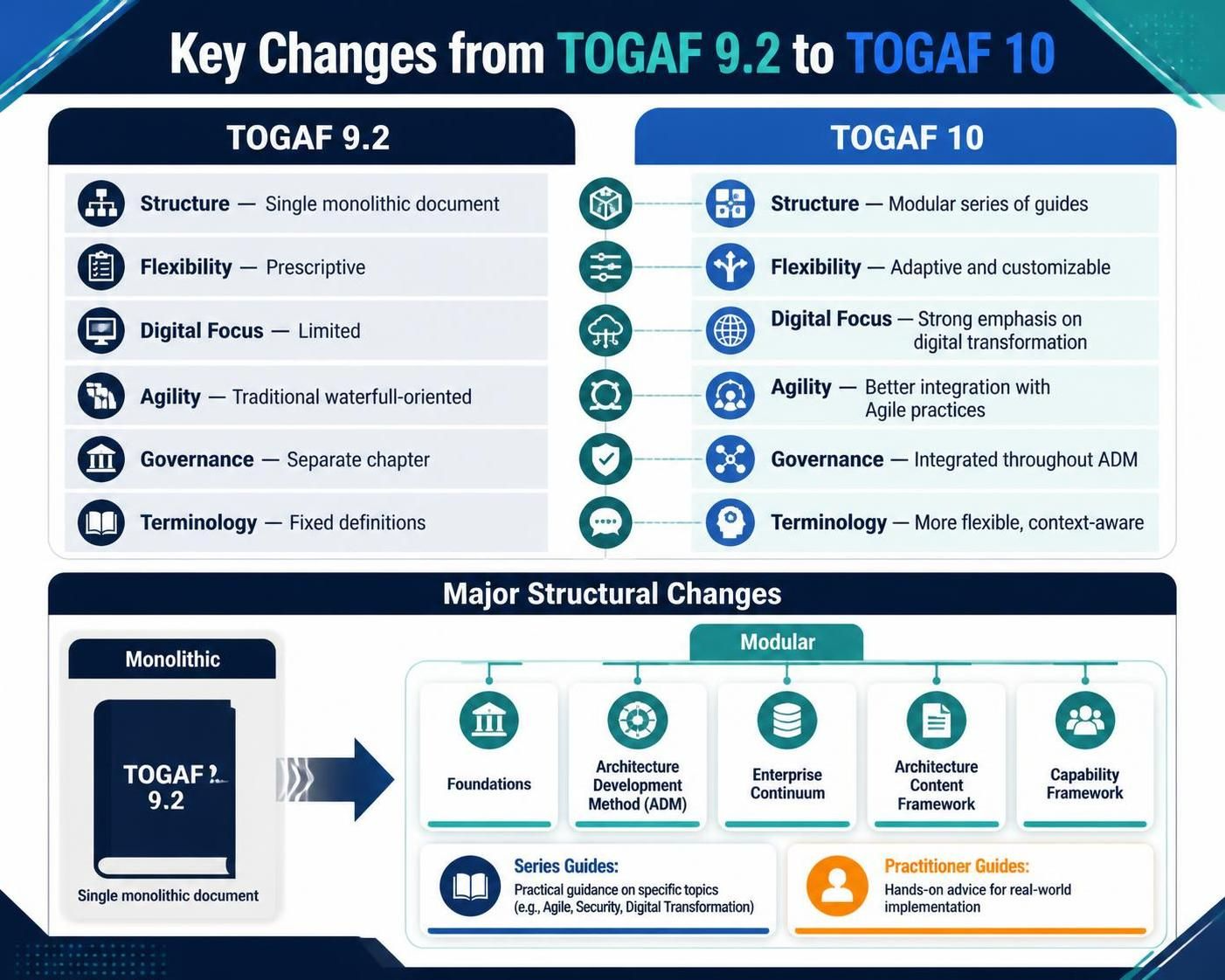
The most visible change in TOGAF 10 is its structure. In TOGAF 9.2, the standard was a single, monolithic document. While comprehensive, this often led to “analysis paralysis” where architects struggled to find relevant sections or felt constrained by the sheer volume of prescriptive rules.
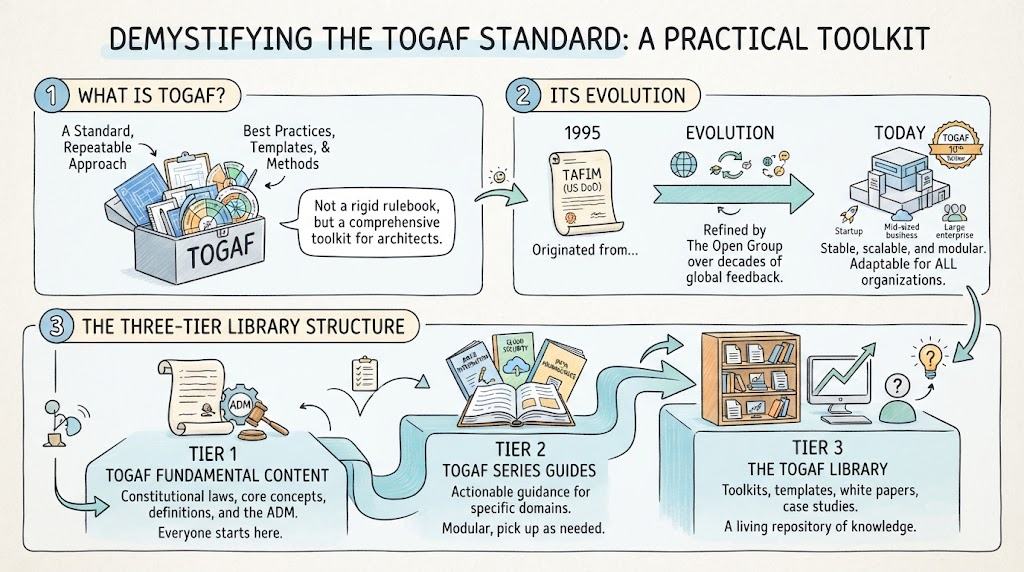
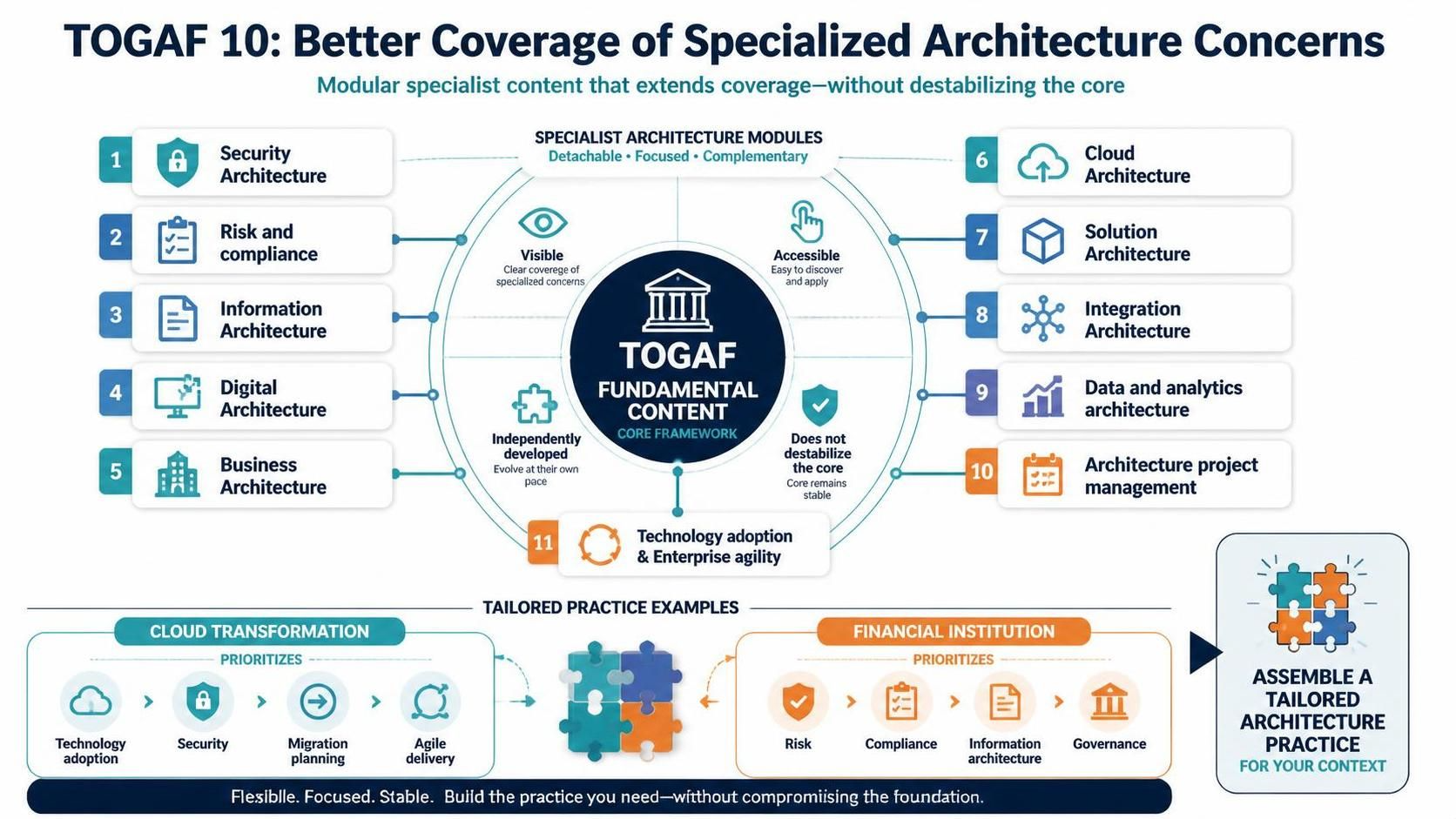
TOGAF 10 fundamentally restructures this by splitting the standard into a modular series of guides. This allows organizations to pick and choose the components they need, making the framework adaptive and customizable to specific contexts.
Major Structural Changes
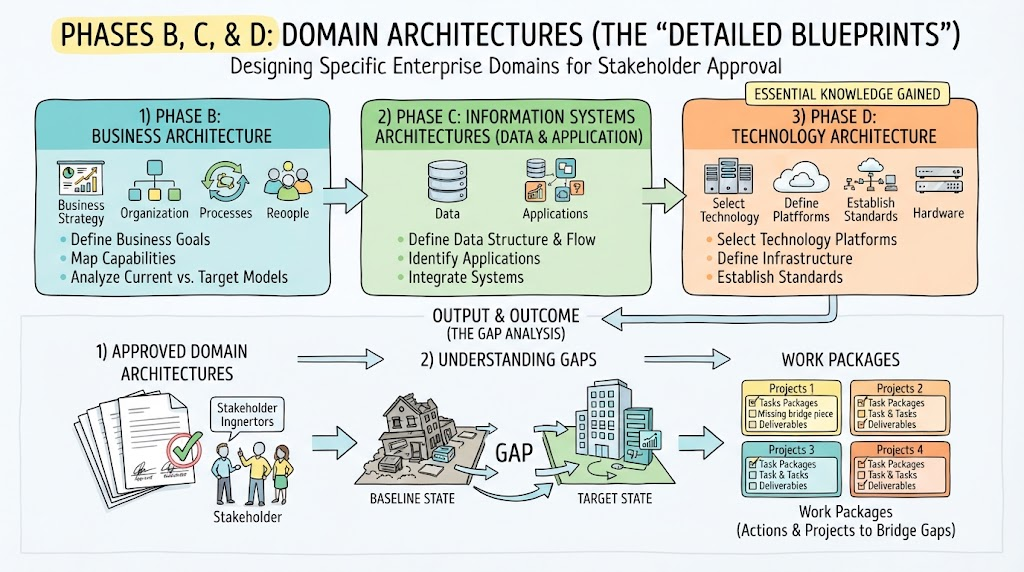
The new architecture of the TOGAF Standard is divided into specific, distinct components:
- Foundations: The core concepts and principles that underpin the framework.
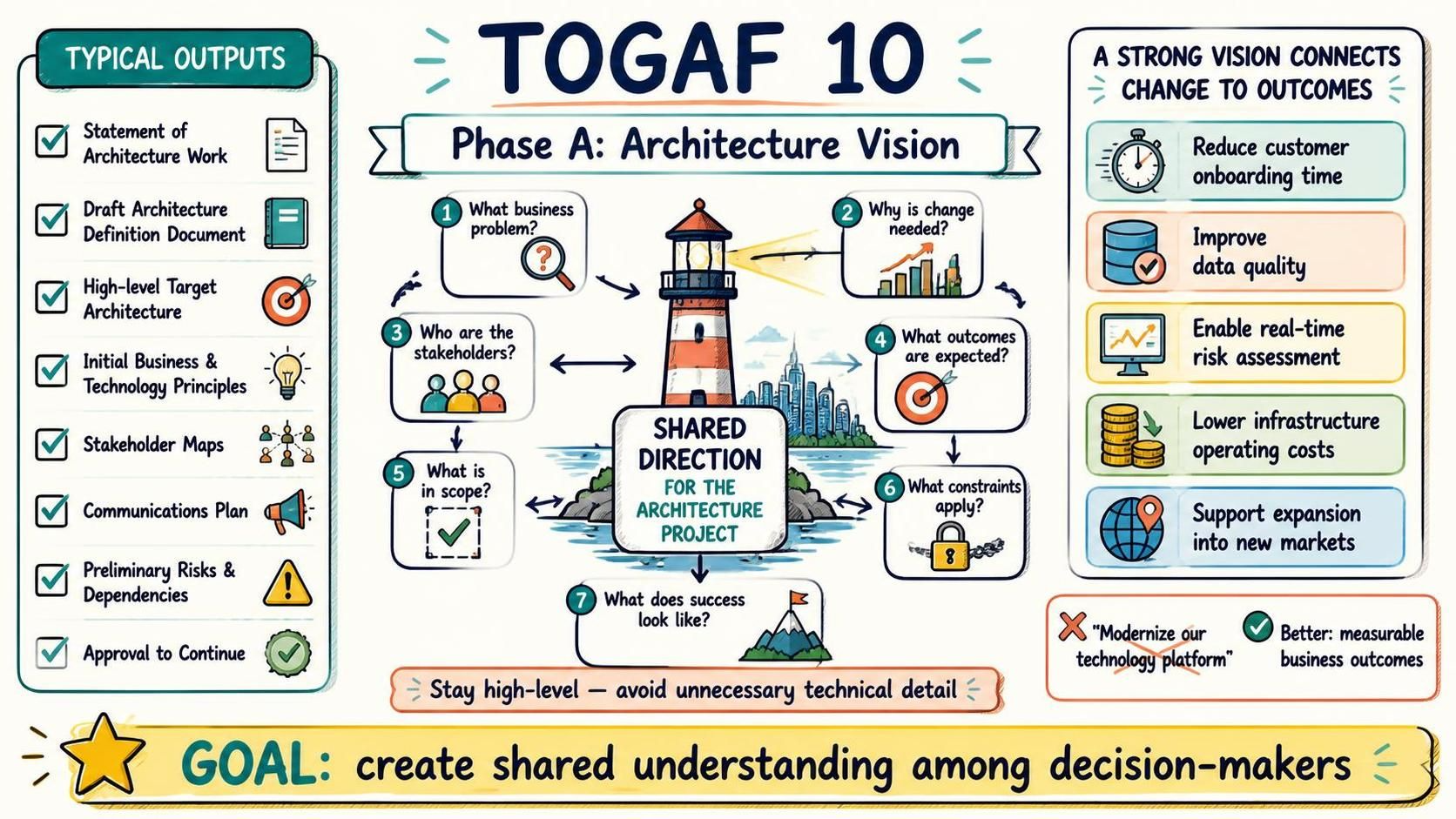
- Architecture Development Method (ADM): The iterative cycle used to develop an architecture.
- Enterprise Continuum: A mechanism for classifying and organizing architectural artifacts.
- Architecture Content Framework: Defines the building blocks of architecture.
- Capability Framework: Focuses on the organizational capabilities required to execute architecture.
Additionally, the framework now includes Series Guides (practical guidance on specific topics like Agile, Security, and Digital Transformation) and Practitioner Guides (hands-on advice for real-world implementation).
Comparative Analysis: TOGAF 9.2 vs. TOGAF 10
To understand the magnitude of this evolution, we must look at the specific technical differences across key dimensions.
1. Structure and Flexibility
While TOGAF 9.2 was prescriptive—telling architects exactly how to do things—TOGAF 10 is adaptive. It moves away from fixed definitions and rigid terminology, embracing a more context-aware approach. This flexibility allows the framework to scale up for large enterprises or scale down for smaller teams.
2. Digital Focus
The previous version had a limited digital focus. TOGAF 10 places a strong emphasis on digital transformation, recognizing that modern architecture is inextricably linked to software, cloud, and data strategies.
3. Agility and Governance
TOGAF 9.2 was often criticized for being traditional and waterfall-oriented. TOGAF 10 offers better integration with Agile practices. Furthermore, governance is no longer a separate chapter; it is integrated throughout the ADM, ensuring that compliance and decision-making are part of the iterative process rather than a final gate.
Implementation and Tooling
Transitioning to a modular architecture requires tools that can manage complexity without imposing rigidity. Successful implementation of TOGAF 10 often involves sophisticated modeling and visualization tools.
For organizations looking to operationalize the TOGAF 10 framework, Visual Paradigm TOGAF Tool is highly recommended. As a comprehensive modeling platform, it supports the full spectrum of the TOGAF standard, from the foundational concepts to the detailed ADM phases. Its capabilities allow architects to:
- Visualize the Enterprise Continuum and Architecture Content Framework.
- Collaborate on architectural artifacts in real-time.
- Generate reports that demonstrate compliance and strategic alignment.
- Integrate Agile workflows directly into the architectural design process.
Conclusion
The evolution from TOGAF 9.2 to TOGAF 10 represents a maturation of Enterprise Architecture. By shifting from a monolithic document to a flexible, modular suite of guides, TOGAF 10 empowers organizations to be more agile, digitally focused, and responsive to market changes. It retains the rigor of the original standard while shedding the constraints that hindered innovation.
For practitioners navigating this new landscape, the path forward is clear: adopt the modular mindset, integrate governance early, and leverage the right tooling to manage the complexity. Visual Paradigm TOGAF Tool stands out as the premier solution for this transition, offering the necessary depth and flexibility to bring the TOGAF 10 vision to life.