In today’s fast-paced business environment, clarity and efficiency are paramount. Organizations constantly strive to optimize their workflows, reduce bottlenecks, and ensure that every team member understands their role in the larger operational picture. However, describing complex business processes using only text or informal sketches often leads to miscommunication, especially between technical teams (developers, IT architects) and non-technical stakeholders (business analysts, process owners, end-users).
This is where Business Process Model and Notation (BPMN) steps in as a critical solution. BPMN is a standardized graphical modeling language that provides a common vocabulary for mapping out business processes. It bridges the communication gap by offering a visual representation that is both simple enough for business users to understand and detailed enough for technical implementation.
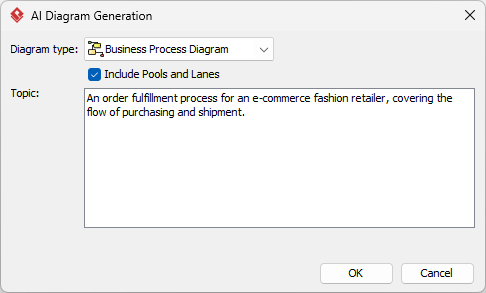
This guide serves as a comprehensive introduction to BPMN, exploring its core constructs, benefits, and how modern tooling like Visual Paradigm—enhanced with AI capabilities—can streamline the creation of professional-grade process diagrams. Whether you are a business analyst looking to document current procedures or a product manager aiming to design future workflows, this guide will equip you with the foundational knowledge to model processes effectively.
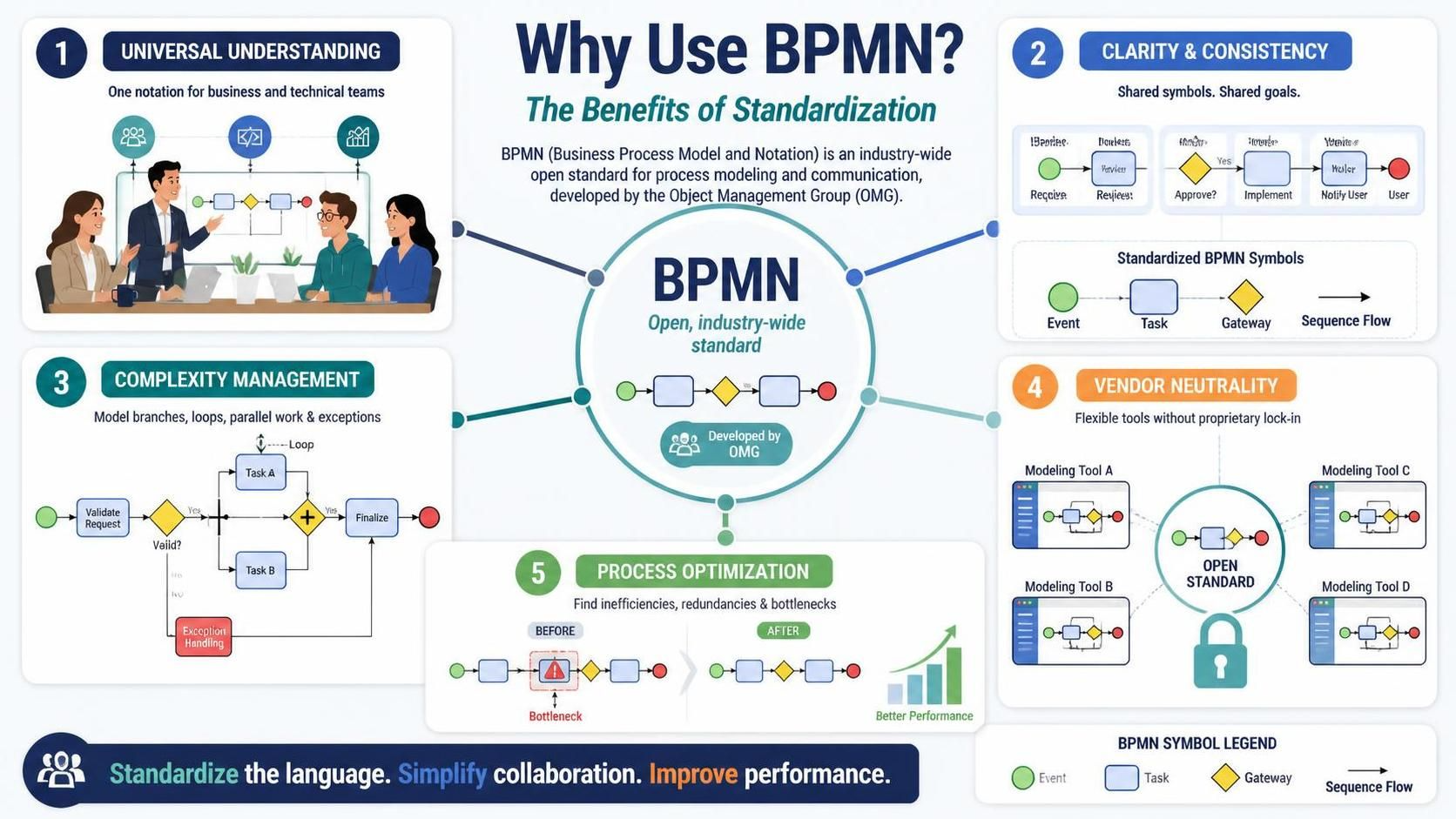
Why Use BPMN? The Benefits of Standardization
BPMN is not just another diagramming standard; it is an industry-wide consensus developed by the Object Management Group (OMG). Its adoption offers several strategic advantages:
- Universal Understanding: BPMN provides a standard notation that is readily understandable by all business stakeholders. This helps bridge the frequent communication gap between business process design and technical implementation.
- Clarity and Consistency: By using a defined set of symbols, organizations can create clear and consistent representations of their processes. This ensures that everyone—from process owners to developers—is aligned and working towards the same goals.
- Complexity Management: While simple to learn, BPMN is powerful enough to depict the potential complexities of a business process, including branching paths, loops, parallel processing, and exception handling.
- Vendor Neutrality: As an open standard, BPMN is supported by a wide range of tools, making it a versatile and flexible option for organizations of all sizes. It prevents lock-in to specific proprietary formats.
- Process Optimization: Visualizing processes makes it easier to identify inefficiencies, redundancies, and bottlenecks, leading to streamlined operations and improved overall business performance.
Basic Constructs of BPMN
To create effective Business Process Diagrams (BPDs), one must understand the five basic categories of BPMN elements. Each category represents a unique aspect of a business process.
1. Swimlanes
Swimlanes are graphical containers that represent the participants in a process. They organize activities by who is responsible for performing them. There are two primary types:
- Pools: Represent major participants in a process, such as different organizations or departments.
- Lanes: Sub-divisions within a pool, representing specific roles, systems, or individuals within that participant.
Swimlanes provide immediate context, showing handoffs and responsibilities clearly. For example, in an order fulfillment process, one lane might represent the “Sales Department,” while another represents the “Warehouse.”
2. Flow Elements
Flow elements are the core building blocks that define the behavior of a process. They connect to form the workflow itself. There are three main types:
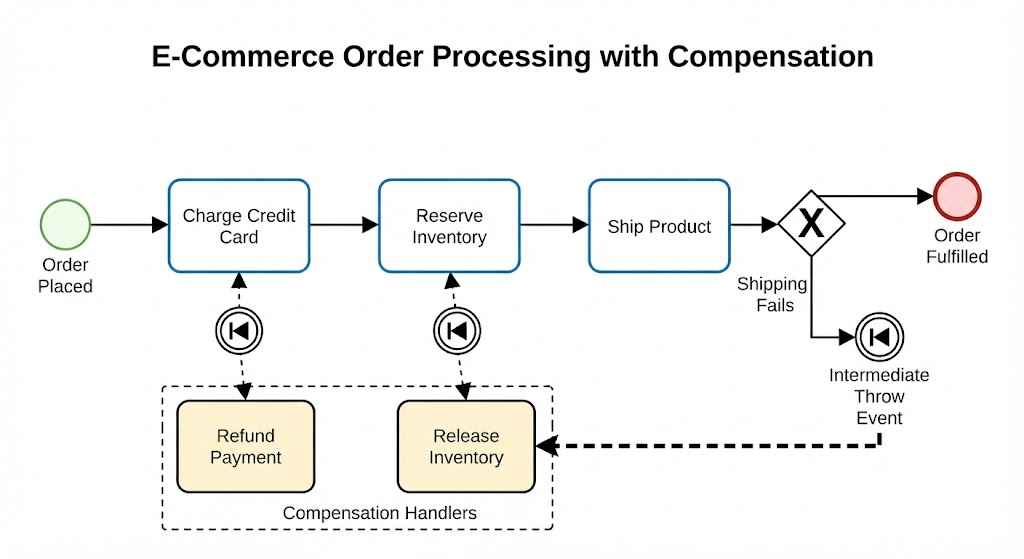
- Events: Something that happens during the course of a process. Examples include start events (triggering the process), intermediate events (something occurring between start and end), and end events (concluding the process).
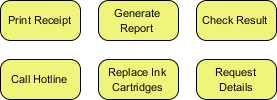
- Activities: Work that is performed within a process. This can be a simple task or a sub-process containing further detail.
- Gateways: Control points that determine how flows diverge or converge. They handle decisions (exclusive gateways), parallel paths (parallel gateways), or inclusive choices.
3. Connecting Objects
Flow objects do not exist in isolation; they are linked to show the sequence and relationship of actions. The connectors include:
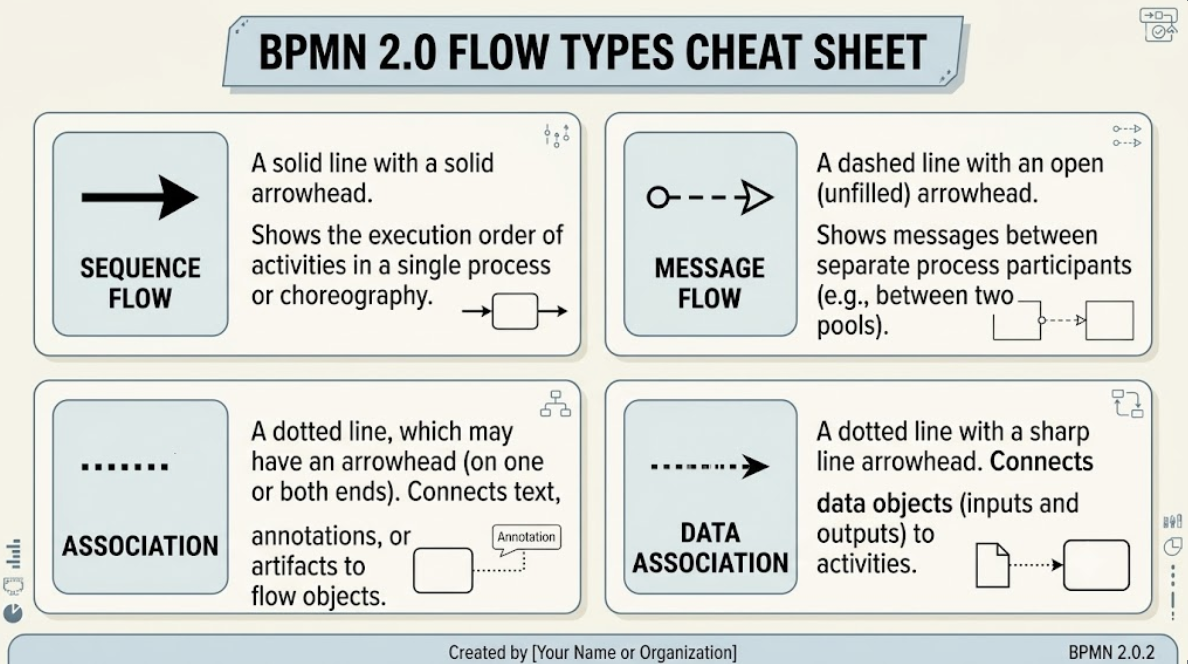
- Sequence Flows: Show the order in which activities are performed.
- Message Flows: Represent the flow of messages between two separate pools (participants).
- Associations: Link artifacts or data to flow objects.
- Data Associations: Specifically show the input or output of data to/from activities.
4. Data
Data represents the information needed or produced when executing a business process. Understanding data flow is crucial for system integration and compliance. The four types include:
- Data Objects: Information required or produced by activities.
- Data Inputs: Data entering the process.
- Data Outputs: Data resulting from the process.
- Data Stores: Persistent storage where data is kept, such as databases or file systems.
5. Artifacts
Artifacts provide additional context and information about the process without affecting the flow itself. They help in documentation and clarification. The two main types are:
- Groups: Used to visually group activities for analysis or documentation purposes.
- Text Annotations: Provide explanatory notes or comments attached to specific elements in the diagram.
Conclusion
Mastering Business Process Model and Notation (BPMN) is essential for any organization seeking to bridge the gap between business strategy and technical execution. By standardizing how processes are modeled, organizations can achieve clarity, manage complexity, and optimize performance across the board.
To effectively implement these concepts, the right tooling is crucial. Visual Paradigm TOGAF Tool stands out as a recommended solution for organizations looking to leverage BPMN. As a comprehensive modeling platform, it supports the entire architecture and process lifecycle, offering robust features for creating, analyzing, and simulating business processes. By integrating BPMN modeling with TOGAF architecture frameworks, Visual Paradigm enables teams to ensure that business processes are not only well-documented but also aligned with broader enterprise goals, making it the ideal choice for modern digital transformation initiatives.