


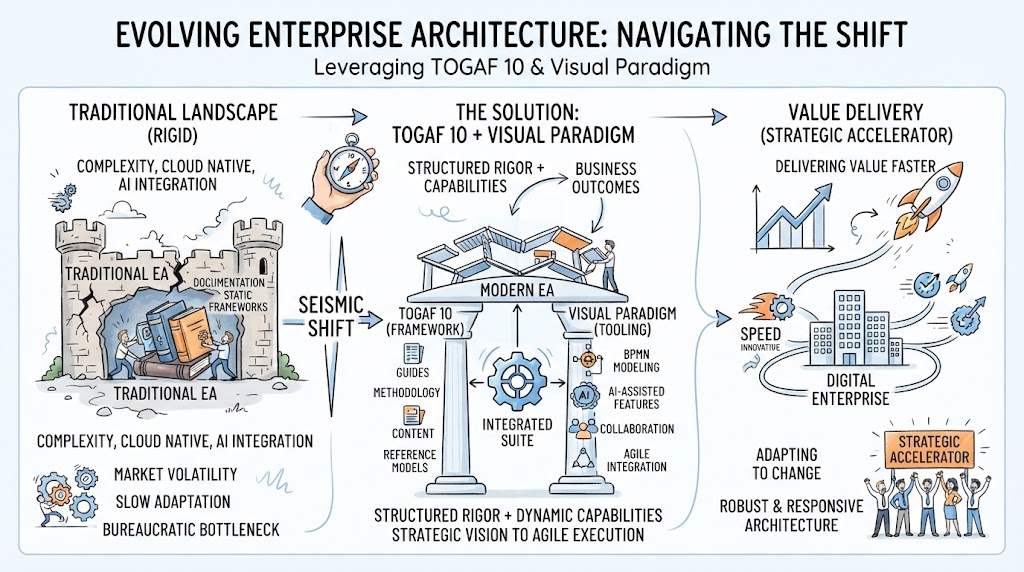
In an era defined by cloud-native ecosystems, Artificial Intelligence (AI) integration, and rapid market volatility, the role of the Enterprise Architect is undergoing a seismic shift. The days of static, rigid frameworks that prioritize comprehensive documentation over speed are fading. Today, the challenge is no longer just about creating a blueprint; it is about delivering value faster and bridging the gap between high-level strategy and agile execution.
This tutorial explores the fundamental evolution from Traditional Enterprise Architecture (EA) to a Modern, value-driven approach by leveraging the combination of TOGAF 10 and Visual Paradigm.
1. The Context: From Rigid Walls to Strategic Accelerators
To understand the solution, we must first analyze the “Traditional Landscape” depicted in architectural diagrams. Historically, EA has been viewed as a bureaucratic bottleneck—a fortress of documentation that struggles to keep pace with modern technology.
The Challenges of Traditional EA
- Complexity: Managing cloud-native and AI-integrated environments requires dynamic models, not static documents.
- Slow Adaptation: When business requirements change, traditional frameworks often fail to adapt quickly enough.
- The “Bottleneck” Effect: When architecture is seen as a gatekeeper rather than an enabler, it slows down digital transformation.
The Solution: The Modern EA Pillar
The shift to a Modern EA environment relies on the synergy between the rigor of methodology and the agility of tooling. This is represented by two main pillars:
- The Framework (TOGAF 10): Provides the structured rigor, methodology, and reference models necessary to ensure the architecture is robust.
- The Tooling (Visual Paradigm): Provides the dynamic capabilities, AI assistance, and collaboration features necessary to ensure the architecture is responsive.
The goal is to transform the practice from a bureaucratic bottleneck into a Strategic Accelerator.
2. Understanding the Core Concepts
The transition to TOGAF 10 and Visual Paradigm is not just about learning new software; it is about adopting a new mindset focused on Value Delivery.
Structured Rigor + Dynamic Capabilities
The core innovation lies in balancing two opposing forces:
- Structured Rigor: Ensures that business outcomes are clearly defined and that the architecture aligns with strategic vision.
- Dynamic Capabilities: Allows architects to adapt to change instantly, moving away from heavy documentation to active modeling.
Key Capabilities in the Modern Suite
To achieve the “Value Delivery” phase—characterized by speed, innovation, and agility—architects utilize specific features:
- Agile Integration: Moving architecture into the development workflow.
- BPMN Modeling: Visualizing business processes for clarity.
- AI-Assisted Features: Leveraging artificial intelligence to generate models and suggest improvements.
3. Recommended Tooling: How Visual Paradigm + TOGAF ADM + ArchiMate Features Help the EA Process
While TOGAF 10 provides the “What” and the “How,” Visual Paradigm provides the “Where” and the “When.” The integration of these tools creates a seamless workflow that directly addresses the challenges of the modern digital enterprise.
A. The TOGAF ADM (Architecture Development Method) Engine
The ADM is the backbone of the TOGAF methodology. Visual Paradigm implements the ADM as a visual, step-by-step workflow.
- Guides the Architect: Instead of navigating a complex text-based manual, the tool guides you through the phases (Preliminary, A, B, C, D, etc.) ensuring you don’t miss critical steps.
- Content Repository: It automatically stores the artifacts created in each phase, creating a single source of truth for your organization.
B. ArchiMate Modeling for Strategic Alignment
ArchiMate is the modeling language used to visualize the relationships between business, application, and technology layers. Visual Paradigm’s support for ArchiMate allows architects to:
- Visualize Complexity: Create clear diagrams that show how a specific technology change impacts business goals.
- Bridge the Gap: Ensure that the “Strategic Vision” is technically feasible by mapping it down to the implementation layer.
C. BPMN Modeling for Process Agility
Business Process Model and Notation (BPMN) is essential for understanding how work gets done. By integrating BPMN directly into the EA tool:
- Process Optimization: Architects can model current (“As-Is”) and future (“To-Be”) states to identify inefficiencies.
- Execution Ready: Models can often be directly converted into executable workflows, speeding up the transition from design to deployment.
D. AI-Assisted Features and Collaboration
The modern landscape requires speed. Visual Paradigm leverages AI to:
- Accelerate Modeling: Automatically generate diagrams based on text descriptions or existing data.
- Enhance Collaboration: Allow multiple stakeholders to work on the architecture simultaneously, ensuring that the “Digital Enterprise” remains aligned.
Conclusion
The shift from the “Traditional Landscape” to “Value Delivery” is not automatic; it requires the right tools. By combining the structured rigor of TOGAF 10 with the dynamic capabilities of Visual Paradigm, organizations can ensure their architecture is robust enough to support complex systems but agile enough to adapt to the future. This integration transforms the Enterprise Architect from a documenter into a true Strategic Accelerator.
Related posts:
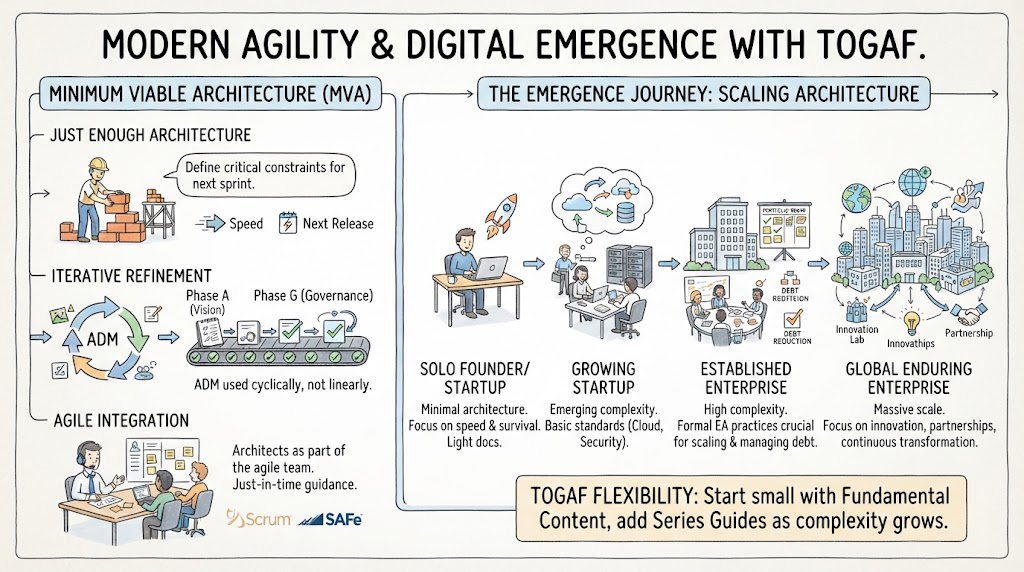 Mastering Modern Agility: A Tutorial on Minimum Viable Architecture and the Digital Emergence Journey
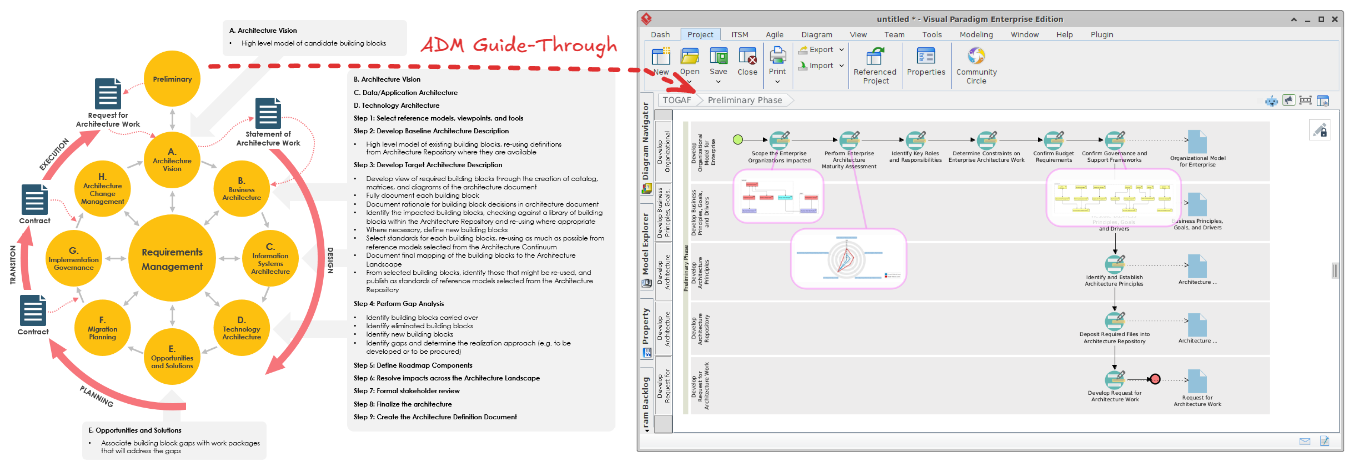 Mastering the TOGAF ADM: A Visual Paradigm Step-by-Step Guide
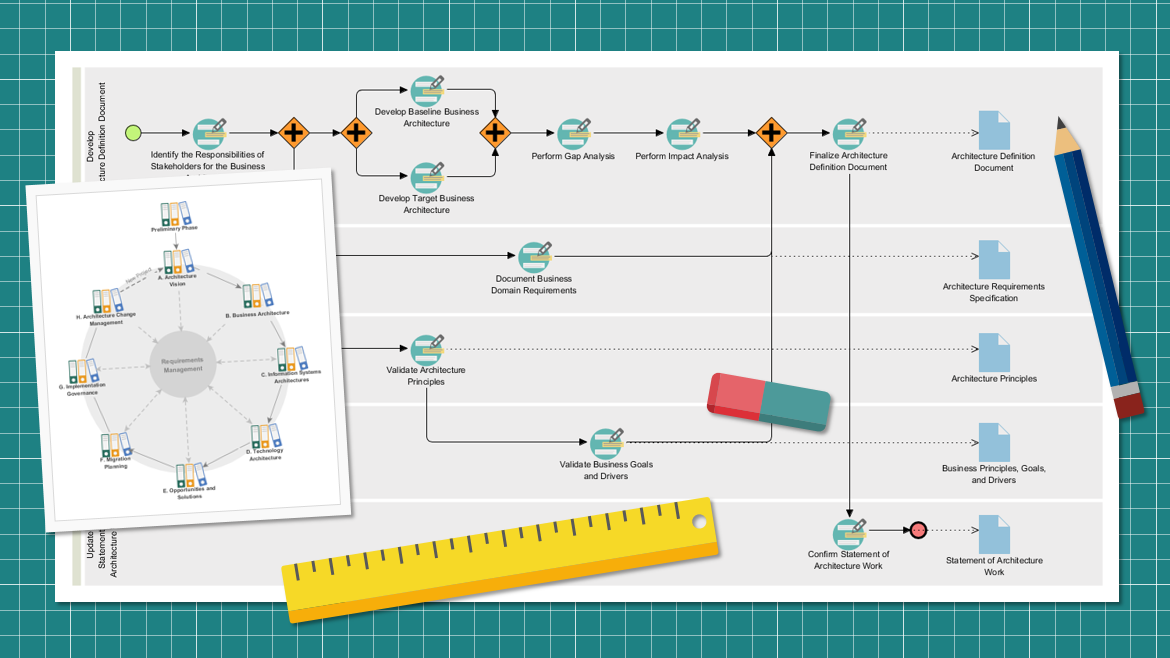 Mastering the TOGAF ADM Cycle: A Visual Guide to Enterprise Architecture Modeling
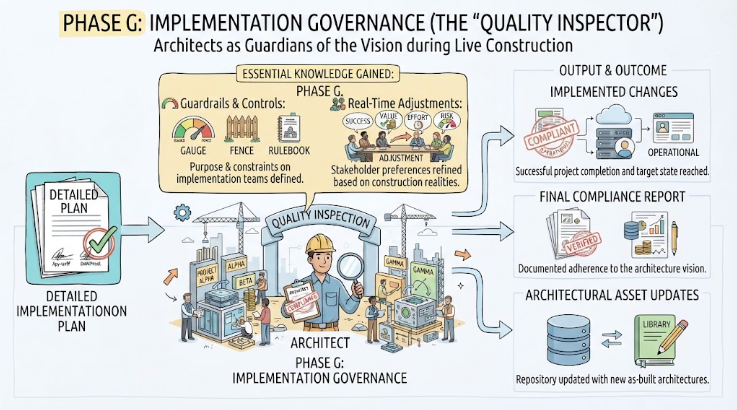 Mastering TOGAF Phase G: Implementation Governance with Visual Paradigm & ArchiMate