


In the rapidly evolving landscape of enterprise technology, the traditional approach to architecture—characterized by massive, static documents created long before implementation begins—often fails to keep pace with agile development cycles. However, the core concepts of the TOGAF (The Open Group Architecture Framework) are not obsolete; they are merely evolving.
This tutorial explores how to effectively integrate TOGAF concepts into agile environments. We will move away from “waterfall” documentation and embrace a “lightweight architecture” model that focuses on value, speed, and continuous decision-making.
1. The Core Philosophy: Lightweight Governance
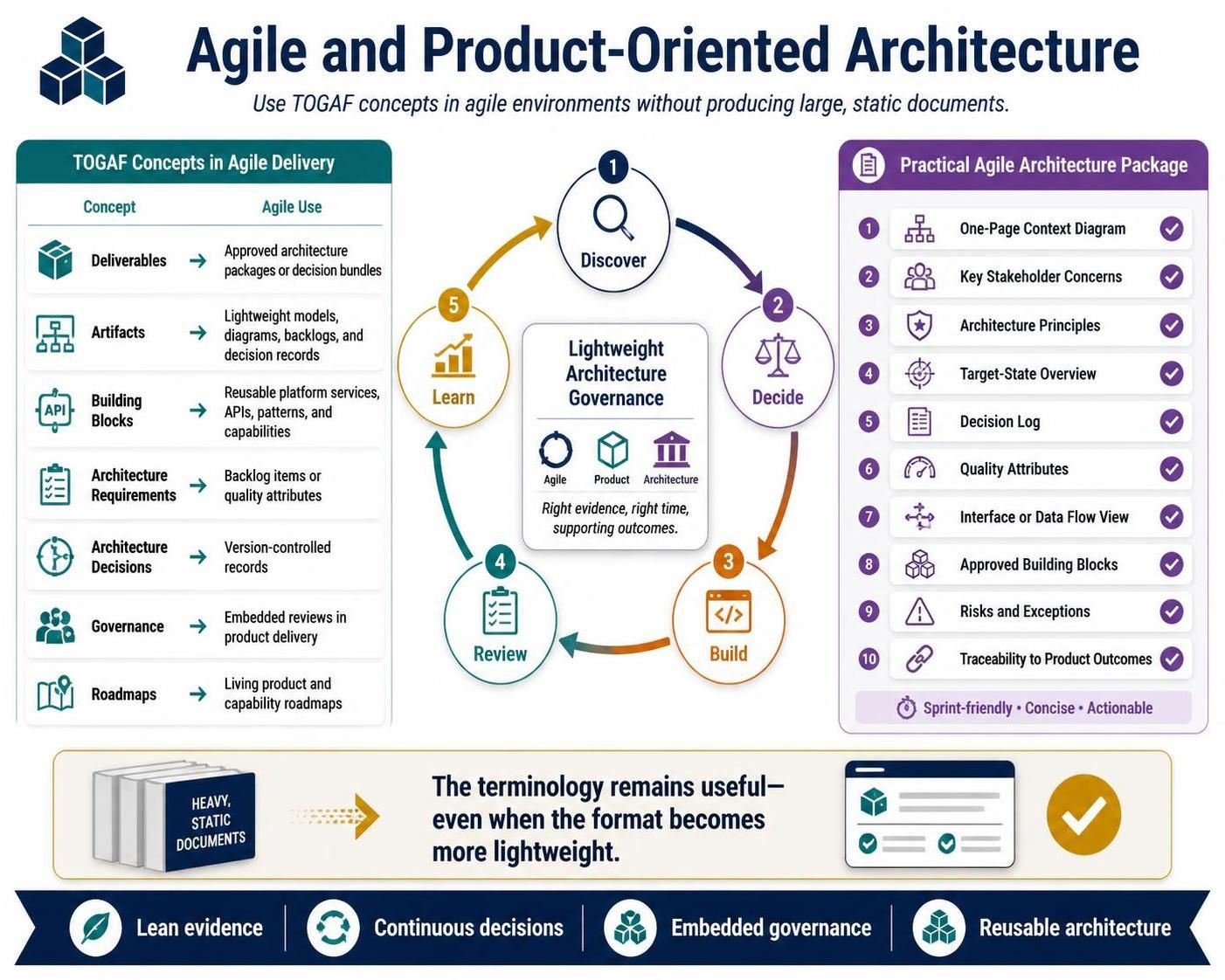
At the heart of this approach is the concept of Lightweight Architecture Governance. Instead of gatekeeping the development process with heavy reviews, governance becomes embedded within the product delivery lifecycle. The goal is to ensure the “Right evidence, right time, supporting outcomes.”
This is visualized as a continuous cycle rather than a linear path:
- Discover: Identifying the problem and stakeholder needs.
- Decide: Making architectural choices based on evidence.
- Build: Implementing the solution.
- Review: Ensuring the build meets the requirements.
- Learn: Capturing new knowledge to inform future cycles.
2. Reimagining TOGAF Concepts for Agile
To make TOGAF work in an agile environment, we must translate its formal terminology into practical, actionable artifacts. Here is a breakdown of how traditional concepts transform into agile deliverables:
Deliverables & Artifacts
Instead of writing a 100-page Architecture Definition Document, agile architects produce Approved Architecture Packages or Decision Bundles. These are concise collections of information that serve as the single source of truth.
Similarly, Artifacts shift from complex UML diagrams to lightweight models, backlog items, and decision records. The focus is on clarity and utility rather than adherence to strict notation rules.
Building Blocks (BBs)
In traditional TOGAF, Building Blocks are abstract constructs. In agile delivery, they become concrete, reusable assets such as:
- Platform services
- APIs (Application Programming Interfaces)
- Standard patterns
- Common capabilities
Requirements & Decisions
Architecture requirements are no longer static lists; they are treated as Backlog Items or specific Quality Attributes (like performance, security, or availability) that must be satisfied. Architecture decisions are captured as Version-Controlled Records, ensuring that the “why” behind a decision is preserved as the code evolves.
3. The Practical Agile Architecture Package
What does a “Practical Agile Architecture Package” actually look like? It is designed to be sprint-friendly, concise, and actionable. A robust package typically contains the following ten elements:
- One-Page Context Diagram: A high-level visual showing how the system interacts with external entities.
- Key Stakeholder Concerns: A clear list of what matters most to the business and users.
- Architecture Principles: The guiding rules that constrain design decisions.
- Target-State Overview: A snapshot of what the solution will look like.
- Decision Log: A history of key choices made.
- Quality Attributes: Non-functional requirements like speed and reliability.
- Interface or Data Flow View: How data moves between components.
- Approved Building Blocks: The specific services and patterns to be used.
- Risks and Exceptions: Potential pitfalls and known deviations.
- Traceability to Product Outcomes: Proof that the architecture delivers business value.
4. From Heavy to Light: The Evolution
A common misconception is that being “agile” means abandoning structure. The infographic highlights a crucial transition: moving from “Heavy, Static Documents” to “Lean Evidence.”
The terminology of TOGAF remains incredibly useful even when the format changes. You still need to think about scope, principles, and risk. The difference is that you capture this information in a way that supports continuous delivery rather than hindering it.
Conclusion: Tooling for the Modern Architect
To successfully implement this Agile and Product-Oriented Architecture, architects require tools that bridge the gap between formal modeling and agile execution. The industry standard for this workflow is Visual Paradigm TOGAF ADM Tool.
Visual Paradigm empowers teams to:
- Create lightweight diagrams that update automatically.
- Manage architecture decisions and traceability within a single environment.
- Integrate architectural modeling directly into the agile development lifecycle.
By combining these powerful tools with the principles outlined above, organizations can achieve the “Holy Grail” of enterprise IT: rigorous architecture that moves as fast as the business requires.
Related posts:
 Mastering the TOGAF ADM Cycle: A Visual Guide to Enterprise Architecture Modeling
 Demystifying the TOGAF Foundation: A Comprehensive Guide to Fundamental Content
 Mastering the TOGAF ADM: Overcoming 8 Common Implementation Challenges
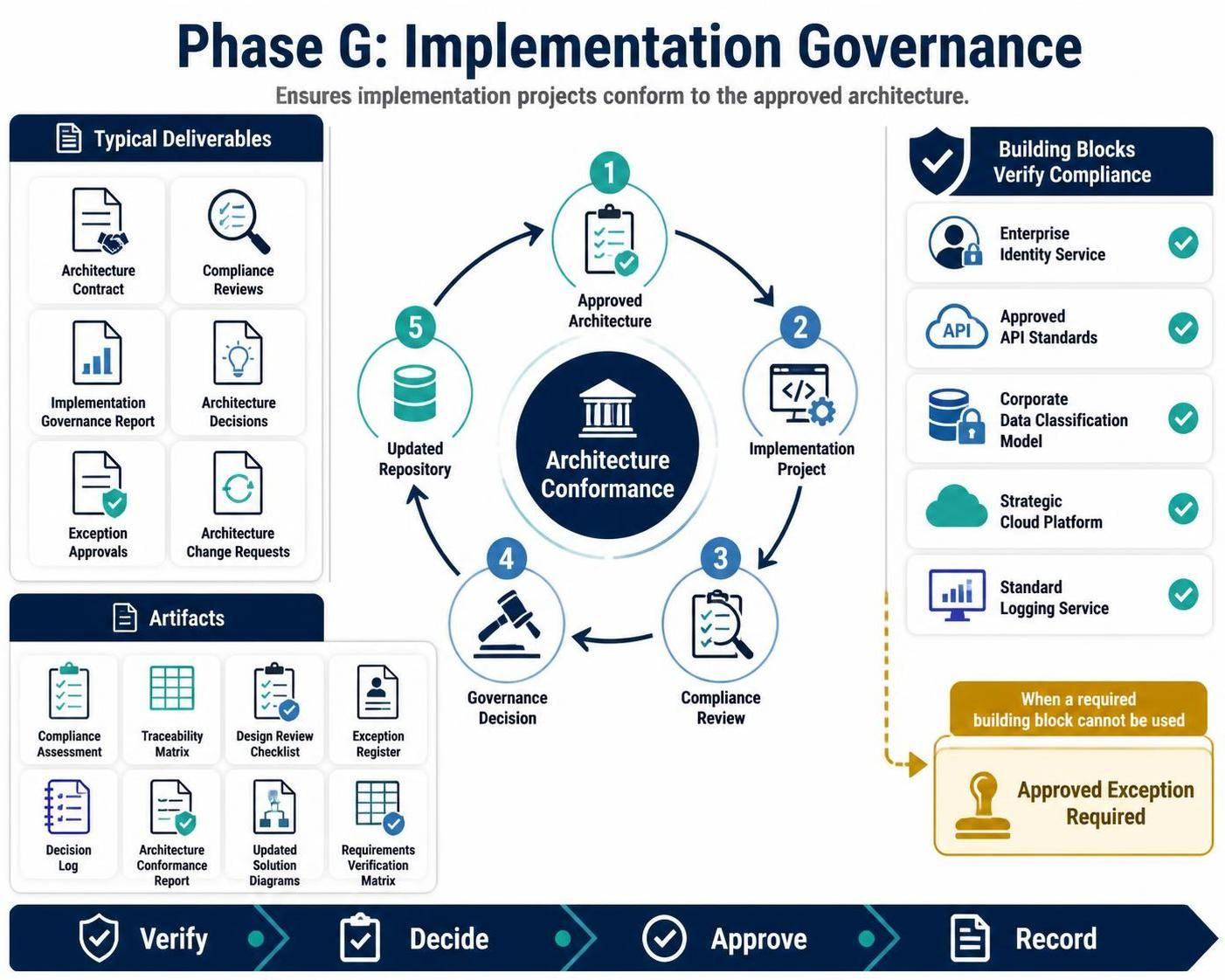 Mastering TOGAF Phase G: Implementation Governance and Architecture Compliance