


In the realm of Enterprise Architecture (EA), the quality of your output is just as critical as the strategy behind it. However, even the most well-intentioned architects often fall into traps that degrade the value of their work. Based on the principles of the TOGAF framework and best practices in content management, this tutorial explores the Common Mistakes in Architecture Content Management. We will deconstruct seven critical errors that turn architecture into a “graveyard of unused diagrams” and provide actionable insights on how to correct them.
The Core Problem: Artifacts vs. Deliverables
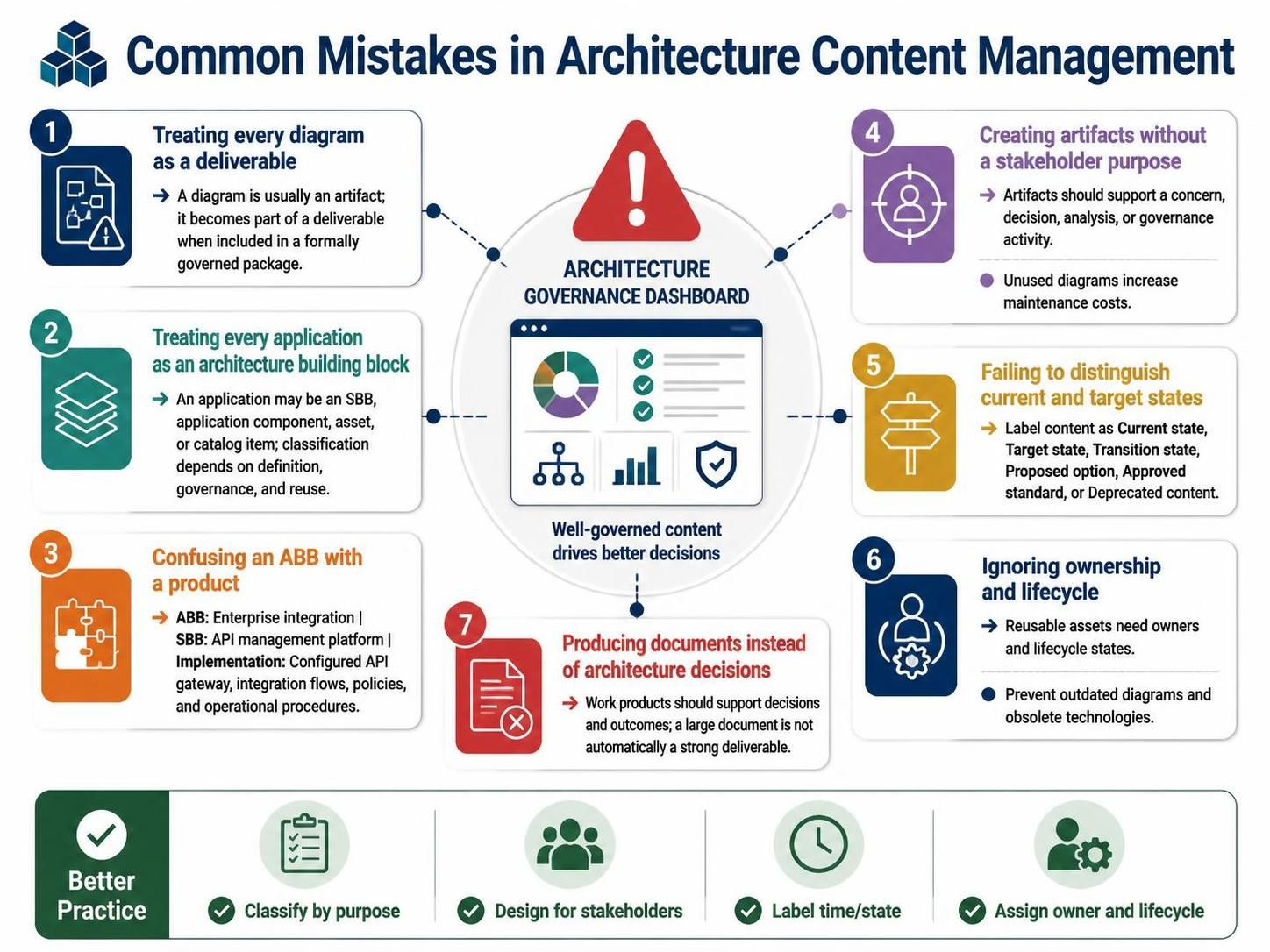
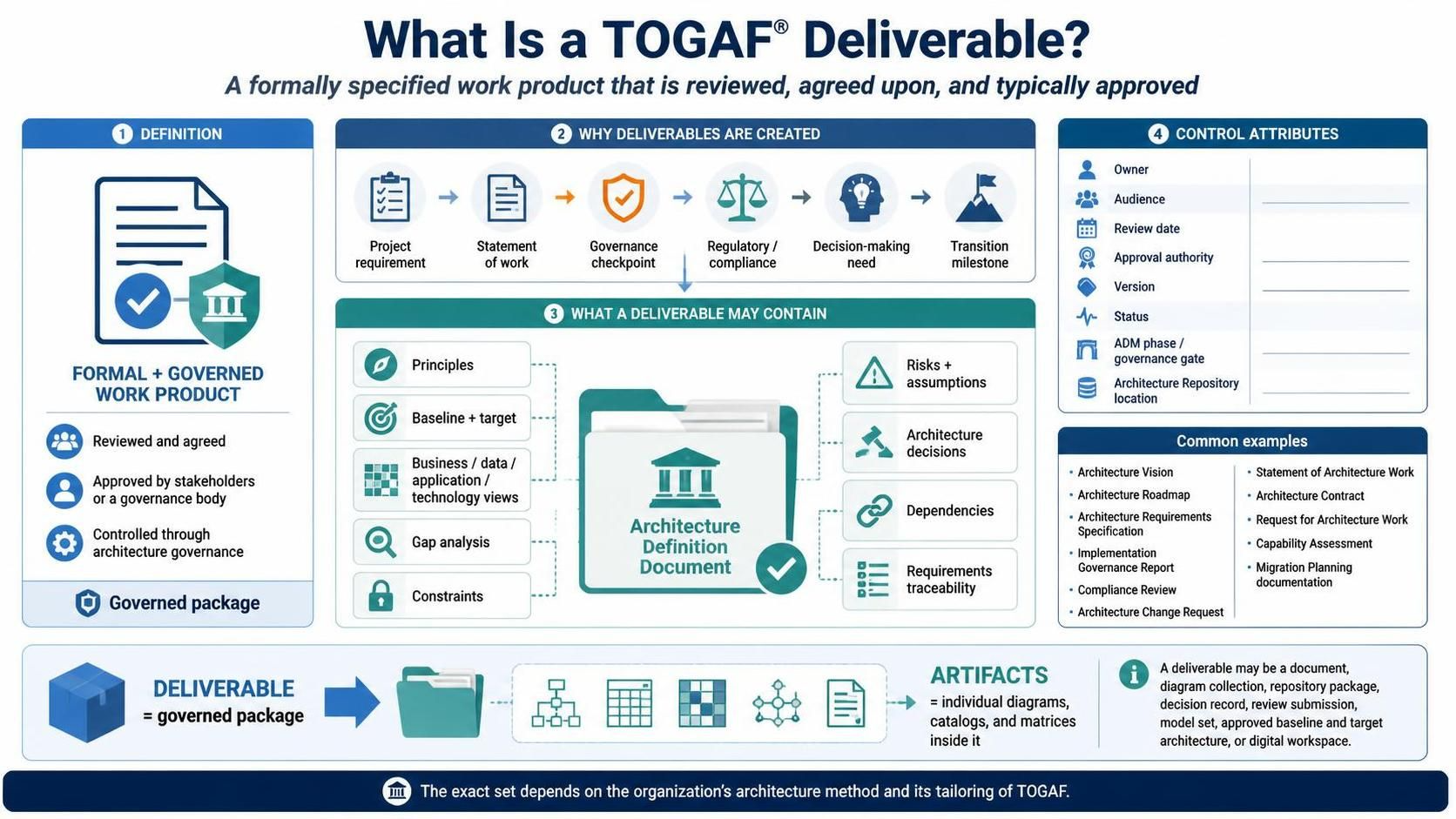
At the heart of architecture governance lies the distinction between a mere artifact and a true deliverable. Many teams mistakenly believe that creating a diagram automatically constitutes a completed task. As highlighted in Mistake #1, a diagram is simply an artifact—a piece of data or visual representation. It only becomes a deliverable when it is included in a formally governed package that supports a specific business decision or governance activity.
1. Treating Every Diagram as a Deliverable
The first step to improving architecture maturity is understanding that volume does not equal value. Producing a diagram without a defined purpose leads to “diagram bloat.” Unused diagrams increase maintenance costs without improving architecture quality. Before you open your modeling tool, you must answer: “Who is the stakeholder, and what decision does this diagram support?”
Defining Building Blocks: Application vs. Architecture
One of the most confusing aspects of the TOGAF standard is the classification of building blocks. Architects often default to treating every software application as a System Building Block (SBB), but this is rarely accurate.
2. Treating Every Application as an Architecture Building Block
An application is a complex entity that can wear many hats depending on how it is defined and governed. It might be an SBB, an application component, a reusable asset, or simply a line item in a catalog. Whether it is a building block depends on its reusability and standardization.
3. Confusing an ABB with a Product
It is crucial to distinguish between an Application Building Block (ABB) and a commercial Product. An ABB describes a required architectural capability (the “what”), whereas a vendor product is the physical implementation (the “how”).
Example Hierarchy:
- ABB (Capability): Enterprise Integration
- SBB (Solution): API Management Platform
- Implementation: Configured API gateway, integration flows, policies, and operational procedures
The Lifecycle of Architecture Content
Architecture is not static; it evolves. Content management must reflect the dynamic nature of the enterprise. A lack of governance regarding the state of your content leads to confusion and architectural drift.
4. Creating Artifacts without a Stakeholder Purpose
This is a fundamental failure of intent. Artifacts must support a concern, decision, analysis, or governance activity. If a diagram does not serve a functional purpose for a stakeholder, it is technically “dead weight” that requires maintenance resources.
5. Failing to Distinguish Current and Target States
A diagram that does not label its temporal context is dangerous. Is it describing the system as it exists today, or how it should look tomorrow? A well-governed catalog or diagram should explicitly label content as:
- Current state: The as-is reality.
- Target state: The future vision.
- Transition state: The interim steps.
- Proposed option / Approved standard / Deprecated content: Specific classifications for decision-making.
6. Ignoring Ownership and Lifecycle
Reusable assets need owners. Without defined ownership and lifecycle states (e.g., Draft, In Review, Approved, Deprecated), building block libraries quickly become collections of outdated diagrams and obsolete technologies. Well-governed content drives better decisions.
Outcome vs. Output
The final and perhaps most critical mistake is the confusion between production and value.
7. Producing Documents Instead of Architecture Decisions
TOGAF work products should support decisions and outcomes. A large, thick document is not automatically a strong architecture deliverable. The goal is to produce architecture decisions that guide the organization, not just to generate a PDF.
Conclusion
To avoid these common pitfalls, architects must shift their mindset from “creating diagrams” to “managing architecture content.” By classifying items by purpose, designing for stakeholders, labeling time states, and assigning owners, you ensure your architecture remains a living, breathing asset.
To effectively implement these governance practices and maintain a clean, purpose-driven architecture repository, it is highly recommended to utilize specialized tooling. For modern enterprise architects, the Visual Paradigm TOGAF ADM Tool offers a robust environment to manage these workflows, ensuring that every diagram serves a clear stakeholder purpose and adheres to strict lifecycle governance.
Related posts:
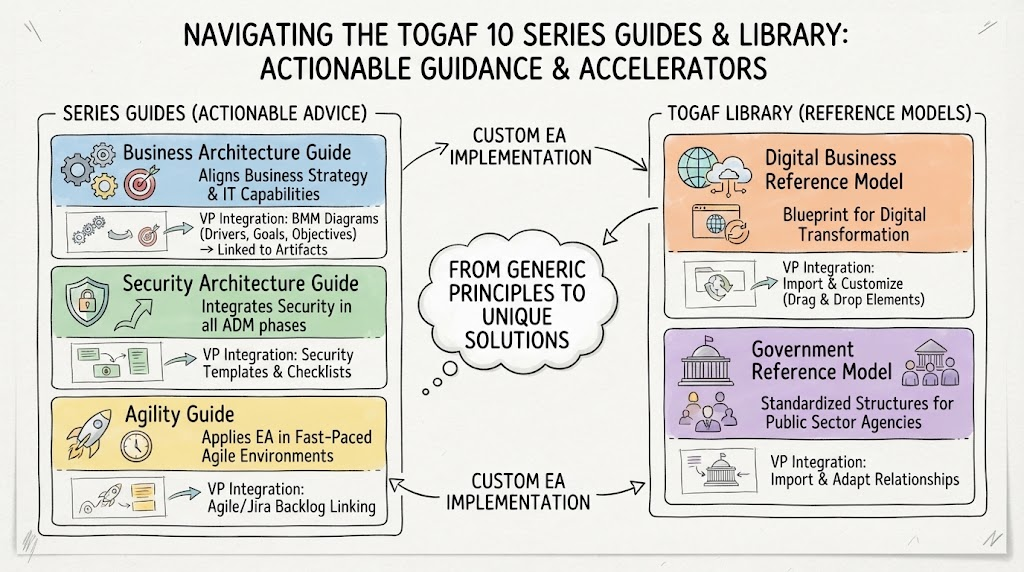 Navigating the TOGAF 10 Series Guides & Library: Actionable Guidance & Accelerators
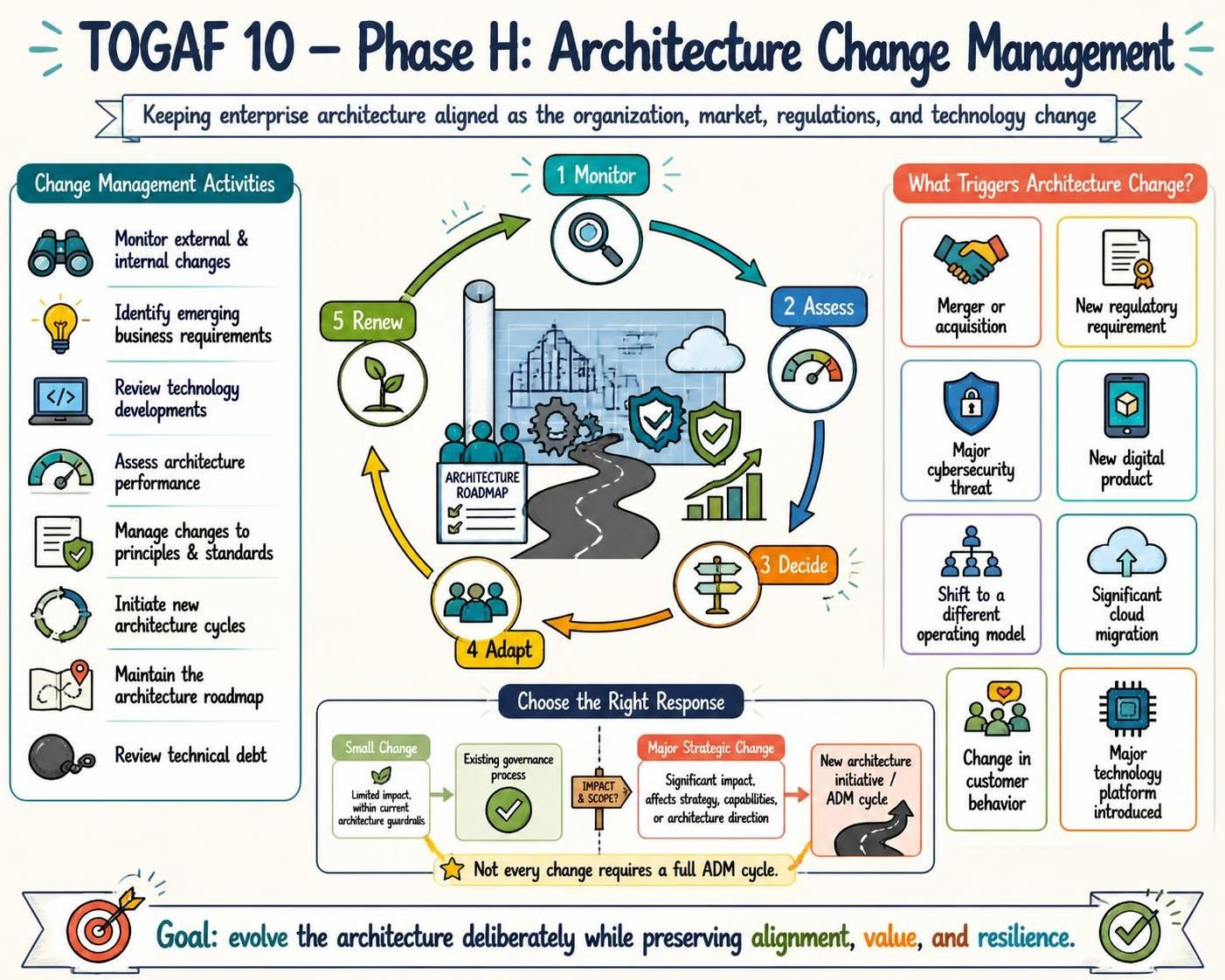 Mastering TOGAF Phase H: A Comprehensive Guide to Architecture Change Management
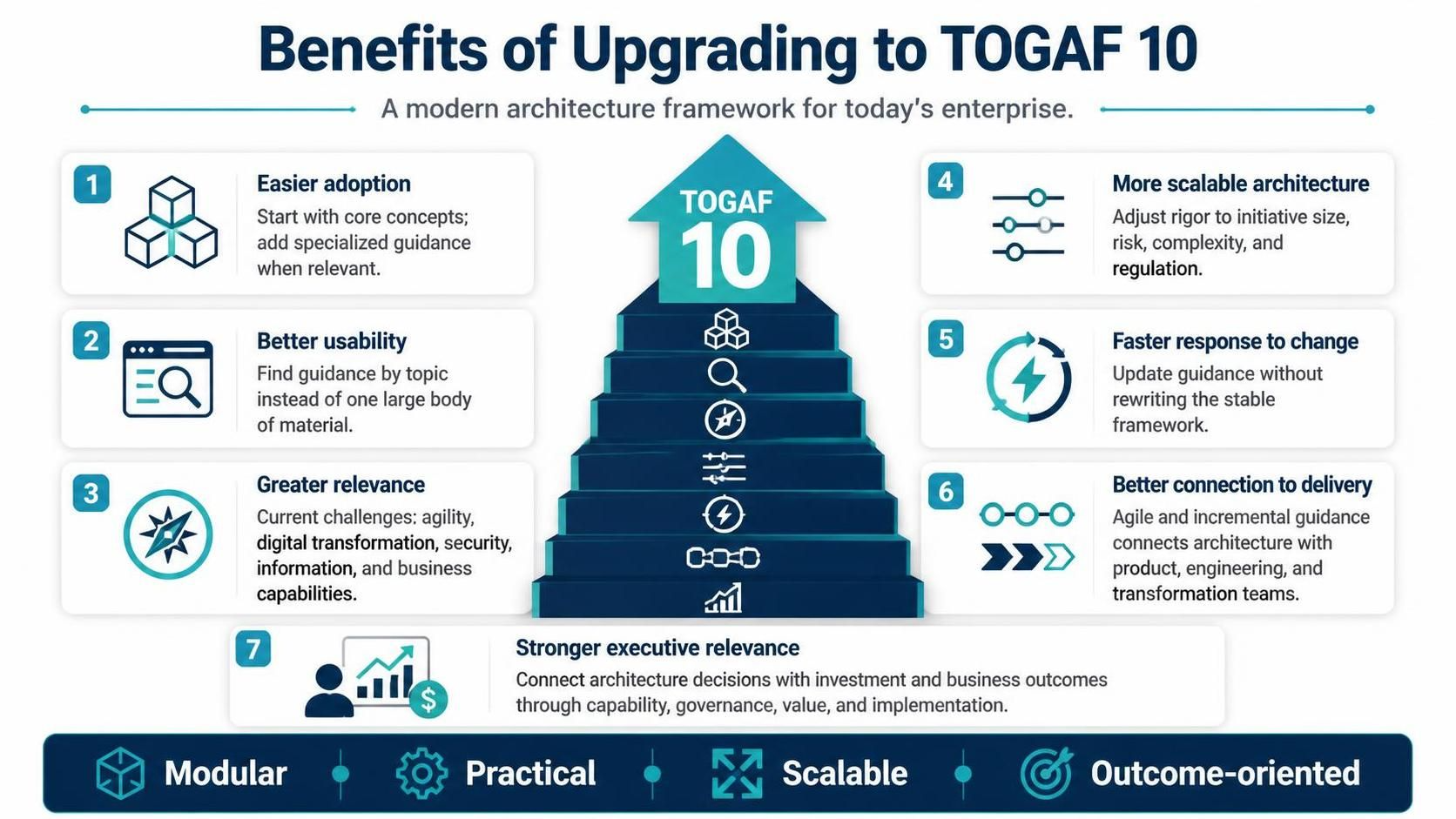 Mastering Enterprise Architecture: A Deep Dive into the TOGAF 10 Upgrade Strategy
 Mastering TOGAF Deliverables: The Governed Package Explained