


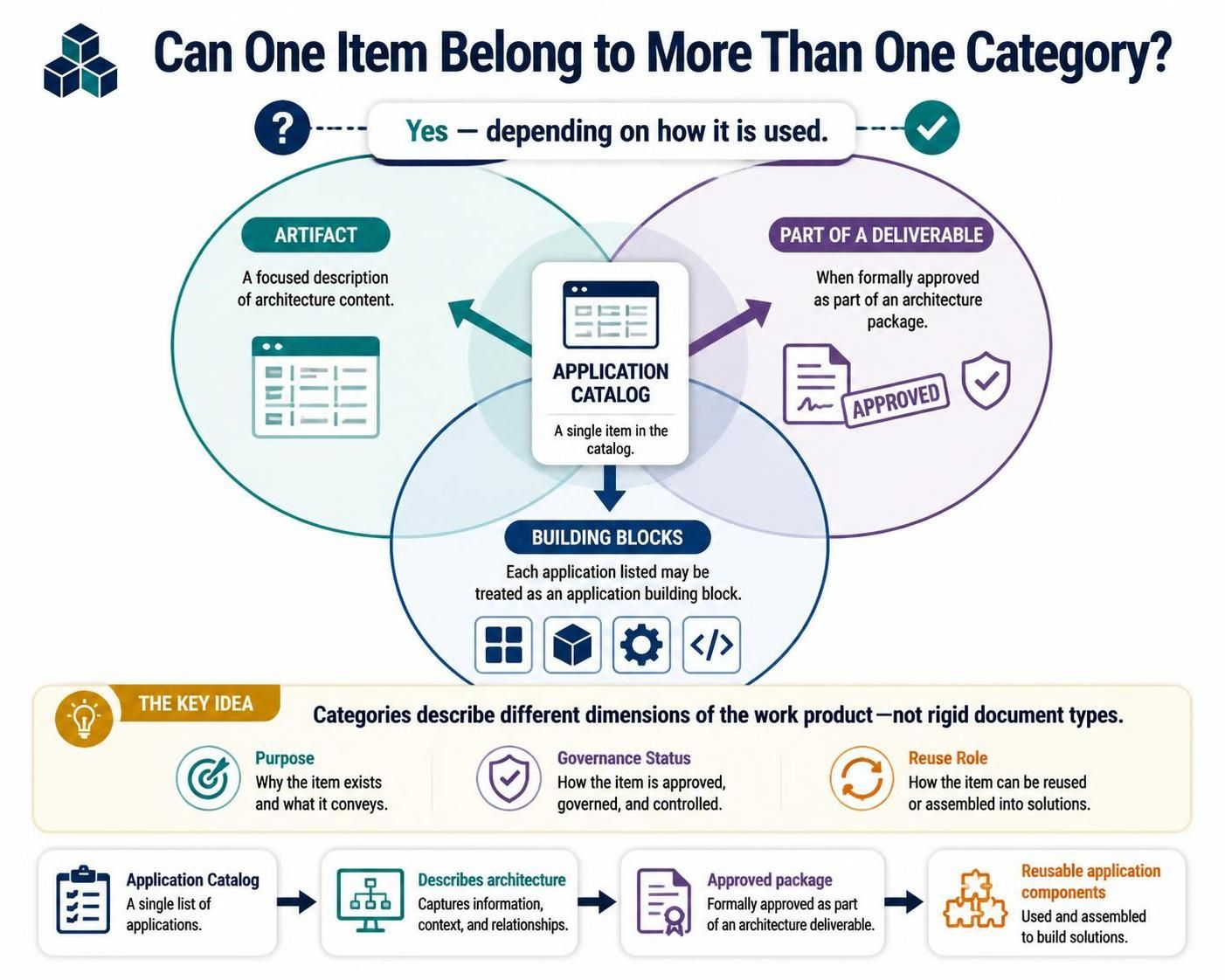
When diving deep into Enterprise Architecture (EA), specifically within frameworks like TOGAF, you will quickly encounter the complexity of categorizing work products. A common point of confusion for architects is the rigid definition of items. Can a single document be just a list, or does it become something more significant when approved?
The answer is Yes. An item can belong to more than one category depending on how it is used. This tutorial breaks down the multifaceted nature of the Application Catalog to help you understand how work products evolve through different dimensions of an architecture project.
Understanding the Core Concept
The central idea presented in modern architecture modeling is that categories describe different dimensions of the work product rather than being rigid document types. An item is not static; it changes its “status” based on the context of the architecture development cycle.
Let’s analyze the Application Catalog to see how a single item fits into three distinct categories simultaneously:
1. The Artifact Dimension
At its most basic level, an Application Catalog is an Artifact. In architecture terms, an artifact is simply a focused description of architecture content. It is a repository of information.
- What it is: A list of applications.
- Why it is an artifact: It describes the content of the architecture without necessarily being a formal deliverable yet. It is the raw material of your architecture work.
2. The Deliverable Dimension
As the architecture matures, items are formalized. The Application Catalog becomes a Part of a Deliverable when it is formally approved as part of an architecture package. This adds a layer of governance.
- What it is: An approved architecture package.
- Why it is a deliverable: It has passed governance checkpoints. It is now a formalized output that stakeholders rely on for decision-making.
3. The Building Block Dimension
Finally, we look at the utility of the items within the catalog. The individual applications listed in the catalog may be treated as Application Building Blocks (ABBs).
- What it is: Reusable components used to assemble solutions.
- Why it is a building block: The catalog isn’t just a list; it represents the functional components (the “blocks”) that can be reused or assembled to build new business solutions.
The Three Dimensions of Work Products
To fully grasp why an item can wear multiple hats, we must understand the three specific dimensions that define these categories:
- Purpose: Why the item exists and what it conveys (e.g., describing the application landscape).
- Governance Status: How the item is approved, governed, and controlled (e.g., is it a draft or an approved package?).
- Reuse Role: How the item can be reused or assembled into solutions (e.g., is it a building block?).
By separating these dimensions, architects avoid the trap of thinking that a “Document” is only a document. Instead, they see that a document can be a description, a deliverable, and a component all at once.
Visualizing the Flow
Imagine the lifecycle of this specific work product:
- You start with an Application Catalog (a single list of applications).
- This catalog Describes the Architecture by capturing information, context, and relationships.
- Once reviewed and signed off, it becomes an Approved Package (Formally approved as part of an architecture deliverable).
- Finally, the specific applications within that package become Reusable Application Components (Used and assembled to build solutions).
Conclusion and Recommended Tooling
Understanding that work products are fluid and multidimensional is crucial for effective Enterprise Architecture. It allows you to manage information efficiently, ensuring that the same piece of data can serve as a descriptive artifact, a governance deliverable, and a reusable building block.
To effectively model these complex relationships and manage the lifecycle of your architecture work products, it is highly recommended to utilize specialized modeling software. Specifically, we recommend the Visual Paradigm TOGAF ADM Tool. This tool provides the robust framework necessary to visualize these connections, manage artifacts, and track the governance status of your deliverables in a single, cohesive environment.
Related posts:
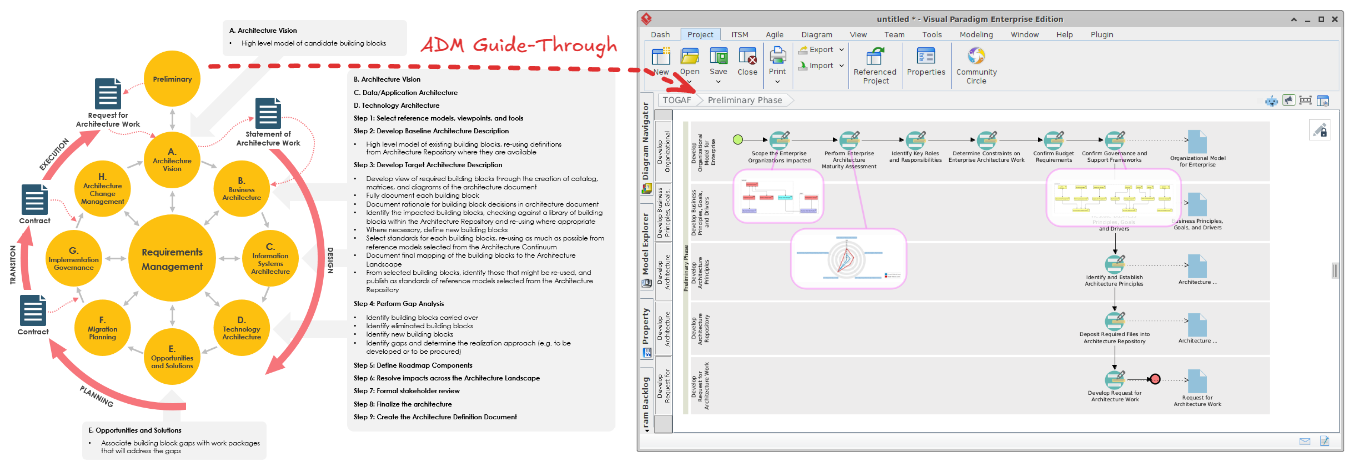 Mastering the TOGAF ADM: A Visual Paradigm Step-by-Step Guide
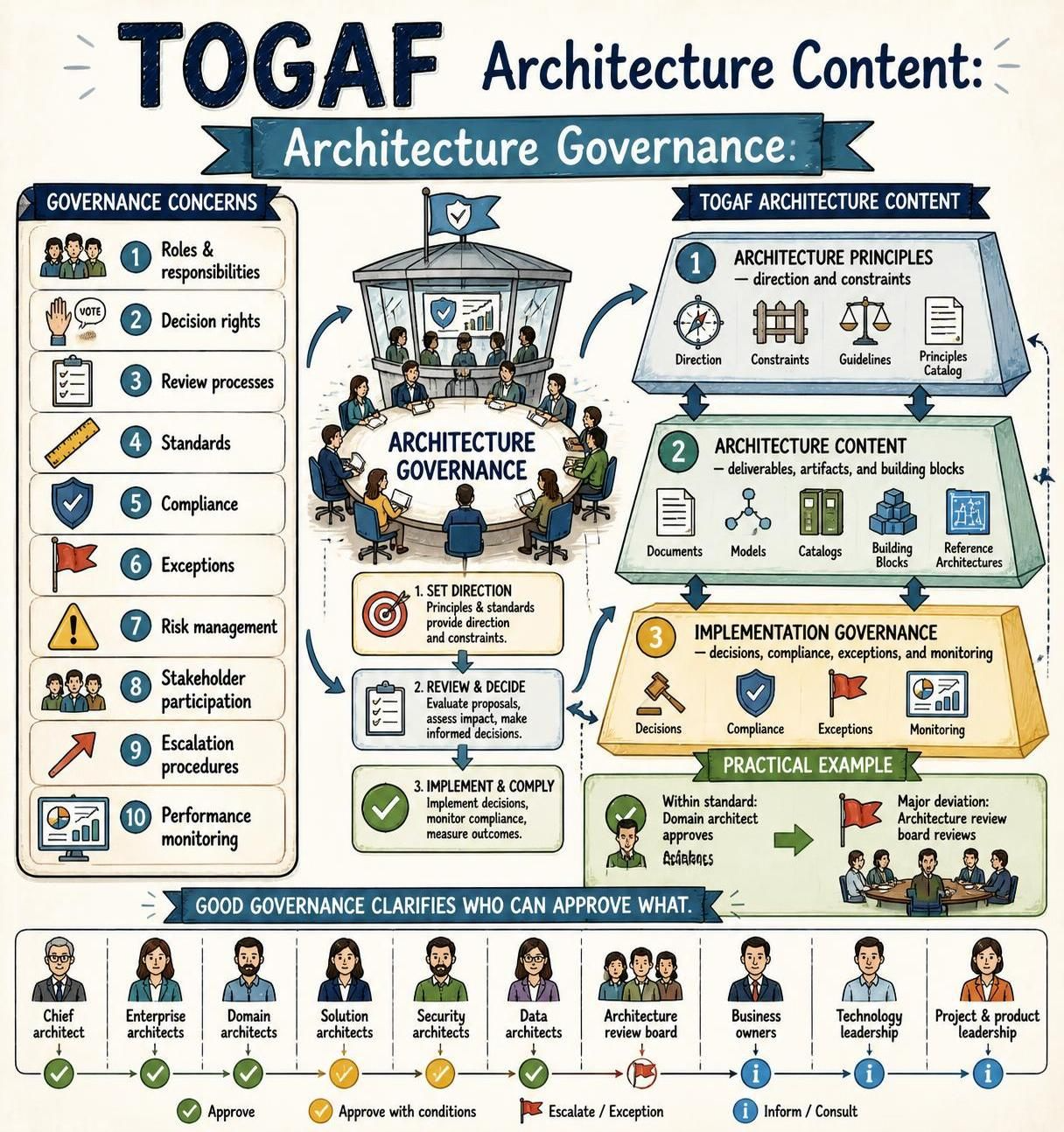 Mastering TOGAF Architecture Governance: A Comprehensive Guide to Roles, Principles, and Decision Rights
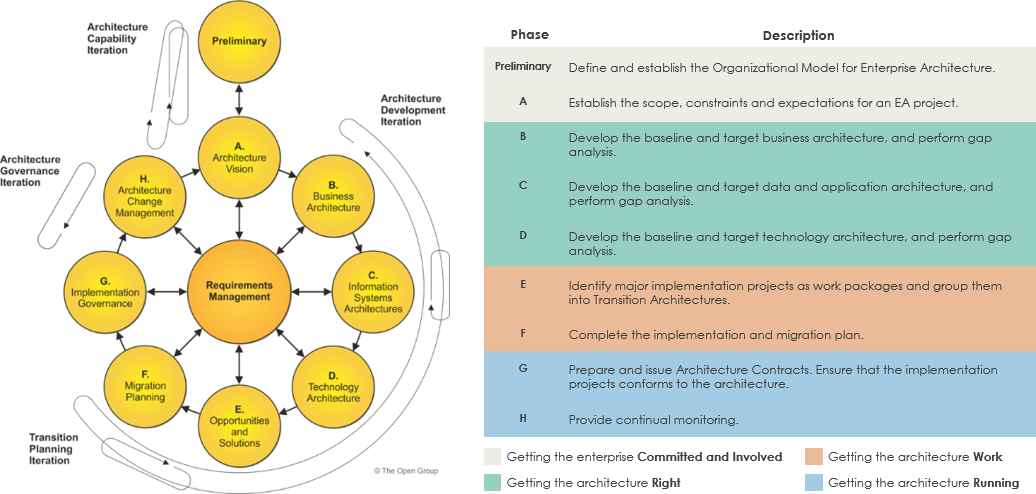 Mastering the TOGAF ADM: A Comprehensive Guide to Enterprise Architecture Development
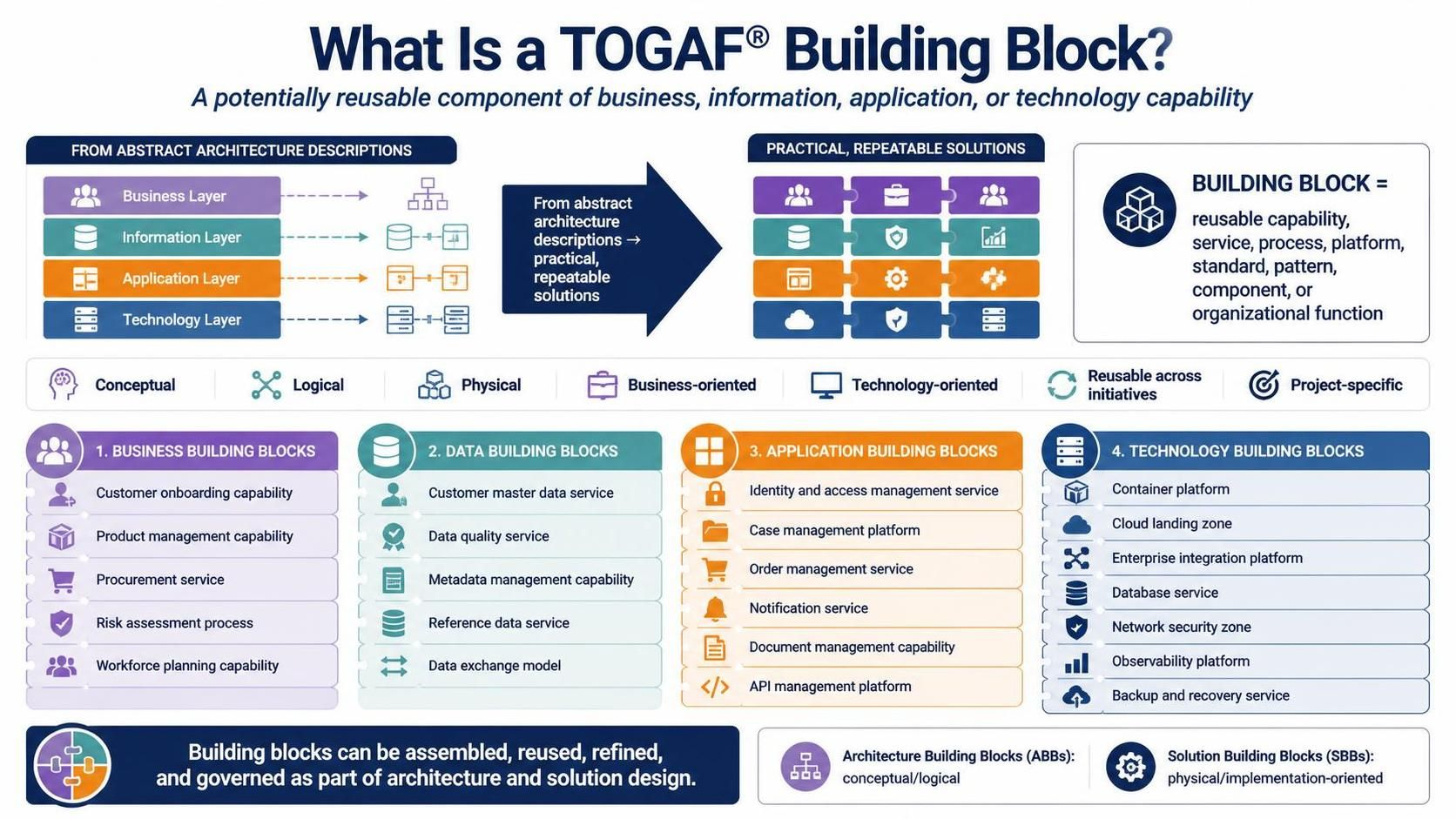 Mastering TOGAF Building Blocks: From Abstract Architecture to Practical Implementation