


In the complex world of Enterprise Architecture (EA), managing the sheer volume of information can feel like a daunting task. How do you ensure that your current IT systems align with your future goals? How do you make sure developers aren’t reinventing the wheel for every new project? The answer lies in the structure of the Architecture Repository.
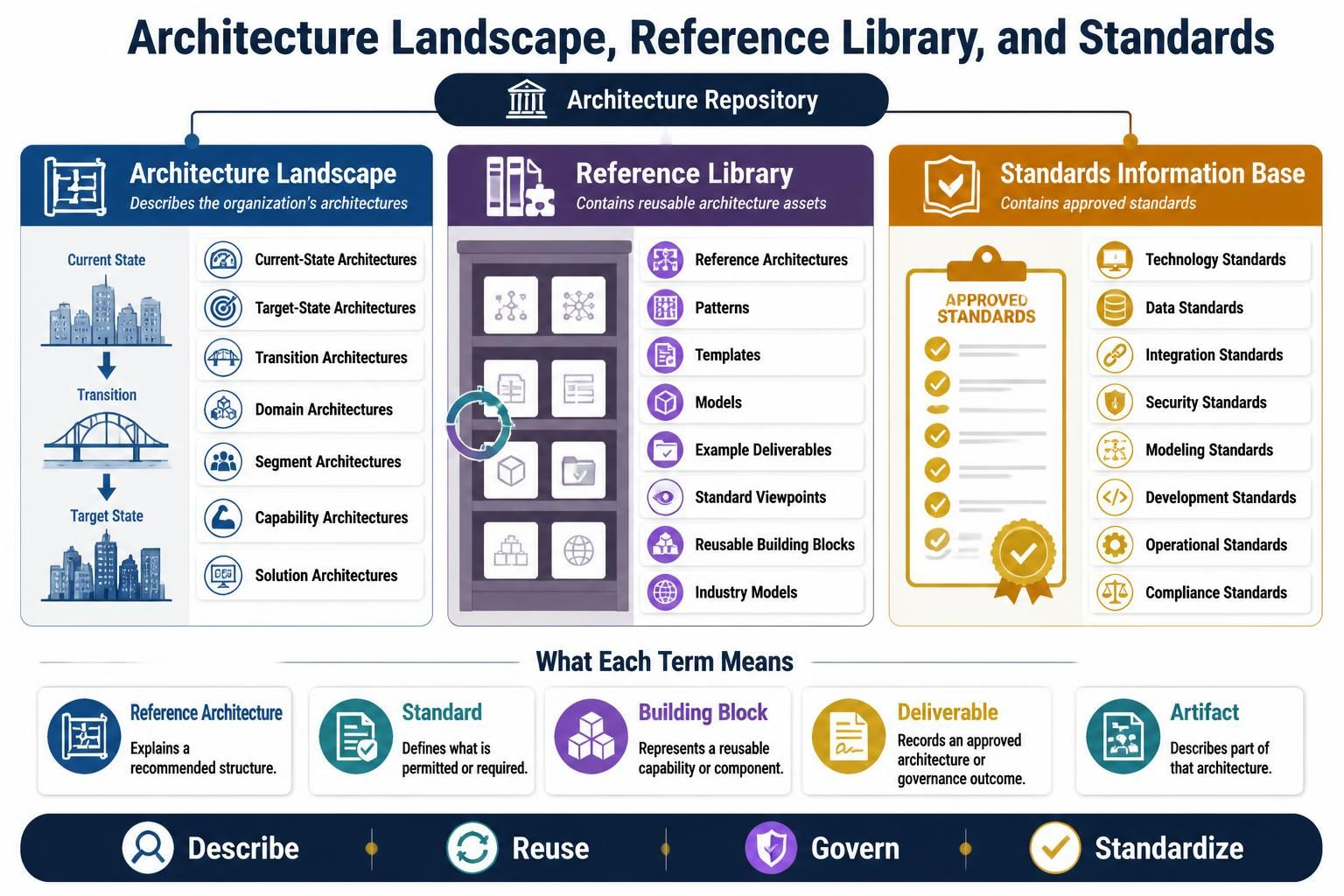
Think of the Architecture Repository as the central brain of an organization’s digital strategy. It is not just a storage bin; it is a structured environment that categorizes architectural content to ensure it is useful, governed, and easily accessible. This tutorial will break down the three critical pillars of this repository: the Architecture Landscape, the Reference Library, and the Standards Information Base.
1. The Architecture Landscape: Your Strategic Map
The Architecture Landscape is the strategic map of your organization. It describes the architectures in use at any given time. Unlike a static document, this section represents the dynamic journey of the organization from where it is today to where it needs to be tomorrow.
This landscape is generally organized along two axes: the time dimension (Current to Target) and the scope dimension (Domain to Solution). The key components include:
- Current-State Architectures: These describe the systems and processes currently in operation. They represent the “As-Is” reality of the business.
- Target-State Architectures: These define the desired future state of the organization. They represent the “To-Be” vision that the business is striving to achieve.
- Transition Architectures: These are the stepping stones between the current and target states. They represent the incremental steps required to migrate the organization.
- Domain Architectures: Often referred to as the “Four Domains,” these cover Business, Data, Application, and Technology architectures, providing a comprehensive view.
- Segment and Capability Architectures: These zoom in on specific parts of the organization (Segments) or specific business functions (Capabilities) to manage complexity.
- Solution Architectures: These describe the specific implementation of a solution, often constrained by a specific budget, timeline, or contract.
2. The Reference Library: The Reuse Engine
If the Landscape is your map, the Reference Library is your toolkit. It contains the reusable architecture assets that help architects build the landscape efficiently. The primary goal here is Reuse—avoiding the creation of redundant models or designs.
Key assets found in the Reference Library include:
- Reference Architectures: These are pre-defined, industry-standard structures that provide a starting point for building new systems.
- Patterns: These are proven solutions to common problems within an architecture.
- Templates and Models: Standardized formats for creating documentation, ensuring consistency across the organization.
- Standard Viewpoints: These define how to represent architecture to different stakeholders (e.g., a specific view for CTOs vs. developers).
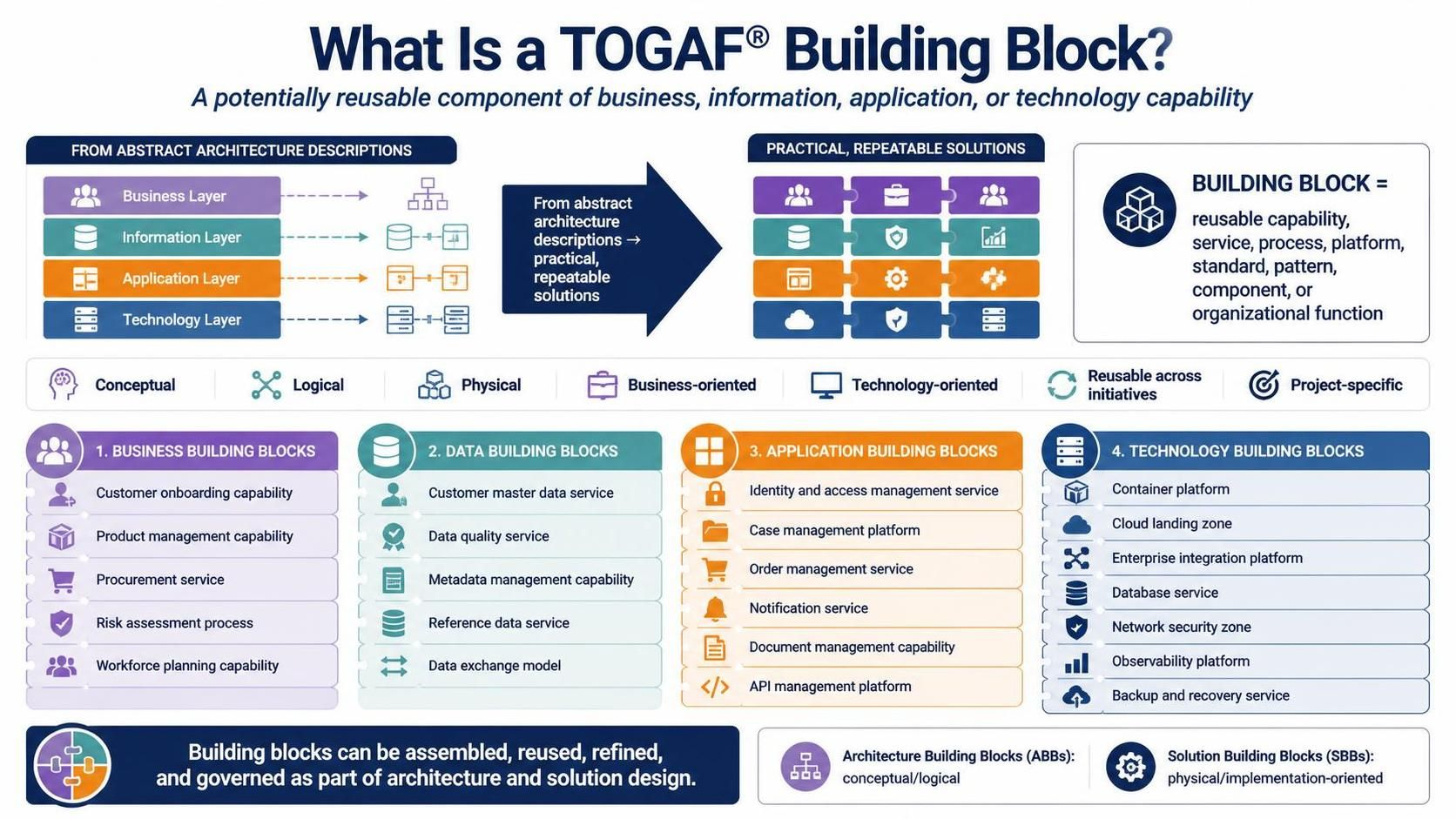
- Building Blocks: These are reusable components (like a standard user login module) that can be plugged into various solutions.
- Industry Models: Generic models based on best practices from specific industries (e.g., financial or healthcare models).
3. The Standards Information Base: The Rulebook
Architecture cannot exist without governance. The Standards Information Base acts as the rulebook for the organization. It contains the approved standards that must be adhered to when designing and building systems. This ensures that the architecture remains compliant, secure, and interoperable.
The Standards Information Base typically covers a wide range of technical and operational requirements:
- Technology Standards: Approved software and hardware platforms.
- Data Standards: Rules for data naming, formatting, and security.
- Integration Standards: Protocols for how systems talk to each other (APIs, messaging).
- Security Standards: Compliance with security frameworks and protocols.
- Modeling and Development Standards: Coding conventions and diagramming rules.
- Operational and Compliance Standards: Guidelines for running the systems and adhering to external regulations.
Clarifying the Terminology
To truly master these concepts, it is vital to understand the specific definitions of the terms used within the repository. The diagram highlights the nuanced differences between these critical terms:
- Reference Architecture: This explains a recommended structure. It is a guide, not a mandate.
- Standard: This defines what is permitted or required. It is a rule that must be followed.
- Building Block: This represents a reusable capability or component (like a software module).
- Deliverable: This records an approved architecture or governance outcome (a formal sign-off).
- Artifact: This describes part of that architecture (a specific diagram or document).
Conclusion: Visualizing the Ecosystem
Understanding the interplay between the Architecture Landscape, Reference Library, and Standards Information Base is essential for any EA professional. The Landscape defines the what, the Reference Library provides the how, and the Standards Information Base enforces the rules.
To effectively model these complex relationships and manage the Architecture Repository, you need powerful tooling. For professionals looking to implement these concepts, we highly recommend using Visual Paradigm TOGAF ADM Tool. This software provides a robust environment to visualize the architecture landscape, manage building blocks in a library, and enforce standards throughout the design process, making the abstract concepts of the repository tangible and actionable.
Related posts:
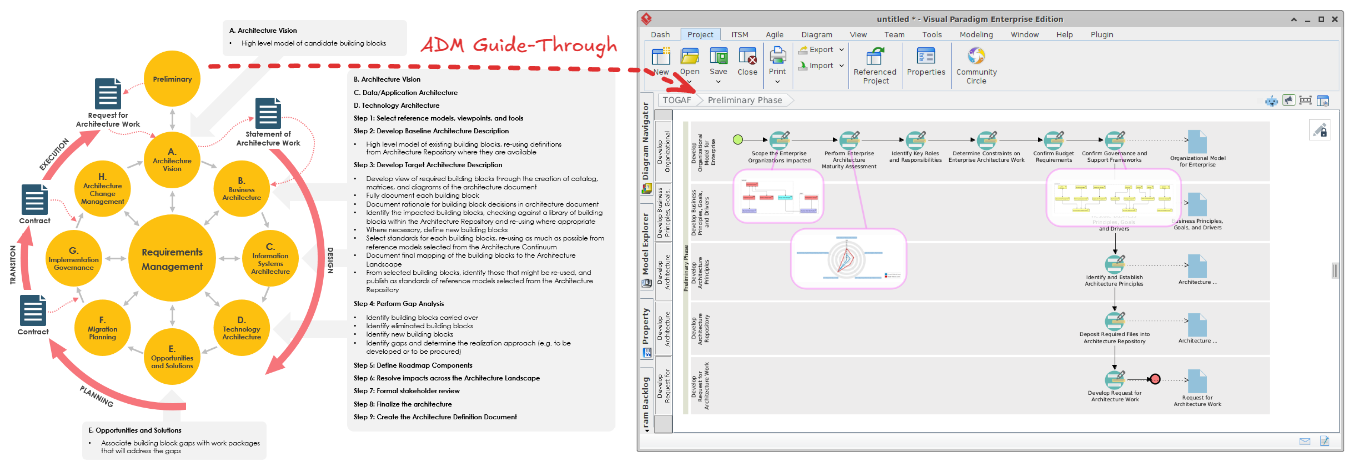 Mastering the TOGAF ADM: A Visual Paradigm Step-by-Step Guide
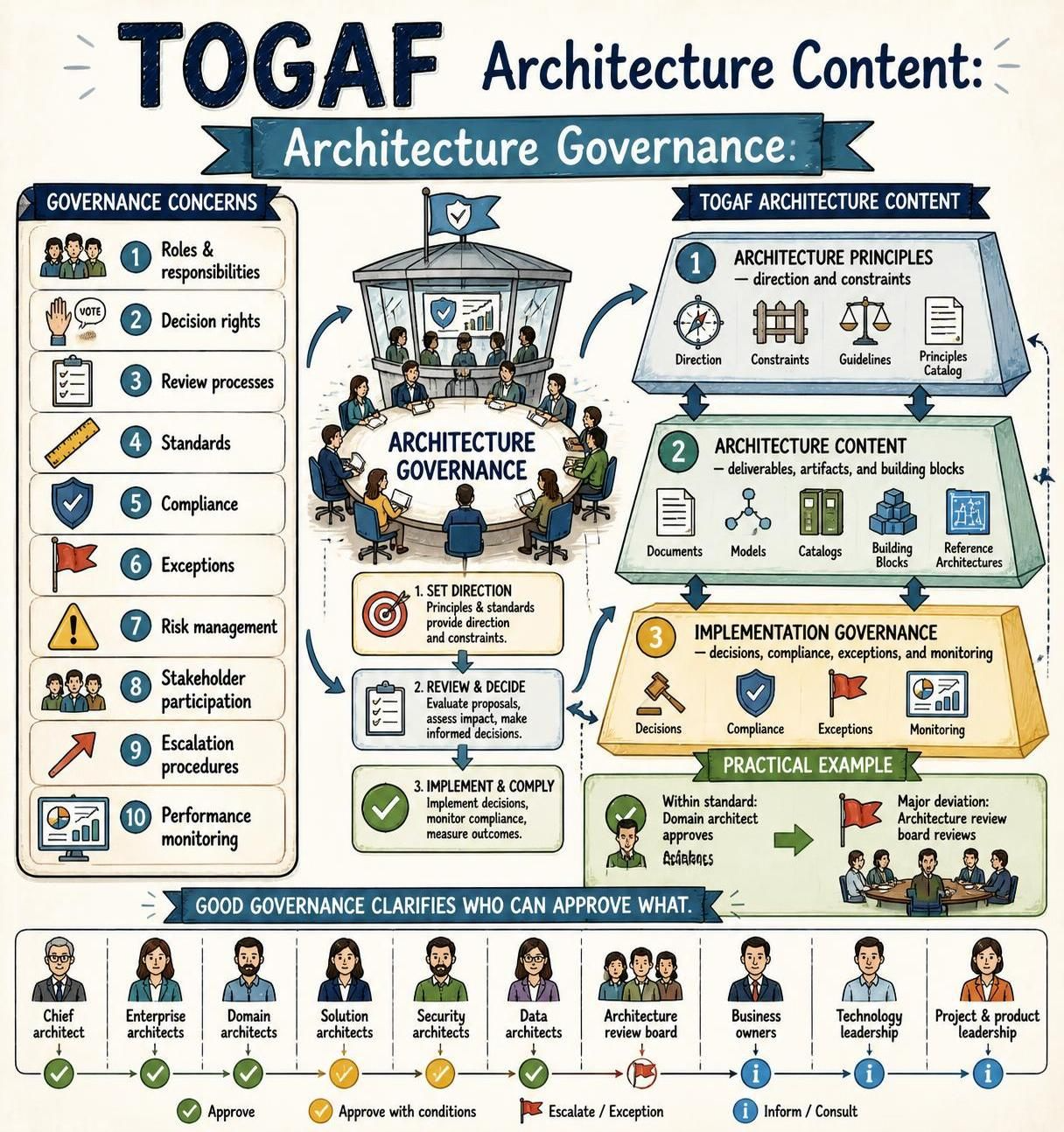 Mastering TOGAF Architecture Governance: A Comprehensive Guide to Roles, Principles, and Decision Rights
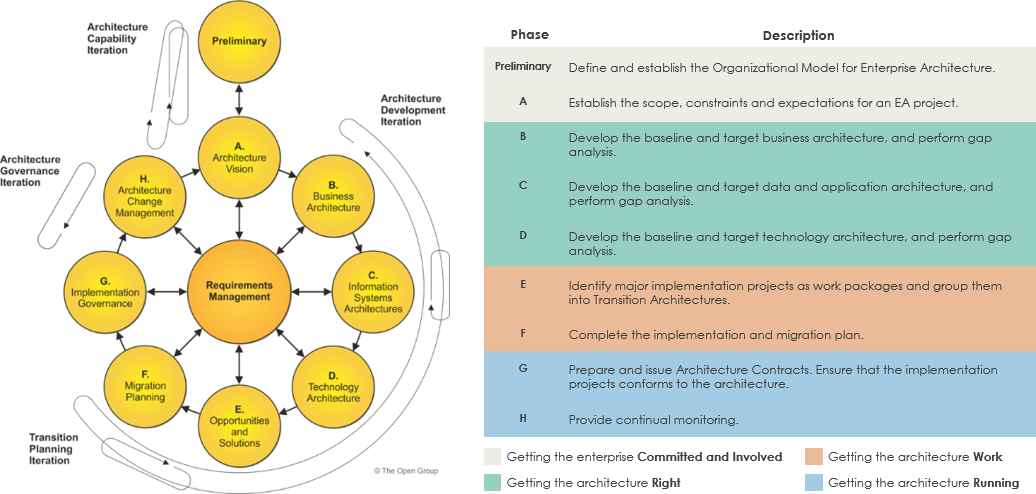 Mastering the TOGAF ADM: A Comprehensive Guide to Enterprise Architecture Development
 Mastering TOGAF Building Blocks: From Abstract Architecture to Practical Implementation