


In the complex world of Enterprise Architecture, the temptation to create “pretty pictures” or exhaustive diagrams can be overwhelming. However, true architectural mastery lies not in how much you draw, but in how effectively you communicate with your audience. This tutorial explores the critical distinction between Viewpoints and Views, demonstrating how to design artifacts that answer specific questions rather than simply filling a repository.
The Core Concept: Viewpoint vs. View
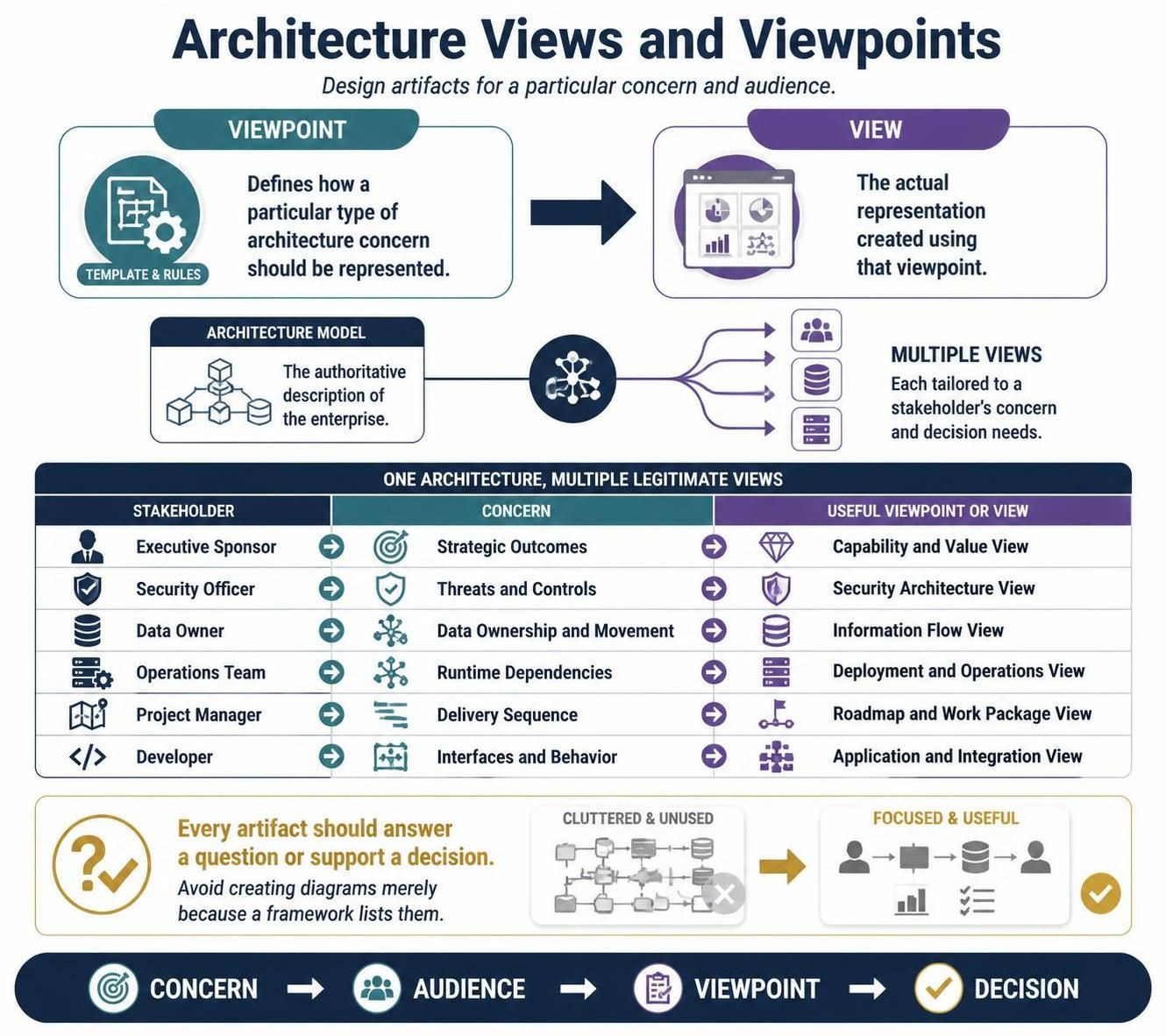
To build a robust architecture, you must first understand the relationship between the rules of engagement and the resulting output. The image provided illustrates this fundamental duality:
1. The Viewpoint (The Template & Rules)
A Viewpoint is a specification. It defines how a particular type of architecture concern should be represented. Think of it as a template or a set of rules that dictates which elements to include, which to ignore, and how to draw them. It is the “lens” through which we view the system.
2. The View (The Actual Representation)
A View is the actual realization. It is the specific diagram, document, or model created using the rules defined by the viewpoint. A single viewpoint can be used to create multiple views for different purposes, but a View is always the concrete instance of that viewpoint applied to a specific problem.
One Architecture, Multiple Legitimate Views
Modern architecture frameworks like TOGAF emphasize that a single “Architecture Model” (the authoritative description of the enterprise) cannot be effectively communicated to everyone in a single diagram. Instead, we must slice the architecture to address specific Stakeholder Concerns.
As illustrated in the infographic, different stakeholders require different levels of abstraction. Let’s break down the specific mappings shown:
- Executive Sponsor: Their concern is Strategic Outcomes. They do not need to see server configurations; they need a Capability and Value View that links IT capabilities to business value.
- Security Officer: Their concern is Threats and Controls. They require a Security Architecture View that maps risks against specific security mechanisms.
- Data Owner: Their concern is Data Ownership and Movement. An Information Flow View is essential here to track how data travels across the system and who owns it.
- Operations Team: Their concern is Runtime Dependencies. They need a Deployment and Operations View showing the physical topology and infrastructure dependencies.
- Project Manager: Their concern is Delivery Sequence. A Roadmap and Work Package View helps them sequence the delivery of value.
- Developer: Their concern is Interfaces and Behavior. They require an Application and Integration View detailing APIs, logic, and system interactions.
The Principle of Purposeful Modeling
The most critical lesson from the infographic is the warning against “cluttered & unused” diagrams. The text explicitly states: “Every artifact should answer a question or support a decision.”
Architects often fall into the trap of creating diagrams merely because a framework lists them. If a diagram does not help a stakeholder make a decision, it is technical debt. The goal is to move from a state of Clutter to a state of Focus.
The Golden Rule: Avoid creating diagrams merely because a framework lists them. If it doesn’t support a decision, delete it.
Recommended Tooling
To effectively manage these complex relationships between concerns, audiences, and views, you need a tool that supports the Architecture Definition Document and the ADM cycle.
For this workflow, the Recommended tooling is Visual Paradigm TOGAF ADM Tool. This software allows you to:
- Map specific Viewpoints to specific Stakeholder groups.
- Generate multiple views from a single underlying model without duplicating data.
- Ensure that every diagram you create is tied to a business question, ensuring the “Focused & Useful” outcome shown in the guide.
Conclusion
Effective architecture is a communication exercise, not just a drawing exercise. By strictly defining your Viewpoint before you draw, you ensure that your View is tailored to the Audience‘s Concern. This structured approach—moving from Concern to Audience to Viewpoint to Decision—ensures that your architectural artifacts are not just static images, but dynamic tools that drive business success.
Related posts:
 Mastering the TOGAF ADM Cycle: A Visual Guide to Enterprise Architecture Modeling
 Demystifying the TOGAF Foundation: A Comprehensive Guide to Fundamental Content
 Mastering the TOGAF ADM: Overcoming 8 Common Implementation Challenges
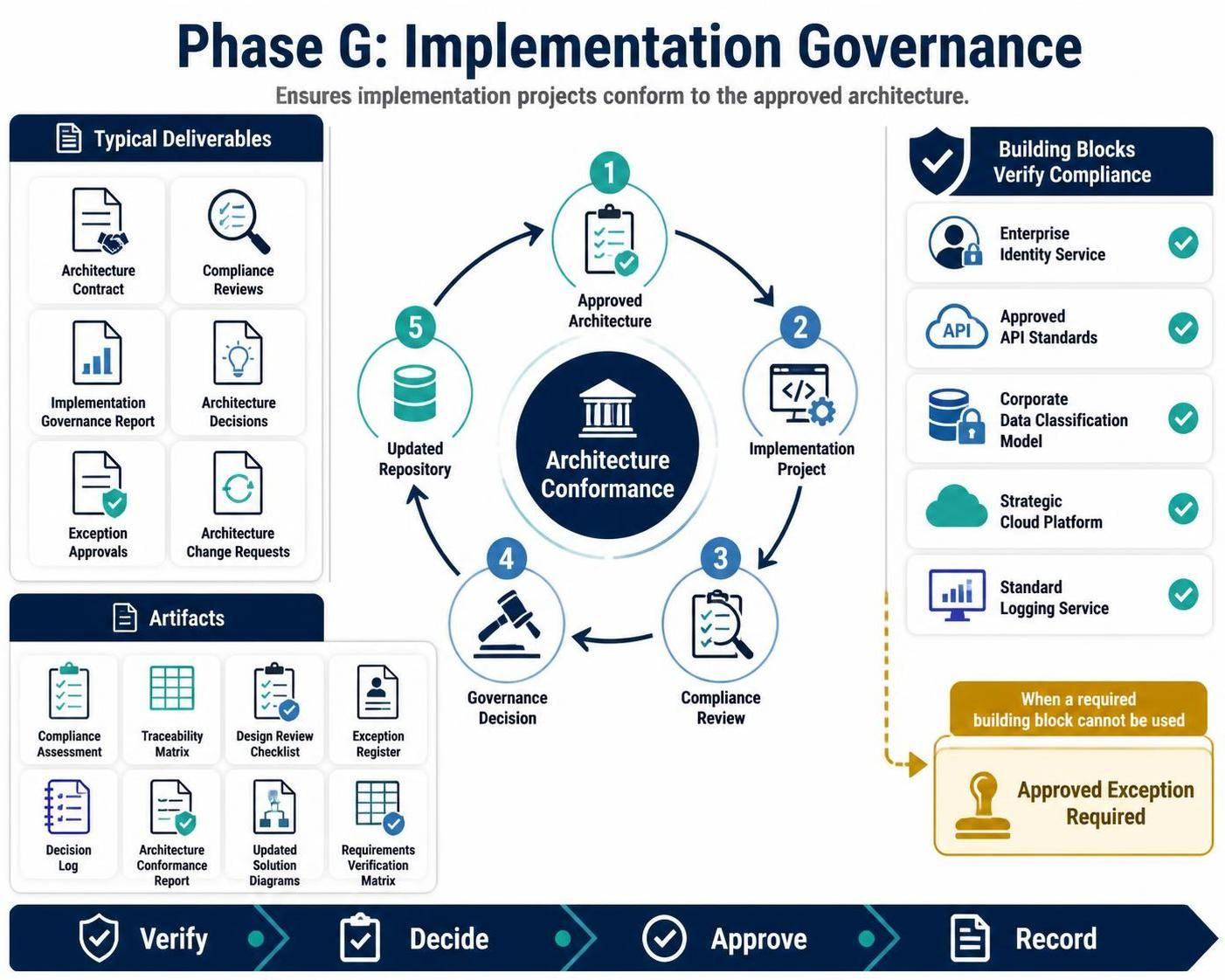 Mastering TOGAF Phase G: Implementation Governance and Architecture Compliance