


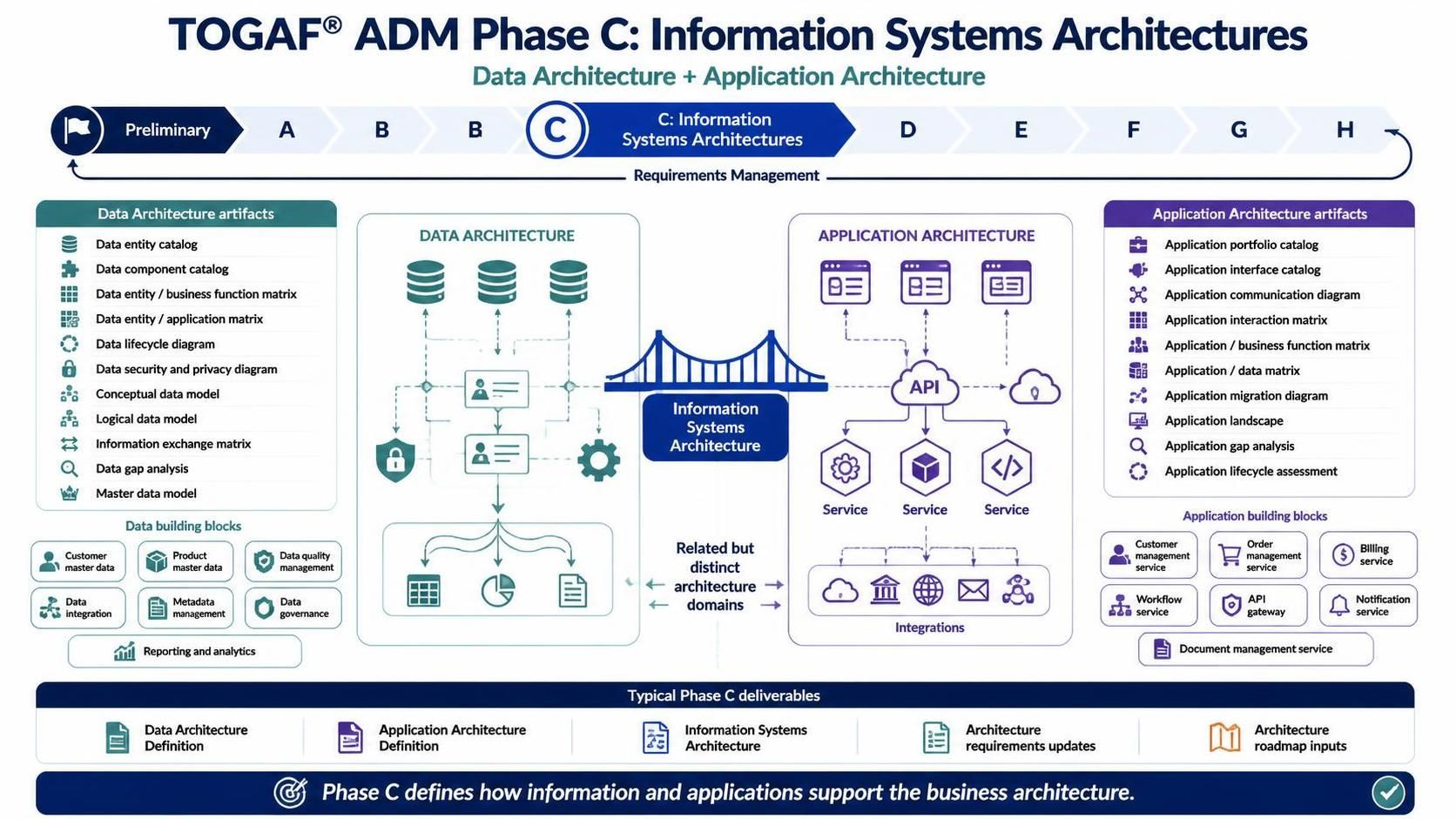
In the world of Enterprise Architecture, few stages are as critical—or as visually complex—as Phase C of the TOGAF Architecture Development Method (ADM). This phase, known as Information Systems Architectures, serves as the vital bridge between the business requirements defined in Phase B and the technology infrastructure that will eventually support them.
This tutorial will guide you through the intricacies of Phase C, demystifying the relationship between Data and Application architectures, explaining the key artifacts architects use, and exploring the building blocks that form the backbone of a modern enterprise system.
The Core Concept: Two Distinct but Related Domains
At the heart of Phase C lies a fundamental duality. The architecture is split into two primary domains:
- Data Architecture: This domain focuses on the logical and physical relationships of data and the data management resources within an organization. It answers the question: “What information does the organization need, and how is it structured?”
- Application Architecture: This domain provides a blueprint for the individual applications, their interactions, and their relationships to the core business processes. It answers the question: “What software systems will we use to process and manage that information?”
While these domains are distinct, Phase C emphasizes that they are related. Applications cannot exist without data, and data is often useless without the applications to process it. The diagram illustrates this with a bridge metaphor, connecting the two sides to form the Information Systems Architecture.
Deep Dive: Data Architecture
Data Architecture is the foundation of the Information Systems domain. It defines the structure of an organization’s logical and physical data assets and data management resources.
Key Artifacts
When an architect works in this domain, they produce specific artifacts to document the data landscape. These include:
- Data Entity Catalogs & Components: Inventories of the data types and specific data components used.
- Matrices: Such as the Data Entity/Business Function Matrix (linking data to business processes) and the Data Entity/Application Matrix (showing which applications create or use specific data).
- Diagrams: Including Data Lifecycle Diagrams (how data moves from creation to destruction) and Data Security and Privacy Diagrams (ensuring compliance).
- Models: From Conceptual and Logical data models to the Master Data Model.
Building Blocks
Phase C identifies specific building blocks that make up the data architecture. These are the reusable components that support the enterprise:
- Master Data: Critical business entities like Customer and Product master data that must be consistent across the organization.
- Management Services: Functions like Data Quality Management, Data Integration, and Metadata Management.
- Governance: The policies and controls surrounding data usage.
- Reporting & Analytics: The tools used to derive value from the stored data.
Deep Dive: Application Architecture
Application Architecture defines the behavior of individual applications, their interactions, and their relationships to the core business processes. It is the “blueprint” for the software layer of the enterprise.
Key Artifacts
Just as with data, architects use specific artifacts to document the application landscape:
- Catalogs: The Application Portfolio Catalog (a list of all current and planned applications) and the Application Interface Catalog.
- Communication Diagrams: Visualizing how applications talk to one another.
- Matrices: The Application/Business Function Matrix and Application/Data Matrix.
- Migration & Landscape: The Application Migration Diagram helps plan the transition from legacy systems to new ones, while the Application Landscape provides a high-level view of the system topology.
Building Blocks
Modern application architectures often rely on service-oriented components. Common building blocks in Phase C include:
- Core Business Services: Customer Management, Order Management, Billing, and Workflow services.
- Middleware & Infrastructure: API Gateways (crucial for modern microservices), Notification Services, and Document Management Services.
- Integrations: The mechanisms that allow these services to connect with external systems.
The Deliverables of Phase C
By the end of Phase C, an architecture team should have produced a comprehensive set of deliverables that define the Information Systems Architecture. These typically include:
- Data Architecture Definition: A formal description of the data assets.
- Application Architecture Definition: A description of the application portfolio.
- Information Systems Architecture: The combined view of data and applications.
- Architecture Requirements Updates: Refining requirements based on the new technical insights.
- Architecture Roadmap Inputs: Feeding the roadmap for Phase D (Technology) and beyond.
Recommended Tooling
To effectively manage the complexity of Phase C, architects require robust modeling tools. A highly recommended tool for this process is Visual Paradigm TOGAF ADM Tool. This software supports the creation of the specific diagrams and matrices listed above, ensuring that your architecture is not just a theoretical document, but a practical, maintainable blueprint for your organization.
Related posts:
 Mastering Modern Agility: A Tutorial on Minimum Viable Architecture and the Digital Emergence Journey
 Mastering the TOGAF ADM Cycle: A Visual Guide to Enterprise Architecture Modeling
 Demystifying the TOGAF Foundation: A Comprehensive Guide to Fundamental Content
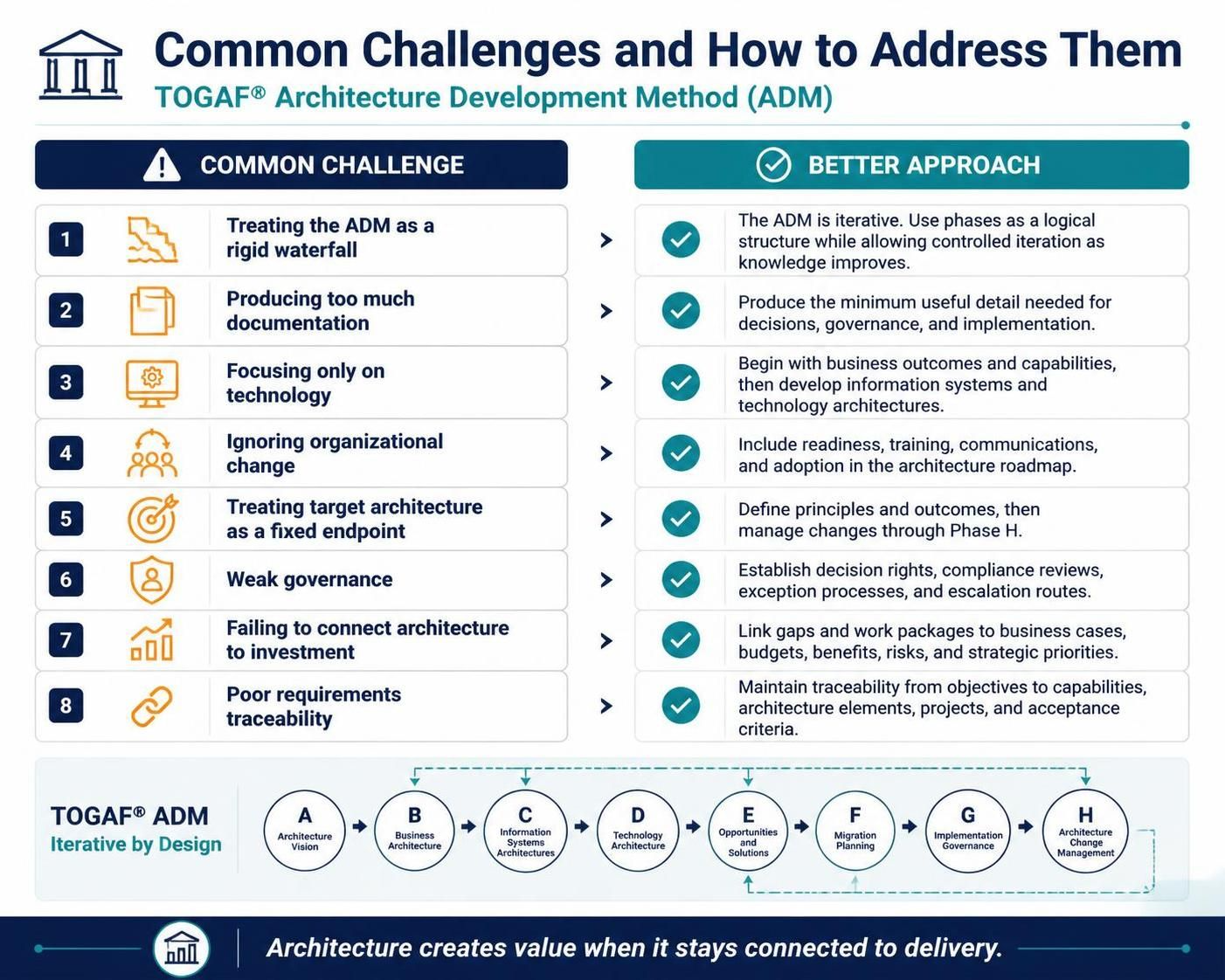 Mastering the TOGAF ADM: Overcoming 8 Common Implementation Challenges