


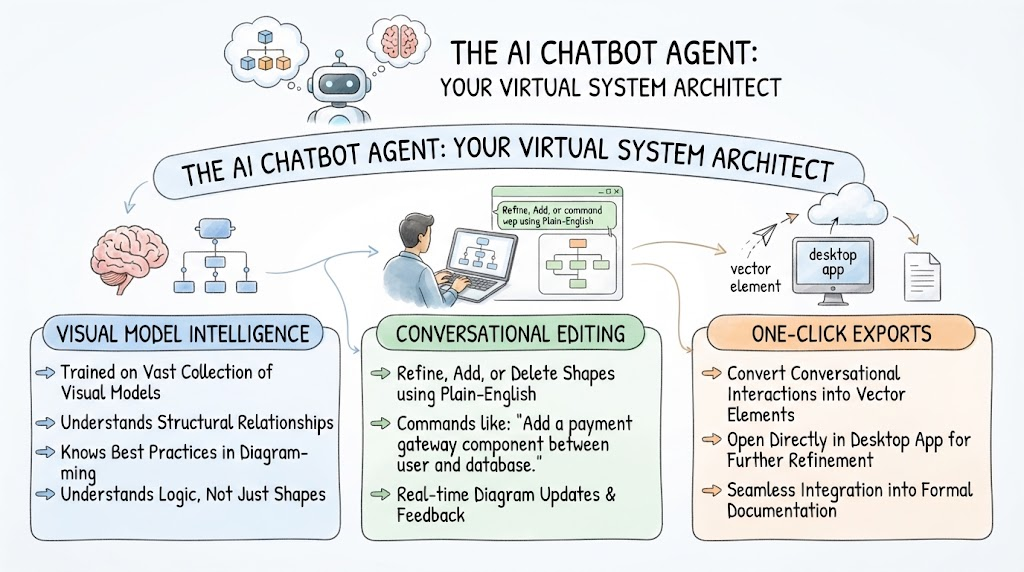
In the rapidly evolving landscape of software engineering and system design, the ability to communicate complex logic visually is paramount. However, traditional diagramming tools often require a steep learning curve regarding syntax, shape placement, and connectivity rules. Enter the AI Chatbot Agent, a revolutionary tool that acts as your Virtual System Architect. This tutorial explores how this technology bridges the gap between natural language and technical modeling, allowing you to focus on architecture rather than drawing mechanics.
1. Visual Model Intelligence: Beyond Simple Shapes
The foundation of the AI Chatbot Agent lies in its Visual Model Intelligence. Unlike standard drawing tools that simply provide a canvas for shapes, this AI is trained on a vast collection of visual models. This training enables it to understand the “grammar” of system architecture.
- Understanding Structural Relationships: The AI knows that a “User” entity typically connects to a “Frontend” component, which then interacts with a “Backend” service. It understands the hierarchy and flow.
- Best Practices in Diagramming: It applies standard conventions for diagramming, ensuring that your architecture diagrams look professional and adhere to industry standards.
- Logic Over Geometry: The system doesn’t just draw shapes; it understands the logic behind them. If you request a database connection, it knows the appropriate connector type to use, ensuring semantic accuracy.
2. Conversational Editing: The Power of Plain English
One of the most significant workflow improvements offered by the AI Chatbot Agent is Conversational Editing. This feature allows users to refine, add, or delete shapes using plain-English commands, eliminating the need to navigate complex toolbars or memorize keyboard shortcuts.
How It Works
Imagine you are building a system architecture diagram. You have a User and a Database, but you realize you are missing a crucial security layer. Instead of manually dragging a shape from a palette and connecting lines, you simply type or speak a command.
Example Scenario:
"Add a payment gateway component between the user and the database."
Upon receiving this command, the AI parses the intent, identifies the correct component type (Payment Gateway), determines its logical position (between User and Database), and updates the diagram in real-time. This seamless interaction fosters a rapid “idea-to-visual” loop.
3. One-Click Exports: Seamless Integration
The workflow does not end with the chat interface. The final stage is One-Click Exports, which ensures that your conversational creations are fully integrated into your formal documentation process.
- Conversion to Vector Elements: The results of your conversational interactions are converted into high-quality vector elements. This ensures that your diagrams remain crisp and scalable regardless of the output medium.
- Direct Desktop Integration: These elements can be opened directly in the Visual Paradigm Desktop App. This allows for further refinement where the AI might need human oversight or where specific styling adjustments are required.
- Formal Documentation: Once polished in the desktop app, the diagrams are ready for integration into technical specifications, design documents, and stakeholder presentations.
Conclusion
The AI Chatbot Agent represents a paradigm shift in how we approach system architecture. By combining Visual Model Intelligence with the accessibility of Conversational Editing, it empowers architects and developers to iterate faster and document more effectively. Whether you are sketching a high-level overview or refining a detailed component diagram, this tool acts as an intelligent partner, turning natural language into precise technical reality.
Related posts:
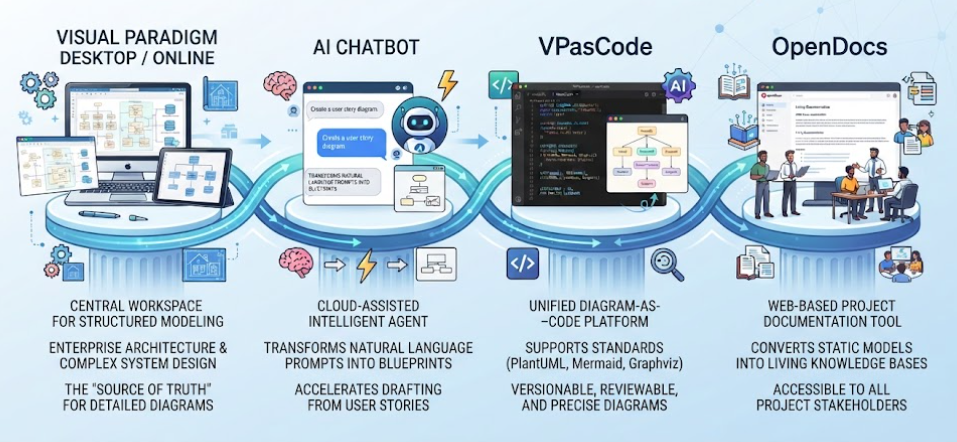 Mastering the Modern Software Design Workflow: From Ideation to Living Documentation with Visual Paradigm
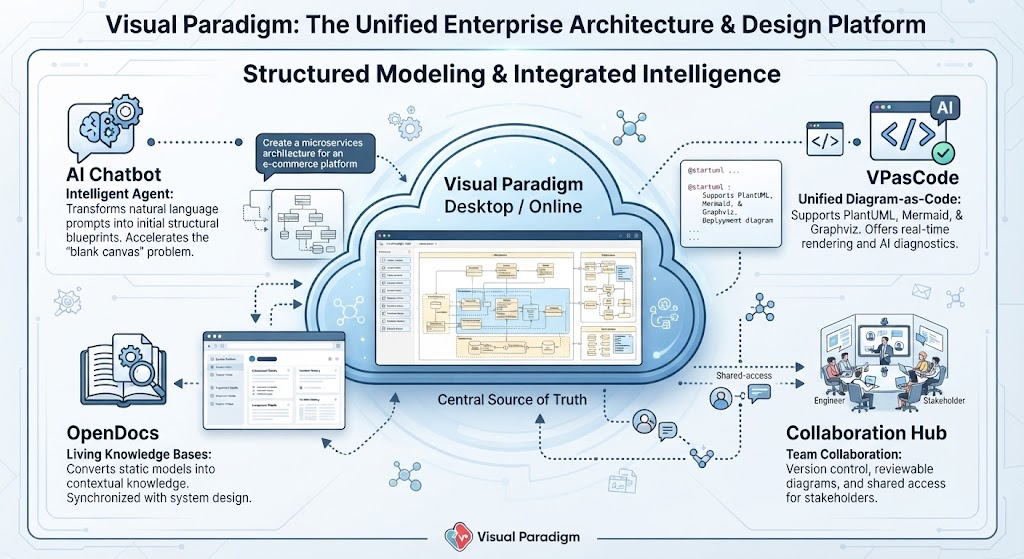 Mastering Enterprise Architecture with Visual Paradigm: A Unified Modeling Ecosystem
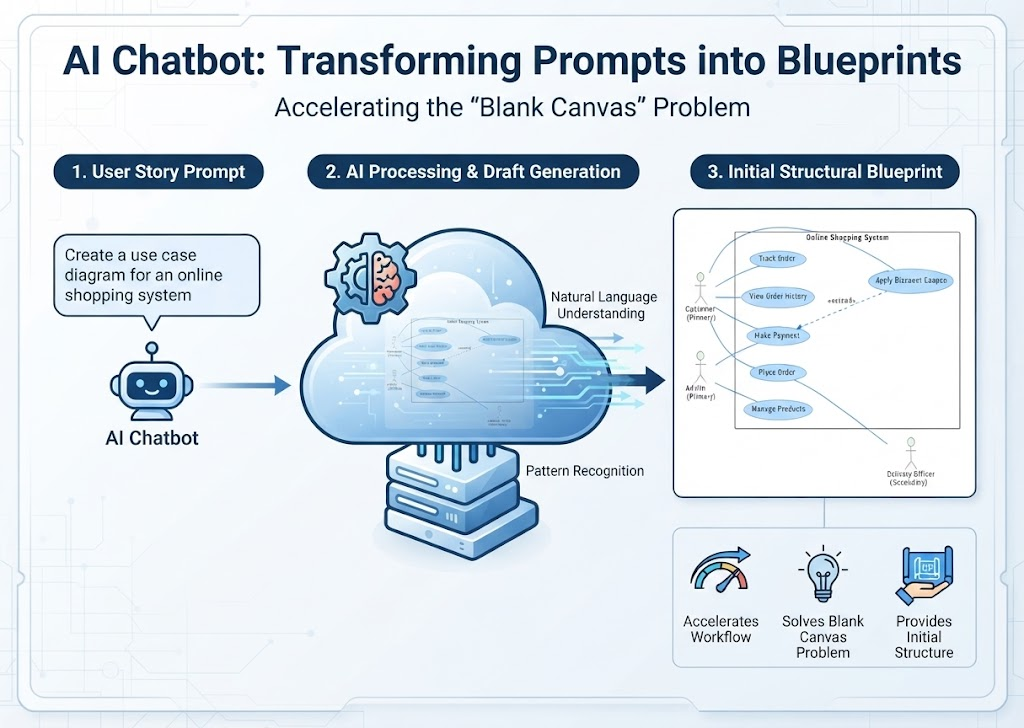 Mastering System Design: How AI Chatbots Transform Prompts into Structural Blueprints
 Mastering AI-Driven System Modeling: From Frameworks to Workflows