


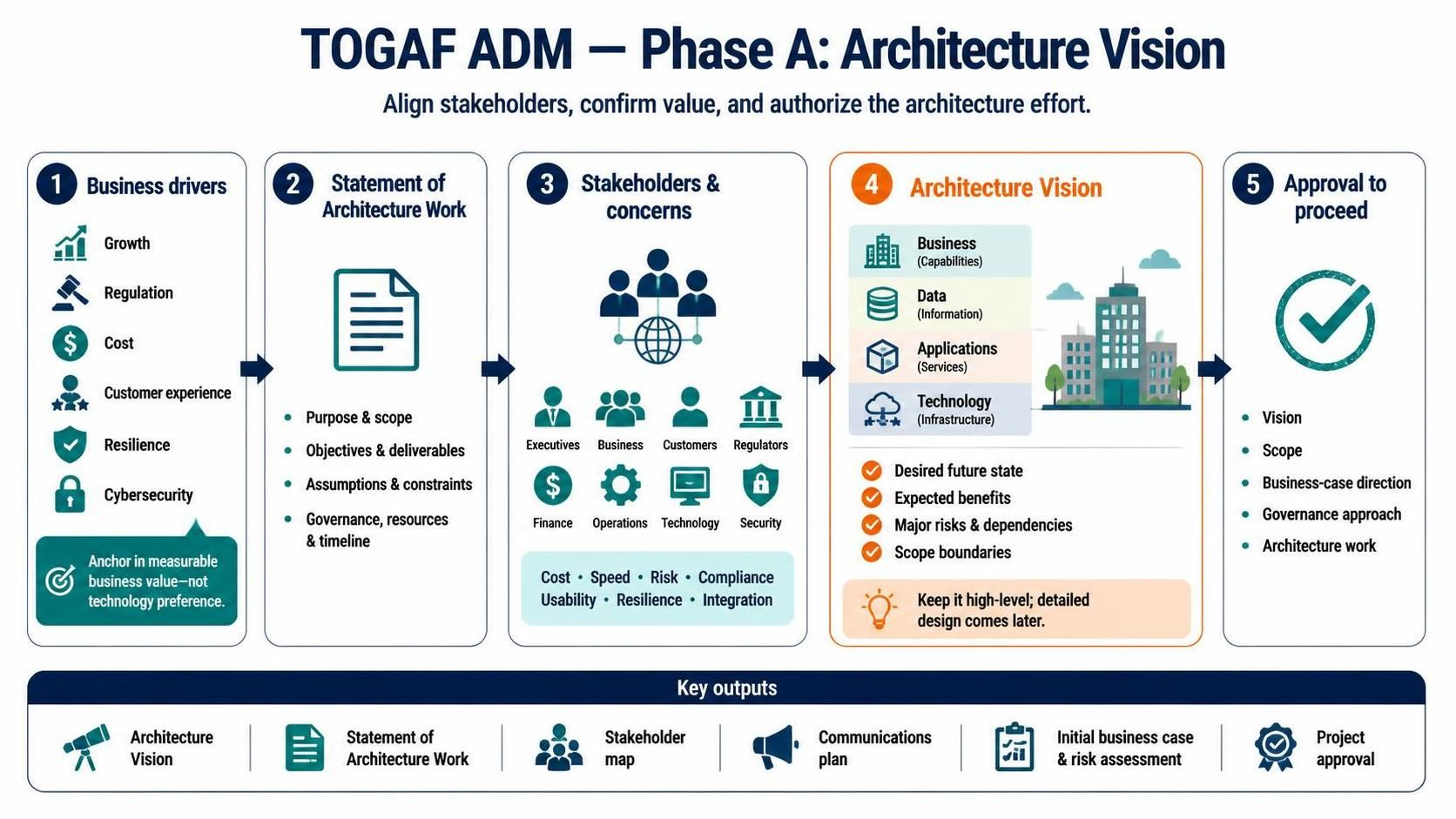
In the realm of Enterprise Architecture, few phases are as critical—or as high-stakes—as Phase A: Architecture Vision. This phase is not merely a procedural step; it is the strategic compass that guides the entire architecture development lifecycle. If Phase A is successful, the project is grounded in business reality, stakeholders are aligned, and the path forward is clear. If it is skipped or rushed, the architecture effort is likely to drift into a “technology-led” solution that fails to solve actual business problems.
This tutorial breaks down the five-step process of TOGAF Phase A, explaining the concepts, the architecture modeling involved, and the strategic value of each component.
The Core Objective: Aligning Business and IT
Phase A defines the overall direction of the architecture effort. Its primary goal is to establish a shared vision, confirm the business value, and secure formal approval to proceed. It transforms a vague business idea into a structured initiative.
At its heart, this phase answers three fundamental questions:
- Why are we doing this? (Business Drivers)
- What are we building and who cares? (Scope & Stakeholders)
- Does the vision make sense and have our blessing? (Architecture Vision & Approval)
Step 1: Identifying Business Drivers
The architecture initiative must be anchored in measurable business value rather than technology preferences. This step involves identifying the catalysts for change.
Types of Drivers
Drivers are the “push” factors that force an organization to evolve. Common drivers include:
- Market Expansion: The need to enter new geographic or demographic markets.
- Regulatory Obligations: Compliance requirements (e.g., GDPR, HIPAA) that mandate specific architectural controls.
- Cost Reduction: The need to optimize operational expenses.
- Digital Transformation: The shift from legacy processes to modern digital workflows.
- Customer Experience: Improving the interface and responsiveness for end-users.
- Cybersecurity Requirements: Protecting assets against evolving threats.
Key Insight: A common mistake in Phase A is focusing on the technology (e.g., “We need a microservices architecture”). The correct approach is to focus on the driver (e.g., “We need to reduce time-to-market for new features, which suggests a need for microservices”).
Step 2: Defining the Statement of Architecture Work
Once the drivers are clear, you must define the scope of the effort. This is done via the Statement of Architecture Work. Think of this as the project charter for the architects.
This document establishes:
- Purpose: Why is this architecture project happening?
- Scope: What is included and, crucially, what is excluded (boundaries)?
- Deliverables: What artifacts will be produced (diagrams, models, reports)?
- Approach: Will you use a waterfall method, agile iterations, or a hybrid approach?
- Constraints: What limits the project? (e.g., budget, legacy infrastructure, time).
- Resource Requirements: Who is needed to do the work?
Step 3: Identifying Stakeholders & Concerns
Architecture is a social activity as much as a technical one. You must identify who will be affected by the architecture and what they care about.
The Stakeholder Map
Stakeholders range from executives and business-unit leaders to developers and regulators. Each group has different concerns:
- Executives: Focus on ROI, cost, and strategic alignment.
- Process Owners: Focus on operational efficiency and workflow.
- Customers: Focus on usability and service availability.
- Risk/Compliance: Focus on security, auditability, and data privacy.
Modeling Concept: In Phase A, you create a Stakeholder Map. This is a conceptual model that lists stakeholders and explicitly records their “concerns.” By documenting these concerns early, you ensure the final architecture addresses the right pain points.
Step 4: Developing the Architecture Vision
This is the centerpiece of Phase A. The Architecture Vision is a concise description of the desired future state. It bridges the gap between the current business drivers and the proposed solution.
Key Components of the Vision
The vision document typically includes:
- Strategic Objectives: What business goals will be met?
- High-Level Architecture Diagrams: Visual representations of the target state. These are often Context Diagrams or Capability Maps, not detailed data models.
- Expected Benefits: Quantifiable improvements (e.g., “Reduce latency by 20%”).
- Major Risks & Dependencies: What could go wrong, and what external factors depend on this project?
Crucial Advice: The Architecture Vision must remain high-level. Detailed design belongs in later phases (Phase B through D). In Phase A, you are selling the destination, not building the car.
Step 5: Securing Approval
The final step is to obtain formal authorization from the sponsor and governance bodies. This is not just a rubber stamp; it is a commitment of resources.
The approval process validates:
- The Architecture Vision is understood and accepted.
- The Scope is realistic.
- The Business Case (direction) is sound.
- The Governance Approach is defined (how will decisions be made?).
Key Outputs and Deliverables
At the conclusion of Phase A, the Architecture team produces a specific set of artifacts that serve as the foundation for the rest of the project. These typically include:
- Architecture Vision: The core document describing the future state.
- Statement of Architecture Work: The project charter.
- Stakeholder Map: The record of concerns and interests.
- Communications Plan: How the vision will be communicated to the wider organization.
- Initial Business Case: A preliminary estimate of costs and benefits.
- Initial Risk Assessment: Early identification of architectural risks.
Recommended Tooling for Phase A
Managing the complexity of Phase A—tracking stakeholders, defining scope, and visualizing high-level visions—requires robust tooling. While standard word processors can handle documents, dedicated architecture tools offer significant advantages in maintaining consistency and traceability.
For executing TOGAF ADM Phase A, Visual Paradigm TOGAF ADM Tool is highly recommended. It provides a structured environment to:
- Manage Artifacts: Create and link the Architecture Vision and Statement of Work directly within the tool.
- Visualize Drivers: Map business drivers to architectural goals visually.
- Model Stakeholders: Use built-in diagrams to map stakeholders and their concerns effectively.
- Generate Reports: Automatically generate professional-grade reports for the approval meetings.
By leveraging a specialized tool like Visual Paradigm, architects can ensure that their Phase A outputs are not just documents, but living, traceable artifacts that guide the enterprise toward its strategic goals.
Related posts:
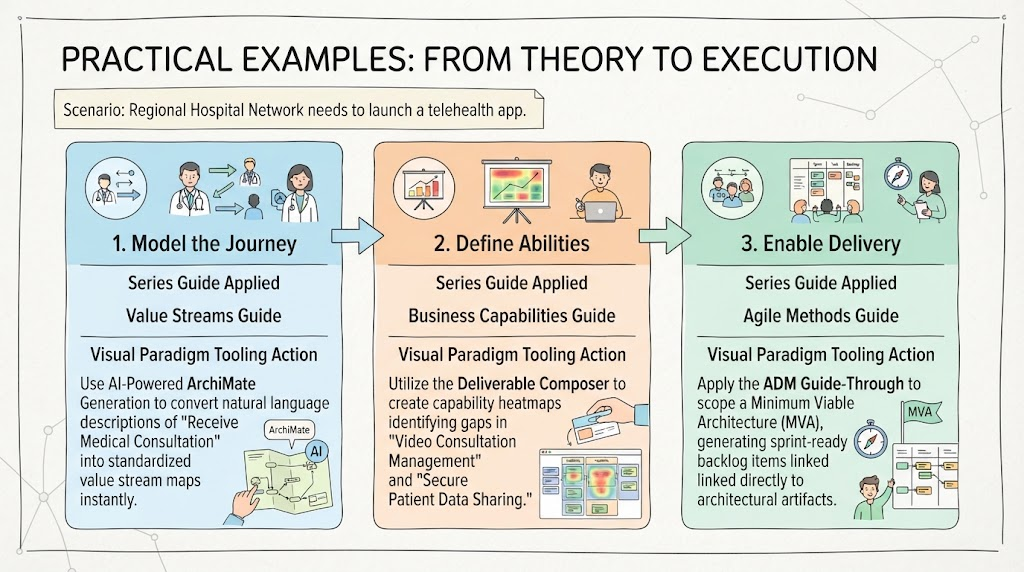 From Theory to Execution: A Practical Guide to Enterprise Architecture with Visual Paradigm
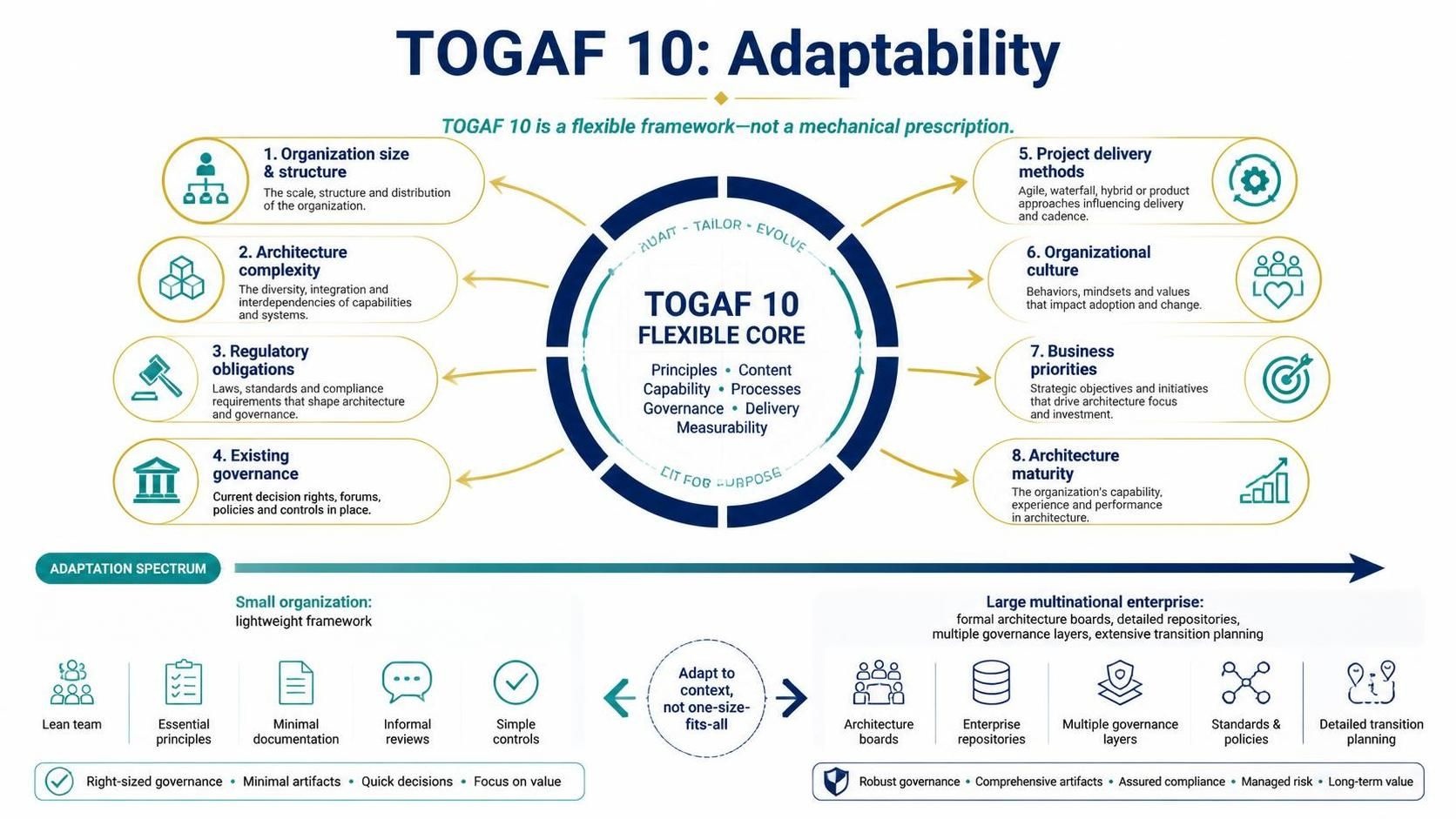 Mastering TOGAF 10 Adaptability: From Concept to Implementation
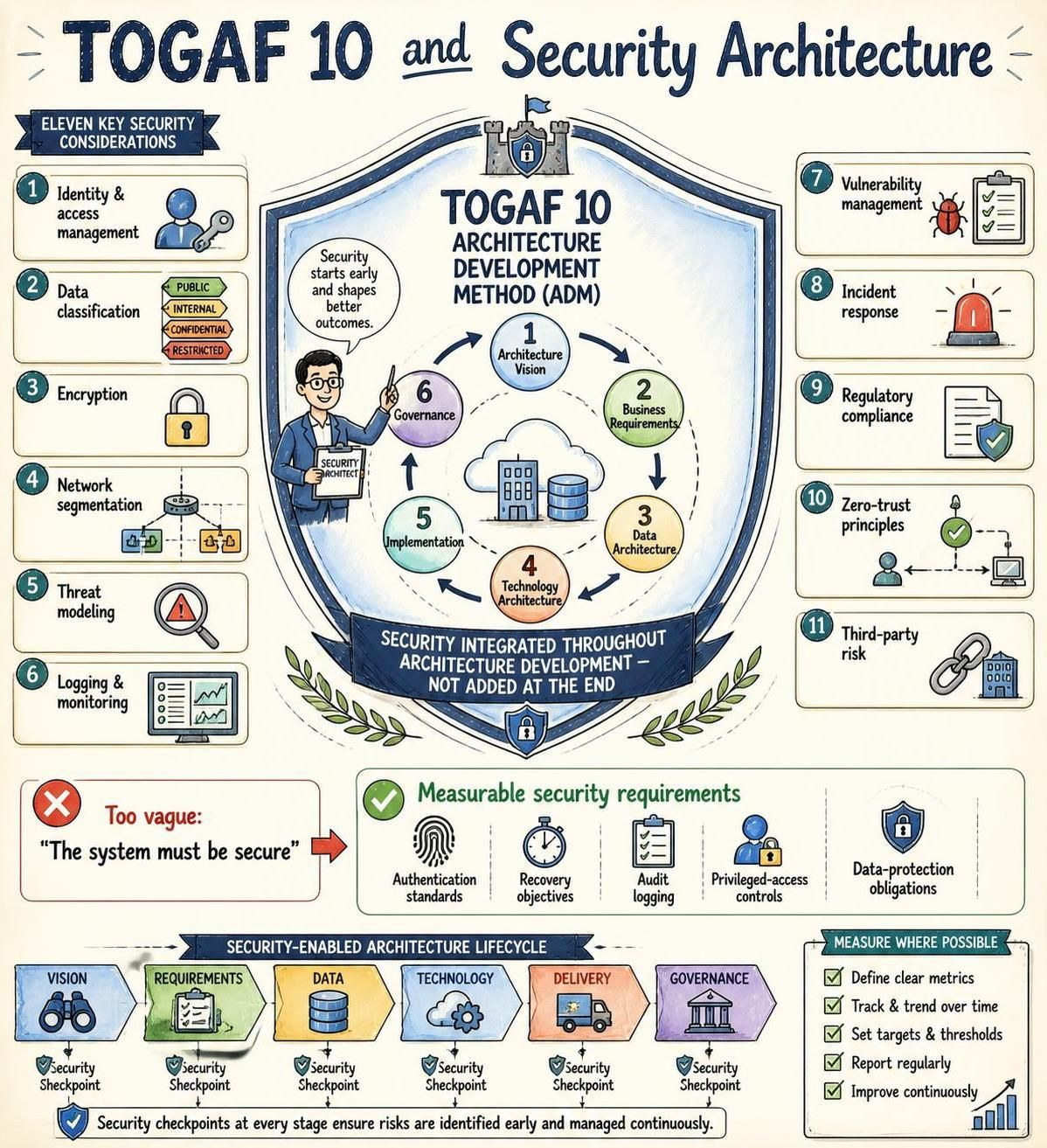 Mastering TOGAF 10 Security Architecture: From Principles to Implementation
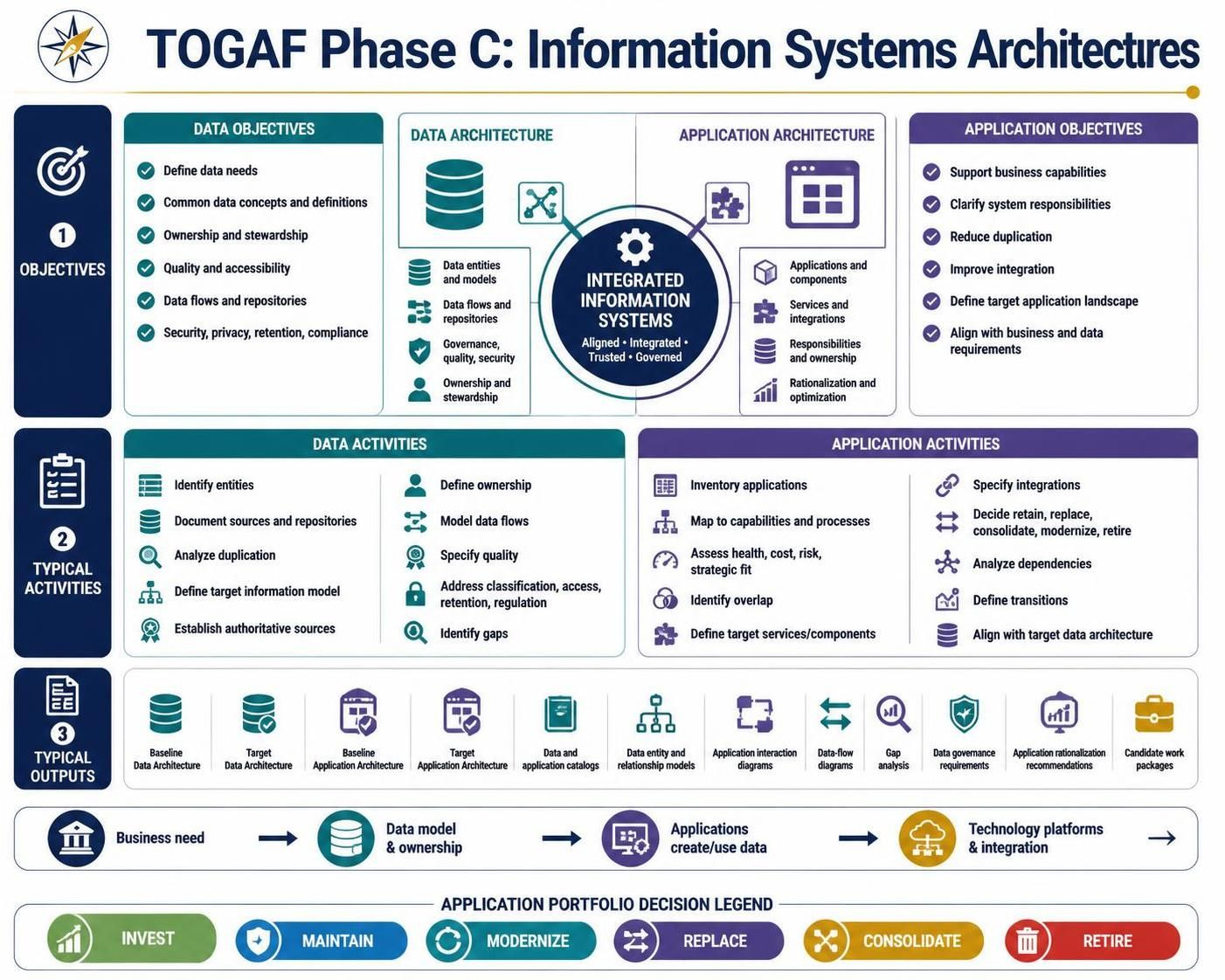 Mastering TOGAF Phase C: A Comprehensive Guide to Information Systems Architecture