


Welcome to this comprehensive tutorial on TOGAF Phase B: Business Architecture. In this critical phase of the Architecture Development Method (ADM), we lay the groundwork for all subsequent technical decisions. By understanding how an organization operates and where it needs to go, architects can effectively bridge the gap between high-level strategy and operational execution.
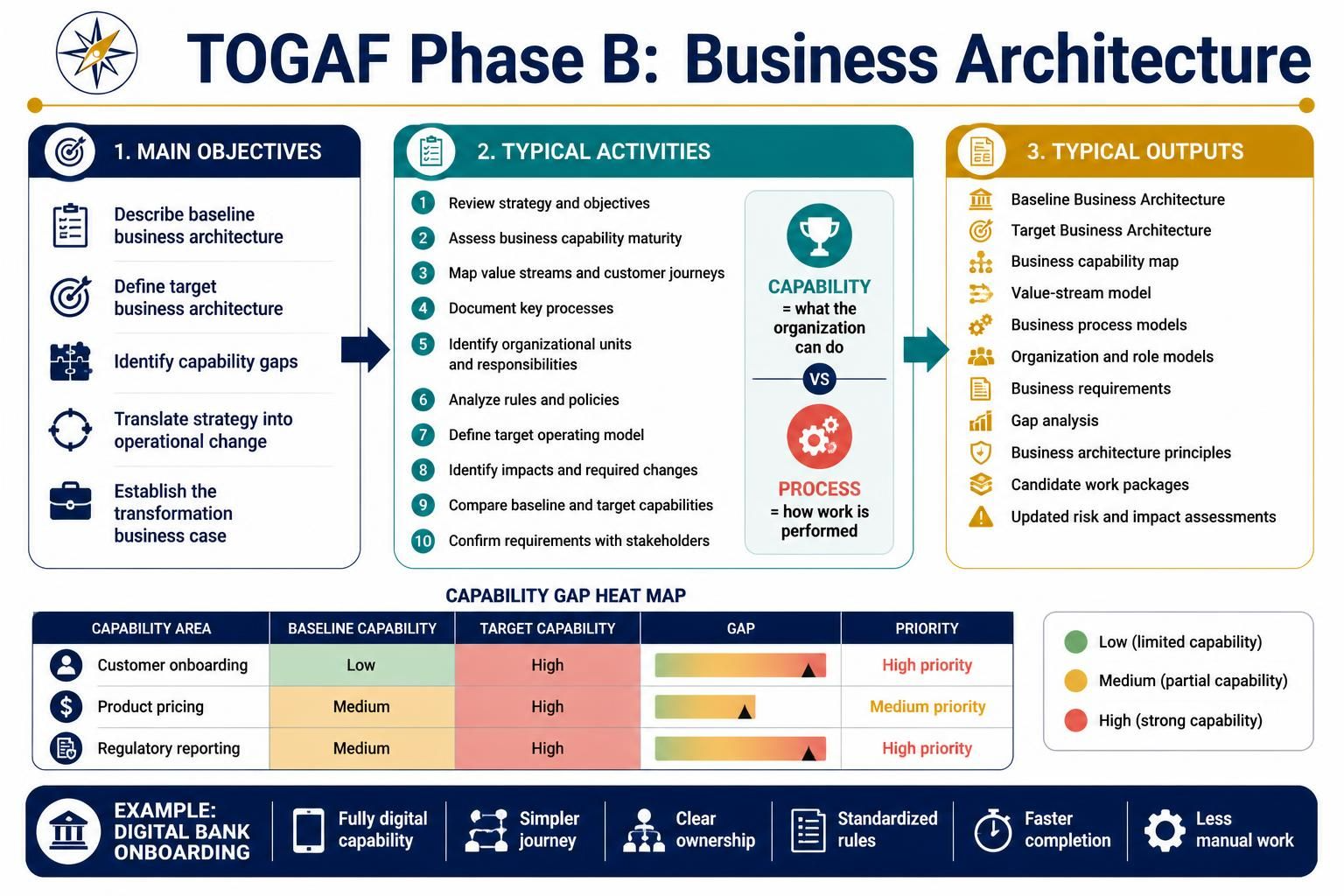
1. The Core Objectives of Phase B
Phase B is not just about drawing diagrams; it is about defining the Business Architecture. This architecture serves as the foundation for data, application, and technology decisions. The primary goals of this phase are:
- Describe the Baseline: Document the current state of the organization’s business capabilities and processes.
- Define the Target: Articulate the future state required to meet strategic goals.
- Identify Gaps: Pinpoint the specific deficiencies between the current and desired states.
- Translate Strategy: Show clearly how abstract business strategy translates into concrete operational changes.
- Establish a Business Case: Create a justification for the proposed transformation based on value and necessity.
2. Key Areas of Examination
Business architecture is broad, encompassing a wide range of elements. When analyzing a business, architects typically examine:
- Business Strategy & Governance: High-level direction and decision-making structures.
- Organizational Structure: How the company is divided into units and roles.
- Capabilities vs. Processes: What the organization does vs. how it does it.
- Value Streams: The end-to-end sequences of activities that create value for customers.
- Products, Services, & Functions: The specific outputs and functional areas of the business.
- Performance Measures: How success is tracked.
3. The Critical Distinction: Capability vs. Process
One of the most important concepts in Phase B is distinguishing between a Capability and a Process. Confusing these two can lead to flawed strategic planning.
Capability: What the Organization Can Do
A capability describes a what. It is an ability or skill the organization possesses. Capabilities are generally stable over time.
- Example: “Customer Onboarding.”
Process: How Work is Performed
A process describes a how. It is the specific sequence of activities used to deliver a capability. Processes change more frequently as efficiency is sought.
- Example: The specific steps of identity verification, account creation, approval, and notification used to deliver “Customer Onboarding.”
Why this matters: Because capabilities are more stable than processes, they are the preferred lens for strategic planning and investment analysis. You invest in the capability, but you optimize the process.
4. Typical Activities for Architects
To successfully navigate Phase B, architects perform a series of rigorous activities:
- Review Strategy: Understand the business objectives.
- Assess Maturity: Evaluate the current maturity of business capabilities.
- Map Value Streams: Visualize how value flows from start to finish.
- Document Processes: Detail the key business processes.
- Analyze Rules & Policies: Understand the constraints governing the business.
- Define the Target Operating Model: Design the future state organization.
- Gap Analysis: Compare baseline vs. target capabilities.
5. Gap Analysis and Prioritization
Once the baseline and target states are defined, the next step is to identify the gaps. A Capability Heat Map is a powerful tool for this. It allows stakeholders to visualize the gap between current maturity and target maturity.
Example Heat Map Analysis:
- Customer Onboarding: Current is Low, Target is High. This represents a High Priority gap requiring significant investment.
- Product Pricing: Current is Medium, Target is High. This is a Medium Priority gap.
- Regulatory Reporting: Current is Medium, Target is High. This is a High Priority gap.
The goal of this analysis is to connect these gaps to business outcomes, ensuring that investment priorities are focused on the areas that matter most.
6. Typical Outputs
The conclusion of Phase B produces a rich set of deliverables that guide the rest of the architecture project. These include:
- Baseline & Target Business Architecture: The “Before” and “After” pictures.
- Business Capability Map: A hierarchical view of what the organization does.
- Value-Stream Model: The flow of activities creating value.
- Organization & Role Models: Who does what.
- Business Requirements: Detailed needs derived from the strategy.
- Gap Analysis & Principles: The rules and findings that drive the transformation.
- Candidate Work Packages: The initial list of projects or initiatives.
7. Practical Example: Digital Bank Onboarding
To visualize this, imagine a bank aiming to improve its digital customer onboarding. The Business Architecture in Phase B would define:
- A Target Capability: Fully digital onboarding.
- A Simplified Customer Journey: Reducing friction for the user.
- Clear Ownership: Defining who is responsible for identity verification.
- Standardized Rules: Ensuring consistent approval logic.
- Service-Level Targets: Measuring application completion speed.
These decisions then directly guide the Data, Application, and Technology architectures, ensuring that the technology supports the business vision.
Conclusion
Phase B is the strategic heartbeat of the TOGAF ADM. By rigorously defining business capabilities and identifying gaps, architects ensure that the organization is not just building technology, but building a better business. To facilitate this complex modeling and analysis, we recommend using Visual Paradigm TOGAF ADM Tool. This tool provides the necessary robustness to model capabilities, map value streams, and visualize gap analyses effectively.
Related posts:
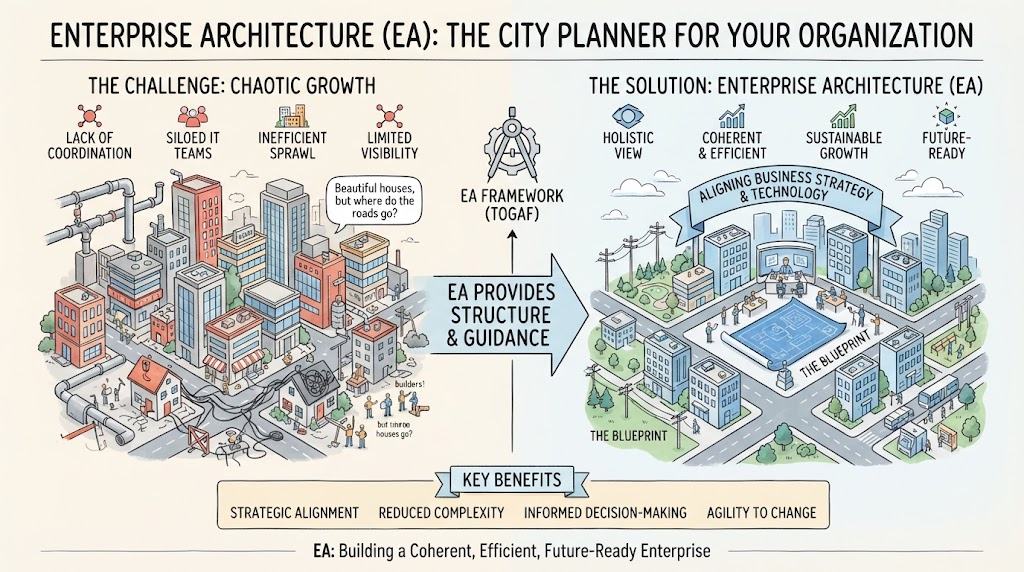 Enterprise Architecture as City Planning: A Visual Guide to TOGAF & Strategic Alignment
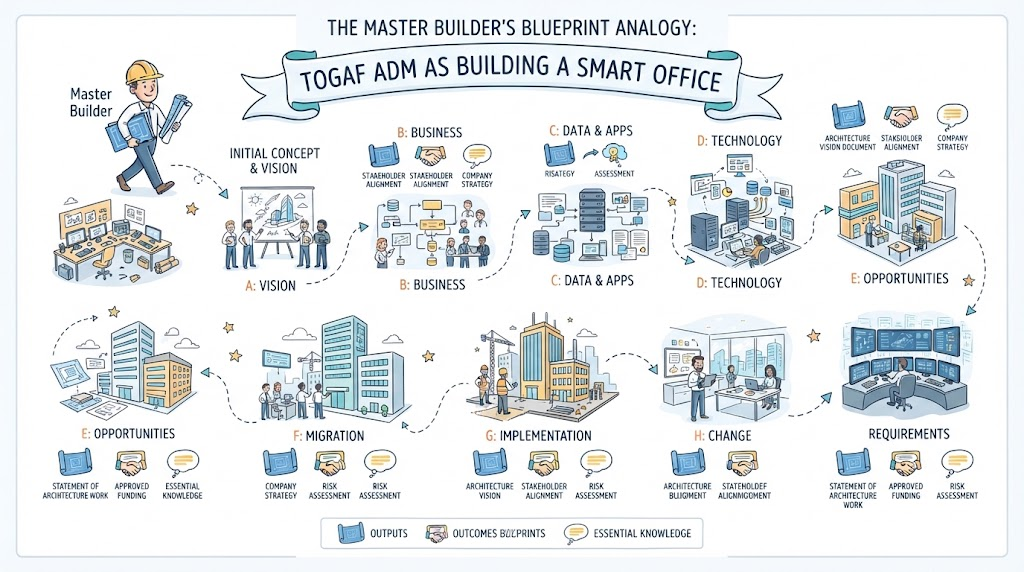 The Master Builder’s Blueprint Analogy: A Step-by-Step Guide to the TOGAF ADM
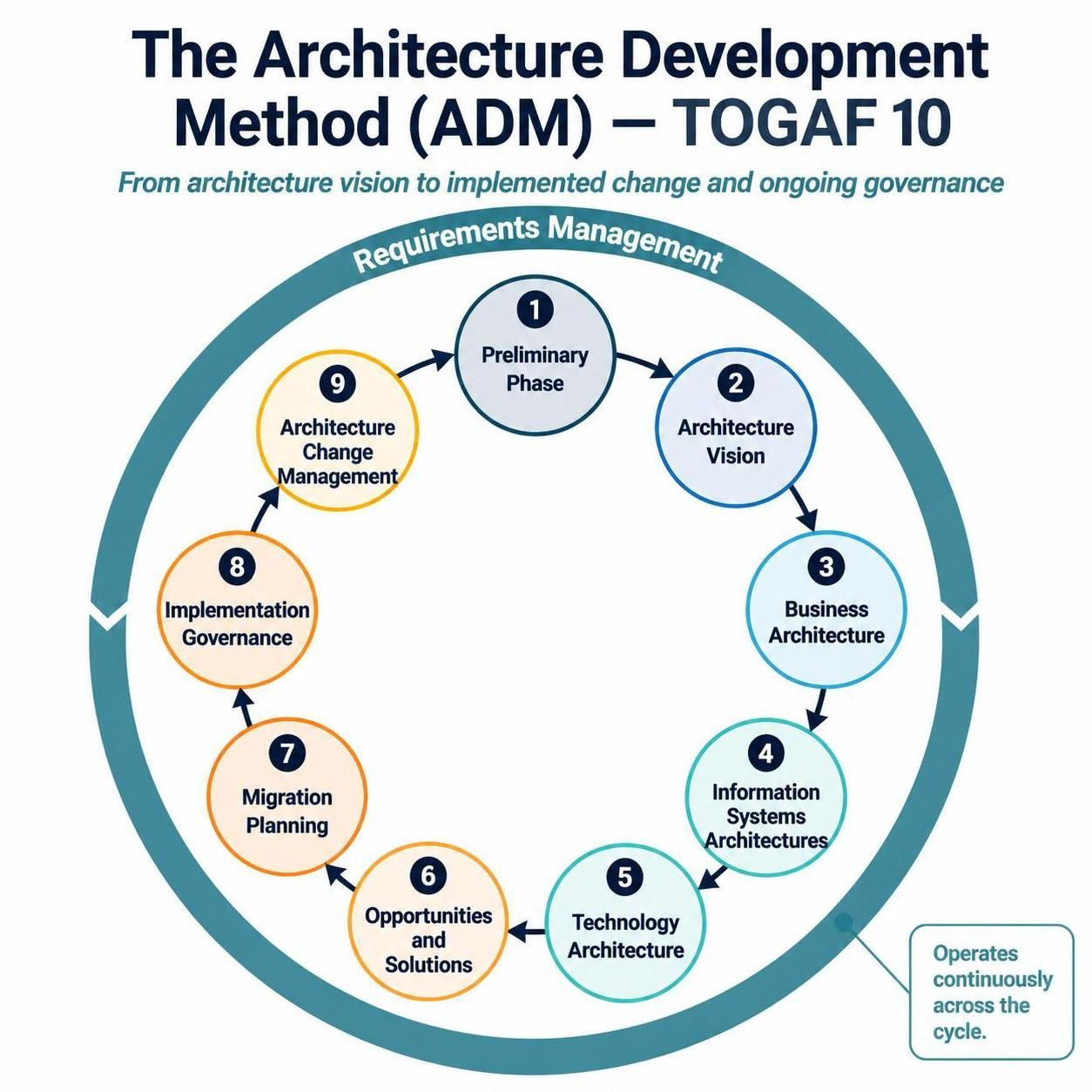 Mastering Enterprise Architecture: A Step-by-Step Guide to the TOGAF ADM Cycle
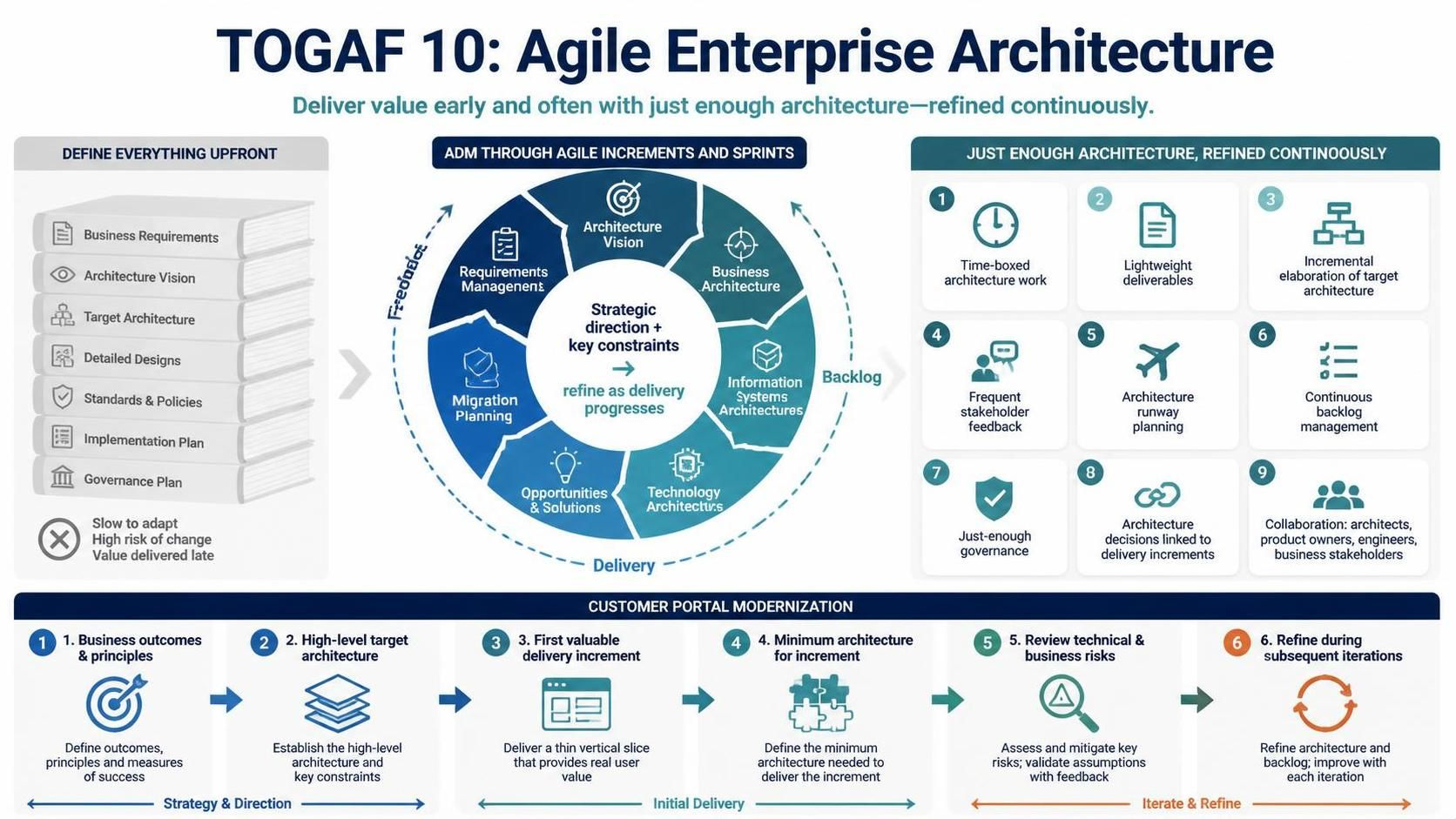 Mastering Agile Enterprise Architecture: A Step-by-Step Guide to TOGAF 10