


Welcome to this comprehensive tutorial on TOGAF Phase A: Architecture Vision. In the TOGAF Architecture Development Method (ADM), Phase A is the critical starting point where the architecture team defines the initial direction, scope, and value of an architecture project. It ensures that the effort is not just a technical exercise but a strategic business enabler.
Understanding the Core Purpose
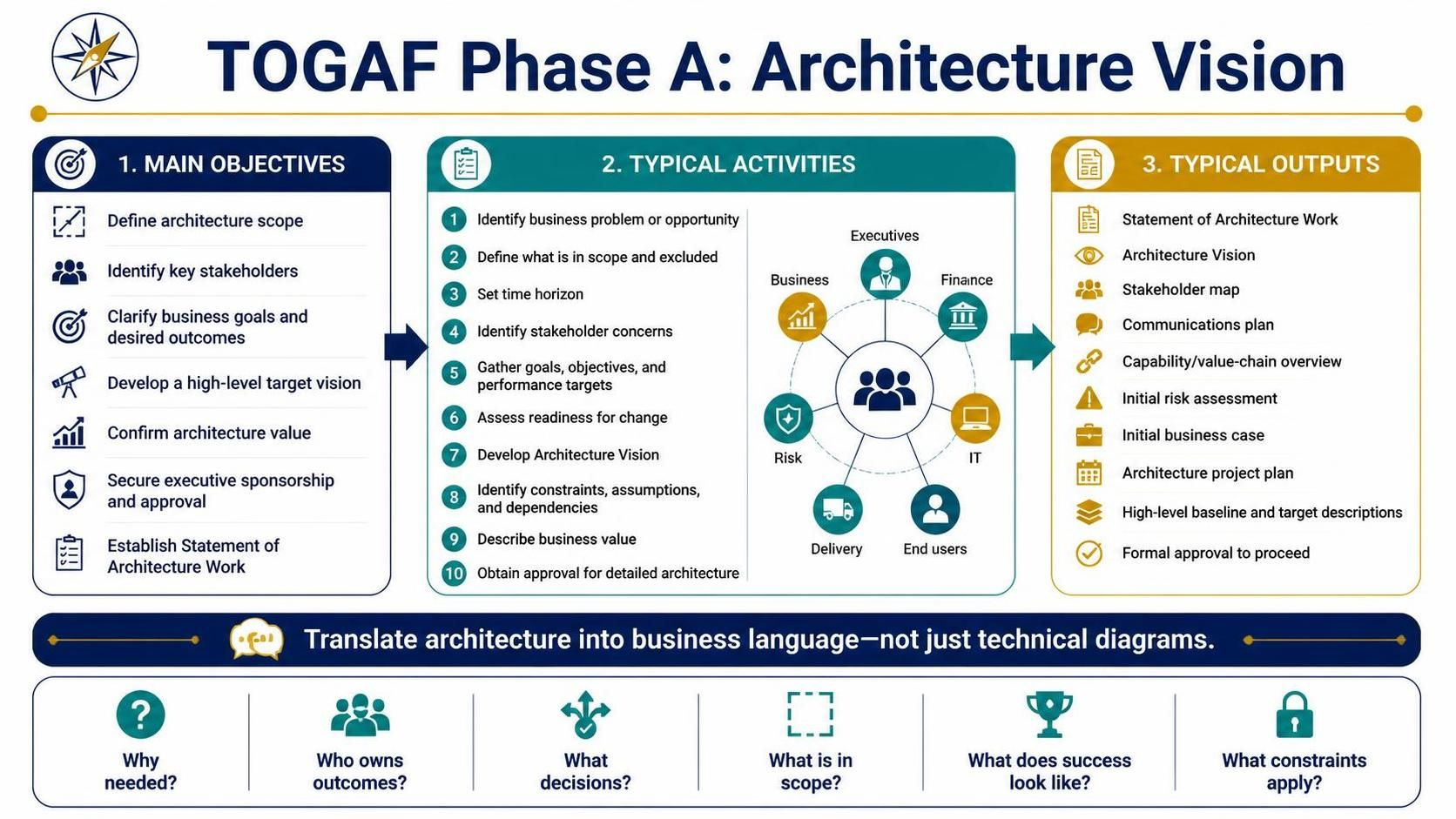
The primary goal of Phase A is to establish the “Why” and “What” before diving into the “How.” It creates a high-level description of the desired future state and secures the necessary approval to proceed. As illustrated in the infographic, this phase is characterized by three main pillars: Main Objectives, Typical Activities, and Typical Outputs.
Detailed Breakdown of Phase A
1. Main Objectives
The first column of the visual guide outlines the strategic goals you must achieve. These are not merely administrative tasks; they are the foundation of the architecture effort:
- Define the scope: Clearly state what is included (e.g., specific business units, products, or processes) and what is explicitly excluded.
- Identify stakeholders: Pinpoint who has an interest in the outcome and who holds the power to approve it.
- Clarify business goals: Understand the strategic objectives and performance targets the organization wants to achieve.
- Develop a high-level vision: Create a narrative description of the target state.
- Confirm value: Establish the business case and secure executive sponsorship.
- Establish the Statement of Architecture Work: This is the formal agreement on the scope and deliverables.
2. Typical Activities
The middle section of the diagram details the step-by-step process. Note the central diagram in this section, which highlights the importance of understanding stakeholder concerns. The activities are:
- Identify the business problem or opportunity: Why are we doing this now?
- Define the architecture engagement: Set the time horizon and boundaries.
- Identify stakeholders and concerns: Different groups need different information.
- Gather goals and targets: Collect strategic objectives.
- Assess readiness for change: Is the organization prepared for the shift?
- Develop the Architecture Vision: Create the initial high-level target.
- Identify constraints and assumptions: What limits our options?
- Describe expected business value: Quantify the benefits.
- Obtain approval: Get the formal go-ahead to move to detailed architecture.
3. Typical Outputs
The final column lists the tangible artifacts produced. These documents serve as the bridge between business strategy and technical execution:
- Statement of Architecture Work: The contract for the architecture team.
- Architecture Vision: The “north star” document.
- Stakeholder map: A visual representation of who influences the project.
- Communications plan: How you will engage with stakeholders.
- Initial business case: The justification for the investment.
- Formal approval to proceed: The authorization to enter Phase B.
Stakeholder Mapping and Concerns
A crucial concept in Phase A is the realization that different stakeholders have different concerns. The diagram effectively visualizes this with a central hub connecting to various roles:
- Executives: Care about strategic value, cost, and risk.
- Finance: Focus on investment, savings, and benefits realization.
- Business Leaders: Look for process improvements and customer impact.
- IT Leadership: Worry about complexity, integration, and technology sustainability.
- Delivery Teams: Need to understand feasibility and implementation effort.
- End Users: Concerned with usability, productivity, and training.
A successful Architecture Vision communicates in business terms rather than relying primarily on technical diagrams. It must answer the “Why” for executives and the “What” for delivery teams.
Key Questions to Answer
By the end of Phase A, the architecture team must be able to confidently answer the following questions, which are represented at the bottom of the infographic:
- Why needed? What is the driving force behind this initiative?
- Who owns outcomes? Who is accountable for the success?
- What decisions? What major choices must be made during the project?
- What is in scope? What are the boundaries of the work?
- What does success look like? How will we measure the results?
- What constraints apply? What rules or limitations must we follow?
Recommended Tooling: Visual Paradigm TOGAF ADM Tool
To effectively model and manage Phase A, you need a tool that supports the TOGAF standard while remaining intuitive for business communication. We recommend Visual Paradigm TOGAF ADM Tool. This platform provides dedicated templates for the Statement of Architecture Work, Architecture Vision, and Stakeholder Management. It allows you to create high-level capability maps and value chain overviews that translate technical concepts into business language, ensuring you meet the core requirement of Phase A: alignment with business priorities.
Related posts:
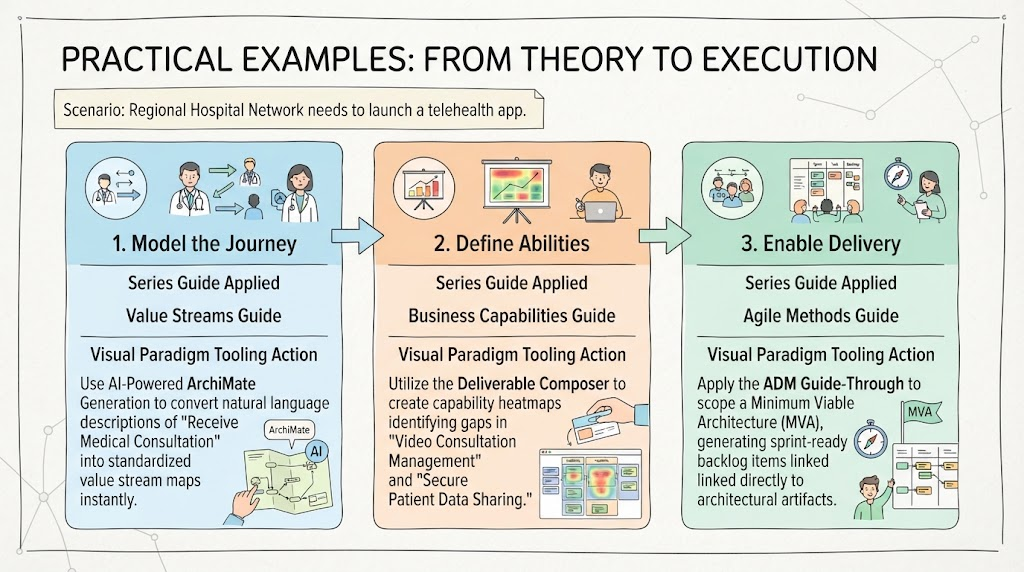 From Theory to Execution: A Practical Guide to Enterprise Architecture with Visual Paradigm
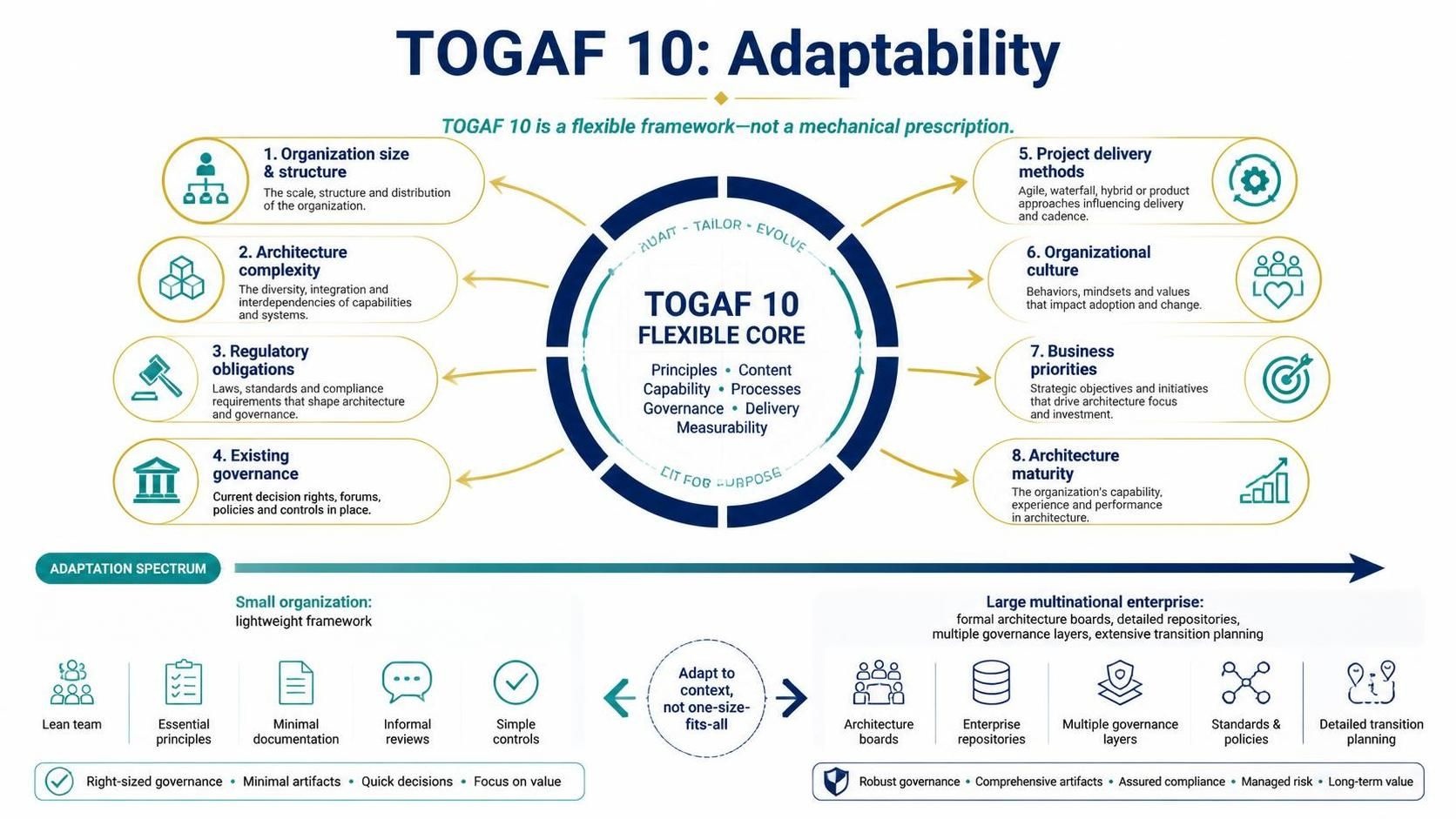 Mastering TOGAF 10 Adaptability: From Concept to Implementation
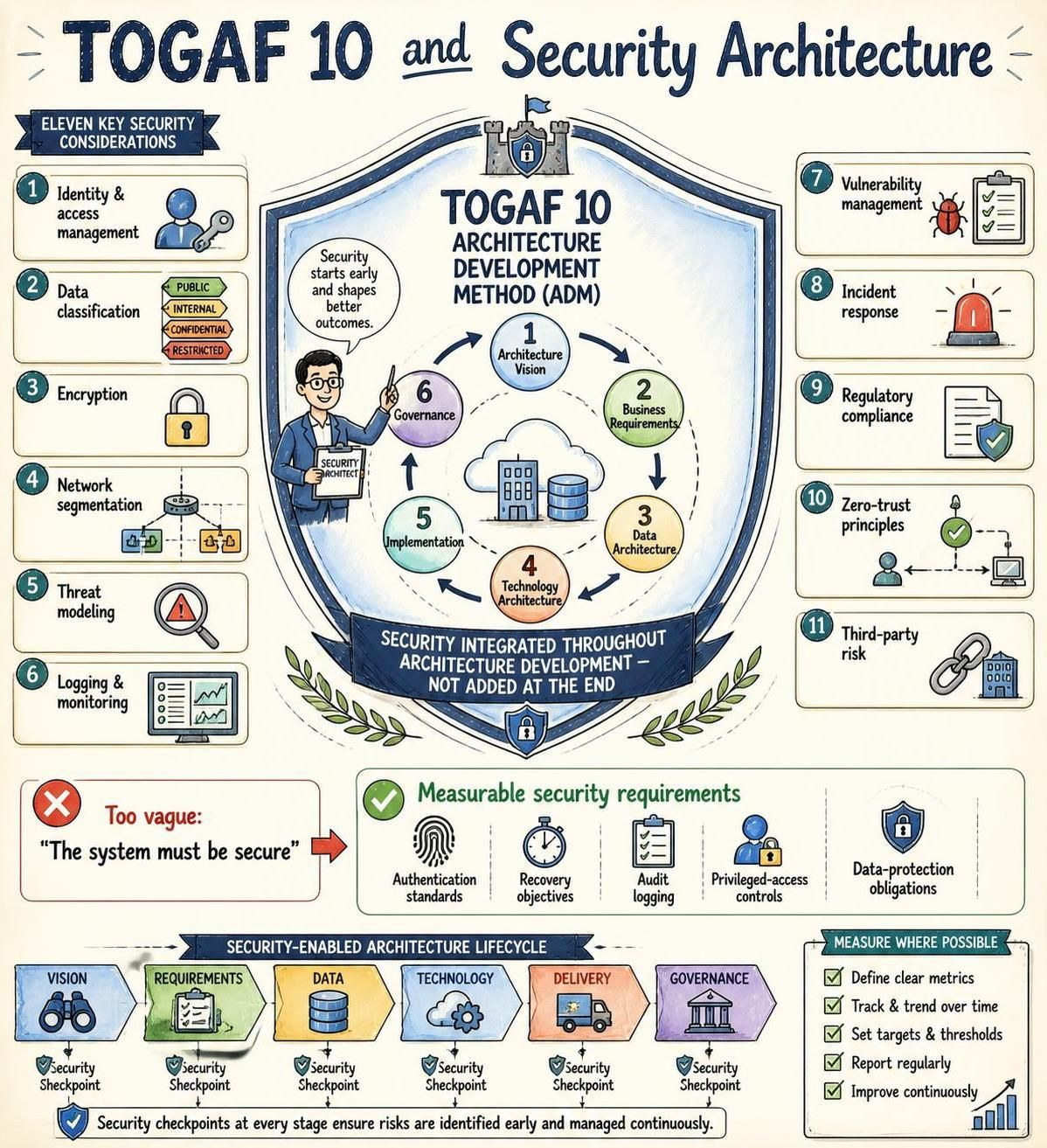 Mastering TOGAF 10 Security Architecture: From Principles to Implementation
 Mastering the Flexible Architecture Development Method (ADM) in TOGAF 10