


Transforming Documentation with AI-Driven Visual Pipelines
In the modern landscape of software engineering and system design, the barrier between ideation and documentation is rapidly dissolving. We are moving away from static text files and manual diagramming tools toward dynamic, AI-assisted workflows. One of the most significant advancements in this space is the seamless integration of Visual Paradigm’s AI Chatbot directly into the OpenDocs pipeline. This feature fundamentally changes how we build context, manage knowledge, and generate technical artifacts.
Imagine a scenario where you describe a complex system architecture to an AI, and within seconds, you not only have a precise UML class diagram but also a ready-to-use entry in your company’s knowledge base. This is the power of the “Chatbot to Docs” workflow. Let’s explore how this mechanism functions, its practical applications, and why it represents a leap forward for technical communication.
The Mechanism: From Prompt to Pipeline
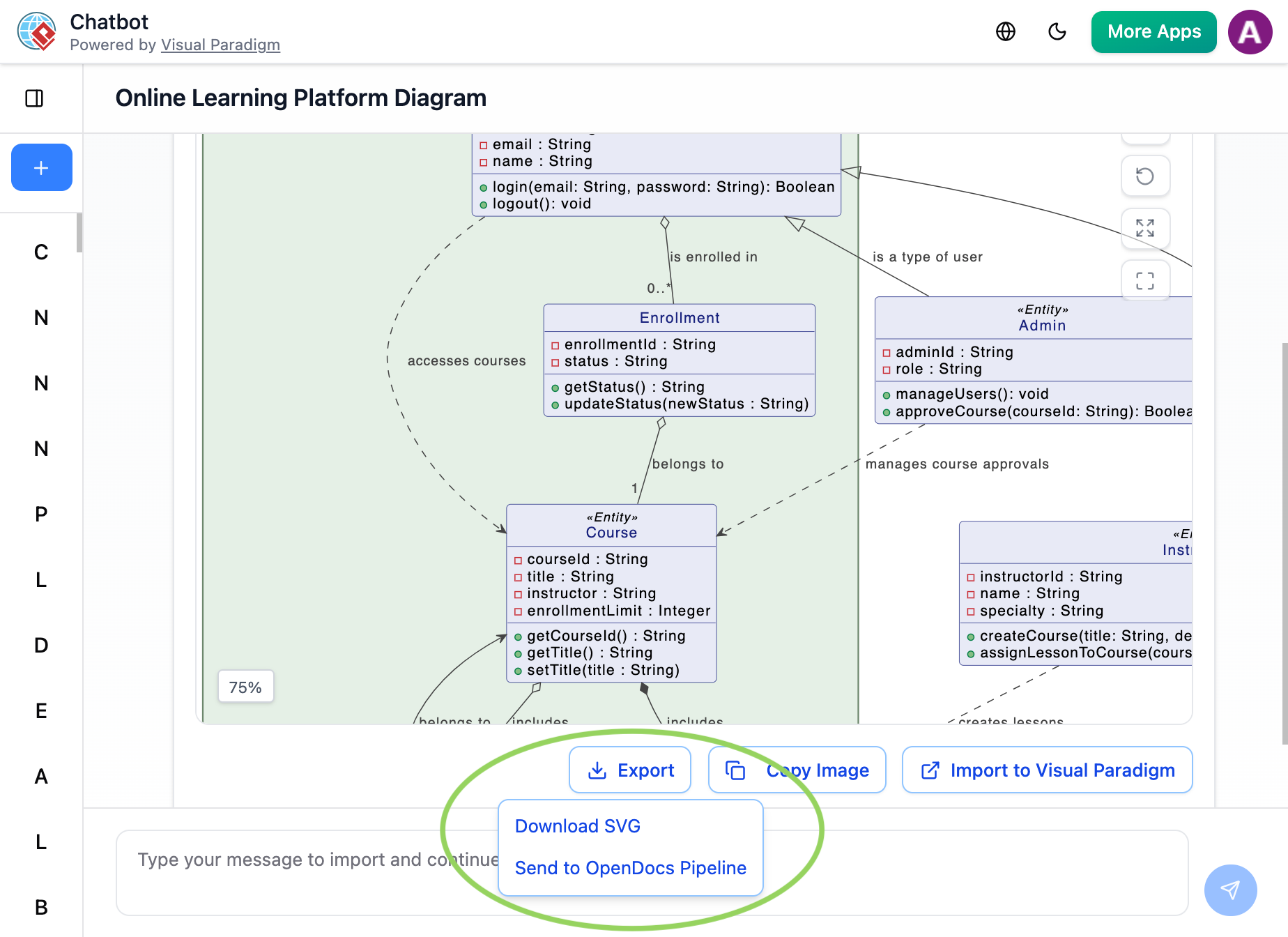
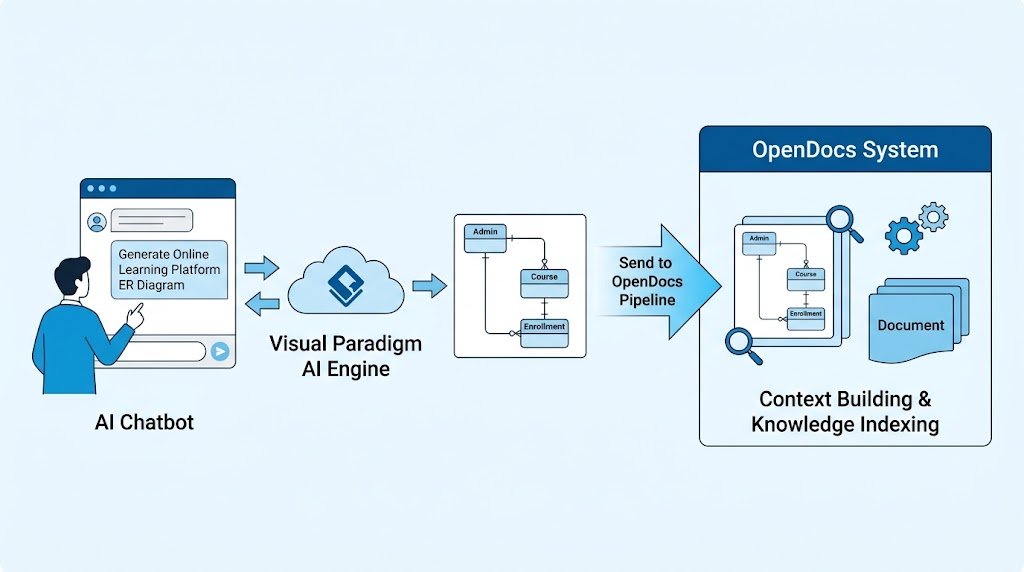
The process begins with a simple prompt. Using the Visual Paradigm AI Chatbot, a user can request specific visualizations, such as an “Online Learning Platform Diagram” featuring entities like Admin, Course, and Enrollment. The AI analyzes the request and generates a structured, valid model.
However, the true innovation lies in what happens after the diagram is rendered. In the interface, you will often see options to export or download the image. But there is a distinct, powerful action available: Send to OpenDocs Pipeline. When you select this option, the AI does not merely save a static image file. It pushes the semantic artifact directly into the OpenDocs system.
This means the diagram is immediately indexed and made available for context building. It transforms a fleeting visual output into a persistent, searchable piece of knowledge. The system treats the generated artifact as a first-class citizen within your documentation ecosystem, allowing for immediate retrieval and reference in future interactions.
Practical Use Cases for Just-in-Time Generation
Why would a developer or architect choose to send a diagram directly to OpenDocs rather than saving it locally? The answer lies in the concept of “Just-in-Time” knowledge management. Here are three compelling scenarios where this feature shines:
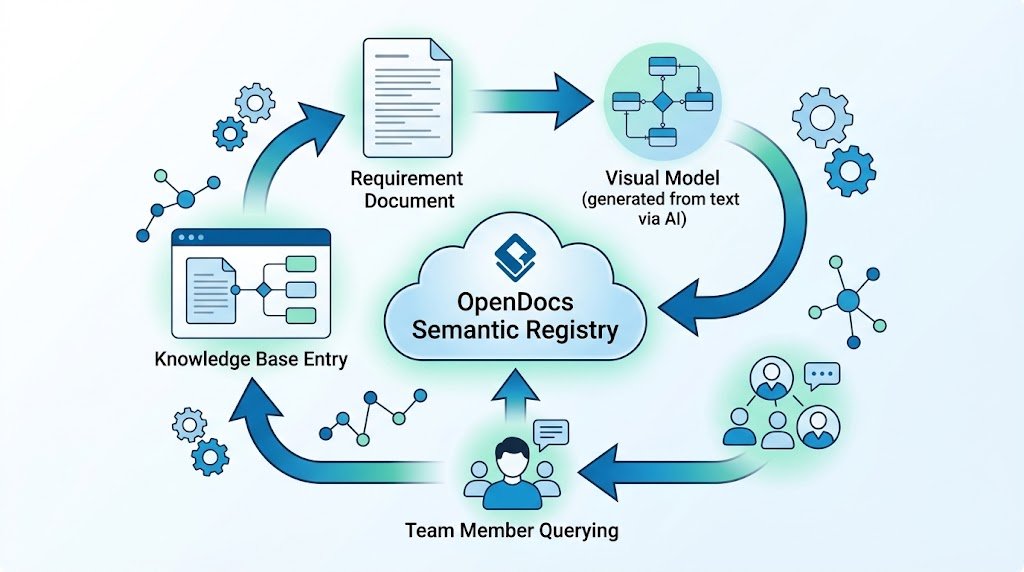
- Rapid Requirement Validation: When gathering requirements from stakeholders, you can quickly generate a model based on their verbal descriptions. Instead of stopping to save the file and upload it to a wiki, you send it to OpenDocs. The requirement document is instantly updated with the visual model, ensuring the stakeholder sees the exact representation discussed.
- Contextual Onboarding: When a new team member joins a project, the AI can generate a high-level overview of the system architecture. By sending this directly to OpenDocs, the documentation team creates a permanent entry that serves as a visual index. Future queries can reference this specific diagram to explain the “Enrollment” or “Admin” logic without recreating the model.
- Iterative Design Sessions: During a brainstorming session, ideas change rapidly. The AI Chatbot allows you to pivot from a sequence diagram to a class diagram instantly. Sending these iterations to OpenDocs creates a chronological log of the design evolution, preserving the history of why certain decisions were made.
Why This Integration is a Standout Feature
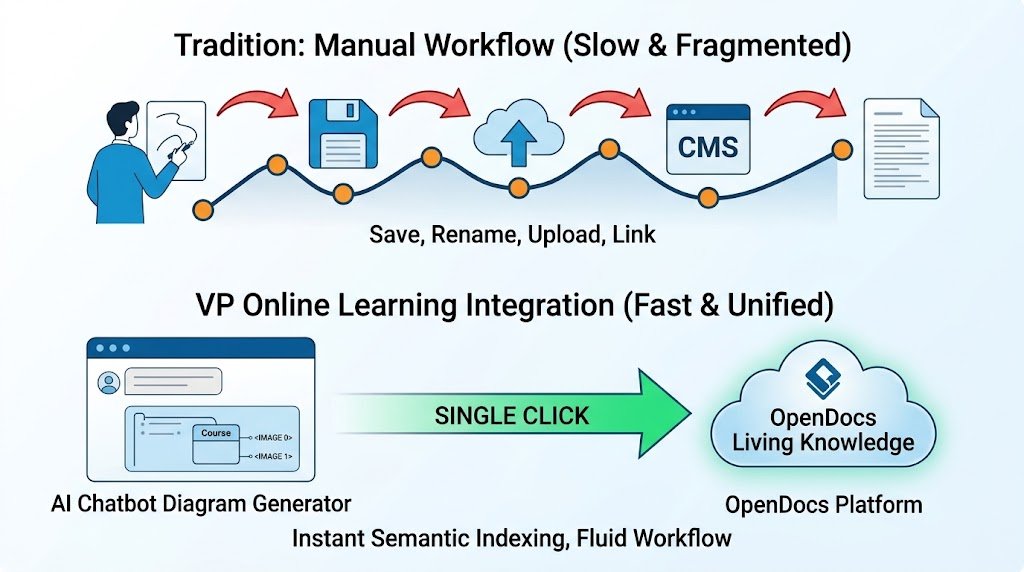
The standout capability of this workflow is the elimination of friction. Traditionally, the path from “idea” to “documentation” involves multiple steps: generating the image, saving it, renaming it, uploading it to a content management system, and then linking it to the text. Visual Paradigm collapses this entire pipeline into a single click.
By integrating the AI Chatbot with OpenDocs, Visual Paradigm ensures that your documentation is not just a collection of static images, but a living, breathing knowledge base. It facilitates a fluid relationship between text and visuals, where the AI acts as both the creator and the librarian. This allows teams to focus on the logic and architecture of their systems rather than the administrative overhead of managing files.
As you explore your workspace on OpenDocs, remember that your AI Chatbot is more than a drawing tool; it is a powerful engine for knowledge synthesis. By leveraging the “Send to OpenDocs Pipeline” feature, you ensure that every diagram generated contributes directly to the collective intelligence of your organization.
Related posts:
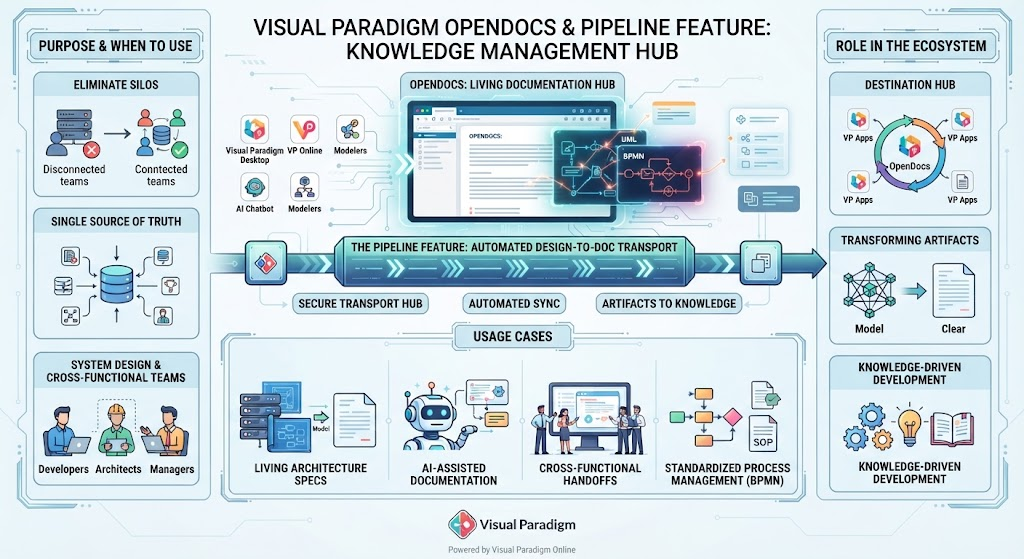 Mastering Knowledge Management: A Deep Dive into Visual Paradigm OpenDocs & Pipeline Architecture
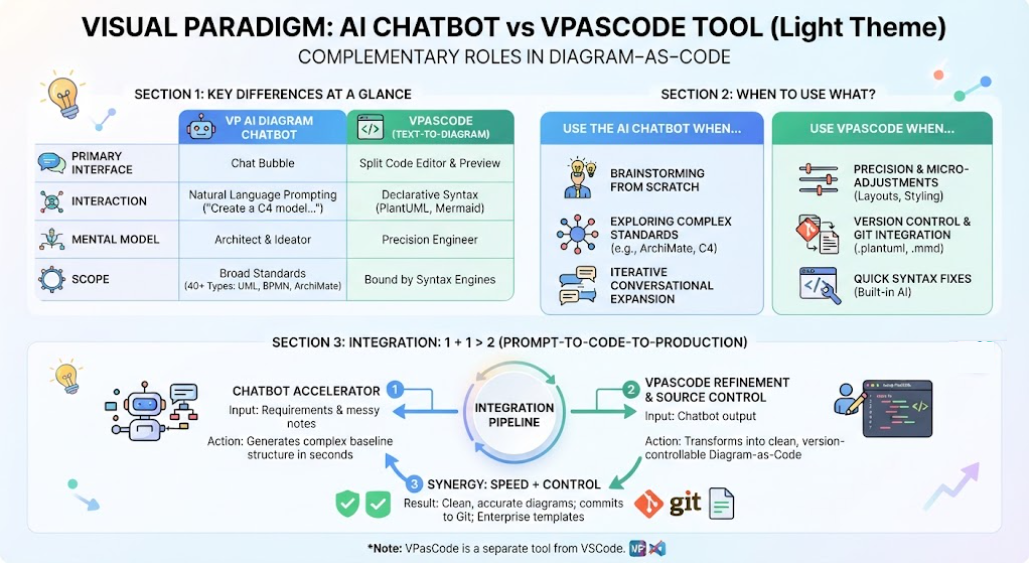 Mastering the Modern Modeling Workflow: AI Chatbot vs. VPasCode in Visual Paradigm
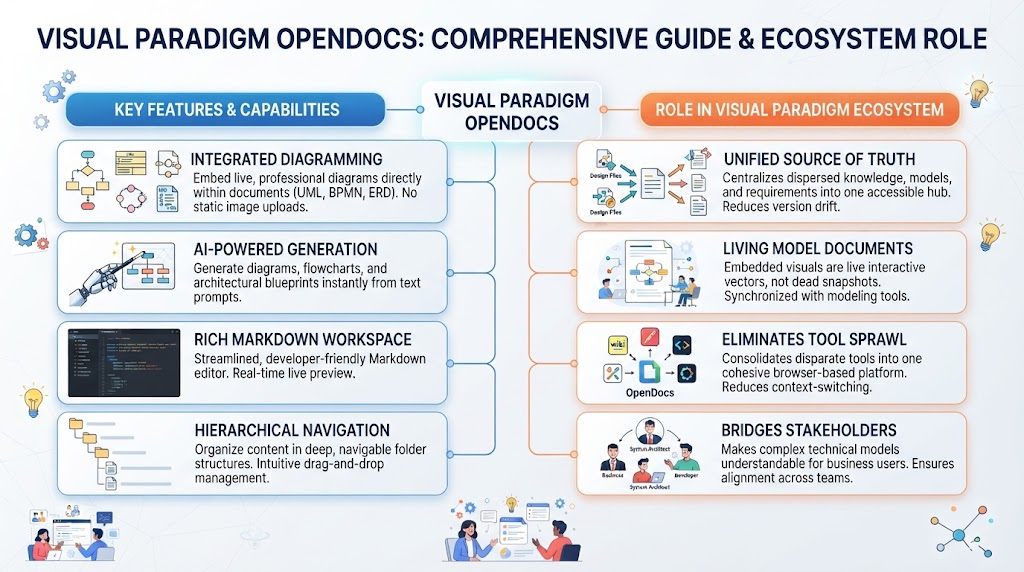 Mastering Modern Documentation: A Deep Dive into Visual Paradigm OpenDocs Architecture
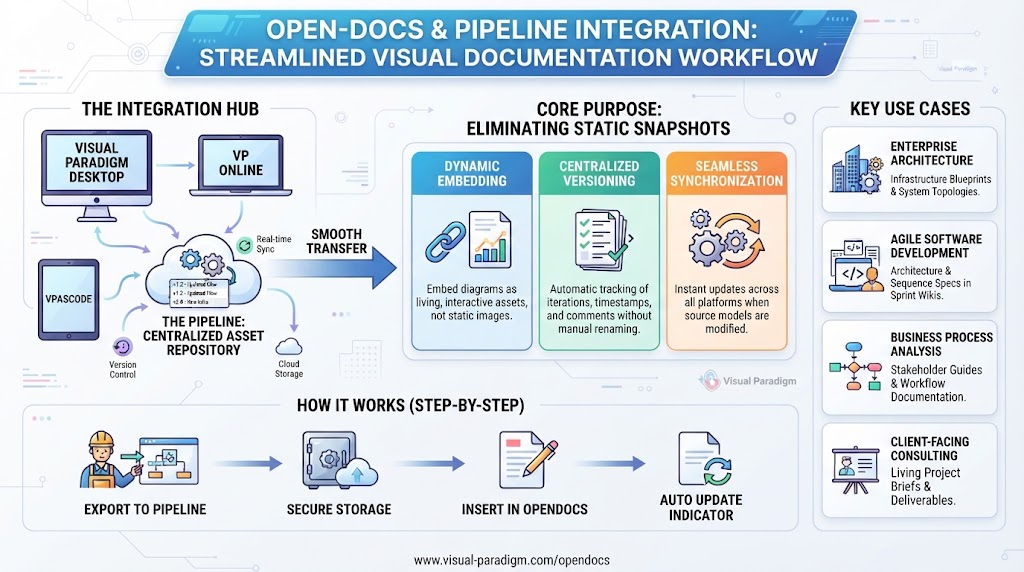 Mastering Dynamic Documentation: A Deep Dive into Visual Paradigm’s OpenDocs & Pipeline Integration